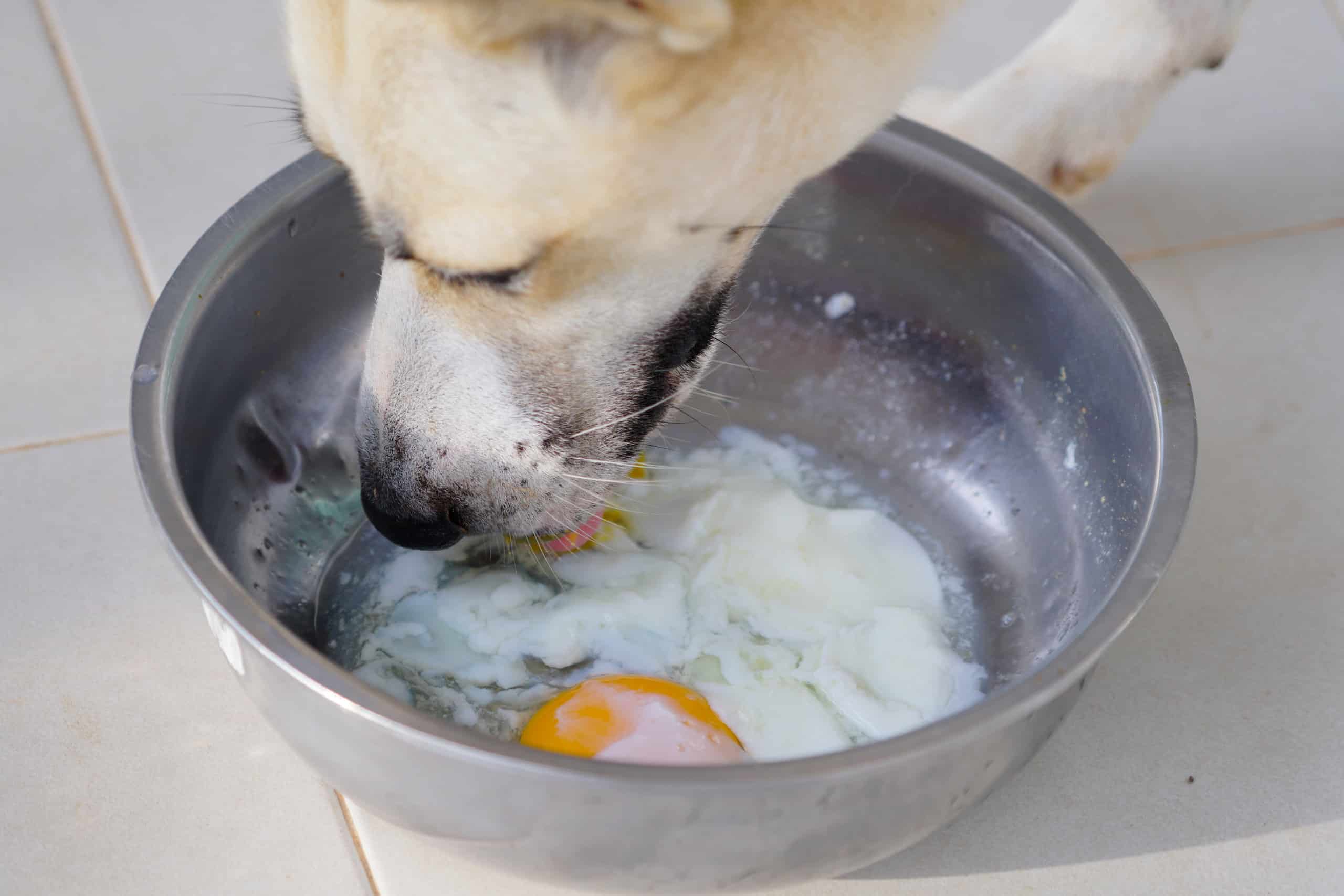

Most dogs love eggs and, given the chance, they would eat several at one sitting! Many dog owners share their cooked eggs with their dogs. Some also give their dogs a little scrambled (whisked) eggs if they have an upset stomach and cannot tolerate their regular food. But are raw eggs safe for your dog to eat? Is there any nutritional benefit in giving raw as opposed to cooked eggs to your dogs? Here, we will explore the science behind feeding eggs to dogs.
Are Eggs Good for Dogs?
Eggs are a highly nutritious food item, and they are safe for dogs to consume in small amounts. Both the egg white and yolk are rich in a variety of proteins. They also contain plenty of lipids (fats), which are in the yolk. The carbohydrate content of eggs is low, but they do contain glucose and other sugars.
When it comes to micronutrients, eggs are an excellent source of vitamins and minerals. The egg yolk contains high amounts of vitamins A, D, E, and several B vitamins. Also, the egg whites possess high amounts of vitamins, including B2, B3, and B5, but also significant amounts of vitamins B1, B6, B8, B9, and B12. Eggs are rich in phosphorus and contain moderate amounts of potassium, magnesium, and trace elements such as copper and iron. Dogs can even eat eggshells, which contain minerals such as calcium and zinc.
Are Raw Eggs Healthier for Dogs?

Eggs contain a lot of protein.
©iStock.com/Watcharin panyawutso
Having established that there are plenty of nutrients in eggs that are beneficial for dogs, the next question is whether they should be served to your pooch cooked or raw. Some human fitness enthusiasts consume raw eggs, believing they are more nutritious than cooked eggs. However, this is a myth. Eggs contain the same amount of protein whether they are cooked or raw. In fact, there is evidence that cooked egg protein is more digestible than raw egg protein. Therefore, there is no nutritional advantage to serving raw eggs to your dog, aside from the convenience of not cooking them.
Can Raw Eggs Be Risky for Dogs?

Raw eggs can contain salmonella.
©OlgaReukova/Shutterstock.com
There are several potential risks associated with feeding your dog raw eggs. First, if you feed your dog eggshells, there is a small risk of choking. Secondly, eggs are high in protein, and it is the protein in foods that can trigger an allergic response in some individuals. Allergies can occur at any time in a dog’s life and may arise in dogs who have previously eaten eggs with no problem. Some common symptoms of an allergic reaction to eggs in dogs include vomiting, diarrhea, and skin irritation, especially around the ears and paws. If your dog displays these symptoms after eating eggs, you should consult your vet right away.
Importantly, raw eggs can contain pathogens that can make your dog ill. A typical example is a bacterium called Salmonella. Salmonella is killed when eggs are cooked, but it can be present in raw eggs. In the UK, nearly all commercial hens are vaccinated against Salmonella, while in the US, vaccination is used in some flocks but is not as widespread or standardized. Salmonella remains a potential risk when consuming raw eggs. In dogs, Salmonella can cause an infection called salmonellosis. The symptoms include vomiting and diarrhea. That said, many Salmonella infections in dogs do not produce any symptoms. Puppies, senior dogs, and dogs with existing medical conditions are most likely to be affected.
There is also some evidence that egg whites can prevent dogs from absorbing biotin from other foods. Finally, because eggs are high in fat, they are not suitable for dogs with conditions such as pancreatitis, diabetes, and obesity. If your dog has an existing medical condition, you should check with your vet before feeding them raw or cooked eggs.
Serving Eggs to Dogs
Adding many eggs to your dog’s diet is not recommended, as eggs are high in calories. Feeding your dog too many eggs could lead to obesity, so it is always a good idea to check with your vet before introducing eggs into your dog’s diet.
Eggs should be cooked before being given to your dog. You can boil or scramble them, but do not add any seasoning. You can serve them on their own or sprinkle them on top of your dog’s regular food. It is also unwise to give your dog too many eggs. The appropriate amount depends on your pet’s size, health, and activity level, but one or two eggs per week should be the maximum.