
Quick Take
- Commercial mosquito sprays are solving the wrong problem entirely. The part of the mosquito population they ignore is what keeps your yard swarming all summer. See why adults aren't enough →
- There's a naturally occurring bacterium that kills mosquito larvae without touching bees, fish, or birds, and it has been hiding in plain sight since the 1970s. Meet the bacterium →
- Mosquitoes' own egg-laying instincts are the trap's real weapon, and once you understand what they're looking for, stopping them gets surprisingly cheap. Understand the egg-laying trap →
If you live in an area of the country where mosquitoes are the primary nuisance, then you know the pain and frustration associated with trying to do anything outdoors while constantly being attacked by flying pests. Many people spend hundreds of dollars a year on hand-held pest control and commercial pest treatments, but as you’ll see here, these are just temporary solutions that are often more harmful to the environment than they are helpful. In this guide, we’ll tell you about an affordable and proven pest treatment that costs less than a cup of coffee, and it’s proven to work.
We’ll tell you how you may be able to reduce your reliance on commercial pest treatments with a simple bucket, some water, organic material, and a naturally occurring bacterium called Bacillus thuringiensis israelensis, commonly known as BTI, can solve your mosquito drama so you can enjoy the season.
Why Traditional Spraying Often Falls Short
Before we get into how to make your own simple pest deterrent, let’s talk about why traditional spraying is ultimately not the answer.
Typical Treatments Focus on Adults
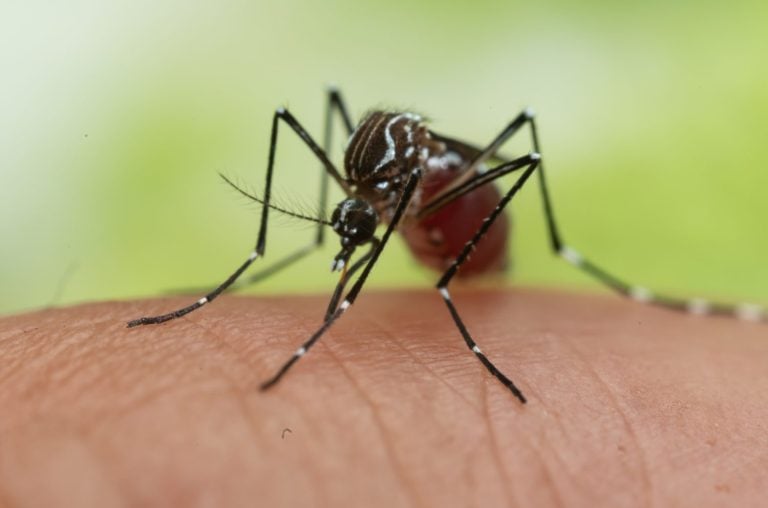
Most modern commercial pest control treatments focus on eradicating adult mosquitoes because they are the insects people notice most. Many of these treatments contain adulticides, chemicals used to kill flying mosquitoes on contact.
The problem is that adult mosquitoes represent only a small fraction of the total mosquito population. While the larger mosquitoes are flying around, most mosquitoes exist as eggs, larvae, or pupae, hidden in standing water. A typical neighborhood may contain thousands of breeding sites, and even if a spray treatment kills the adults, new mosquitoes can emerge from untreated water within days. It’s a bit like removing weeds by mowing the grass instead of pulling out the roots.
Typical Treatments Become Less Effective
Another challenge for traditional commercial pest treatments is resistance. Mosquitoes reproduce rapidly, and some possess traits that help them to survive pesticide exposure. Over time, these survivors pass their resistance genes to offspring. Eventually, chemicals that once worked well become far less effective. In fact, the issue has become so pressing that it is a growing concern for public health officials, who fear that mosquito resistance could lead to larger global health problems down the road.
Typical Treatments Hurt Other Creatures
Finally, spraying mosquitoes without regard for other living creatures along the path can cause unnecessary harm. Many broad-area commercial pest treatments negatively affect beneficial insects, like pollinators, including bees and local butterfly populations. So, the spray does not provide the targeted approach that should be the ultimate goal.
Meet BTI: Nature’s Mosquito Killer
Your more targeted solution includes a couple of essential components, starting with BTI. It stands for Bacillus thuringiensis israelensis, and it’s a naturally occurring soil bacterium first discovered in the 1970s. Scientists found that BTI produces proteins that are highly toxic to the larvae of mosquitoes, black flies, and certain related insects. When mosquito larvae consume BTI particles, the proteins disrupt their digestive systems, killing them quickly.
In the process, the BTI does not harm birds, fish, mammals, pollinators, or anything else in the vicinity. It’s for this reason that BTI has become one of the most widely recommended mosquito control products in environmentally sensitive areas.
Create an Ovitrap
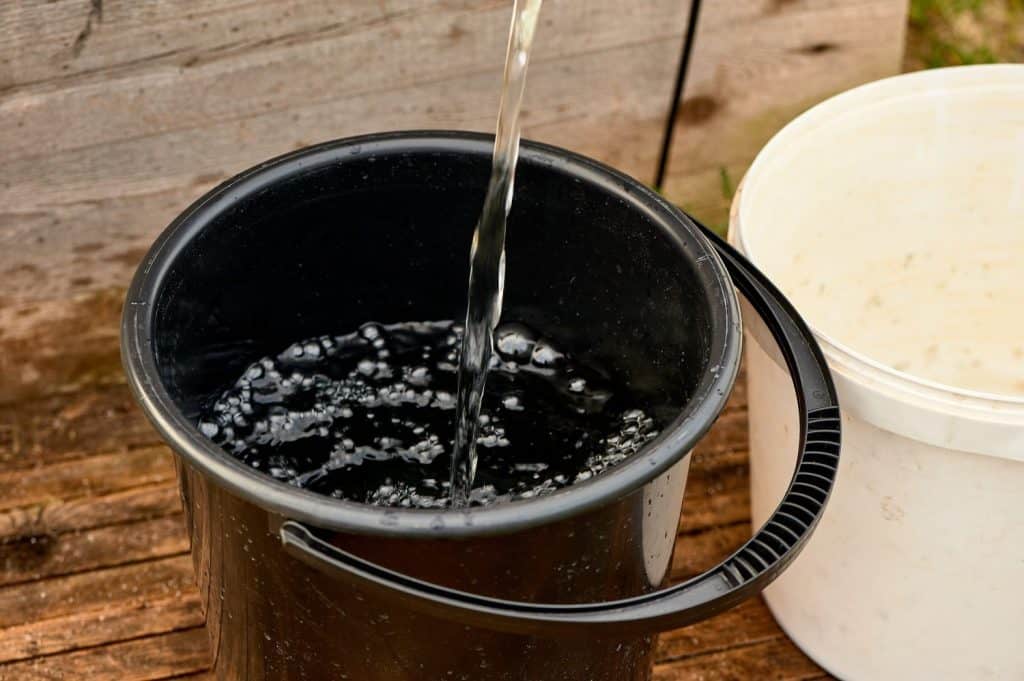
Although the science and Latin names discussed may seem confusing at first, reducing the number of mosquitoes around your home is actually quite simple once you understand the process. What you need to make is an ovitrap. Essentially, the name combines the words “oviposition” (egg laying) and “trap,” describing a mosquito nursery that never allows the larvae to mature. This strategy relies on mosquitoes’ natural behavior.
Female mosquitoes feed on blood during a meal and immediately search for a place to lay eggs. Many mosquito species will seek out stagnant, nutrient-rich water. They’re not looking for the cleanest water. Instead, they’re often attracted to water containing decomposing leaves, grass clippings, or organic matter. These materials support microbial growth, providing future food for developing larvae. Instead of chasing adult mosquitoes around a yard, homeowners can deliberately create breeding sites that are more attractive than natural alternatives and that contain BTI. From there, the process is straightforward:
- Mosquitoes willingly deposit eggs into what amounts to a biological trap.
- The eggs hatch.
- The larvae begin feeding.
- The BTI eliminates them before they mature into biting adults.
Best of all, you can create this trap for a fraction of the cost of most commercial pest treatments.
Building a Five-Dollar Mosquito Bucket Trap
Get the Necessary Materials
To start, gather the necessary materials, which include:
- One black bucket (approximately 3 to 5 gallons)
- Water
- A mosquito dunk containing BTI
- Dead leaves, grass clippings, or straw
Head to a hardware store to buy the bucket for a dollar or two. The pre-made BTI dunks are often priced at a few dollars per multipack. The reason you want a black bucket is that mosquito species prefer shaded, protected breeding locations. Black buckets often outperform lighter-colored containers because they resemble natural tree holes, neglected containers, and other favored habitats.
Fill the Bucket
The next step is to fill the bucket with the required components, starting with organic matter. Add leaves, straw, or grass clippings to the bucket. As the materials decompose, they release compounds that attract egg-laying mosquitoes. You don’t want a clean-water bucket. The more contaminated, the better.
Next, fill the bucket with water until it’s approximately half to three-quarters full. If you can use rainwater, that’s ideal, but tap water is generally fine. You’ll increase your chances of success by allowing the organic matter to soak for a few days. Next, read the instructions of your mosquito dunk of choice and add the appropriate amount to your bucket. The BTI inside will dissolve and remain active for weeks.
Finally, place the bucket in a shaded location, as mosquitoes often avoid hot, exposed breeding sites. The trap should remain undisturbed and retain water throughout mosquito season.
Stay Vigilant
Depending on the size of your property, you may want to set up several ovitraps to increase your chances of success. The more ovitraps you have, the more likely mosquitoes are to choose them over gutters, flowerpots, birdbaths, and other areas where you spend time outdoors. Be sure to inspect your traps regularly. Buckets that dry out will become ineffective, and the pests will return.
The Future of Mosquito Control
BTI and ovitraps are increasingly popular tools for mosquito control and may reduce the need for some commercial chemical treatments, especially in residential settings. With a small investment, some basic knowledge, and the right materials, you can significantly curb the mosquito threat. In the end, that five-dollar bucket may be one of the best investments you can make all summer long.
.