
Quick Take
- One folk remedy is actually endorsed by well-regarded healthcare organizations, yet it still makes jellyfish stings significantly worse. See which remedy backfires →
- Some jellyfish stings show no symptoms for up to 48 hours before becoming potentially fatal. Learn about severe reactions →
- The most effective jellyfish sting treatment costs almost nothing and is probably already in your kitchen, though most people miss a critical catch that comes with it. Find the vinegar catch →
Whether on the internet or around the beach bonfire, you’ve probably heard a similar story retold in different ways. As it goes, someone is out on the beach when they get a nasty jellyfish sting on their foot. This sends them into a panic or, worse, catapults them into shock. With symptoms mounting and emergency rescue out of easy reach, the jellyfish victim has no choice but to engage in a bit of street medicine. As the stories go, this usually takes the form of urinating on the wound. It’s dramatic, compelling, hilarious, and gross, but such remedies can actually do far more harm than good.
There are a host of folk remedies out there for dealing with jellyfish stings. The only problem, however, is that most of them are useless. Furthermore, many are considerably more harmful than just waiting for proper medical treatment. Whether urination, alcohol rubbing, or outright scraping, several folk remedies for jellyfish stings have been passed around for decades. Yet all of them are less effective than a simple vinegar wash. For the sake of safety and clarity, let’s explore the nature of jellyfish stings, why folk remedies can do more harm than good, and what actually works.
The Science of a Jellyfish Sting
Over 11,000 cnidarian species are capable of delivering jellyfish-like stings.
©Andrei Antipov/Shutterstock.com
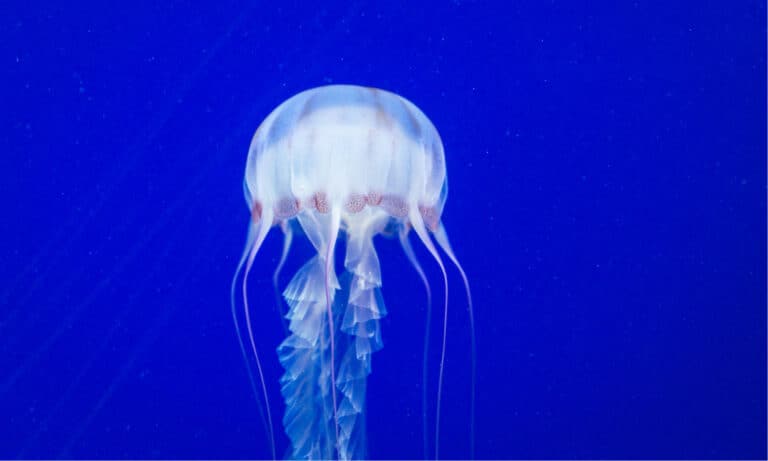
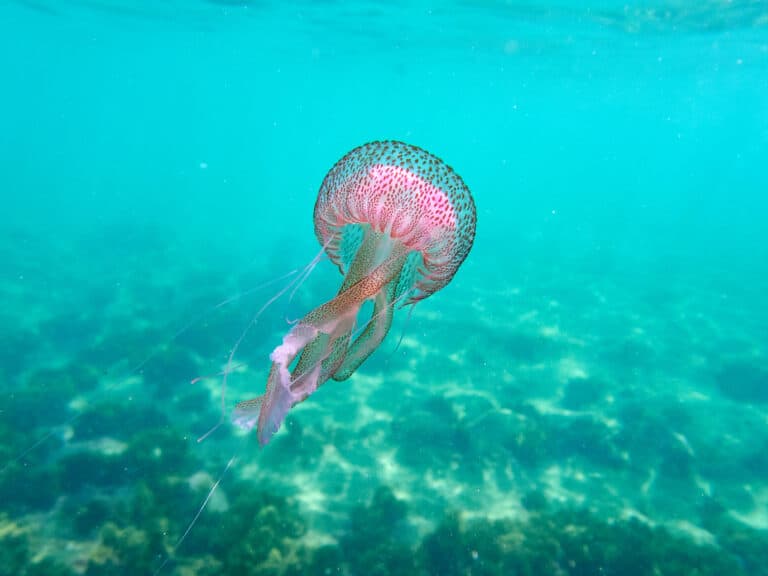
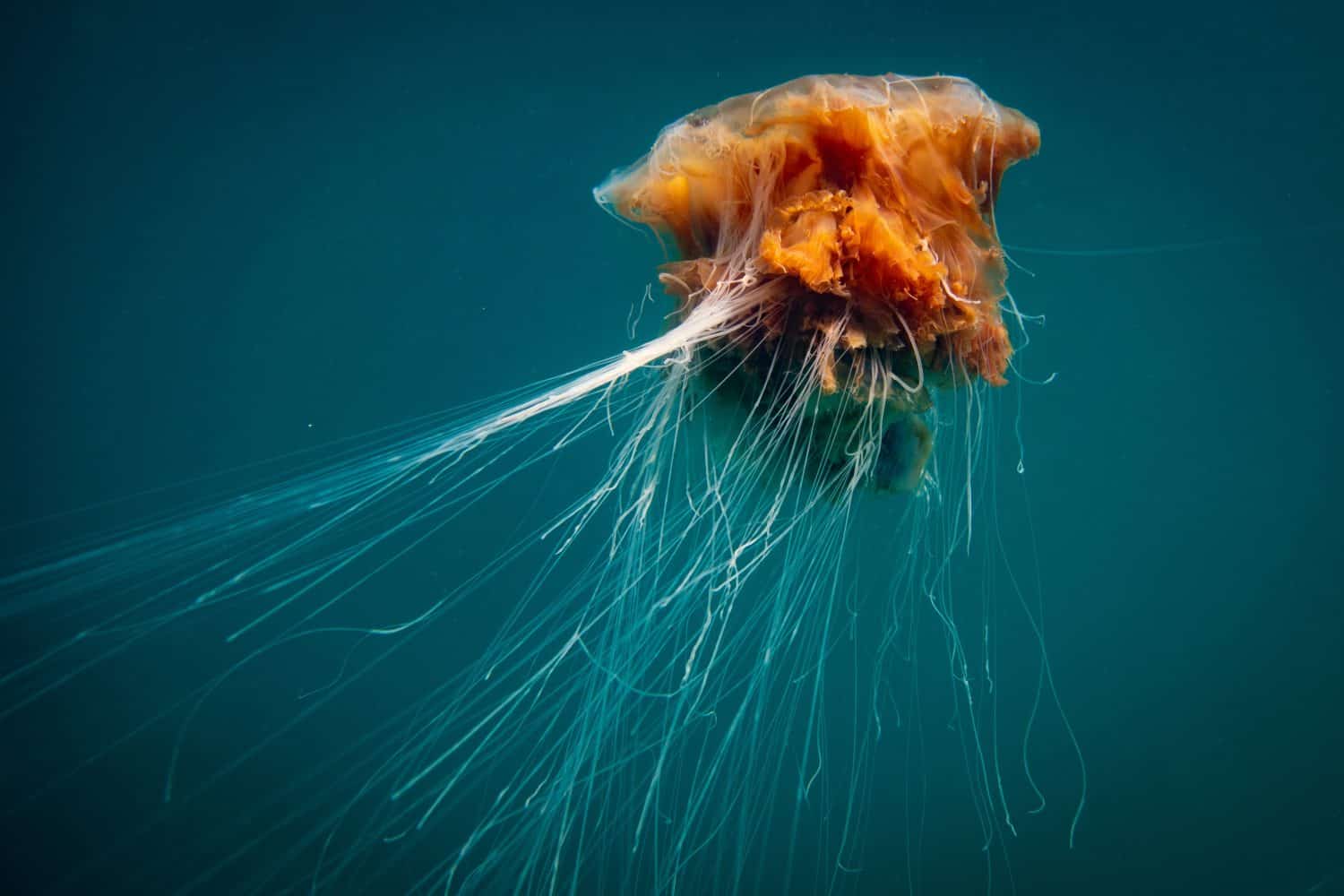
Despite people’s best efforts to avoid them, jellyfish stings are a surprisingly common injury that comes from wading in shallow ocean water. The term ‘jellyfish’ is general; in fact, there are over 11,000 cnidarian species capable of stinging, including corals, anemones, and various types of jellyfish. Cnidarians accomplish this using small stinging cells called nematocysts. These cells, which look and function like tiny harpoons with sharp, barb-like spines, remain in small sacs until the animal senses danger. This prompts the nematocysts to shoot out, stabbing threats within just milliseconds. This process is among the fastest mechanical actions in the animal world.
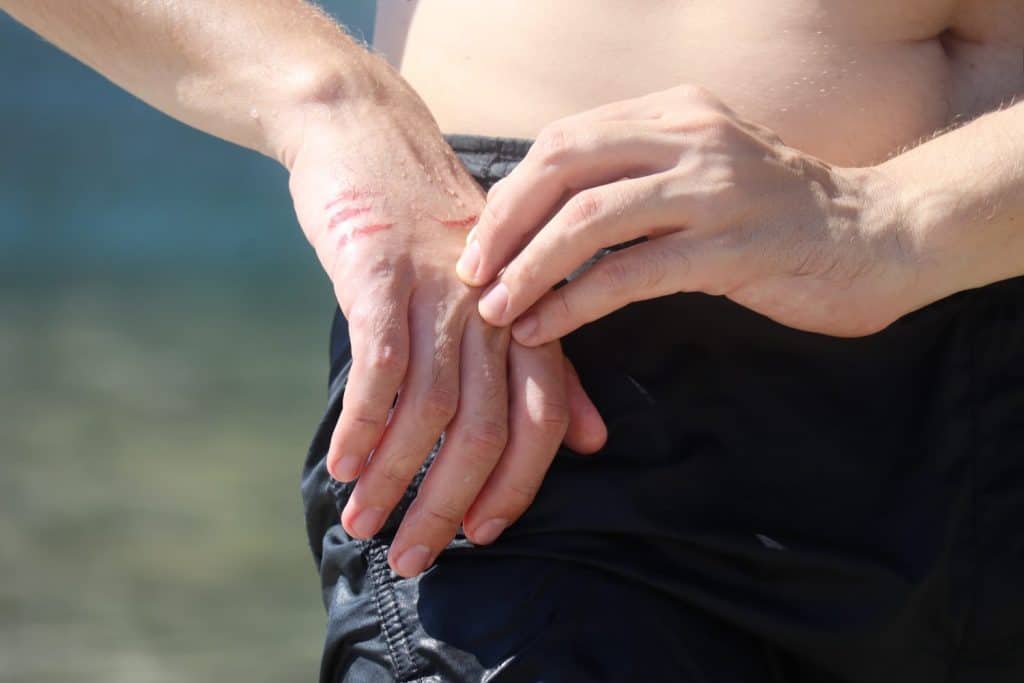
Most people stung by jellyfish feel an instant spike of pain and see red marks on their skin, followed by a lingering, throbbing feeling. Typically, jellyfish stings heal over the course of a few days or weeks. Less commonly, jellyfish stings can result in systemic illness. These cases manifest with symptoms like chest pain, skin blisters, and muscle cramps. They can also cause nausea or vomiting, difficulty swallowing, excessive sweating, and abdominal pain.
While most jellyfish stings are relatively harmless, some species can cause dangerous or even fatal health issues. Box jellyfish, for example, sting in such a manner that it can lead to death in minutes. Other box jellyfish, like Irukandji jellyfish found off the coast of Australia, produce delayed sting reactions that can lead to severe pain, cardiac arrest, and death. While alarming, such effects and stings are incredibly rare. The majority of jellyfish stings require minimal treatment.
Folk Remedy Mythbusting
Most jellyfish stings can be treated at home. However, the majority of folk remedies out there are either outright useless or actually harmful for healing. Perhaps the most famous (and dramatic) home remedy is urinating on the wound. This, however, is an old wives’ tale. The reasoning is that fresh urine will either counteract jellyfish venom or clean the wound. No scientific studies back this up, and peeing on a jellyfish sting will likely make it hurt worse than just leaving it alone.
There are plenty of other folk remedies, but all are ineffective, and some can even be harmful. Rinsing with freshwater, for example, can trigger unfired stingers and spread the sting to a larger area than what was originally affected. One unusual method—scraping the sting with a credit card—is even endorsed by some well-regarded healthcare organizations. This, too, can be harmful, as scraping applies pressure that may cause the stingers to release more venom into the skin. Coating the sting in shaving cream doesn’t work, either.
Other methods may sound promising, but they do little to actually heal the wound, even if they seem to provide temporary relief. These include rinsing stung areas with a mixture of seawater and baking soda. Another method involves rubbing the area with an ice cube before applying hydrocortisone cream.
What Actually Works

Vinegar followed by hot water remains an effective treatment for most jellyfish stings.
©masa44/Shutterstock.com
There’s no need for folk remedies when the scientific community has reached a clear consensus on the best home remedy: vinegar followed by hot water. That’s because vinegar usually contains between 4% and 6% acetic acid. This transforms the environment around nematocysts lodged in the skin, preventing them from releasing extra venom. Hot water helps break down the molecular structure of most jellyfish venom.
To properly treat a jellyfish sting with vinegar and hot water, first rinse the affected area with vinegar for 30 seconds or more. Then remove any remaining tentacles with tweezers. Once the area is clear, soak it with water at a temperature between 104 and 113 degrees Fahrenheit. Try to keep the area submerged in water for 20 to 45 minutes.
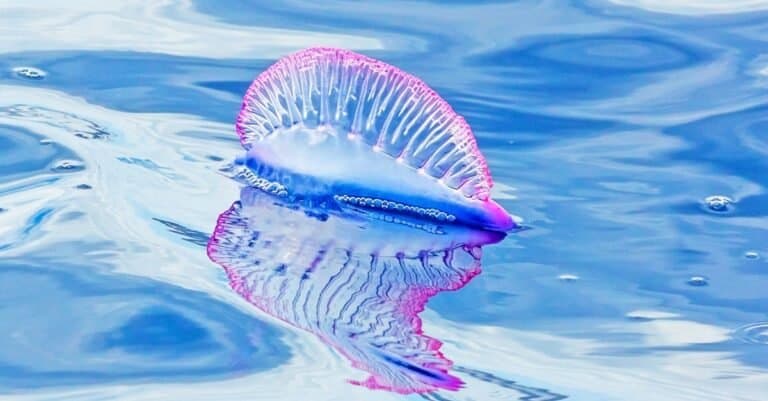
White vinegar is the best choice for this treatment, since the acetic acid concentration in homemade vinegar can vary. Subsequent hot water treatments should use water that is very hot but not scalding. While this treatment’s effectiveness has been studied for jellyfish found in the Indian and Pacific Oceans, it may be less effective for other jellyfish species. It’s important to be extra careful with Portuguese man-of-war jellyfish, as their stings should be treated with seawater rather than fresh water.