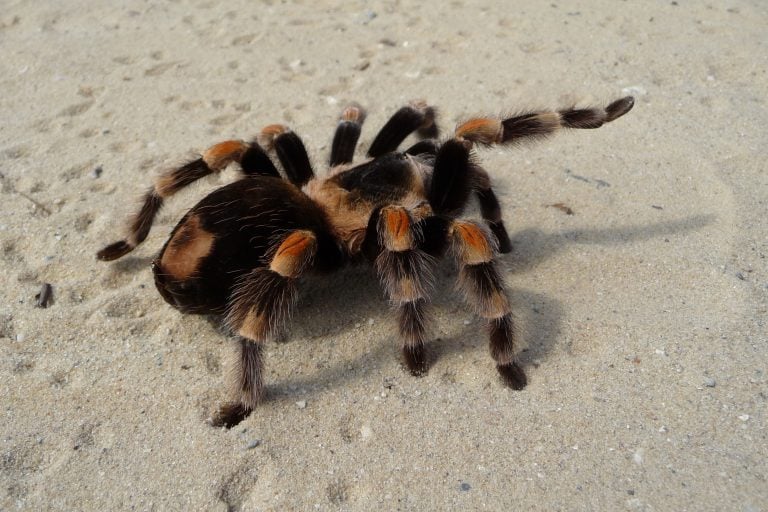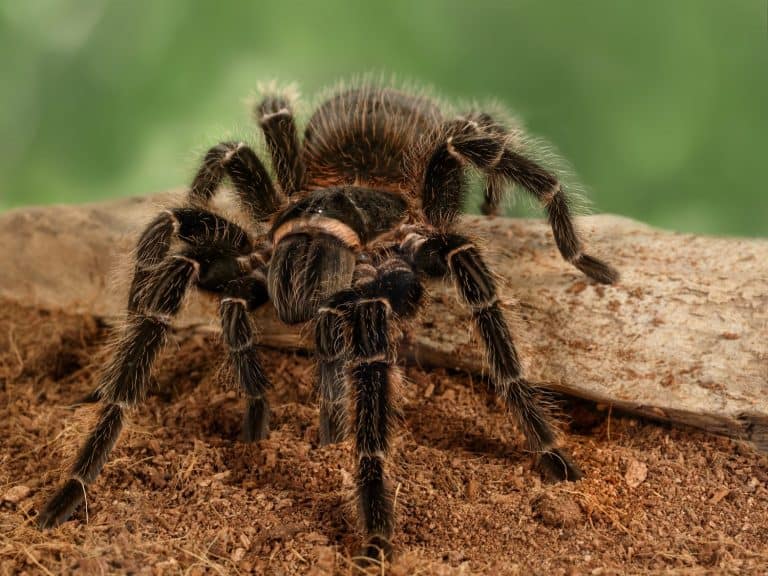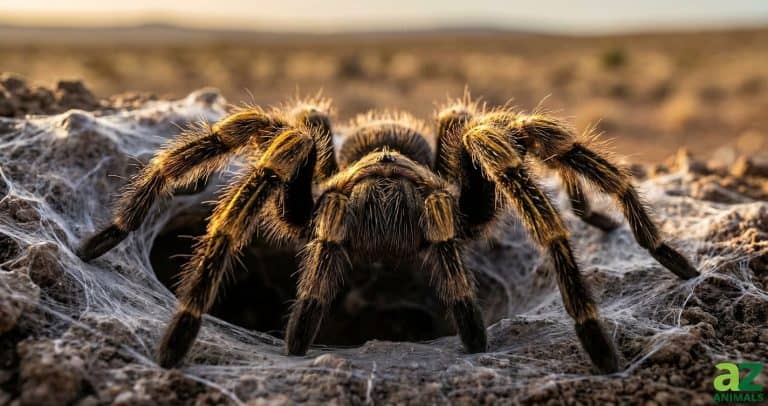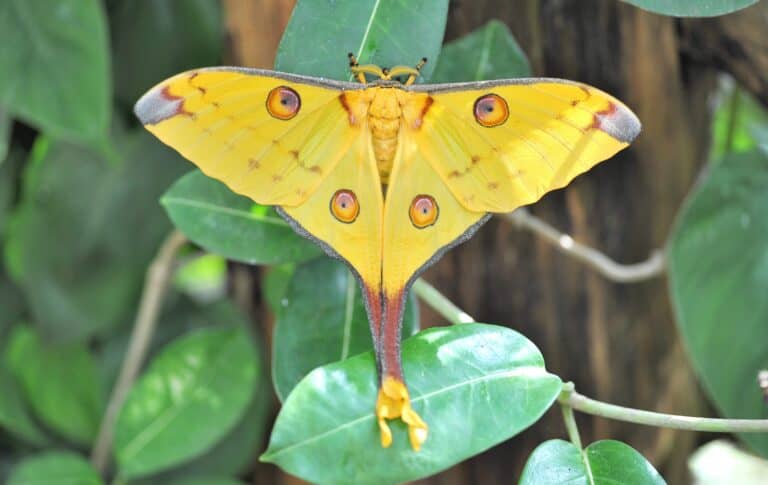

Is it a tarantula with wings? Do spiders actually fly? Is it time to find a new planet? These are just some of the reactions to a terrifying image of a so-called “flying tarantula” that left many people trying to figure out what the creature really was. The nightmare-inducing viral photo shows what appears to be a spider on a brick wall. It is hairy like a tarantula and has two feelers. So, are flying tarantula real?
Are Tarantulas With Wings Real?
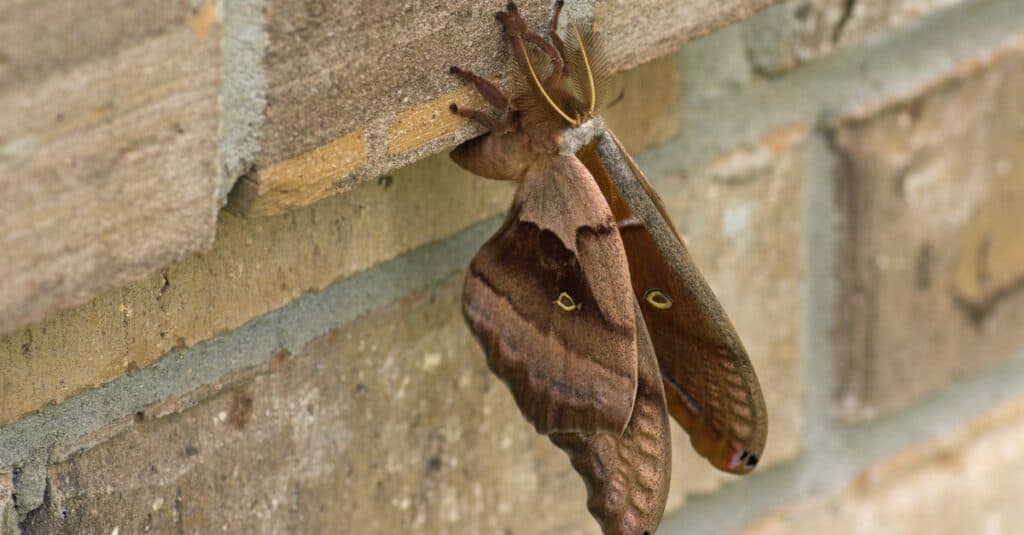
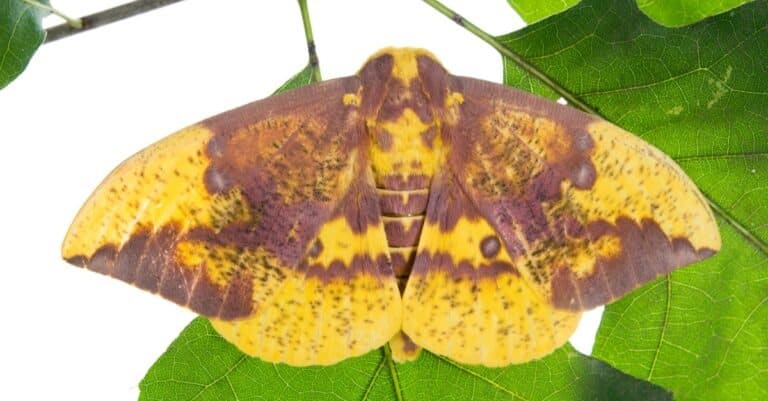
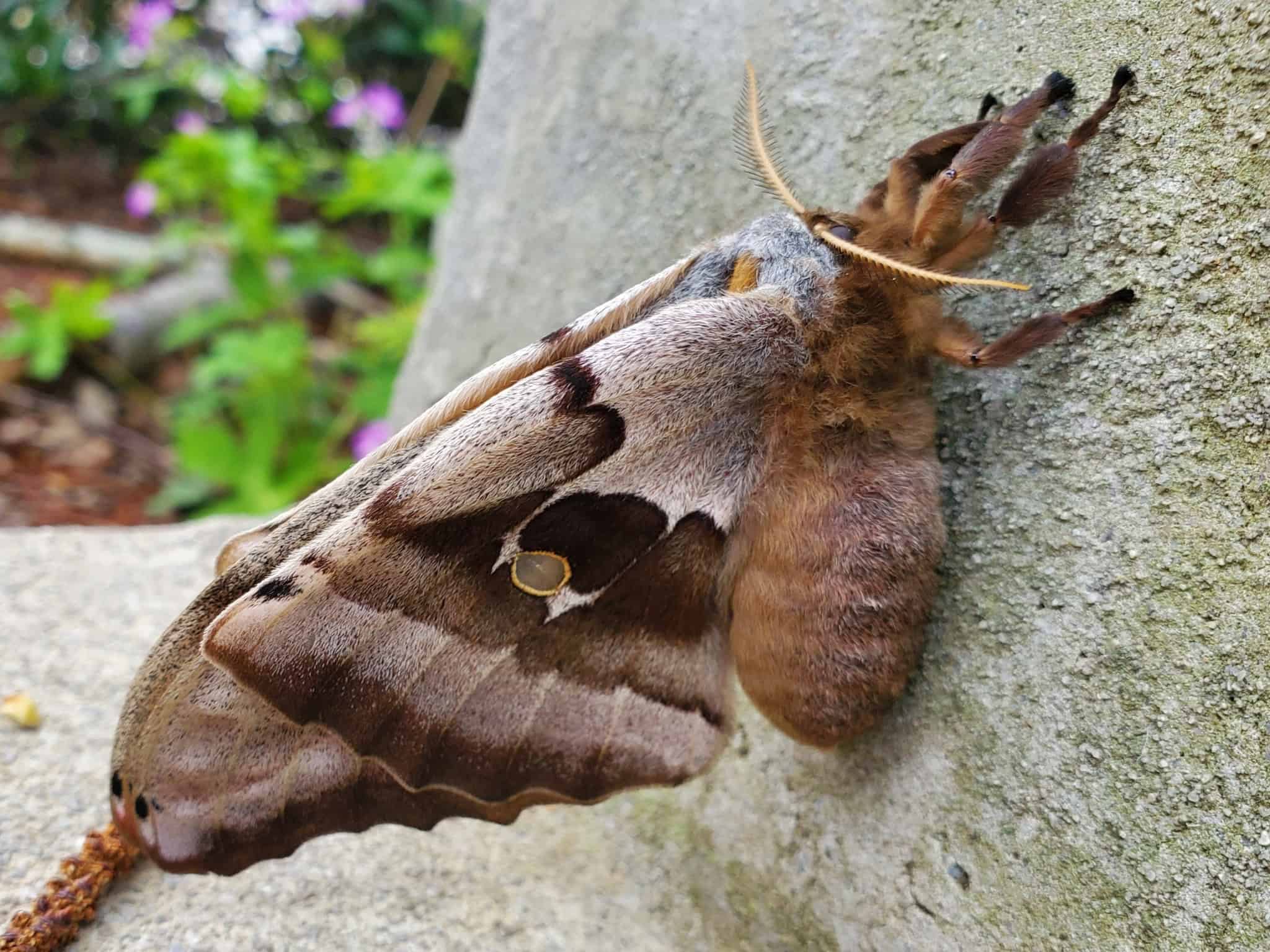
Polyphemus moths have stout, fuzzy bodies and legs, which can give them a tarantula-like appearance.
©Tom Franks/Shutterstock.com
The caption on the photo stated, “Antheraea polyphemus, basically a tarantula with wings.” However, flying tarantulas do not exist. In fact, no arachnid species has ever evolved wings. So, what is Antheraea polyphemus?
The insect captured in the viral images is one of the largest silk moths in the world, the polyphemus moth. These moths can be brown, reddish-brown, or tan. They have a small eyespot in the middle of each forewing and a much larger eyespot in the middle of each hindwing. Their body length can measure up to 2 inches, and they have a wingspan of nearly 6 inches. They also have stout, fuzzy bodies and legs, which can give them a tarantula-like appearance.
The Polyphemus Moth
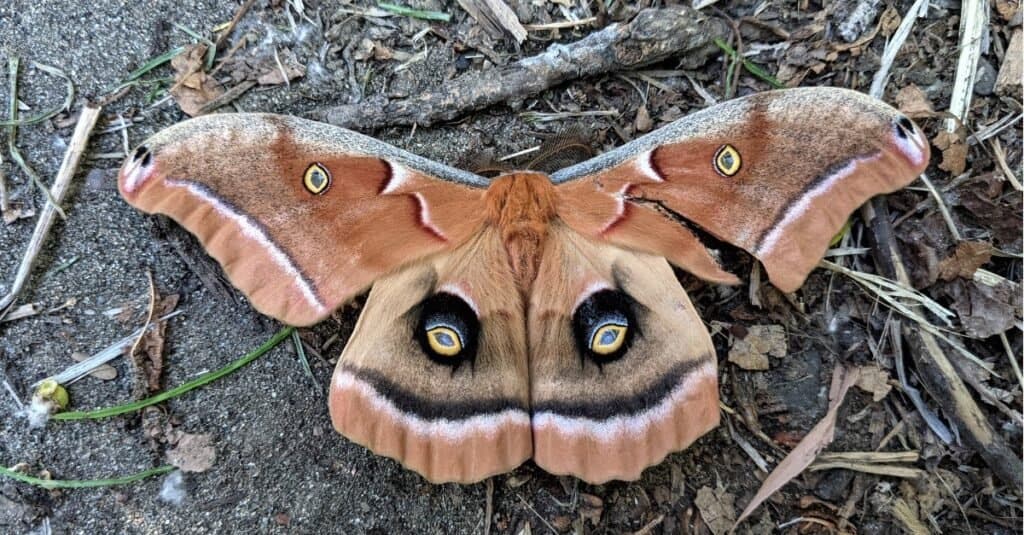
Polyphemus moths have a wingspan of nearly 6 inches.
©iStock.com/Mickilu
Polyphemus moths are endemic to North America, from southern Canada down to northern Mexico. They are commonly found in and around forests, as well as in orchards, wetlands, and suburban areas. They belong to the family Saturniidae, which includes giant silkworm moths and royal moths. These moths are nocturnal and are attracted to light. They can often be found resting on houses and in trees during the day.
The polyphemus moth is named after the giant one-eyed cyclops in Homer’s “Odyssey” because of the prominent yellow, blue, and black eyespots on each of its hindwings. Their eyespots are normally hidden by their forewings. When suddenly revealed in a defensive display, the eyespots draw a predator’s attention and may startle or confuse it, allowing the moth to escape.
Ballooning Spiders
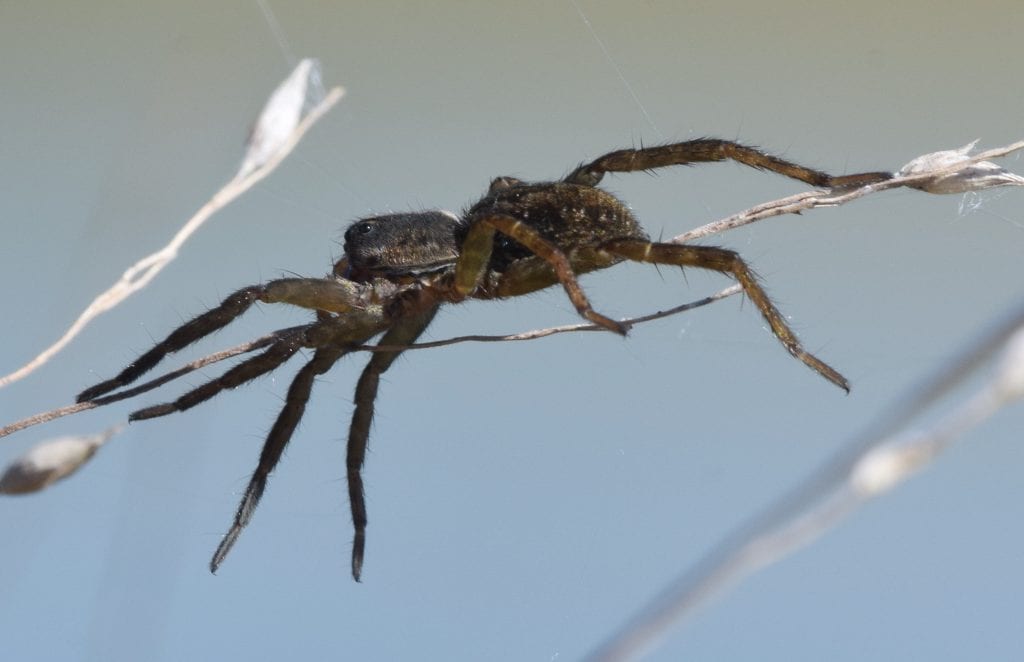
Spiders travel via silk strands to move to new areas.
©Andy Reago and Chrissy McClarren / CC BY 2.0 – Original / License
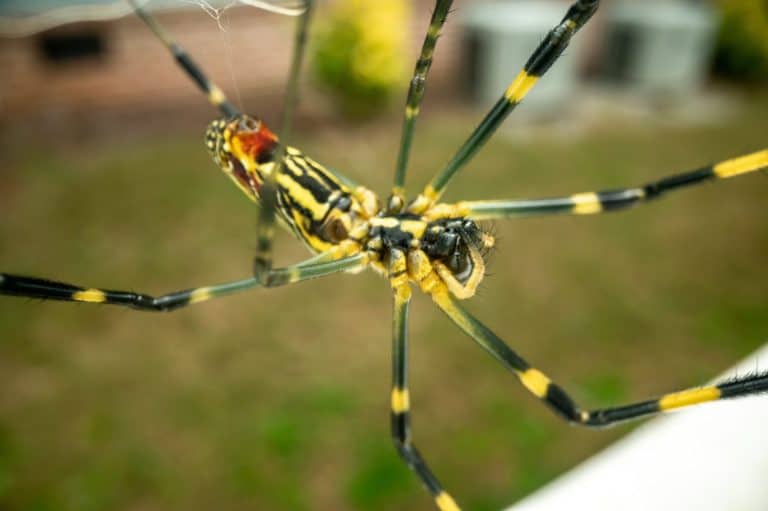
Flying spiders might be a myth, but some spiders can appear as if they are flying. Spider species such as orb weavers and crab spiders use a technique called ballooning to propel themselves into the air to find new habitats. The spiders face the wind and stand on the tips of their legs. Then they release silk threads into the wind.
Scientists previously believed that wind currents created a drag force that pulled spiders into the air and randomly blew them from place to place. However, researchers have recently discovered that spiders have the ability to read Earth’s magnetic field. Spiders can sense the correct time to release strands of negatively charged silk into the air so they react with the positively charged atmosphere around them. This creates a reaction that launches the spider up and out into the air.
Researchers also discovered that spiders release more silk depending on their size. Larger spiders require more silk to generate the reaction that allows for takeoff. Not only does the force give the spiders lift, but since all of the silk lines are negatively charged, they repel each other, which avoids entanglement. Ballooning can propel spiders miles into the air, allowing them to ride Earth’s electric fields and land hundreds of miles away.