
Quick Take
- That scorpion-like tail looks like a weapon, though its real purpose is something far more salacious. See the tail explained →
- Scorpionflies don't hunt. Instead, they exploit one of nature's most skilled predators using a fluid that sounds like it belongs in a chemistry lab. Discover the dissolving fluid →
- The mating ritual involves a gift so morbid it reframes everything you think you know about insect courtship. Explore the grim gift ritual →
The scorpionfly (order Mecoptera) is one of nature’s most bizarre insects. Despite its intimidating name, the scorpionfly is completely harmless to humans. So why is this insect so feared by people who encounter it?
Although it appears menacing, the scorpionfly poses no threat to humans. However, it has quite a reputation among its much smaller prey. This insect is not only strange in name but also displays unusual traits that leave most people scratching their heads or running in the other direction. That pincer-like tail is used for something far more salacious than stinging.
The Odd Life of a Scorpionfly
Scorpionflies hatch from eggs laid in moist soil, which makes swamps the perfect places to find them. They can also be found in damp leaf litter, which provides humidity and much-needed protection. When these tiny larvae hatch, their true nature comes out. Even from a young age, they feed on dead and decaying organic matter in the soil from which they were born.
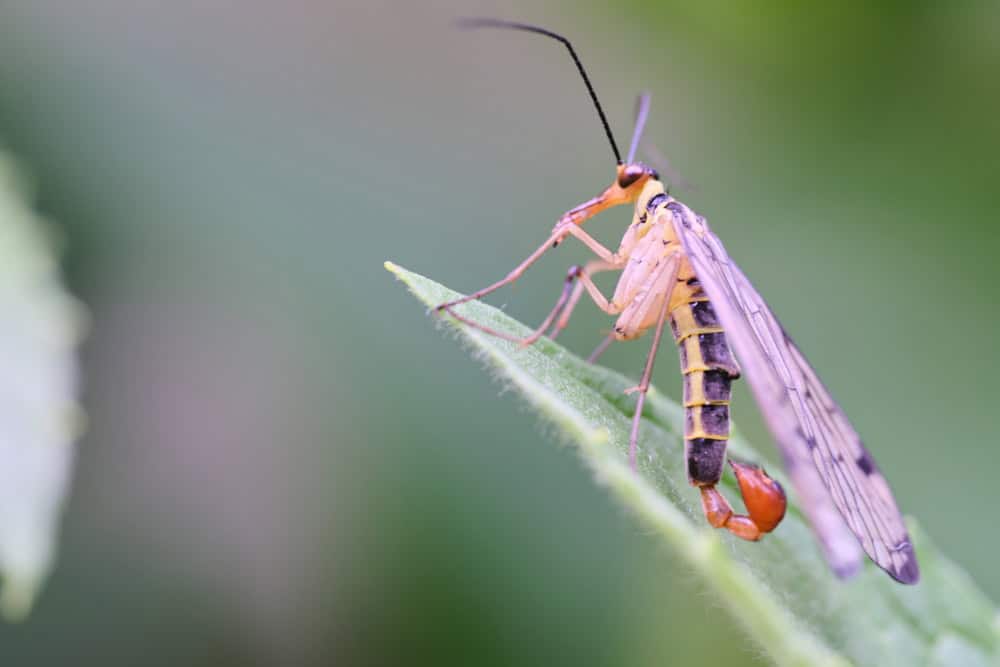
There are approximately 600 known species of scorpionflies worldwide, with an estimated 85 living in North America.
©Wirestock Creators/Shutterstock.com
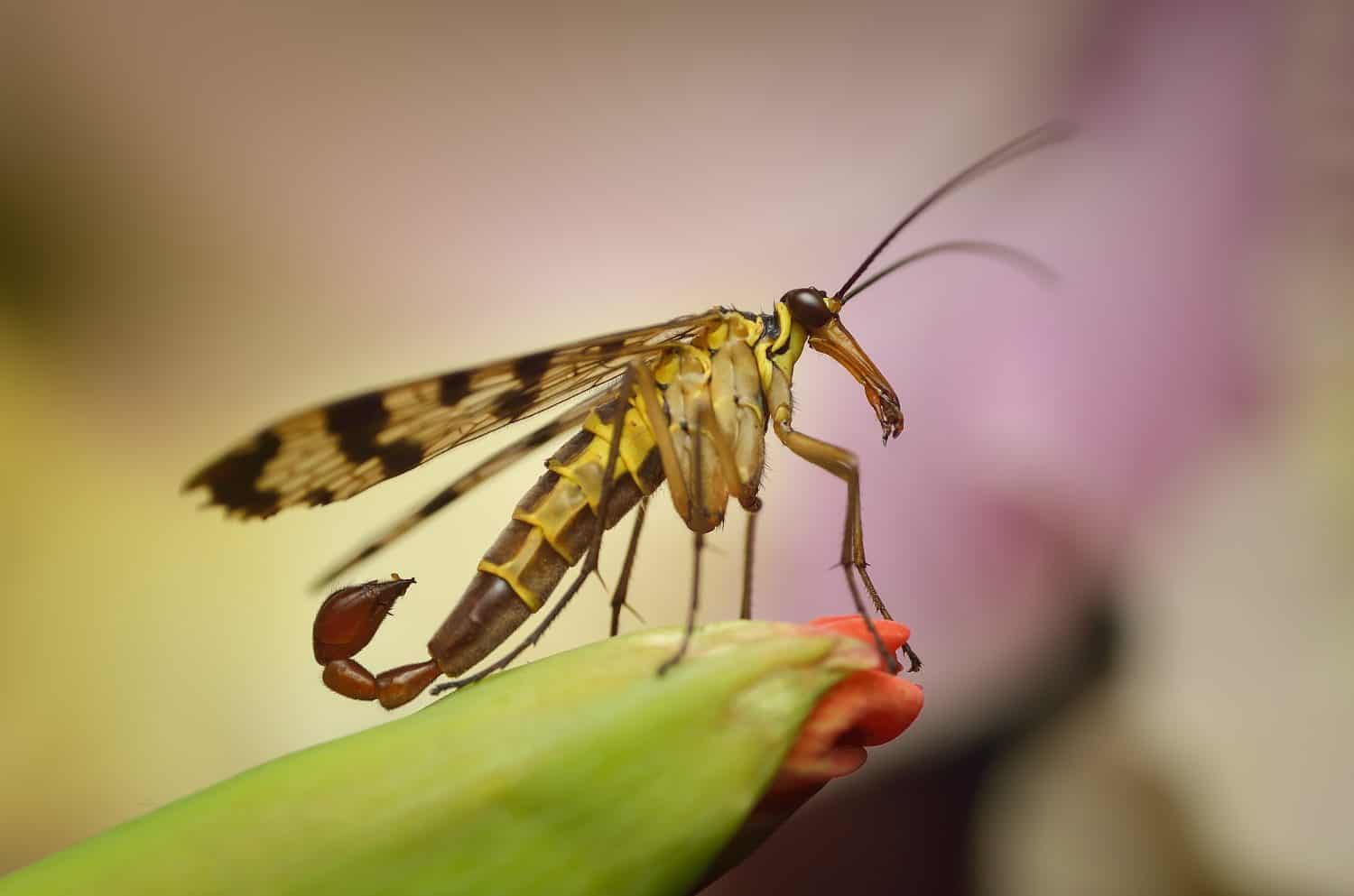
After a few weeks, the larvae are ready to pupate. Like caterpillars undergoing metamorphosis, scorpionfly larvae remain deep in the ground until they reach their adult form. When fully mature, the adults emerge from the ground with brand new wings, large antennae, and, for males, a scorpion-like tail. Instead of this unique pincer, females have cerci, which are two pointed appendages at the base of their abdomens.
Interestingly, scorpionflies are closely related to fleas but also share genetic DNA with butterflies, moths, and flies. Contrary to their appearance, they’re not in any way related to scorpions or even arachnids. The tails on males are harmless, and the mouths of scorpionflies are so small that biting is out of the question. They are docile by nature and typically don’t want anything to do with humans or even live prey.
Nature’s Thieves
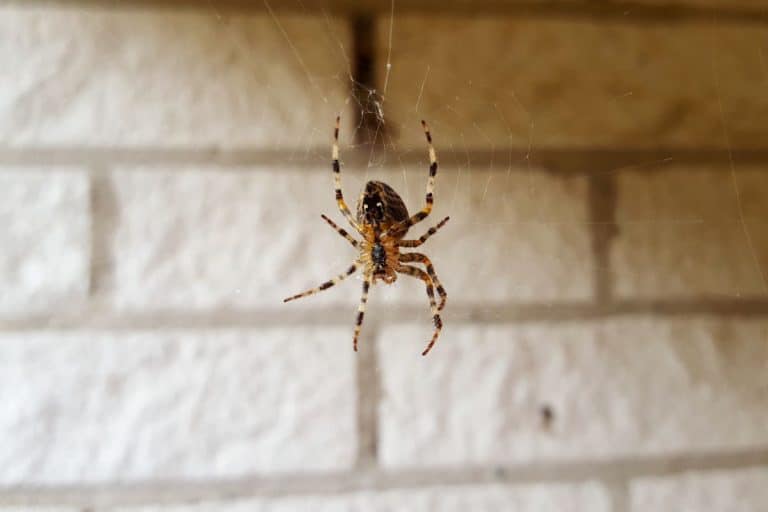
The scorpionfly might be built to look like a skilled predator among insects, but it’s far from it. Rather than actively hunting prey, this species prefers to attack stealthily. It prefers to work smarter, not harder. Scorpionflies practice kleptoparasitism, which happens when animals steal food from others. Specifically, in this case, spiders.
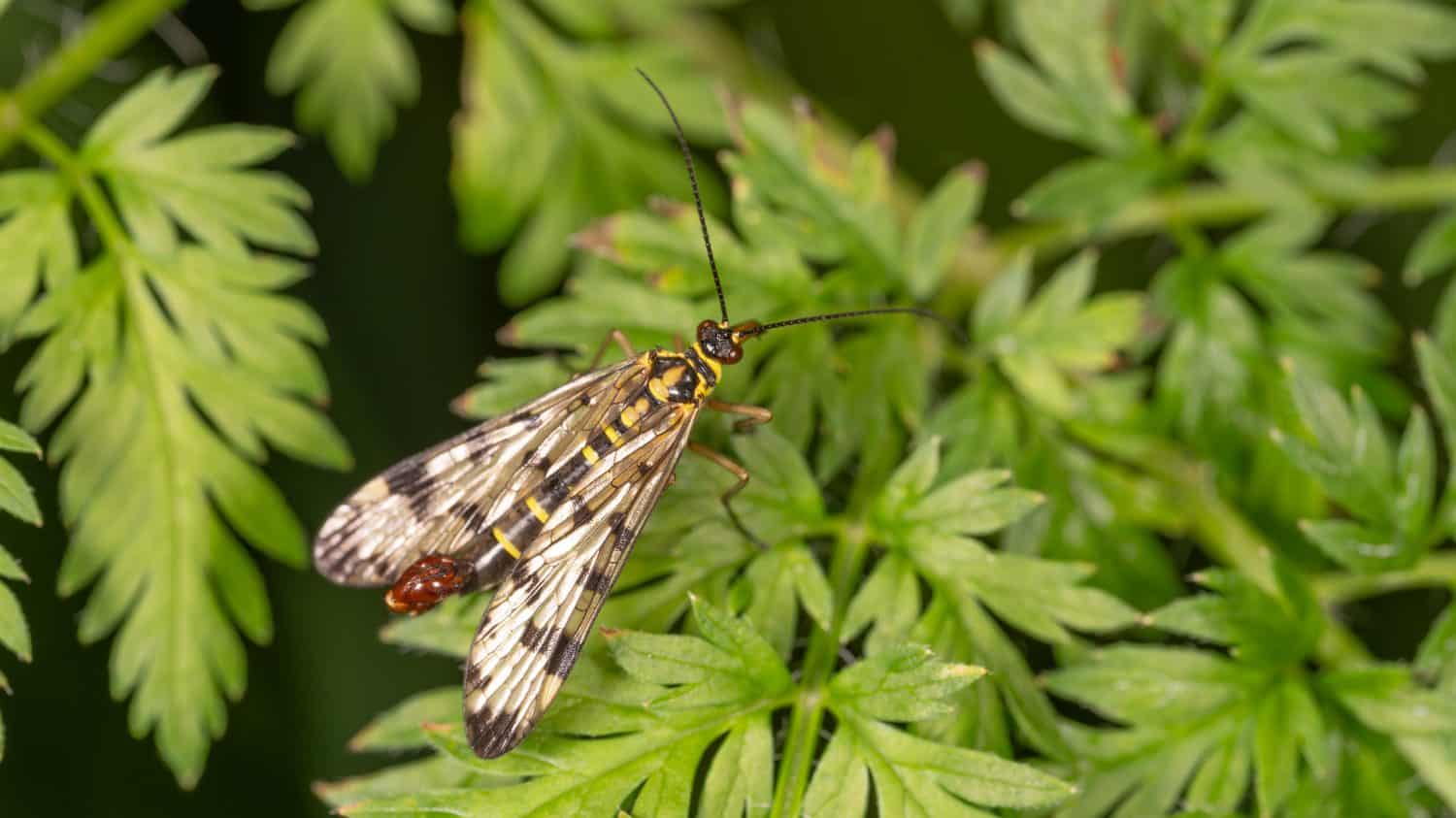
Only male scorpionflies have long tails that resemble stingers, but are completely harmless.
©Sebastian Czech/Shutterstock.com
When a scorpionfly finds the web of a particularly active arachnid, it leverages its lightweight body. This allows it to tiptoe across each strand. Sensing the prey that’s been wrapped like a present, the insect then regurgitates a special fluid from its mouth to dissolve the silk. This fluid is also strong enough to dissolve small prey, which is how the scorpionfly consumes it after breaking in. Thankfully, the acid-like fluid also doubles as a weapon that some scorpionflies have been known to fling at spiders defending their webs.
However, this isn’t the strange part. Scorpionflies use the corpses of their prey as one of their nuptial gifts in one of the most bizarre mating rituals of any insect.
A Morbid Wedding Party
Not only are scorpionflies skilled at stealing prey, but this behavior is also an important part of their mating rituals. To attract females, males emit pheromones and make vibrations with their wings. During the mating ritual, males present a female with the hollowed-out corpse of the insect they’ve stolen. In typical fashion, the larger the prey, the more impressed the female will be. And if a corpse isn’t available, some males offer a ball of nutrient-rich saliva, which is consumed by the female.
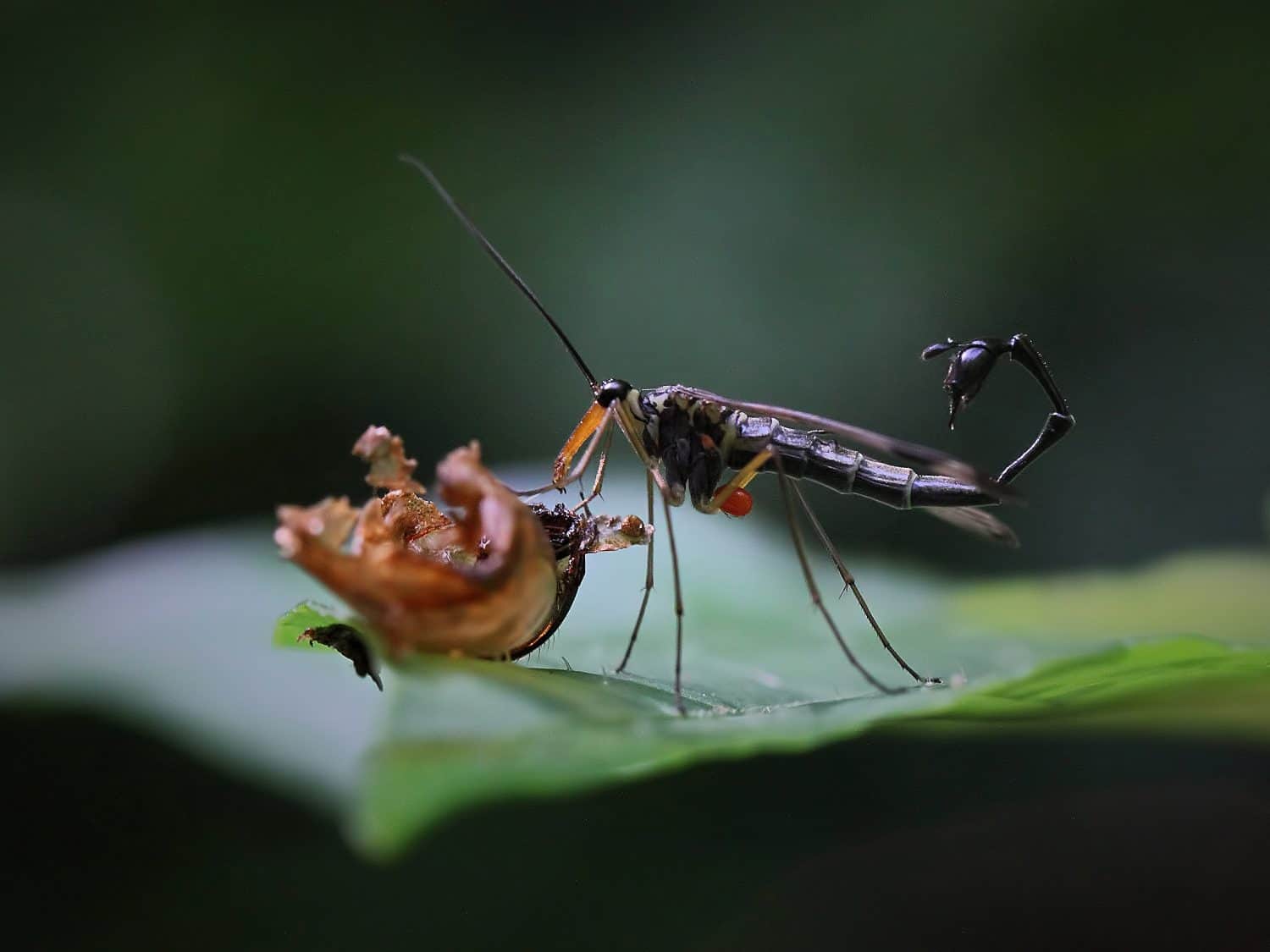
Scorpionflies are sneaky and steal food from the webs of spiders, many times without the spider knowing.
©Char.Da/Shutterstock.com
However, for females, this show of affection is merely a distraction. While the female is occupied with the prey or saliva, the male seizes the opportunity to mate. He uses his stinger-like tail—which is harmless to humans—to hold her in place during mating. These tails are actually enlarged genitalia used exclusively for reproduction. Males may also use this tail to snap at other males while defending territory.
Finding a mate is highly competitive among scorpionflies, and not all males are skilled hunters. Those who are less successful have even found ways to trick other males into ‘gifting’ them meals, though this deceptive behavior is still being studied. By emitting the same pheromones as females, some male scorpionflies trick other males into dropping food for them.
It turns out that these insects, while intimidating in appearance, are actually quite intelligent—albeit in a rather morbid way.