Quick Take
- One tiny detail in a jaguar's coat separates it from its famous lookalike.
- Protect this one cat, and dozens of other species quietly get saved too.
- Ranchers sometimes make a fatal call about jaguars, and often without proof.
The jaguars that are found in the rainforests of South and Central America are among the most gorgeous and powerful predators in the world. These beautiful cats are considered spotted royalty because they help maintain a delicate balance between predators, prey, and surrounding ecosystems.
Though we should appreciate Jaguars every day, their importance is highlighted every November 29th, on International Jaguar Day. This day raises awareness about the threats facing these majestic felines. Let’s learn more about jaguars and their impact on their surrounding ecosystem.
The Largest Cats in the Americas
Jaguars (Panthera onca) are the largest wild cats native to the Americas and the third-largest cat species in the world, surpassed only by tigers and lions. The adult males are astonishing, often weighing between 120 and 250 pounds. Females are generally smaller, but both sexes possess muscular bodies, powerful jaws, and remarkable hunting abilities.
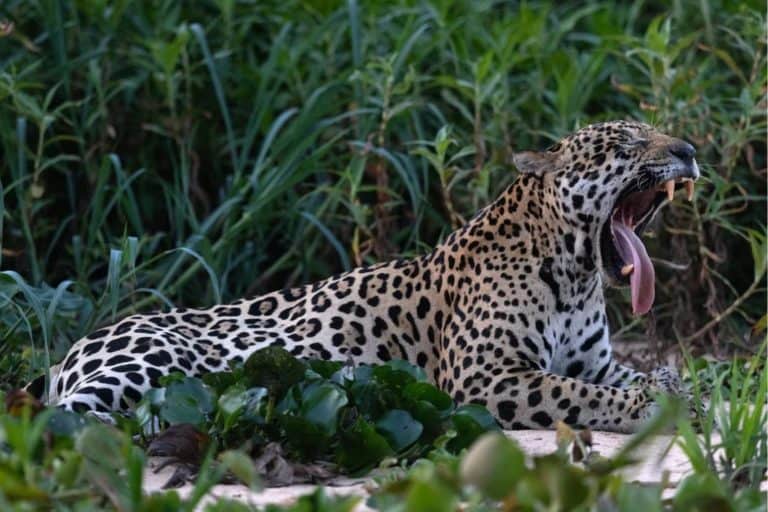
One of the jaguar’s most recognizable features is its beautiful spotted coat. Its golden-yellow fur is covered with dark markings called rosettes, many of which contain smaller spots in their centers. These markings distinguish jaguars from leopards, which have similar-looking coats but generally lack the central spots within their rosettes. Jaguars also possess one of the strongest bites relative to body size among big cats. Their powerful jaws allow them to pierce tough hides and even crush turtle shells.
Historically, jaguars inhabited a vast territory stretching from the southwestern United States through Mexico and Central America into South America. Today, their primary populations are concentrated in tropical forests, wetlands, and other relatively undisturbed habitats from Mexico to northern Argentina.
Jaguars Help to Regulate Animal Populations
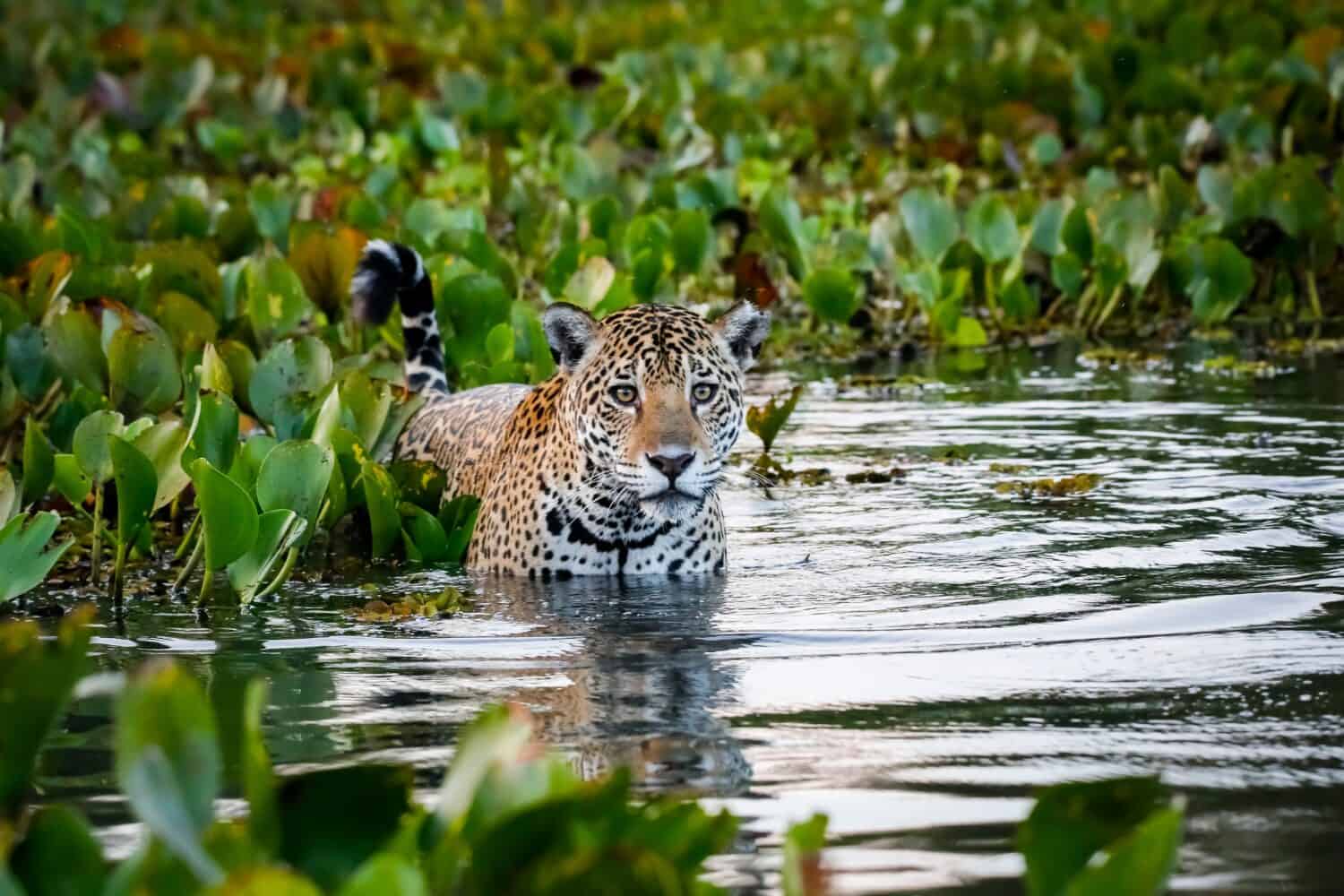
These wild cats are famously effective hunters, and that population control helps the ecosystem.
©Bildagentur Zoonar GmbH/Shutterstock.com
Jaguars are apex predators, meaning they occupy the top of their food chains and generally have no natural predators. This position gives them an important ecological responsibility: helping regulate other animal populations to maintain a healthy balance. Jaguars hunt a remarkable variety of prey, including deer, peccaries, capybaras, armadillos, and reptiles. By feeding on these animals, they help influence prey populations and behavior, which can affect vegetation and other components of the ecosystem.
For example, when herbivore populations become unusually large, excessive grazing or browsing can damage young trees and other plants. Predators can help limit these pressures by consuming prey and influencing where prey animals spend their time. That said, keep in mind that jaguars don’t single-handedly control entire ecosystems, but they’re a big part of the solution.
The spotted jaguar of the Americas is considered an umbrella species, meaning conservation measures designed to protect it can benefit numerous other animals sharing its habitat. In this way, protecting jaguars can help preserve entire ecosystems.
Many Forces Threaten Jaguar Populations
Sadly, many threats continue to hurt jaguar populations year after year. Luckily, many organizations worldwide are working to address them.
- LC Least Concern
- Near Threatened NT
- VU Vulnerable
- EN Endangered
- CR Critically Endangered
- EW Extinct in the Wild
- EX Extinct
Population trend: Decreasing
Habitat Destruction
Although jaguars are impressively strong creatures, they still need a suitable habitat, and unfortunately, it’s disappearing. Deforestation, agricultural expansion, mining, and infrastructure development are transforming landscapes throughout Latin America.
As forests disappear, jaguars lose hunting grounds, breeding territories, and access to natural prey. Habitat fragmentation creates another serious problem. Even when portions of forest remain, roads, farms, and settlements often divide them into isolated patches. A jaguar living in one forest fragment may struggle to reach another suitable habitat. This becomes particularly concerning when animals need to find mates or establish new territories.
Human-Jaguar Conflict
Another challenge in jaguar conservation involves conflicts between predators and livestock owners. As humans settle into areas that are also jaguar habitats, encounters between people and these powerful animals become more common.
Jaguars naturally hunt wild animals, but they sometimes prey on cattle, sheep, and other livestock, particularly where natural prey has become scarce or domestic animals are easily accessible. For ranchers who depend on livestock for their income, losing even a single animal can create significant financial hardship. Sadly, these losses sometimes lead to retaliatory killings. Jaguars may be shot, trapped, or poisoned by people attempting to protect their animals. In some cases, jaguars are killed simply because people see them near livestock, even without proof they intended to attack.
Improved livestock management offers potential solutions. Some conservation programs are actively working to promote better fencing, livestock insurance, and financial incentives that make coexistence more practical for ranchers.
Poaching and the Illegal Wildlife Trade
As is often the case with endangered species, poaching also contributes to the declining jaguar population.
Illegal hunting and wildlife trafficking continue to threaten jaguar populations. This was a major issue during the twentieth century, when jaguars were heavily hunted for their beautiful spotted pelts, which were sold internationally for clothing and luxury products. International trade restrictions introduced under the Convention on International Trade in Endangered Species of Wild Fauna and Flora (CITES) have helped reduce the commercial trade in jaguar skins. However, illegal trafficking has not stopped entirely.
Today, jaguars are sometimes killed for their teeth, claws, bones, and other body parts, which may be sold as jewelry, ornaments, or products associated with traditional medicinal beliefs. Combating these activities requires coordinated law enforcement, stronger monitoring, and cross-border cooperation.
Recent initiatives aim to help stop poaching. In July 2026, the Convention on Migratory Species adopted a decision encouraging jaguar-range countries to strengthen efforts against illegal killing and trade while improving habitat protection and coexistence programs.
Wildlife Corridors Offer a Path to Survival
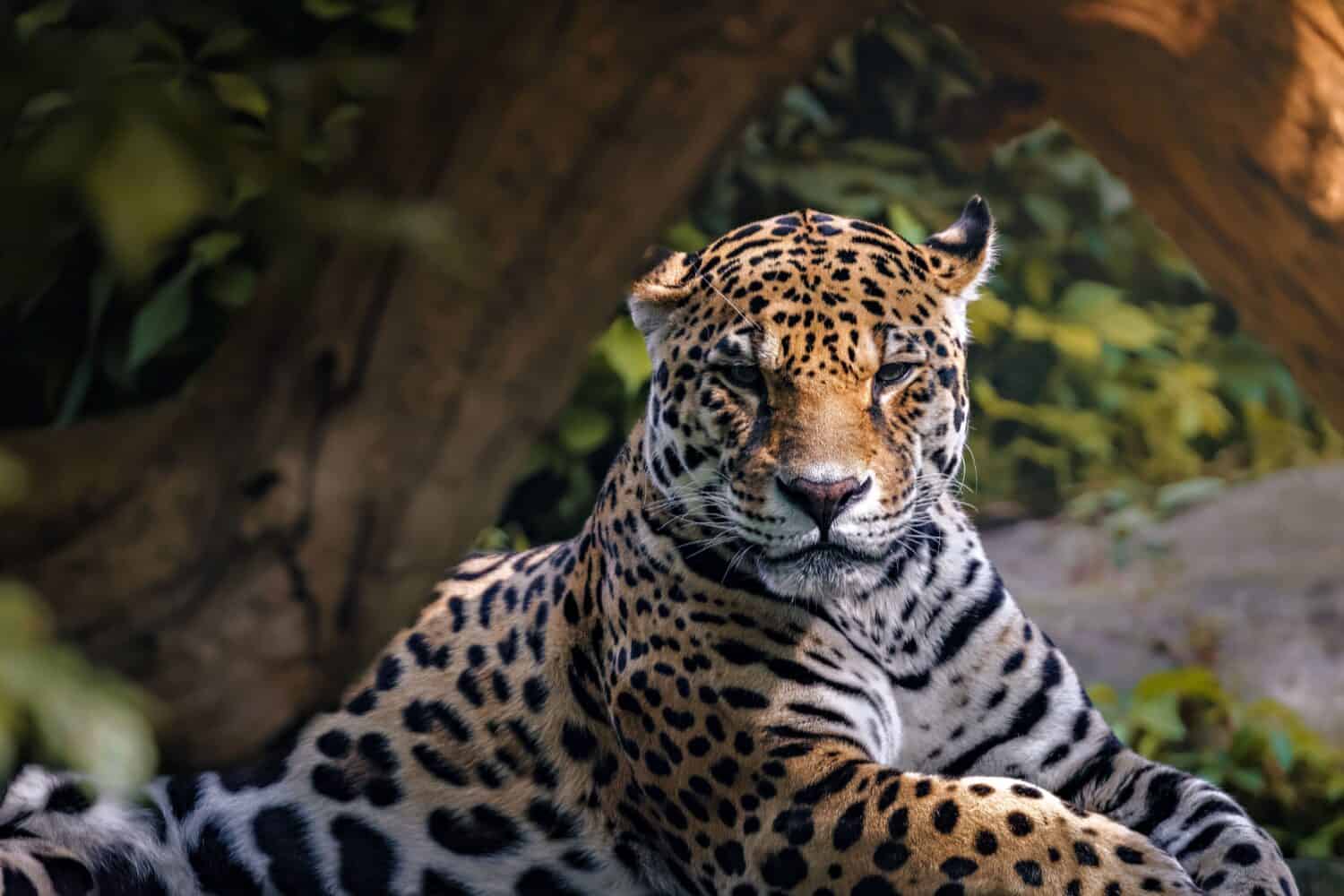
We have the right to protect the gorgeous spotted royalty of our jungles.
©Wirestock Creators/Shutterstock.com
In addition to battling the illegal jaguar trade, initiatives also protect our spotted royalty through wildlife corridors. These corridors are connected stretches of suitable habitat that allow animals to travel between protected areas without encountering many dangerous threats.
One of the biggest proponents of this idea is the conservation organization Panthera. The folks there are working hard on what they call the Jaguar Corridor Initiative, which seeks to maintain connections between jaguar populations across approximately 6 million square kilometers of their range.
Rather than focusing exclusively on isolated national parks, the initiative recognizes that jaguars must be able to move across broader landscapes, including areas populated by people. Wildlife corridors can include forests, riverbanks, private lands, and other habitats that provide relatively safe passage.
International cooperation matters because jaguars do not recognize national borders. For more information, look into the Jaguar 2030 Conservation Roadmap for the Americas, launched in 2018. This program aims to strengthen cooperation among governments and conservation organizations with a plan to secure 30 priority jaguar landscapes by 2030.
- 2018 Jaguar 2030 Conservation Roadmap launched The program aims to strengthen cooperation among governments and conservation organizations.
- Jul 2026 Convention on Migratory Species adopts a decision It encourages jaguar-range countries to strengthen efforts against illegal killing and trade while improving habitat protection and coexistence programs.
- 2030 Target: 30 priority jaguar landscapes secured The roadmap’s plan is to secure 30 priority jaguar landscapes by 2030.
Remember Our Spotted Royalty During International Jaguar Day
These powerful and majestic wild cats are in trouble, so use International Jaguar Day as inspiration to support conservation groups in their efforts to save them. If people in countries across the Americas get on board, we can make a world of difference and help Jaguars thrive again.