
Quick Take
- Maintaining 50 females requires alpha bulls to survive a season at 5,000 pounds.
- A 3-month period of total fasting creates significant weight loss and physical injuries for bulls.
- The 2026 mating season creates an overlap between birthing and breeding on California beaches.
- Experts at San Simeon tracked 4,000 pups to predict the success of the current rookery season.
Much of the eastern United States is currently undergoing a massive polar vortex, with another one expected to follow. Meanwhile, California basks in the sunshine. These conditions set the stage for one of the most boisterous and chaotic scenes in the animal kingdom. Each year, the normally peaceful beaches of the West Coast become battlegrounds for elephant seals during their peak mating season.
In the late winter, massive elephant seals descend upon several beaches in California, including Año Nuevo and San Simeon. Some of the males—bulls weighing up to 2.5 tons—do everything in their power to secure territory and establish mating harems. According to experts, 2026 will bring something of a baby boom for elephant seals. This is a welcome improvement for a population that is recovering after years of living under threat, even though the stakes are high. For the curious onlooker, elephant seal mating season provides a true spectacle of biological bloodsport. Let’s learn more about this unique season, what it means for elephant seals, and how you can watch for yourself.
The Ringleader
Elephant seals spend at least 90% of their lives underwater. Once a year, however, they emerge from the waves and set up shop on several California beaches. While both male and female elephant seals gather on these beaches, it is the bull elephant seals that run the show. Some of these bulls—weighing 4,000 pounds or more—turn these tranquil beaches into battlegrounds.
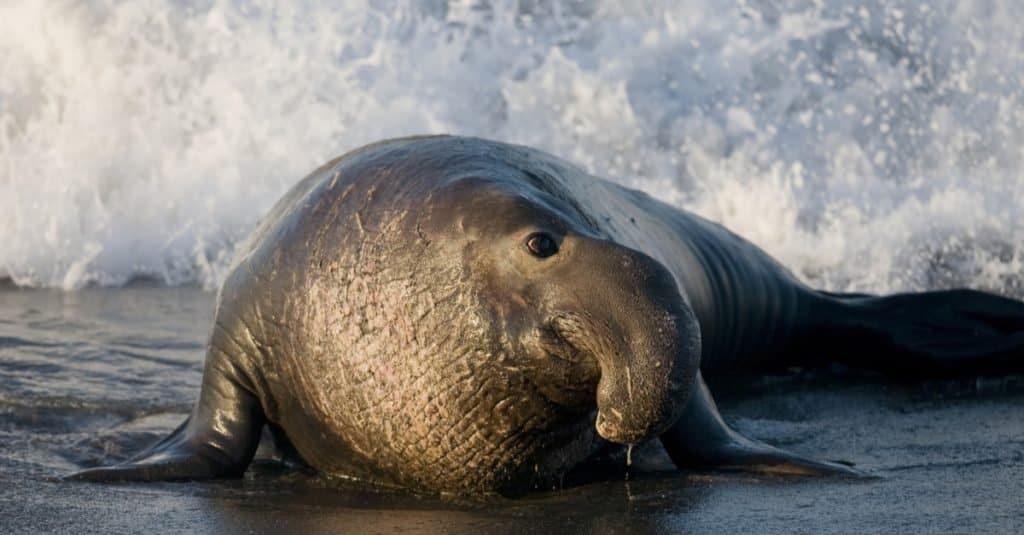
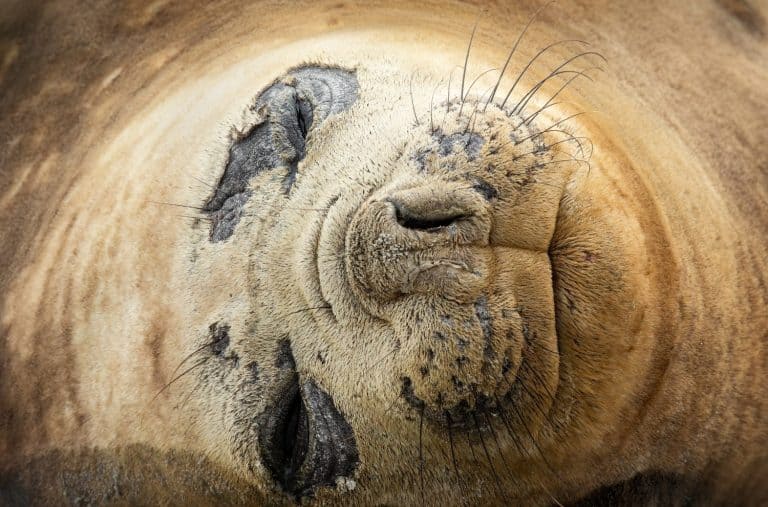
Bull elephant seals have large appendages on their faces called proboscises that they use to produce loud, metallic, resonating sounds.
©creativex/Shutterstock.com
Like many species, elephant seals have a winner-takes-all approach to mating. The strongest bulls, suitably called alpha bulls, have one goal in mind: to build a harem of up to 50 females and mate with them. However, there is tough competition, so elephant seal bulls must fight each other to keep their harems.
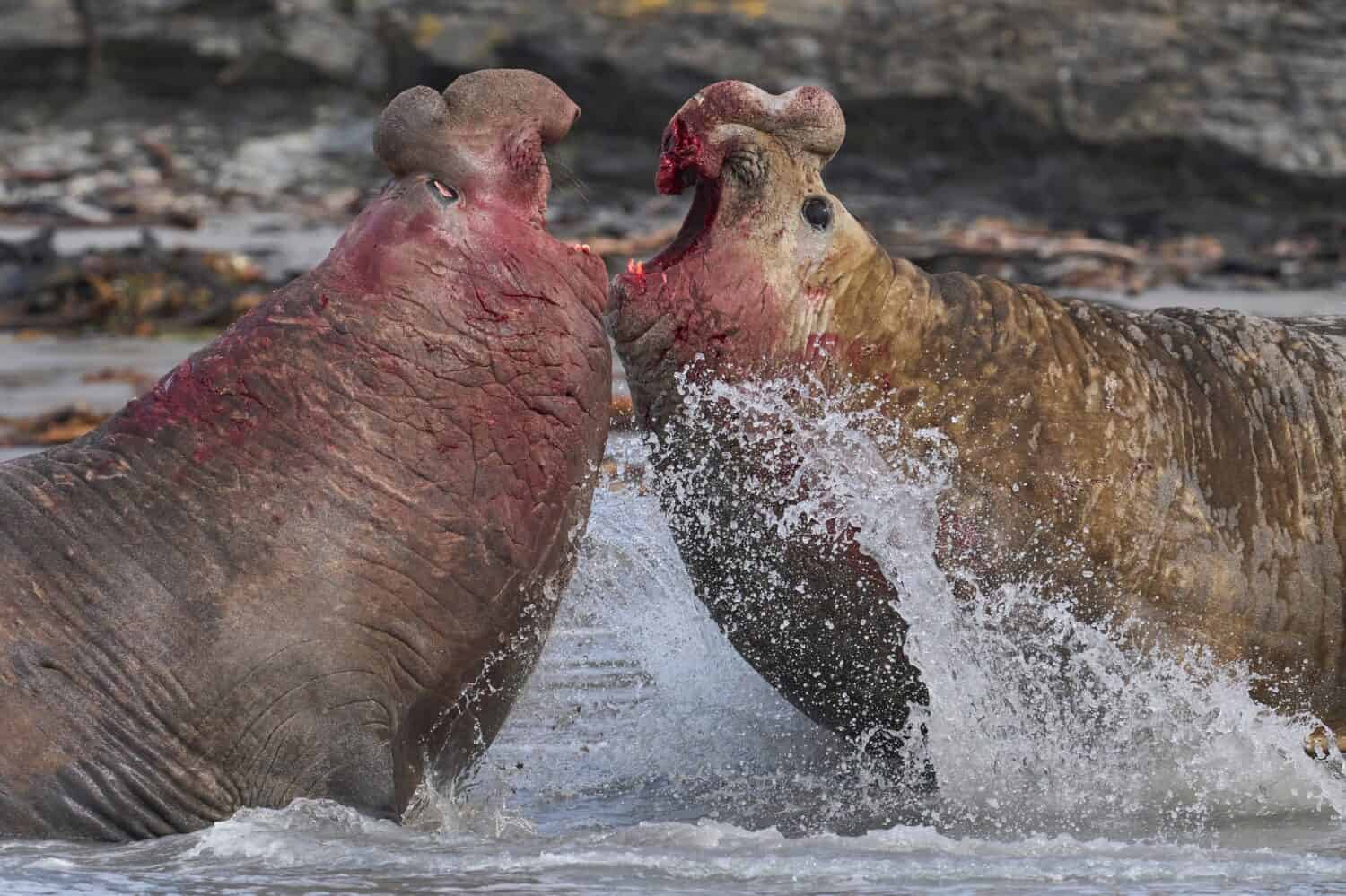
Each bull has an elephant trunk-like proboscis that he uses to produce metallic, resonating sounds that vibrate through the sand. If that fails to deter an approaching male, the defending bull will rear up on his back fins to show off his size and his calloused chest. If his foe continues to approach, the two bulls engage in vicious, violent combat. They slam their bodies into each other, using their sharp teeth to bite at each other’s necks and chests. The goal isn’t necessarily to kill, but to dominate completely. As such, these battles can last for hours or until both bulls are completely exhausted. However, a bull can acquire a harem and maintain it through each onslaught.
Whatever It Takes
It’s hard to overstate just how much effort bull elephant seals put into acquiring a harem. For example, bulls do not eat any food for the entire three-month mating season. Instead, they rely entirely on their blubber reserves for energy, spending the rest of the time positioning or fighting. Even the most dominant males will sustain injuries and lose considerable weight throughout the mating period.
Since these creatures only come ashore once or twice a year and females have an 11-month gestation period, the mating and birthing seasons practically coincide. This results in a flurry of activity on these beaches: males are fighting for breeding rights, and females are raising elephant seal pups. At a certain point, most pups will be left to fend for themselves. They will have to learn to hunt and swim before returning to the beach in a year or so to take part in the gladiatorial contests.
According to William Kneeland, with the nonprofit Friends of the Elephant Seal, the first pup of the season was born in mid-December. He told a reporter with KCBX, “January is the busiest month for birthing, and so we expect to see quite a few births this winter. Last winter at the elephant seal rookery in San Simeon, there were about 4,000 pups born, and we anticipate about the same number this year.”
Where to Watch
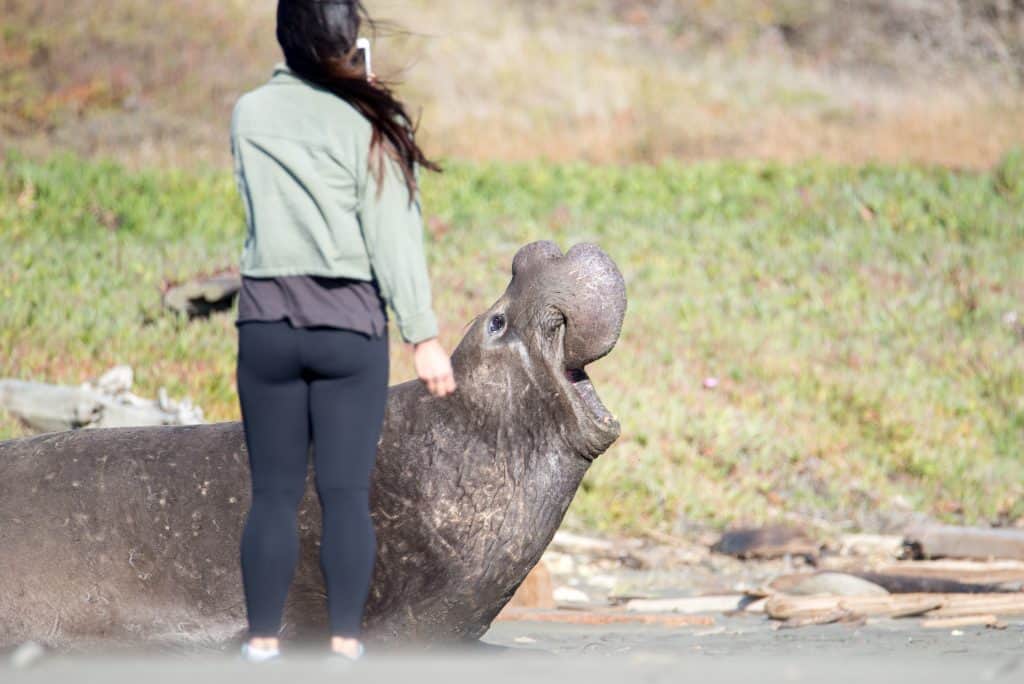
While several beaches offer viewing opportunities, approaching or disturbing elephant seals is illegal under federal law.
©Jessica Weinberg McClosky/NPS public domain – Original / License
Some people may find elephant seal mating season overwhelming, while others consider it one of the greatest wildlife spectacles on earth. For the latter group, several key areas on the California coast provide elephant seal watching opportunities.
Wildlife officials recommend viewing the animals from trails and an elevated boardwalk in northern San Simeon, California. These platforms allow visitors to observe multiple stages of the elephant seal life cycle from a safe distance. As for Año Nuevo Coast Natural Preserve, park officials offer guided tours of the seal mating area. There is still a month left to see elephant seals, but all beach visitors should remember that approaching or disturbing these magnificent creatures is against federal law.