
Quick Take
- People were recently caught on camera throwing rocks at Northern elephant seals in California.
- Under the Marine Mammal Protection Act, disturbing seals is illegal, and wildlife regulations safeguard these populations from harm.
- Northern elephant seals fast for 4 to 5 weeks during molting and breeding, making disturbance especially dangerous.
- Despite rising numbers, genetic diversity remains low due to a historic bottleneck, increasing vulnerability to disease and environmental change.
In an unfortunate recent event, a couple threw rocks at an elephant seal at Point Reyes National Seashore in California. The individuals were not identified, but live-stream camera footage captured both a man and a woman hurling rocks toward a seal resting on the beach.
“The footage shows deliberate throwing actions by both individuals. These animals are protected by the Marine Mammal Protection Act and other NPS wildlife regulations,” says Pt. Reyes National Seashore in a Facebook post.
The Marine Mammal Protection Act, enacted in October 1972 after the recognition that certain marine mammals were in danger of extinction, mandates actions to sustain populations. Under the act, unless there is a specific exemption, such as for Native American subsistence harvest, elephant seals and their ecosystems are protected from disturbances that could harm the animals.
“If I were to witness a wildlife harassment incident, I would document the location, time, and description of the person, and immediately report it to local wildlife authorities such as park rangers or an enforcement hotline,” says Roxanne Beltran, a professor in Ecology & Evolutionary Biology at UC Santa Cruz.
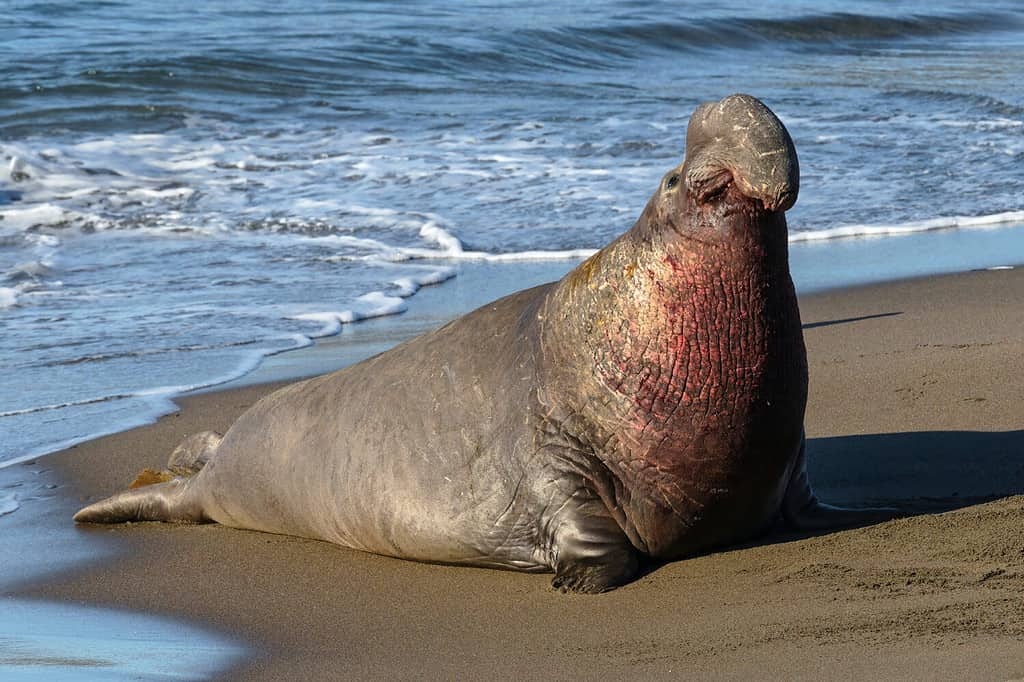
Male elephant seals get bloodied when they compete for mating access to females.
©David Osborn/Shutterstock.com
When elephant seals come up onto land, they are especially vulnerable. Northern elephant seals (Mirounga angustirostris), such as the ones at Point Reyes, spend most of their lives in the ocean. As migratory carnivores, they forage for fish and squid at sea, making deep dives of up to 2,500 feet, during about nine months of the year.
However, elephant seals come ashore twice each year: once to molt (from March to August) and again to breed and raise pups during the winter months. While they’re streamlined and efficient underwater, elephant seals move awkwardly and slowly on land. A male elephant seal can weigh up to about 5,000 pounds (about the weight of a minivan), while a female can weigh up to about 1,800 pounds. Both must drag this considerable weight over the sand.
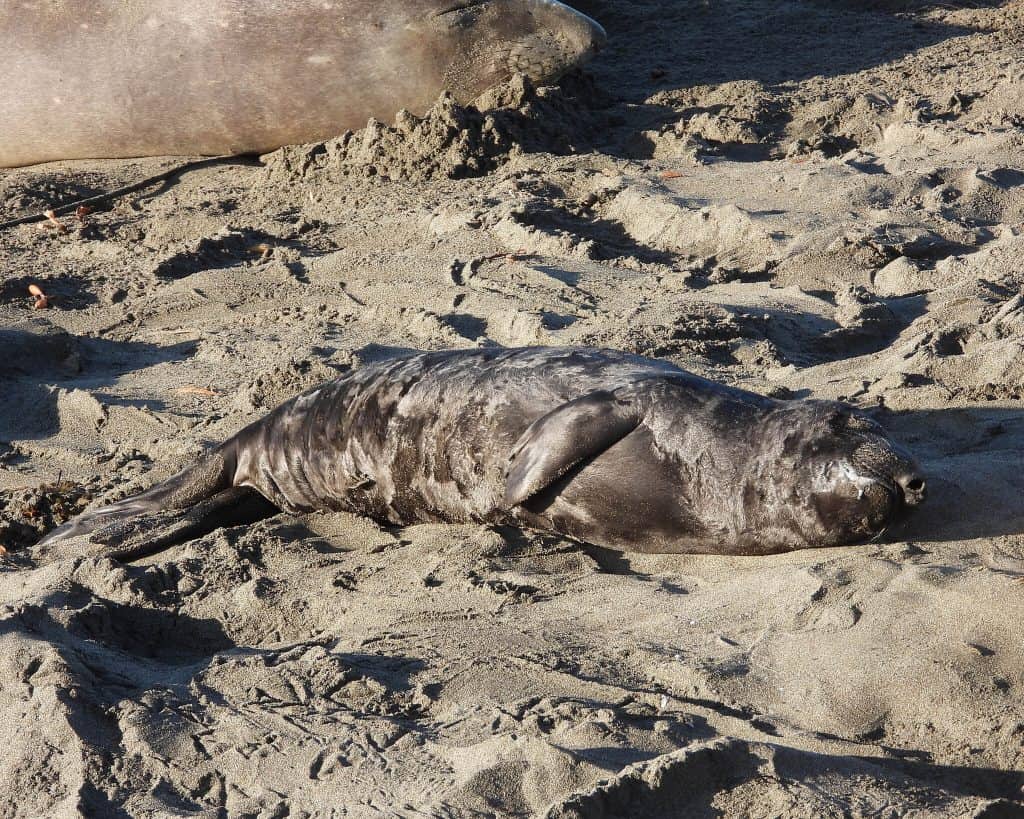
When an elephant seal molts, it sheds not only fur but also patches of skin.
Additionally, elephant seals do not eat or drink while on land. This complete fast results in significant weight loss—elephant seals can lose up to a third of their body weight during molting and breeding forays. Molting takes four to five weeks, during which old fur is shed in patches and replaced with a new coat. Breeding occurs from December to March, with males expending energy battling to control harems of females and females using energy to give birth and nurse their pups.
Therefore, the elephant seal targeted by rock throwing in December was about to enter a long, stressful period of fasting—either as a male establishing his breeding territory or as a female preparing to give birth to a pup conceived the previous year. During this time, conserving energy is critical for their survival. While on the beach, elephant seals need to conserve energy and allow any wounds sustained at sea to heal.
“Disturbing a seal forces it to flee or remain alert instead of resting, which carries real energetic costs and when done repeatedly, could lead to chronic stress, which affects immune function, growth, and reproduction,” Beltran explains. “Over time, disturbance can push seals out of familiar resting spots and into less suitable or more dangerous habitats, including offshore islands where people may never get the chance to see them.”
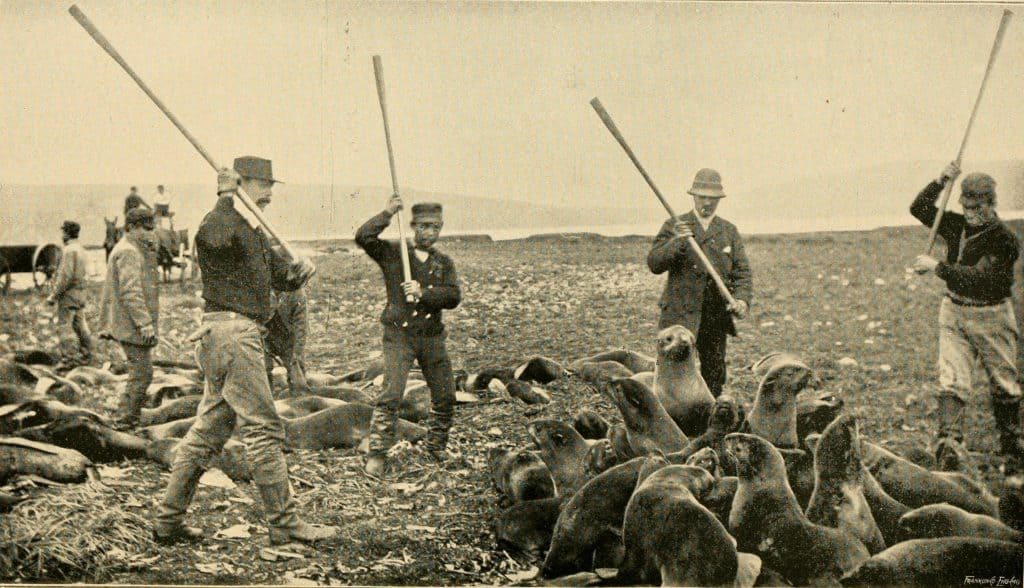
As seen in this 1895 fur seal slaughter, elephant seals were also once killed en masse by being clubbed over the head.
©Miner W. Bruce, Seattle, Wash/public domain – Original
Today, elephant seals appear abundant along the Central California Coast, which may lead to some visitors taking their presence for granted, but this species was once nearly extinct. During the boom of 19th-century marine mammal exploitation, Northern elephant seals were hunted for their blubber oil. A single male elephant seal could yield almost 25 gallons of oil, which was coveted for lubricating machinery.
An account of his 1852 “elephanting” expedition by ship captain Charles M. Scammon describes how his crew anchored off the coastal islands of California and slaughtered 100 to 200 elephant seals, yielding 350 barrels of oil.
Disturbing a seal forces it to flee or remain alert instead of resting, which carries real energetic costs and when done repeatedly, could lead to chronic stress, which affects immune function, growth, and reproduction.
Roxanne Beltran, professor in Ecology & Evolutionary Biology at UC Santa Cruz
By 1869, Northern elephant seals were deemed commercially extinct (i.e., not abundant enough to sustain harvesting). By 1910, it is estimated that fewer than 1,000 Northern elephant seals remained in Baja, Mexico, as they had been extirpated along the California coast. Even Scammon acknowledged their demise, writing in his 1874 book, Marine Mammals of the North-Western Coast of North America, “Owing to the continual pursuit of the animals, they have become nearly if not quite extinct on the California coast, or the few remaining have fled to some unknown point for security.”
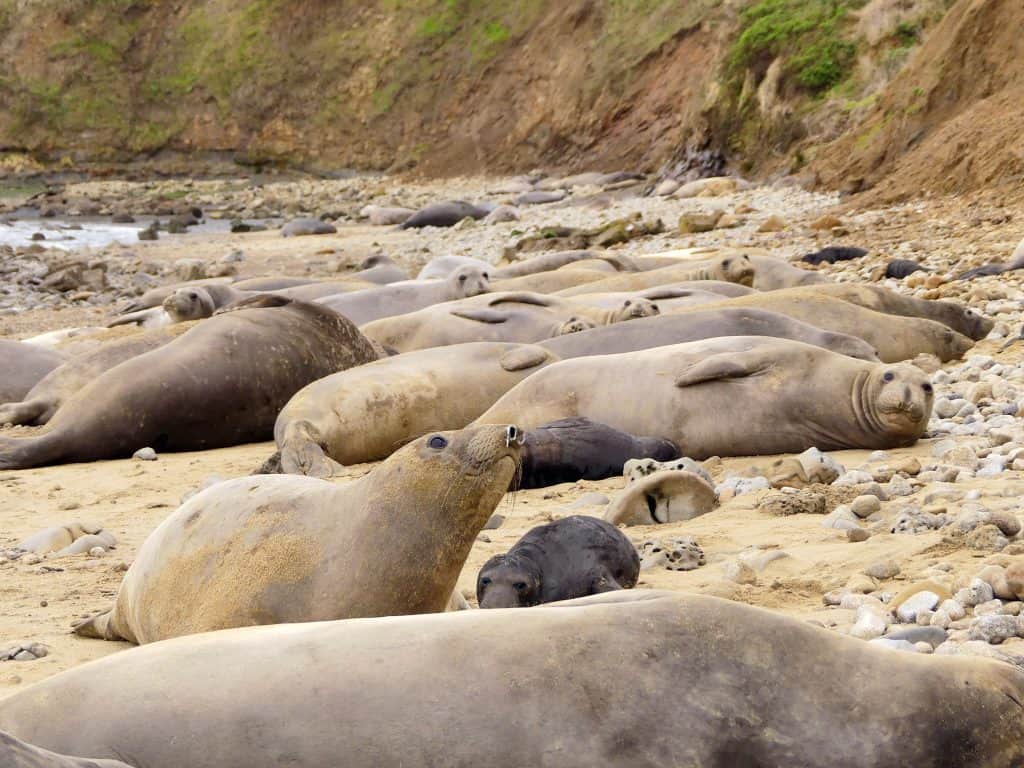
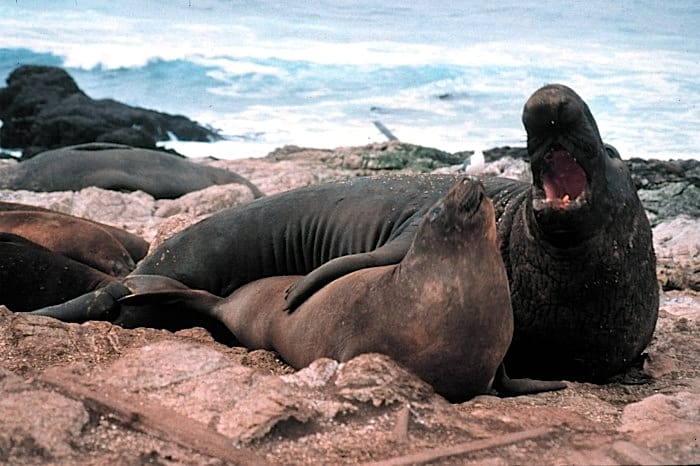
This elephant seal harem at Point Reyes National Seashore has a few young pups.
After their absence from California waters for more than a century, elephant seals turned up on Point Reyes National Seashore during the 1970s and began to breed by 1981. As of 2022, the Point Reyes population was estimated at about 4,000 individuals. As of 2024, the worldwide population of Northern elephant seals is estimated to be around 225,000 individuals. Marine scientist Mark Hindell deems the resurgence of Northern elephant seals “one of the most remarkable population recoveries of any mammal” in an article.
The Channel Islands off the California coast are a stronghold for the species and are home to approximately 80 percent of the U.S. Northern elephant seal population, according to NOAA Fisheries. After breeding was reestablished on the islands in the 1950s, colony sizes increased by about 14 percent per year. Growth rates have slowed in recent years, now that Northern elephant seals occupy more than two dozen distinct breeding colonies along the California coast and offshore islands.
In British Columbia, Northern elephant seals are occasionally observed on beaches at a location off southern Vancouver Island, which may become a breeding site in the future. A BC Conservation Data Centre report estimates that the number of seals feeding in BC waters has increased by several orders of magnitude since the late 1800s.
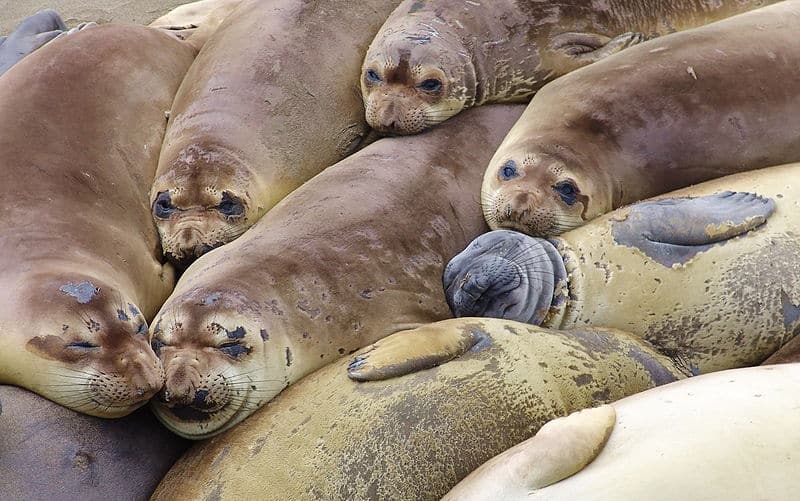
Elephant seals can be found in high densities today, thanks to international protections.
©CillanXC / Creative Commons – Original
However, Northern elephant seals still face an array of threats from human proximity. They sometimes get entangled in fishing gear, which can tire them out if they are forced to drag it around. At worst, entanglement can restrict their movements so much that they starve or drown if they cannot free themselves. The growth of the Great Pacific garbage patch, a massive concentration of marine debris, has likely heightened the risk of entanglement, although data are not yet available on entanglement rates.
Because elephant seal populations collapsed to near extinction and then recovered from a small group of Baja California survivors, their genetic diversity is limited. A study published in the Journal of Evolutionary Biology reported a marked loss of genetic variation after the 19th-century population bottleneck. Low genetic diversity makes a species more susceptible to disease and vulnerable to environmental changes.
Elephant seals also risk being hit by ships, especially large vessels that are less likely to spot the seals or be able to stop quickly. A government report on elephant seal mortality from 2015 to 2019 documented the following losses: two individuals were shot; four died from entanglement in debris; four from hook-and-line fisheries; two from dog attacks; nine from human interactions, such as harassment; one from a vehicle collision; 22 from tar and oil pollution; and one from a vessel strike. In addition, Northern elephant seals suffered a significant mortality event caused by the H5N1 bird flu outbreak in 2024–2025, which resulted in the death of over 17,000 Northern elephant seal pups.
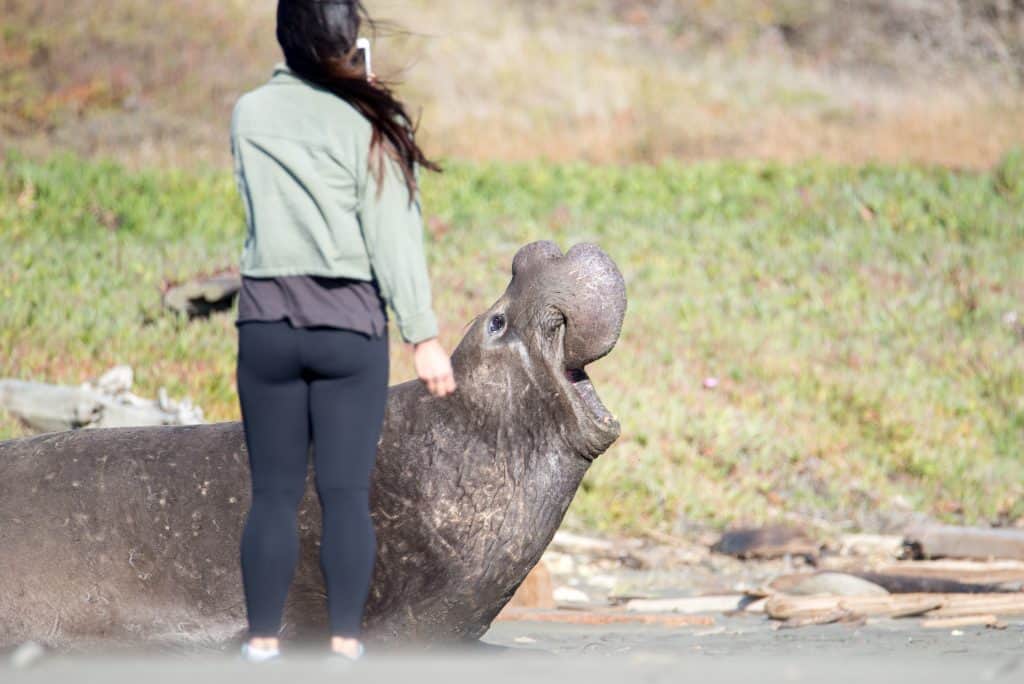
Getting close to an elephant seal is dangerous for both the person and the seal.
©Jessica Weinberg McClosky/NPS public domain – Original / License
While the population is increasing, provoking wild animals with rocks or in any other way is shortsighted and harmful. Elephant seals choose breeding beaches based on certain characteristics, which may include the level of seclusion from human disturbance. Elephant seal populations appear to be reaching carrying capacity on some beaches, which might slow population growth or cause individuals to seek less crowded sites. As they have recovered to higher densities, elephant seals have increasingly encountered humans.
“Everyone wants to see and photograph the amazing wildlife scenes along the central California coast. Taking amazing photographs responsibly often takes patience and timing – please help us protect these amazing animals by viewing them responsibly,” Beltran says.