
Quick Take
- Elephant seals undergo a catastrophic molt when they shed their fur and the first layer of skin underneath.
- Molting requires the seals remain beached, where they’re unable to move until it’s finished.
- Visible writhing in the sand is a sign of successful molting rather than extreme trauma.
- This San Francisco beach posts signs alerting visitors as to what’s going on, encouraging them to watch from a distance.
On a beach in San Francisco, a crowd gathers to watch an elephant seal as it writhes in the sand. Concern increases as onlookers wonder what’s wrong with the animal. It seems to be in pain, but is not making any move to flee or escape the gathering crowd. When wildlife experts arrive on the scene, they seem calm, only adding to the confusion.
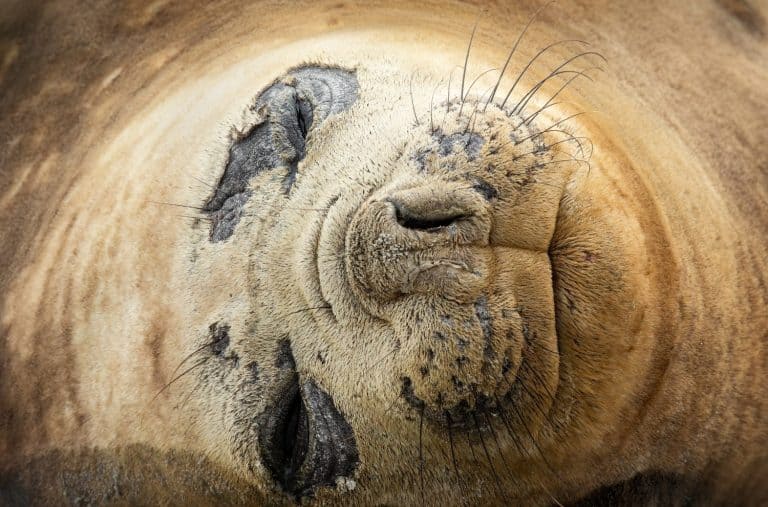
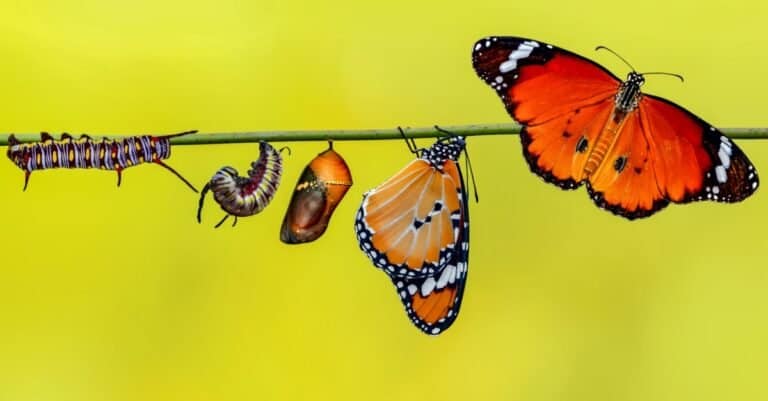
The elephant seal is indeed undergoing something akin to a transition. Like many insects, reptiles, and a few terrestrial animals, the species molts its skin once a year. The process, called a catastrophic molt, is as dangerous, uncomfortable, and awkward as it seems.
The Annual Catastrophic Molt of the Elephant Seal
“Catastrophic” might sound dramatic, but for the elephant seal’s molt, it’s accurate. The process of its annual molt begins small, with tiny patches of skin flaking off. Females molt in the spring, typically from March to May; juveniles molt from April to June; and males molt later, from July to August. When the molt begins, elephant seals intentionally beach themselves. They must secure a spot on the sand; otherwise, they become vulnerable to the cold water in which they usually thrive.
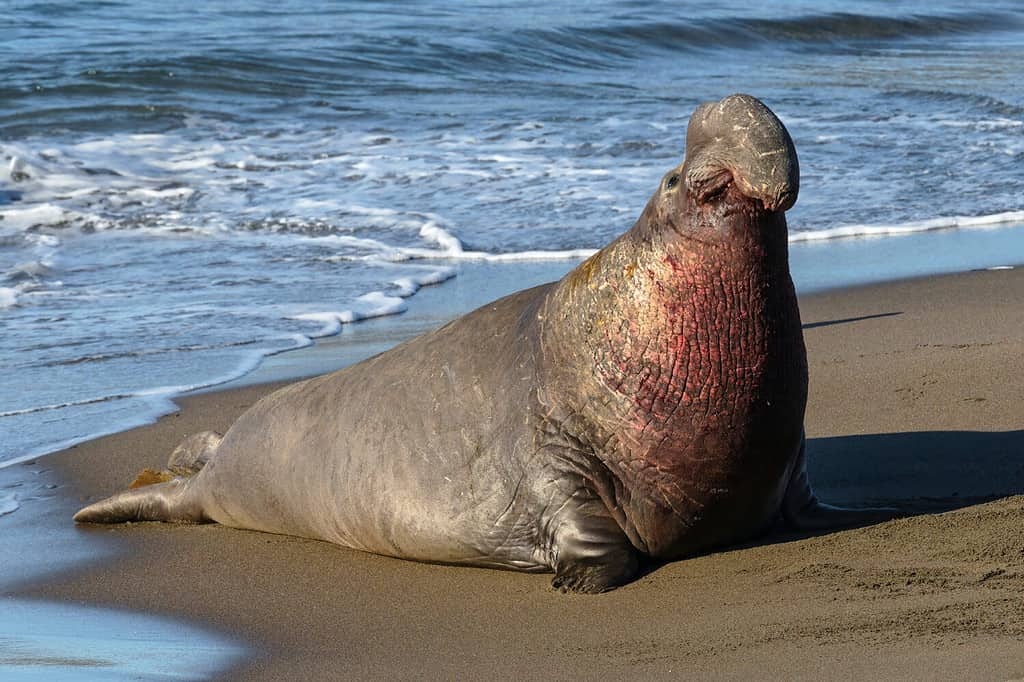
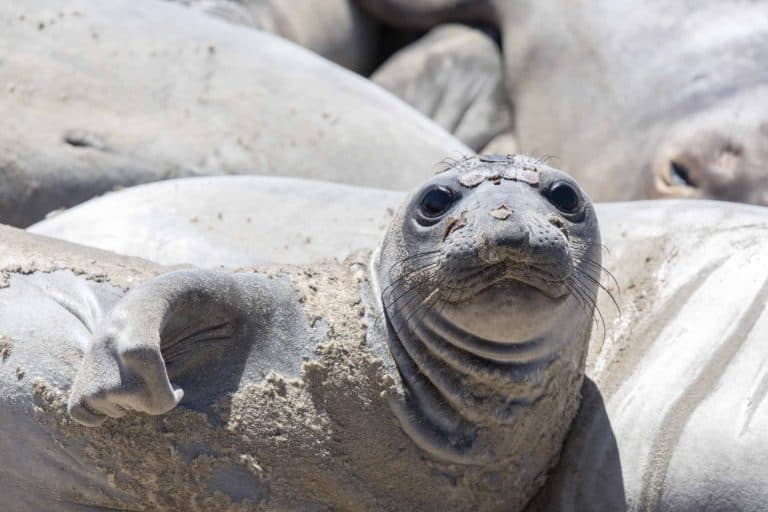
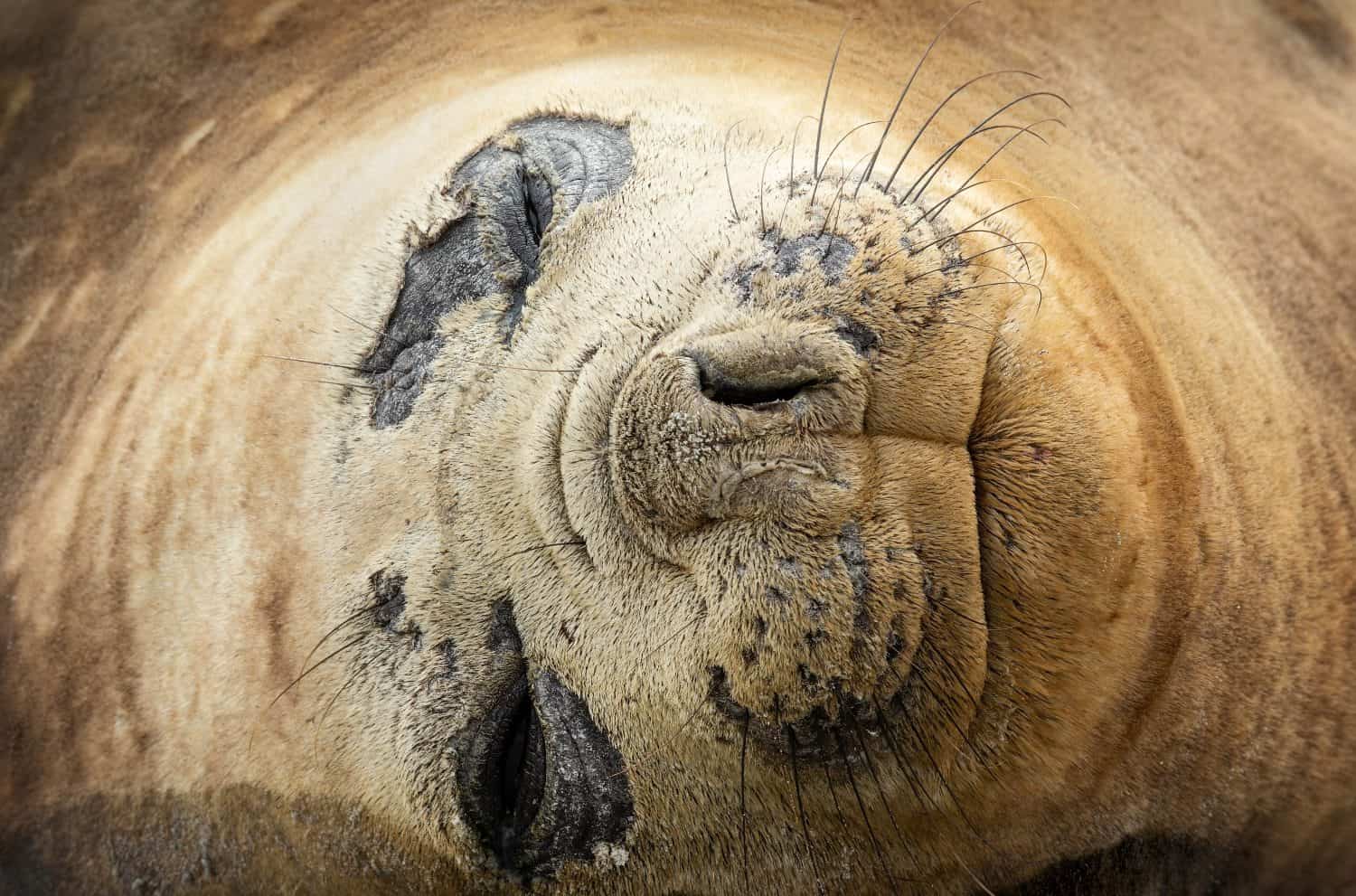
Elephant seals molt throughout their entire lives and will shed their skin once a year.
©David Osborn/Shutterstock.com
As elephant seals line up across sandy strips of beach, they often shift around but rarely move from one spot. The process is long and uncomfortable, but the seals’ only option is to endure. Fur falls off in chunky bits, making the molt messy and inconsistent. Eventually, the skin underneath begins to fall off with it. Many would like to believe this is not painful for the elephant seal, but it’s arduous and not without discomfort.
During This Time, Elephant Seals Are Extremely Vulnerable
Elephant seals remain on the beach for about 3 to 4 weeks during molting. During this time, they’re vulnerable to the elements, predators, and even human activity. They can’t return to the ocean until molting is complete, because their blood flow is redirected to growing new skin. This means all of their effort and energy are internalized, helping them grow a new coat that will protect them more than the last one did.
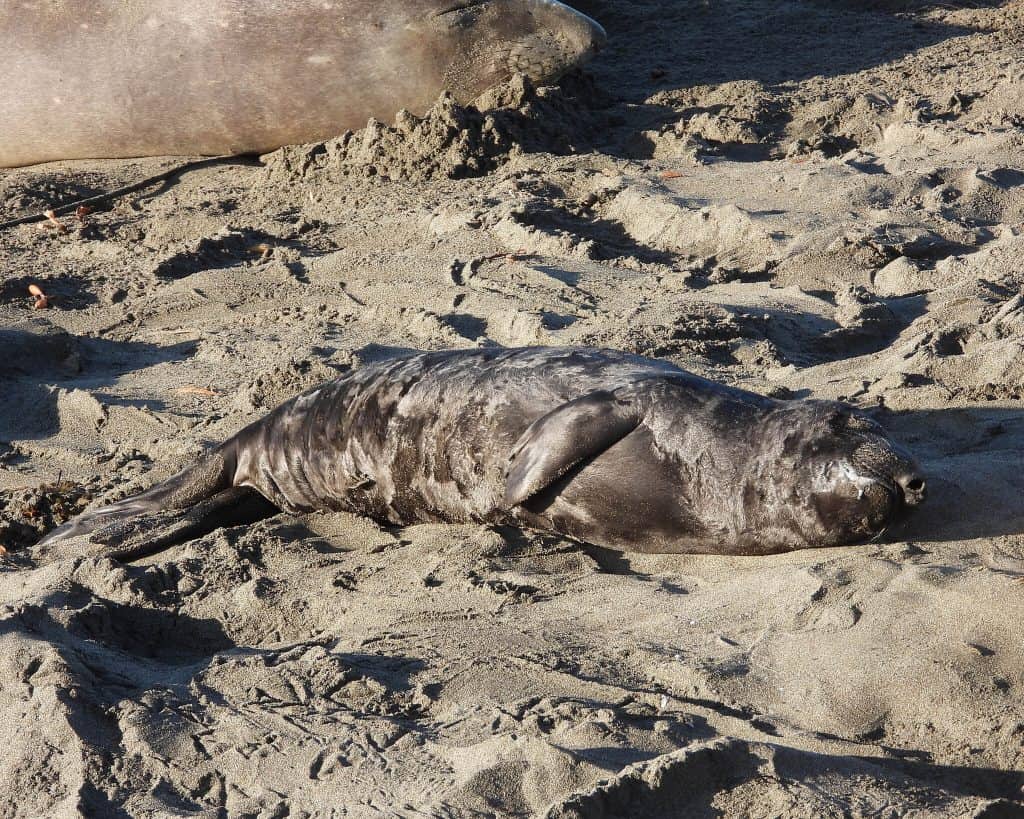
When an elephant seal molts, it sheds not only fur but also patches of skin, making it look painful and sickly.
Eating and drinking are not options during this time. Elephant seals rely on the fat reserves they’ve gathered for this specific purpose. As they congregate in groups, they remain huddled together both for warmth and protection. It’s arguably the most vulnerable an elephant seal will ever be in its lifetime. As the seals molt, their skin comes off in ragged, uneven patches. They shed their skin similarly to how a deer sheds its antlers, and the process often looks more gruesome than it is.
New Skin, New Adventures
Once the catastrophic molt is over, the elephant seals take on new life. The new skin is shiny and silver toned. At this point, they’re ready to hop back into the ocean to resume their aquatic lives. Their new skin will protect them in cold water, allowing them to hunt and swim for long periods. As long as they remain undisturbed, the catastrophic molt is nothing more than an annual ritual elephant seals must complete as they mature. While they never stop molting, the process is what allows them to endure season after season of brutally cold water.
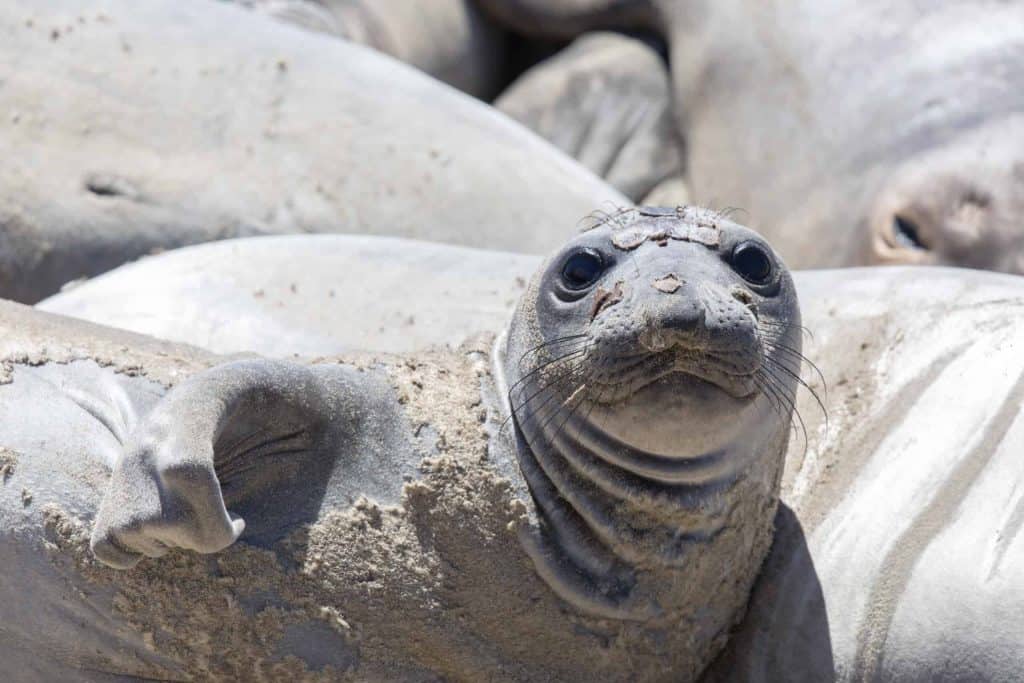
Even juvenile elephant seals undergo the catastrophic molt, although its timing differs for males and females.
©yhelfman/Shutterstock.com
Elephant seals that molt on the beach, such as those in San Francisco’s Aquatic Park, require space and time. Signs are often posted around the beach alerting visitors to what’s happening. Human activity, even so much as getting too close to take a photo, can disturb the process. Molting is uncomfortable and draining for an animal, and the less disturbed they are, the better. When they’re done molting, their instincts guide them back into the water, where they remain until it’s time to head back to shore and do it all over again the following year.