
Quick Take
- The researcher who found this spider wasn't looking for spiders at all, and what he did next accidentally revealed an entirely new species. See how it was found →
- This spider fakes being dead, but it's not mimicking what scientists initially thought. Meet the real mimic →
- A museum specimen collected in 1903 sat unidentified for over a century, and it ultimately turned out to be a clue to help classify this new species. Discover the century-old clue →
- It belongs to a family of web-spinning spiders, but it has never spun a web. See its hunting method →
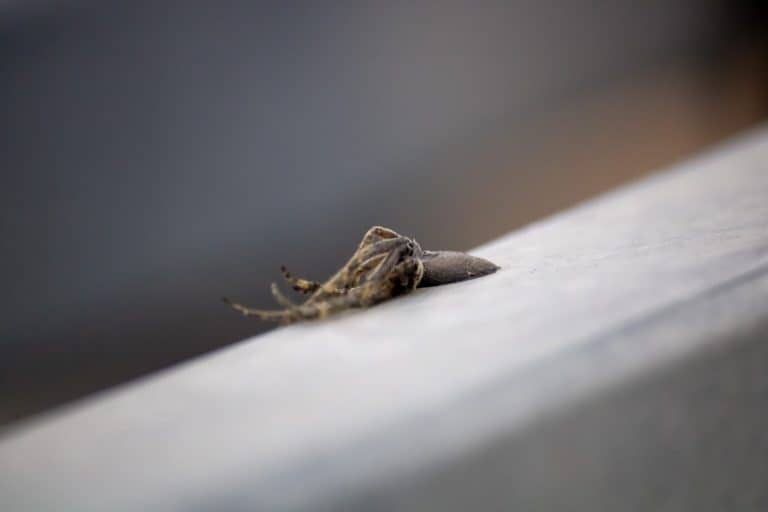
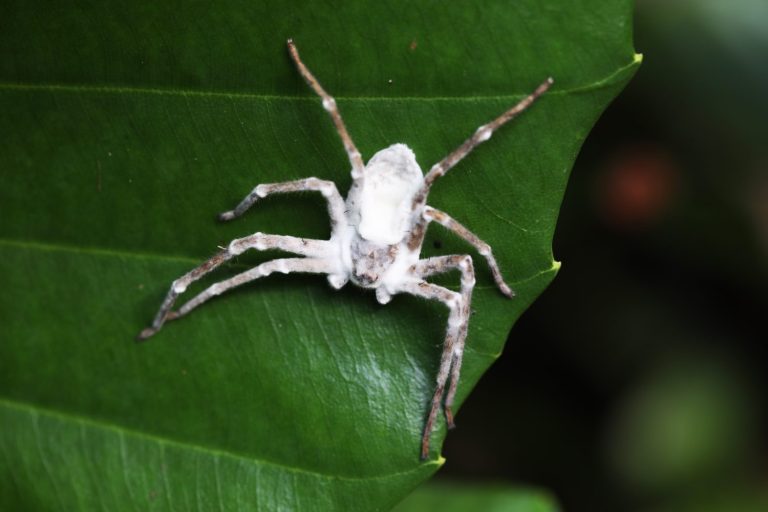
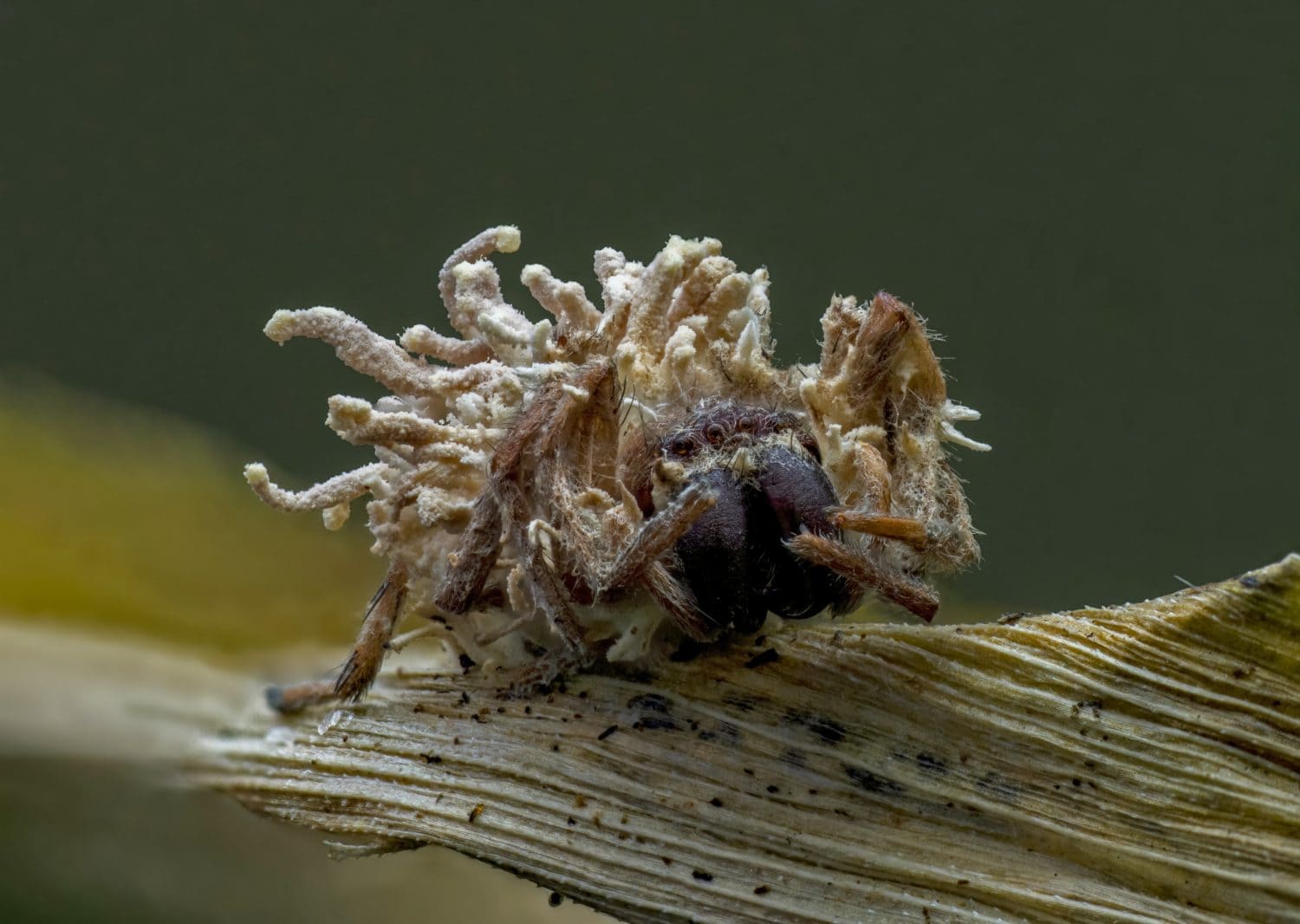
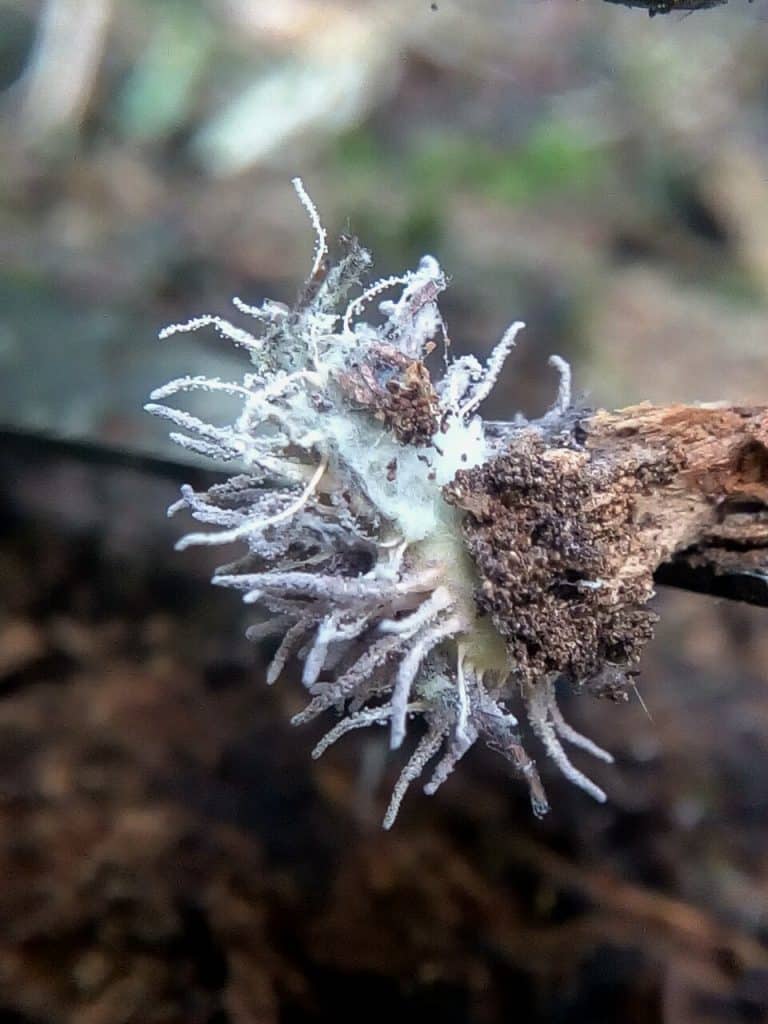
Spiders living in the Amazon rainforest defend themselves from predators using an amazing variety of strategies. One newly discovered species has adapted to resemble a dead spider infected with a parasitic fungus. Resembling a miniature version of the zombies from “The Last of Us,” Taczanowskia waska plays dead to escape predators and hide from prey in a particularly macabre way. Discovered by a herpetologist leading a group tour through the Amazon rainforest in Ecuador, T. waska looks much like a fungus-covered spider corpse stuck to the bottom of a leaf.
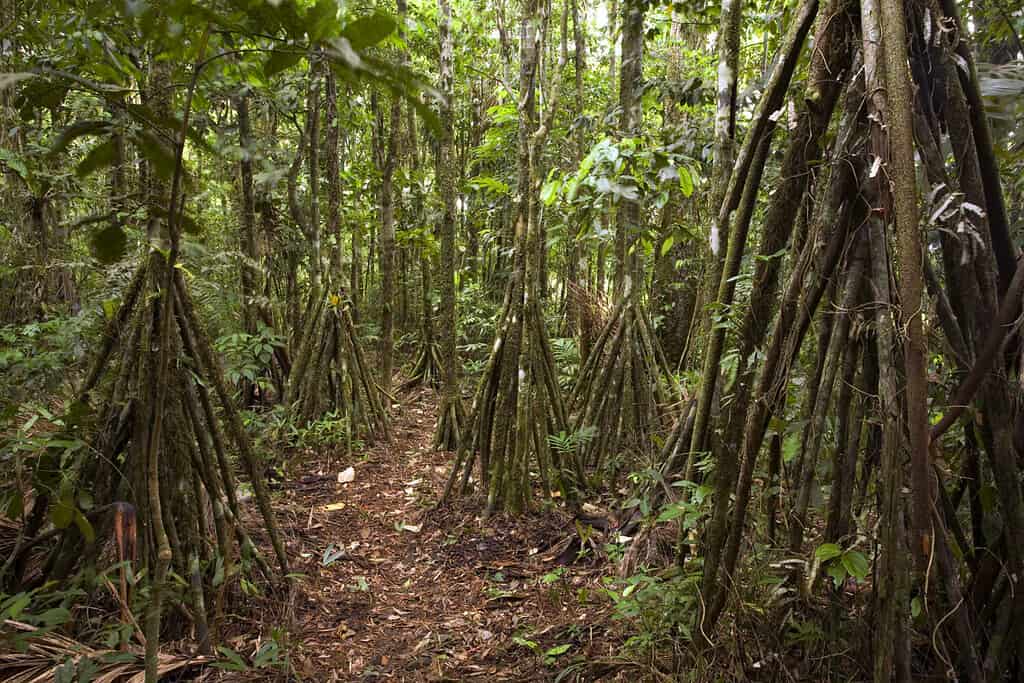
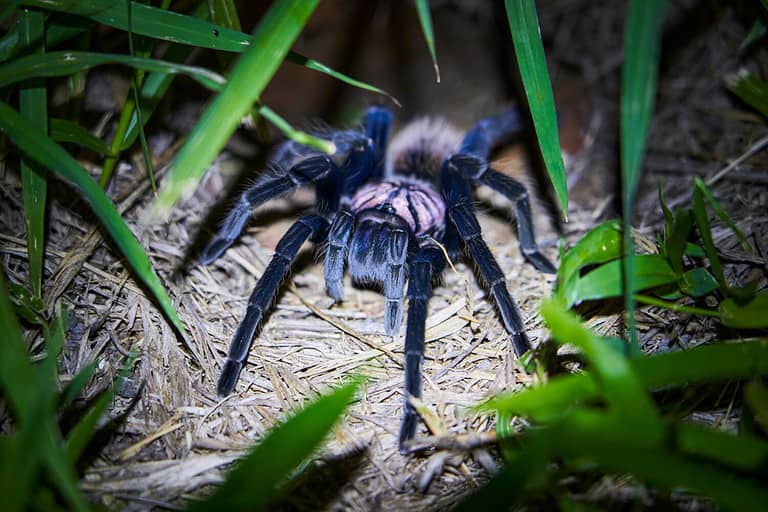
The Amazon rainforest is home to many yet undiscovered species of plants and animals.
©Dr Morley Read/Shutterstock.com
The “Zombie” Spider That Wasn’t Dead
Alexander Bentley, a herpetologist who leads guided tours in Ecuador, was leading a group on a rainy night through the Llanganates-Sangay Corridor when he found something unusual. He turned over a leaf, expecting to find a dead insect or arthropod infected with the parasitic fungus, Cordyceps. Cordyceps is a genus of fungi, similar to Ophiocordyceps.
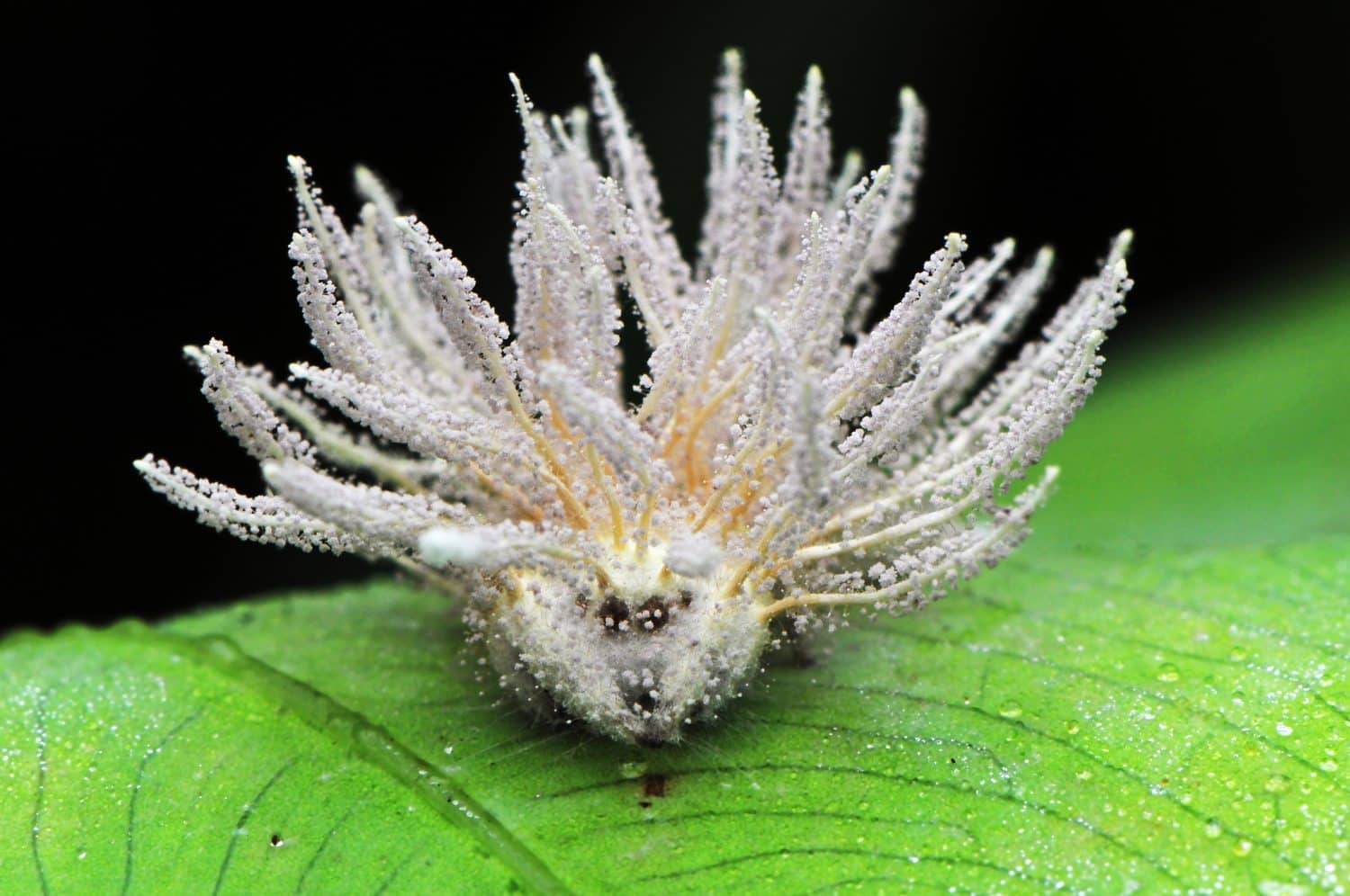
These fungi infect insects and arthropods, changing their behavior to help spread their spores. The fungus replaces some of the host’s tissue with its own mycelium, which grows outside of the insect or arthropod, and looks much like the frightening zombies that appear in the video game and TV series, “The Last of Us.”
Parasitic fungi that infect spiders are often also known as zombie fungi.
©Kamil Fraczek/Shutterstock.com
When Bentley spotted what he thought was Cordyceps infecting a spider, he poked at the mass of yellow tendrils. To his surprise, it moved. Instead of being a member of the undead, this spider was very much alive, and unlike any other known species.
Bentley uploaded images of his startling find to the iNaturalist platform. Citizen scientists quickly responded and informed Bentley that his discovery was not a spider infected by a fungus, but rather a spider mimicking one.
A 1903 Specimen Helps Solve the Mystery
Bentley published his findings along with Nadine Dupérré of the Museum of Nature Hamburg and David Ricardo Díaz-Guevara, an arachnid curator at the National Institute of Biodiversity in Ecuador. The researchers studied T. waska in the lab to learn more. They also studied a previously unidentified specimen of T. waska collected in Bolivia that had been sitting in a museum since 1903.
“Finds like these demonstrate the value of scientific collections. They enable us to classify new species and compare them with historical specimens,” explained Dupérré in a press release. “Combined with international collaboration and citizen science, this opens up new opportunities for researching biodiversity.”
A Spider That Hunts Without a Web
Other spider species, besides this new discovery, are also known to mimic fungi as a defense. However, those spiders spin webs to trap insects. Spiders in the Taczanowskia genus are in the family Araneidae of orb weavers, but they aren’t web spinners. Taczanowskia spiders are ambush hunters. They use various methods to disguise themselves from their prey while lying in wait to ambush. The spiders sit motionless, waiting until their prey passes by, when they reach out and snatch it with their front legs.
Spiders in the Taczanowskia genus tend to be elusive. Because scientists rarely see them, they know little about their behavior and eating habits. Scientists discovered the first known species in the family in 1879. Since then, not many have been observed in the wild.
A Spider That Imitates a Fungus Infection
Gibellula is a fungus that infects spiders and sends out spores from erect stalks that emerge from the spider’s body.
©Suhaib Firdous Yatoo, CC BY-SA 3.0, via Wikimedia Commons – Original / License
Díaz-Guevara studied a living specimen of T. waska in his lab. T. waska is around 1/3 of an inch long with a pale coloring and long, spindly structures protruding from its abdomen. It stays hidden underneath leaves, where it remains completely motionless. The scientists learned it’s not actually mimicking the Cordyceps fungus, but instead a similar parasitic fungus called Gibellula.
Gibellula is a genus of fungus that infects spiders. Before the spider dies, the fungus controls its brain and changes its behavior. The spider leaves its usual hiding spot and goes out in the open, where the fungal spores will spread after the spider dies.
Díaz-Guevara told The New York Times the spider’s similarity in appearance to an infected spider was “without a doubt super crazy and very surprising.” Díaz-Guevara explained that T. waska has evolved to “realize that if it mimics something that is dead, the chances of being hunted are low.”
A Reminder of How Little We’ve Seen
T. waska is one of the latest discoveries of a previously unheard-of spider species, but it won’t be the last. Although scientists have identified over 50,000 spider species, they believe they have not yet discovered roughly 86% of Earth’s species. That means millions of species remain unknown, including an estimated 50,000 to 100,000 spider species.
Scientists believe many of the undiscovered species will come from the massive and largely unstudied Amazon rainforest. The Llanganates-Sangay Corridor in Ecuador, where this spider was found, is known as a biodiverse hotspot filled with endangered animals. The more we learn about these regions, the more we realize the need to protect them before we lose species that we have not yet discovered.