
Quick Take
- At just a few millimeters long, this spider routinely takes down prey most hunters its size wouldn't dare approach. The method it uses to do so is surprisingly calculated. See how it hunts →
- This spider has quietly been providing a pest control service inside urban homes, and it exploits one very specific human habit to do so more efficiently. Discover its urban role →
- Its name honors a legendary rock band, but the second half of that name reveals something stranger about where this spider actually lives. Meet the Pink Floyd spider →
There’s a new spider on the block—or, more accurately, in the block—literally living inside a wall! Don’t let the quirky name fool you; Pikelinia floydmuraria is a ferocious hunter and may also be our friend when it comes to pest control. We analyzed the recently published report of this exciting new arachnid.
New “Pink Floyd” Spider Discovered
Members of the Pikelinia genus are crevice weaver spiders. They frequently live in what scientists call synanthropic environments (close to humans) and anthropized habitats, which are habitats altered by humans. These terms are often used to describe human settlements.
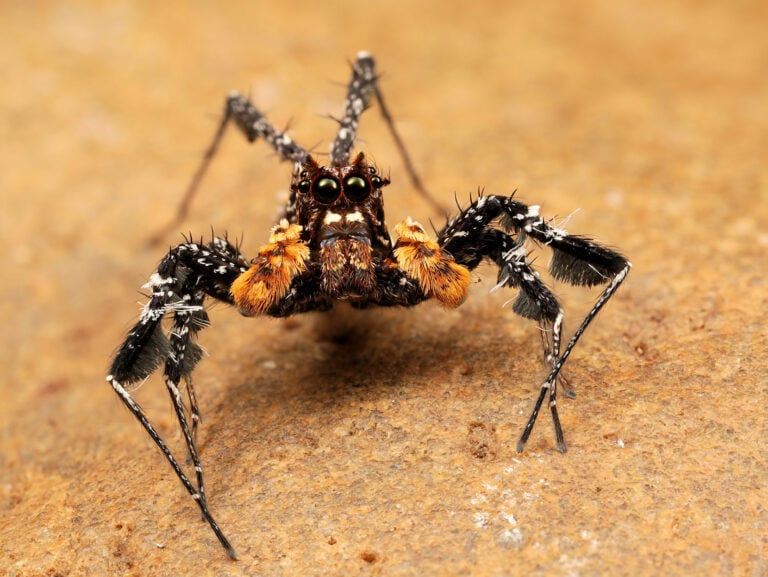
The newly discovered species, Pikelinia floydmuraria, is no exception. It was found in the urban areas of the Department of Tolima in Colombia. What’s more, it appears to be found in abundance here, which suggests that it has a strong adaptation to human-modified ecosystems. These are small spiders measuring just 3 or 4 millimeters in length, or about 0.15 inches.
This spider has a cool name! It pays tribute to the rock band Pink Floyd and their iconic album ‘The Wall,’ while the second part of its name reflects the spider’s association with walls. The word “muraria” is derived from the Latin word for wall.
About Crevice Weaver Spiders
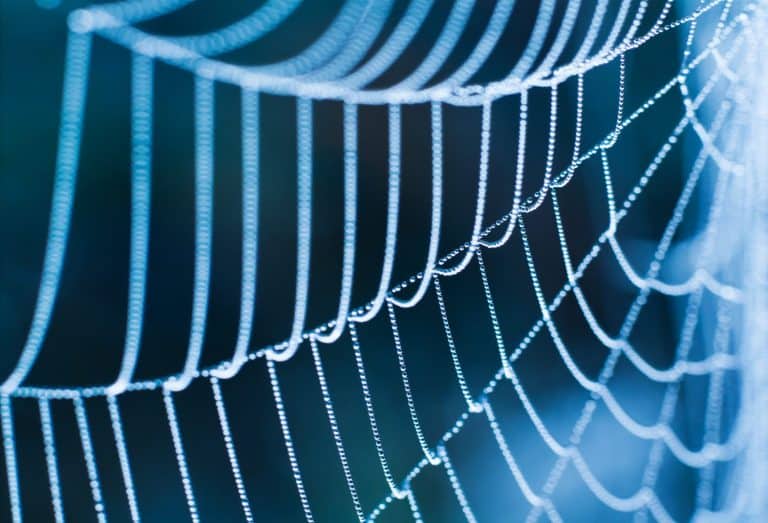
Crevice weaver spiders belong to the Filistatidae family and are cribellate spiders. They construct tunnels or tube webs. These spiders make their webs in small holes, crevices, and corners around structures such as walls. They tend to be more active at night and prey on insects. Despite their taste for urban living, they are also shy and keep away from humans if they can.
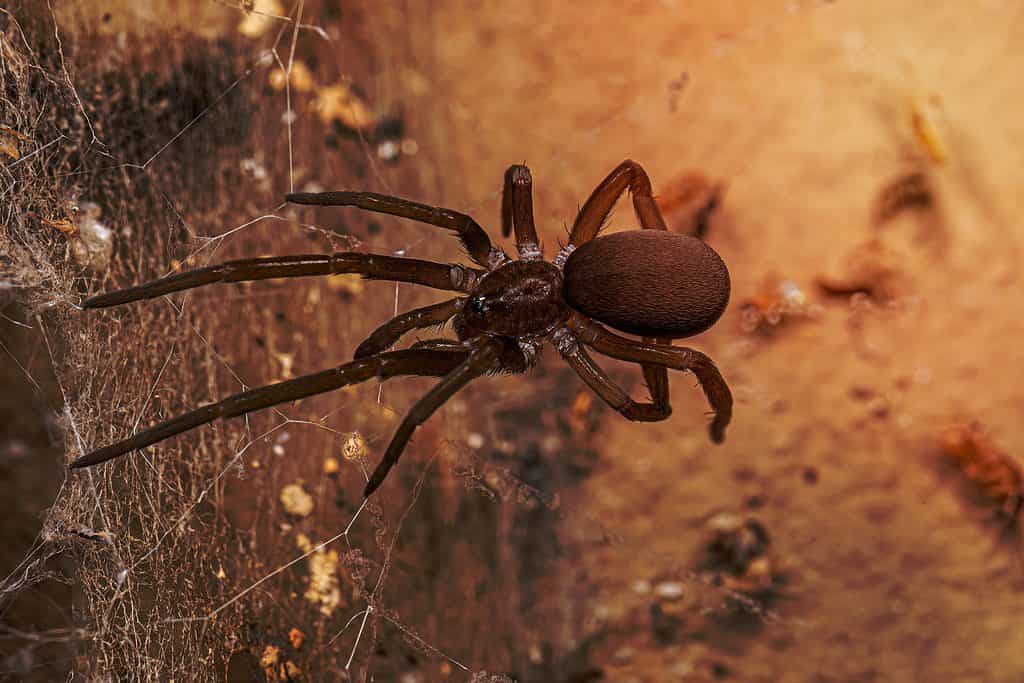
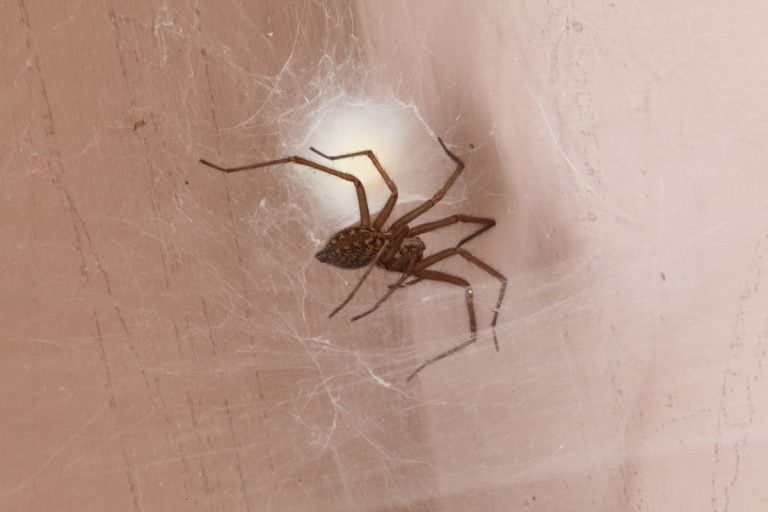
Pikelinia floydmuraria is in the same family as southern house spiders
©postolocanu/Shutterstock.com
In the US, the southern house spider is a common example. This spider also enjoys an urban lifestyle and can be found within the masonry of buildings, especially dark recesses of windowsills, shutters, and overhangs. They are largely beneficial and help to keep down populations of house flies, horse flies, mud daubers, cockroaches, and May beetles.
Why Is P. Floydmuraria So Similar to a Galapagos Spider?
It’s not unusual to find species of spiders or other animals that are similar to each other. Often, they live in locations reasonably close to each other, and they have a common ancestor. Scientists have found that P. floydmuraria is surprisingly similar to a spider found on the Galapagos Islands called P. fasciata. These locations are over a thousand miles apart, and there is a lot of ocean in between them!
Both spiders share a distinctive dorsolateral projection known as an apical tibial apophysis—a structure in male spiders often used for prey capture, food manipulation, communication during courtship, and as a copulatory device for sperm transfer. They also both have elongate-necked spermathecae, specialized structures in the female reproductive system that store sperm. How could two spiders that evolved so far apart have such similar features?
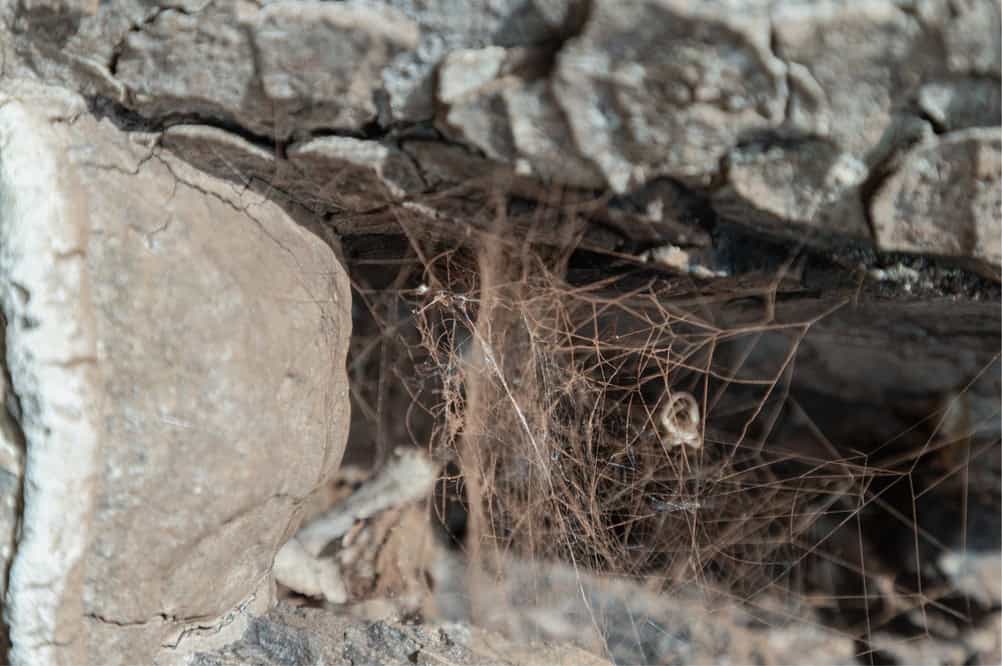
Crevice weaver spiders make messy webs.
©anutr tosirikul/Shutterstock.com
The first potential explanation is a shared evolutionary link, which is puzzling given the vast Pacific Ocean between them. Alternatively, it is an example of convergence where similar environmental pressures shape the same features in entirely unrelated animals. Ultimately, molecular analyses (DNA studies) are needed to establish whether this is a native species of Colombia that has learned how to exploit the human urban environment or if it is a newly introduced species.
The Lifestyle of Pikelinia floydmuraria
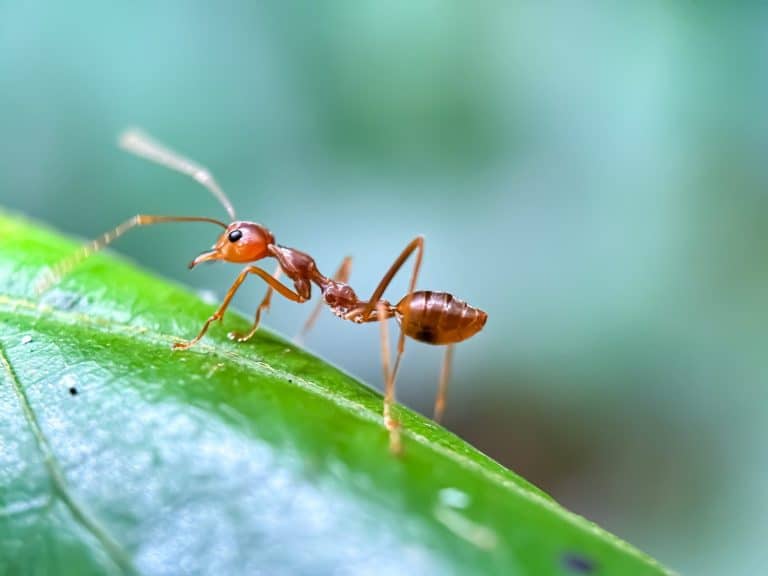
Research has shown that these spiders eat a lot of ants! That is quite a skill considering how good ants are at defending themselves. It suggests that they have evolved special skills to allow them to exploit this prey source. Even more startling, this little spider can prey on ants that are six times larger than itself. Some populations seem to be particularly drawn to certain types of prey, suggesting that there is dietary variation within the species. This may reflect local specialization for hunting certain prey—a trait seen in other urban spiders that helps them thrive in new locations.
Spiders Providing Pest Control
Another interesting finding was that this species provides its human hosts with a pest control service. They happily hunt a group of animals called dipterans (true flies), which are also considered household pests. They include mosquitoes, common fruit flies, blow flies, and horse flies.
The spiders even spin their webs close to artificial lights. It’s an adaptive strategy that allows them to catch phototactic prey that respond to light sources. This maximizes the quantity of prey they can catch in their webs in an urban environment. This can only enhance their pest control abilities! No doubt we will be hearing more about this latest addition to the roster of urban-dwelling spiders.