
Quick Take
- The Florida Aquarium recently transferred 9,000 coral babies to The Reef Institute and Reef Renewal USA.
- The move was part of the Florida Coral Reef Restoration and Recovery (FCR3) Initiative.
- More than 50 percent of the world’s coral reefs have disappeared since the 1970s.
- Reef restoration is helping to bring Florida’s Barrier Reef back to health.
Around the world, coral reefs are under threat from rising ocean temperatures, deteriorating water conditions, and diseases like Stony Coral Tissue Loss (SCTLD). Since the 1970s, more than half of the world’s coral cover has been lost. That loss is only accelerating.
A 2020 report from the Global Coral Reef Monitoring Network says that approximately 14% of the world’s corals were lost between 2009 and 2018 alone. The majority of this loss was due to large-scale bleaching events driven by rising ocean temperatures.
Florida’s reefs are no exception. The recent “functional extinction” of both staghorn and elkhorn coral in the Florida Keys is one example of the destruction of the Sunshine State’s reefs. Population growth and human development are two of the biggest contributors to the decline of Florida’s reef system.
So when The Florida Aquarium announced that it recently transferred 9,000 coral babies to reef restoration groups in the state, it was news to cheer about.
The Organizations Helping Build Back Florida’s Coral Reefs
The three groups involved in this milestone achievement were The Florida Aquarium, Reef Renewal USA, and The Reef Institute. The coordinated effort marks the largest statewide distribution of land-grown coral babies under the broader Florida Coral Reef Restoration and Recovery (FCR3) Initiative. FCR3 is led by the Florida Department of Environmental Protection.
Florida’s coral reef, also known as the Florida Reef Tract, stretches about 350 miles along Florida’s southern and eastern coastline, from Dry Tortugas National Park west of the Keys to the St. Lucie Inlet in Martin County. It is the third-largest barrier reef in the world. Only Australia’s Great Barrier Reef and Belize’s Barrier Reef are larger. Florida’s reef system is critical to the state in several ways.
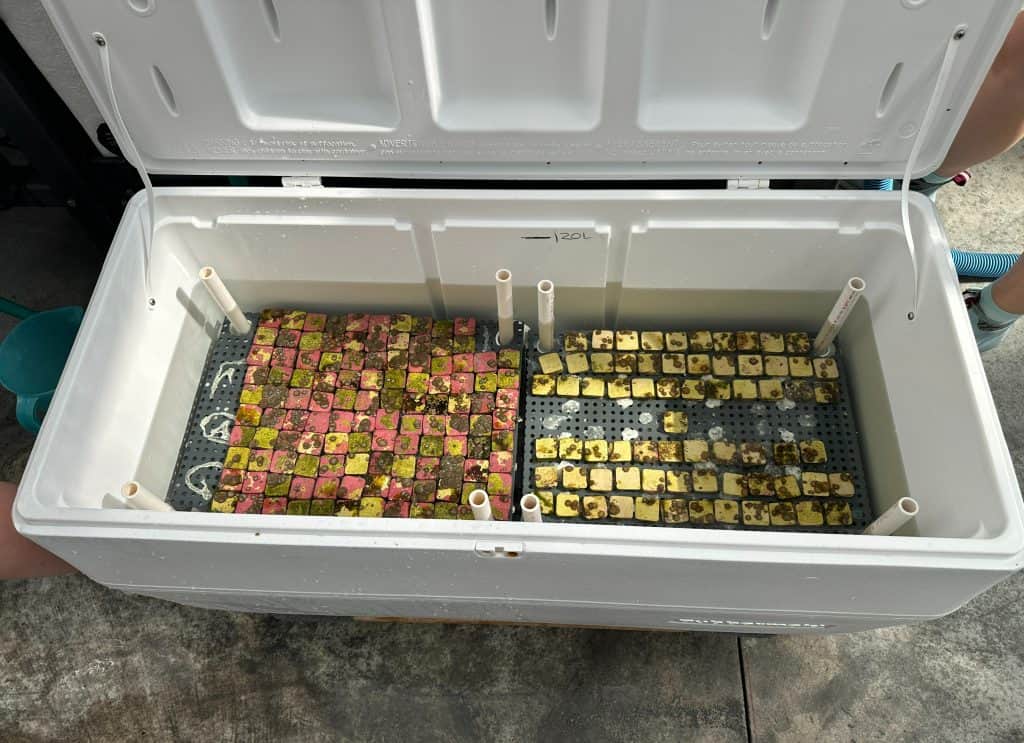
Coral babies were packed for transfer as part of the FCR3 coral restoration initiative.
Florida’s coral reef is essential for protecting the state’s coastlines, especially during hurricanes and other extreme storm events. It is also a major economic driver for tourism in coastal communities and serves as a natural fisheries habitat that supports both commercial and recreational fishing.
The goal of FCR3 is to recover more than 25 percent of Florida’s coral reefs by 2050. This will be accomplished through the development of technology, infrastructure, logistics, and a skilled workforce. The efforts are focused on propagating and outplanting native corals and other keystone species.
The initial phase of FCR3 focused on two main objectives: strengthening the infrastructure needed to breed and raise coral babies on land, and training the workforce so that coral production could be successfully scaled to meet the project’s goals. As a result, the team was able to grow 9,000 coral babies into thriving juveniles, which could then be transferred and further prepared for transplantation into ocean environments.
Keri O’Neil, Coral Conservation Program Director at The Florida Aquarium, notes, “This moment shows what’s possible when long-term state investment, science, and collaboration come together. Thanks to the FCR3 Initiative, we now have a functional pipeline to scale coral breeding efforts and get these corals back to the reef.”
The Process of Growing Coral Babies In a Lab
For the recently transferred baby corals, their story begins at The Florida Aquarium’s Coral Conservation and Research Center. This 9,000 square foot building is a safe haven for more than 70,000 corals from 17 species. It is a state-of-the-art facility that is an industry leader in Atlantic coral sexual reproduction and baby rearing. It is where these baby corals were born and raised.
But how did their coral parents get to the Center? Divers start the process by collecting fragments from healthy, resilient coral species from the Florida Reef Tract and elsewhere. The fragments are brought to facilities like The Florida Aquarium, then attached to frame structures in underwater nurseries. This creates an underwater coral garden. Teams regularly clean the coral in these gardens to remove harmful algae.
Once the coral samples are large enough, the Center’s coral team replicates the reef conditions that trigger coral spawning in the wild. When the lab coral spawns, hundreds of thousands of eggs and sperm are released by the coral polyps. Scientists collect the eggs and sperm, fertilize them, and then grow the resulting larvae in the safety of the lab. This eliminates the risk of predators that coral larvae in the wild face.
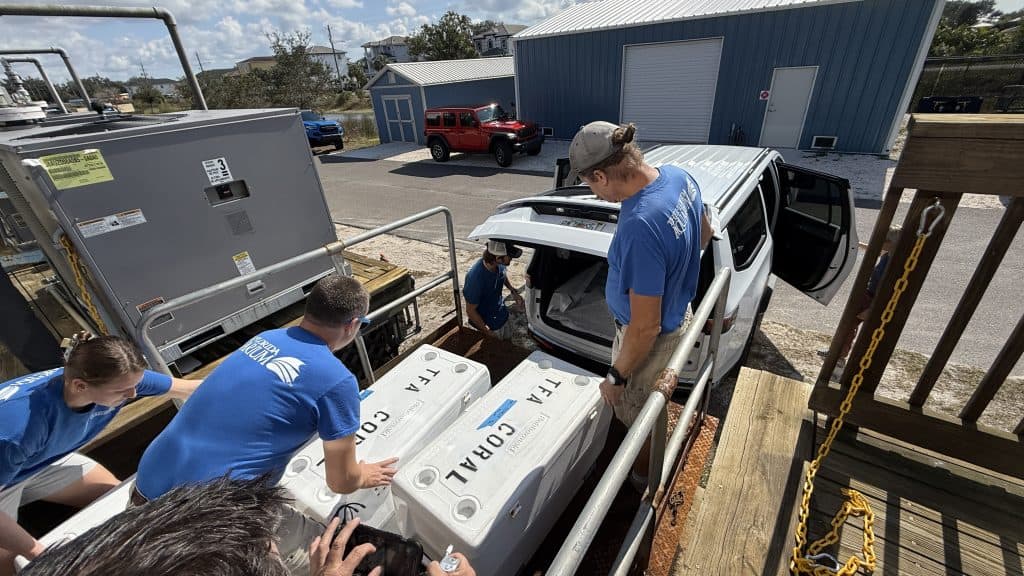
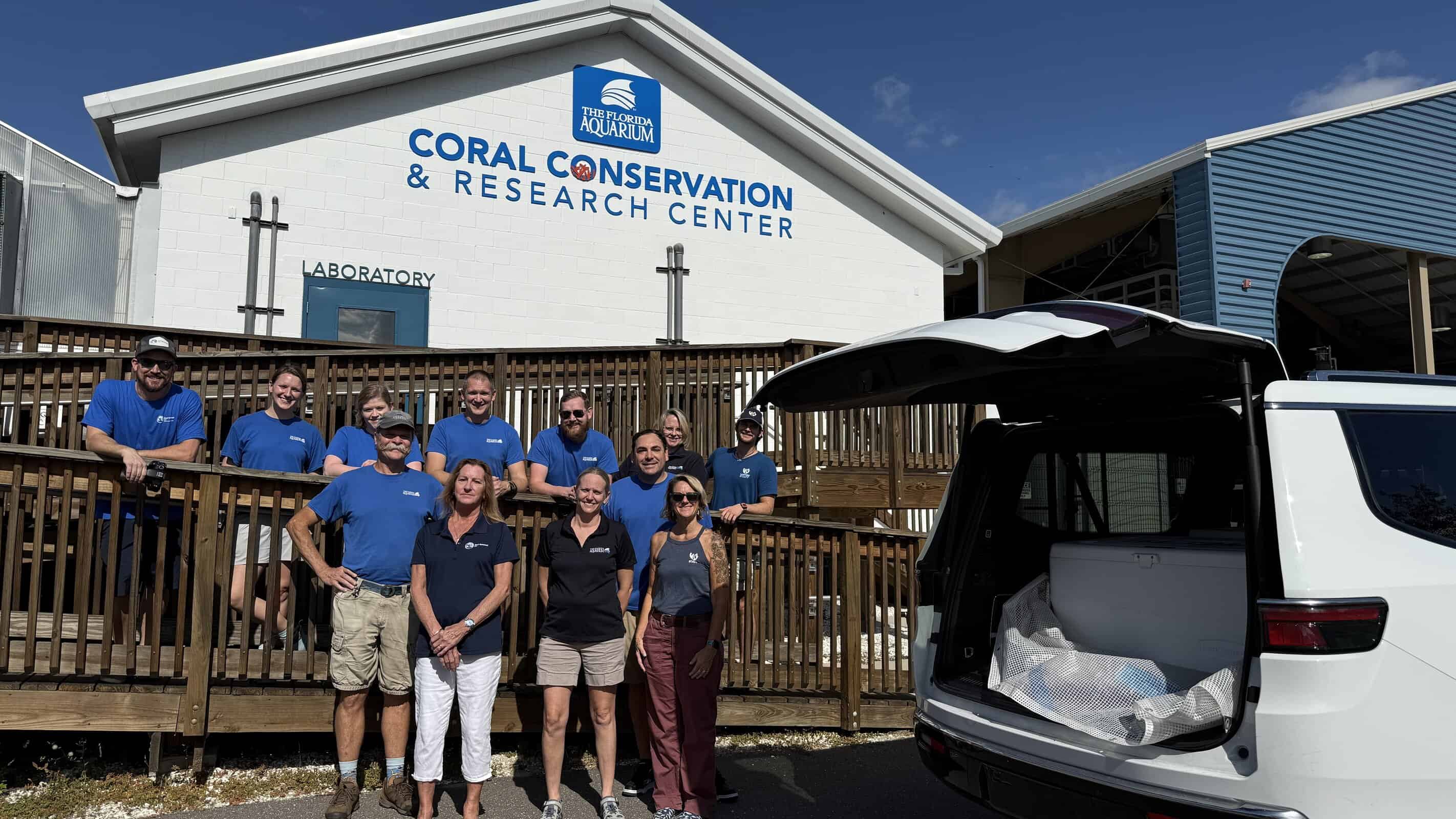
A team from The Florida Aquarium prepares coral babies for transport to their new home.
The larvae are carefully transferred to the Center’s coral nursery, where they remain until they are old enough to be moved to secondary facilities, such as Reef Renewal USA and The Reef Institute. When the coral babies are ready, biologists carefully pack the baby corals and prepare them for transport to the organizations that will care for them as they grow.
Once the baby corals are settled into their new homes, they will continue to grow until they are “reef ready”—meaning they have reached a size at which they can be successfully transplanted back onto ocean reefs. This most recent transfer of 9,000 baby corals included star corals, boulder brain corals, symmetrical brain corals, and grooved brain corals.
Next Steps for the 9,000 Coral Babies
The Reef Institute was one of two organizations to receive about half of the 9,000 coral babies. These babies will grow in the Institute’s new 23,000-square-foot land-based facility in West Palm Beach.
“This transfer represents years of preparation, innovation, and shared commitment,” said Leneita Fix, CEO and Executive Director of The Reef Institute. “Our facility—largely funded through FCR3—was built for moments like this, allowing us to scale coral recovery and give these corals the strongest possible start before returning them to the reef. Working alongside The Florida Aquarium and Reef Renewal USA allows us to move faster and restore the Florida reef together.”
Once the coral is ready, it will be outplanted onto reefs in Martin and Palm Beach Counties.
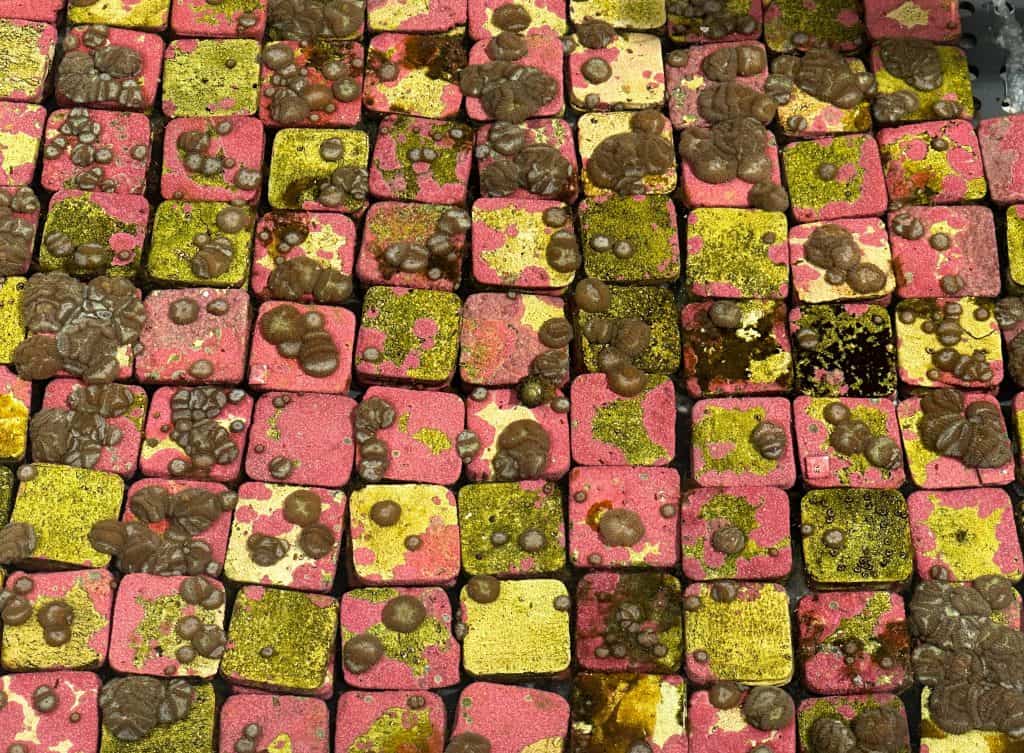
These coral babies were part of the 9,000-specimen transfer.
Reef Renewal USA received its share of the coral babies in two separate transfers: the first arrived in December 2025, and another 4,000 seven-month-old grooved brain corals were delivered in January. The corals will remain at the organization’s facility in Ruskin until they are ready to be outplanted on reefs throughout the Florida Keys over the coming year.
“Scaling restoration is essential to keeping pace with the challenges facing Florida’s reefs,” said Martha Campbell, Operations Manager at Reef Renewal USA. “FCR3 funding allows us to bridge the gap between coral spawning and reef restoration by growing corals to a size where they are more likely to survive and contribute to reef recovery. This partnership helps turn science into measurable, real-world impact.”
What’s Next for Florida Coral Restoration?
The FCR3 program supports more than just coral production and deployment. Grant money also supports other initiatives at The Florida Aquarium’s Coral Conservation and Research Center. These include a hands-on training curriculum and the design of a new classroom lab. The lab expansion will be the hub for training the next generation of coral scientists, restoration practitioners, and conservation professionals needed to keep Florida’s reef restoration momentum moving forward.
FCR3 also helped The Reef Institute move into a new facility that is seven times larger than its previous space. The larger facility allows the Institute to scale up its larval settlement operations and expand its coral spawning efforts. Both initiatives support the long-term goal of restoring reefs off the coasts of Palm Beach and Martin Counties.
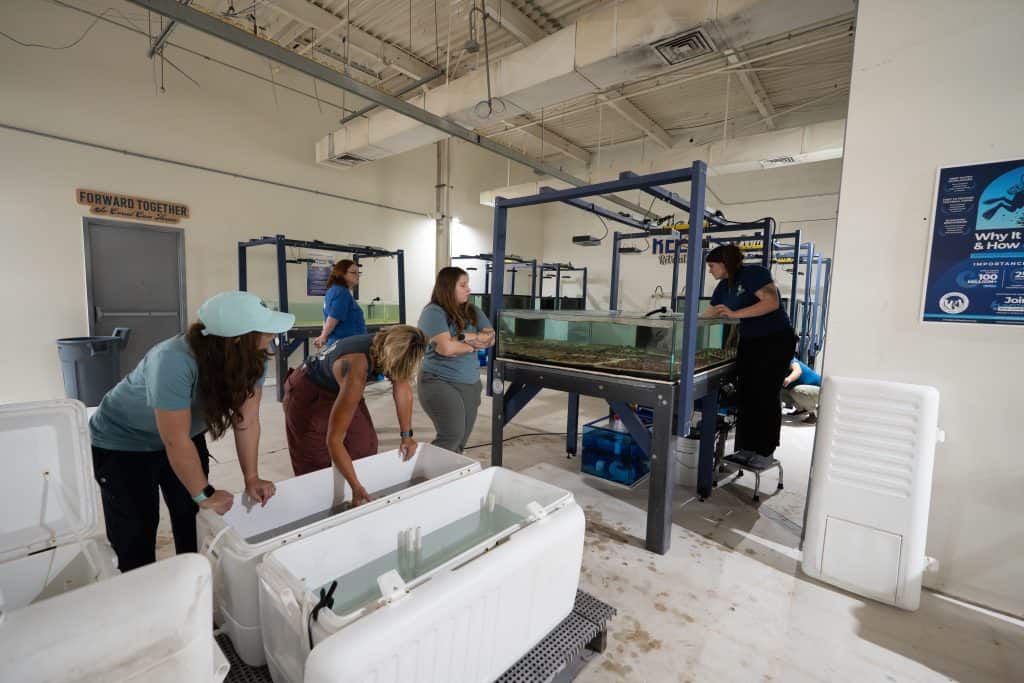
Workers at the Reef Institute transferred the received coral babies to the new nursery.
Reef Renewal USA was also able to significantly expand its facility in Ruskin thanks to grant money from FCR3. In the larger facility, they were able to develop a large-scale coral grow-out system to raise both sexually and asexually propagated baby corals to suitable sizes for successful outplanting. The FCR3 grant supports approximately 90,000 gallons of grow-out capacity. These expanded resources are a big step towards helping achieve Florida’s statewide reef recovery goals.