
Quick Take
- The official population estimate for this species is dangerously wrong, and the real number is shocking enough to change its entire conservation status. See the real population numbers →
- The Timor green pigeon checks every single box for extinction risk, and scientists have a specific list that explains exactly why. Explore the extinction risk factors →
- The people partly responsible for this bird's decline may also be its best hope for survival, provided one unconventional idea takes hold. Discover the conservation hopes →
The call of the Timor green pigeon once echoed around the thick forests of Indonesia. Now, sadly, that wonderful sound is rarely heard. Analysis of over twenty years of field data has revealed that this species may soon face extinction if urgent action is not taken.
Finding the Timor Green Pigeon
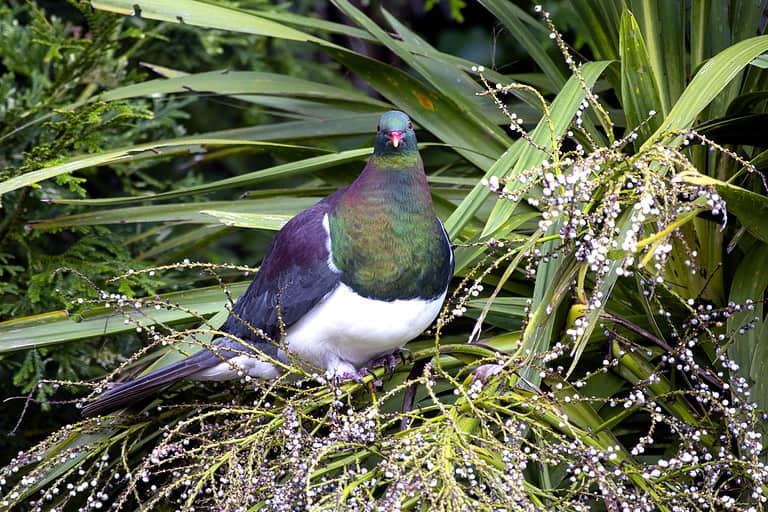
The Timor green pigeon (Treron psittaceus) is a member of the Columbidae family of birds, which includes other pigeon species and doves. The Timor green pigeon is a striking bird, measuring around 12 inches in length. Its main color is a soft, grey-green, which becomes brighter on the throat, rump, and upper tail-coverts. It prefers to live in primary, tall secondary, and monsoon forests, mainly in lowlands. Little is known about its diet apart from the fact that it forages for figs. Individuals have been observed both alone and in flocks of up to 20. Its distinctive cooing song sounds like “u-wop, u-wop…,” but it can also produce a growling or bubbling sound.
What Is Their Conservation Status?
In general, the Columbidae family is among the most threatened of all bird families. It is estimated that 17 percent of them are threatened with extinction, and nearly 70 percent have declining population trends. The birds in this family that are most under threat are those that have globally restricted ranges, occur on islands, are forest specialists, and are non-migratory. The Timor green pigeon ticks all of these boxes!
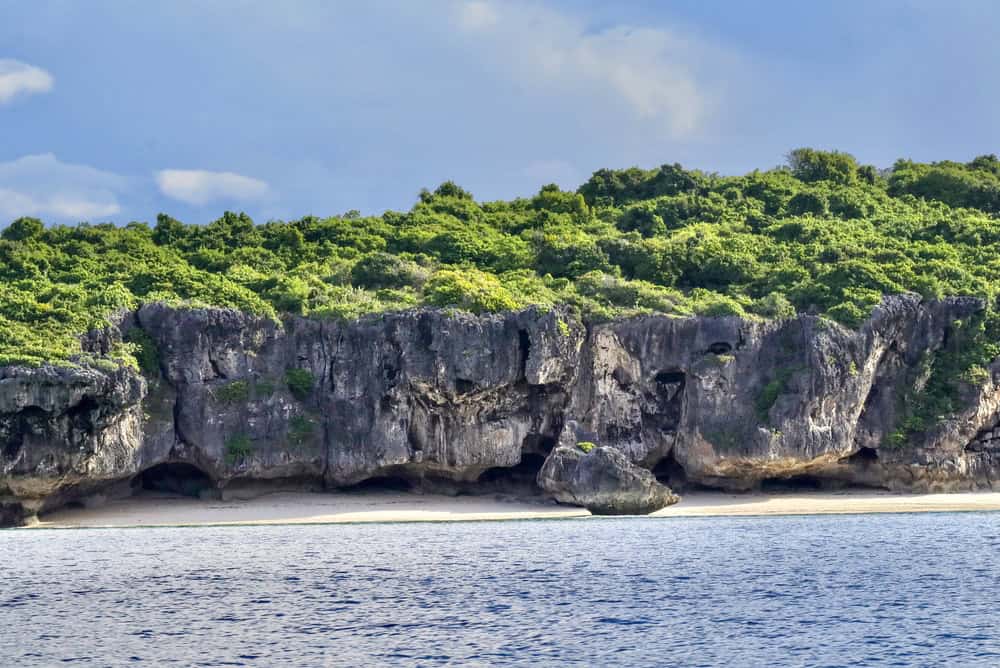
Timor green pigeons have been hunted intensively on Rote Island.
©arwindw/Shutterstock.com
This pigeon is found in Indonesia on Rote Island, Semau Island, and on the Indonesian portion of West Timor. They are also found in Timor-Leste, which occupies the eastern part of Timor Island and includes the island of Atauro. Throughout parts of this range, the pigeon is sadly considered possibly extinct.
It has been categorized as threatened by the IUCN Red List since 1988 and as Endangered since 2000. Yet, there is still so much that we do not know about it. Surveys have either failed to find them or have recorded them as rare and very wary birds. Overall, the picture is one of a declining population, probably due to hunting and habitat loss. Reliable data were needed to inform conservation efforts to save the species.
Surveying the Timor Green Pigeon
A recent study of Timor green pigeon numbers was based on field surveys (between 2002 and 2025) and literature records. Dated field records were used to create distribution maps and included field observations submitted to eBird, published articles, and sound recordings.
Overall, the final study included 96 records of the Timor green pigeon made up of 62 field observations, 17 records from eBird, one from Observation International and local partners, 15 from published literature, and one personal communication.
Survey Results Paint a Worrying Picture
The survey results suggest that the current global population estimate for Timor green pigeons, which is between 660 and 2,000 mature individuals, is optimistic. A more realistic figure would be 100–500 mature individuals, with 100 being the most likely number. There is little doubt that this worrying situation has been caused by intense hunting and a lack of conservation management across the bird’s range.
There are very few records from Rote Island, and the species is likely functionally extinct. However, there is still hope that there are a few of them left in the remote, intact forests of northern Rote. The problem this species faces is that it is accessible to hunters from nearby forest communities and is therefore still in great danger.
The situation on Semau Island is equally depressing. Only two Timor green pigeons have been seen in 33 years! On this island, there is little remaining remote forest where unrecorded birds could survive, so the outlook is bleak. Similarly, there have been hardly any recorded sightings in West Timor. This suggests that, if a population exists there, it is very small.
Is the Timor Green Pigeon Functionally Extinct?
Overall, the experts concluded that the Indonesian population of Timor green pigeons is very small and is made up of fewer than 50 mature individuals. It is probably functionally extinct, consisting of just a few scattered individuals.
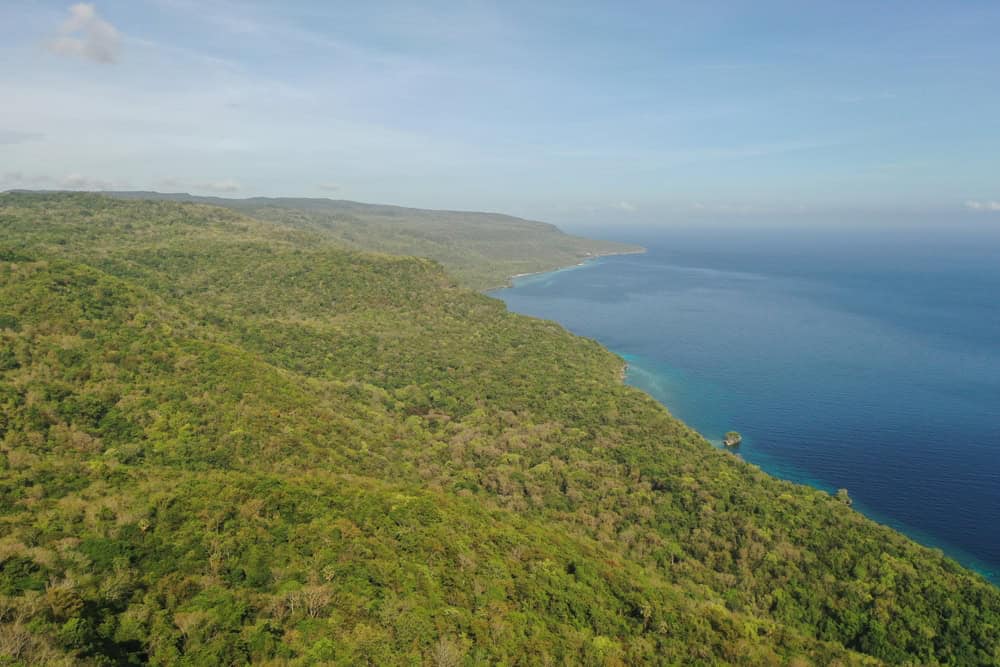
There may be a few Timor green pigeons living in Konis Santana National Park.
©Albino da Silva Barbosa/Shutterstock.com
Things look a little more optimistic in Timor-Leste. Here, there are likely between 100 and 450 mature individuals. Most of them are living in the Konis Santana National Park. However, there are still large parts of the national park with no Timor green pigeons at all. This suggests that, in a worst-case scenario, there could be just 100 pigeons left. However, there are some more remote, under-surveyed forests where additional individuals may exist. Again, hunting is a huge threat to these vulnerable birds.
Urgent Conservation Action Needed
There is still hope for this beleaguered avian species. In Indonesia, a new generation of conservation workers has produced a new interest in citizen science bird surveys and monitoring. A growing number of highly skilled bird observers now work as guides for local and international commercial bird tours.
Since Timor-Leste gained independence in 2002, there have been several key conservation efforts. This has included identifying Important Bird Areas within remaining forest habitats and establishing 46 national parks and protected areas. There is a national protected wildlife list to which the Timor green pigeon has been added. It is now illegal to hunt and kill them. If local hunters could be engaged in conservation work and wildlife monitoring, there is still a chance that this wonderful bird will survive.