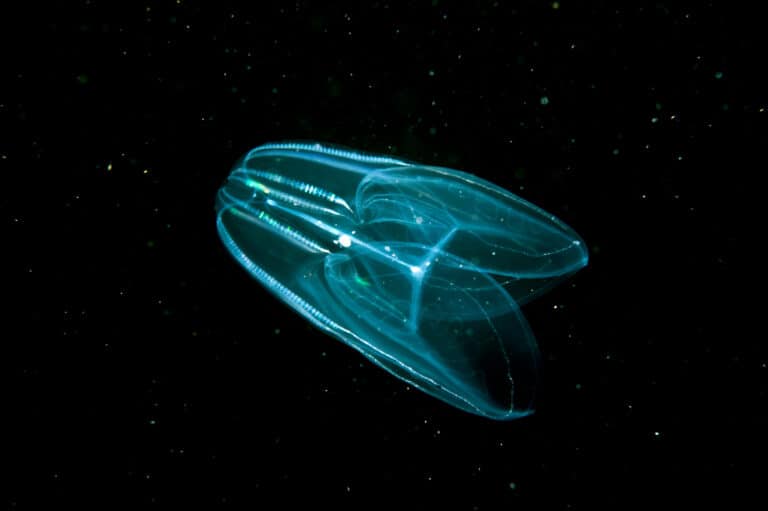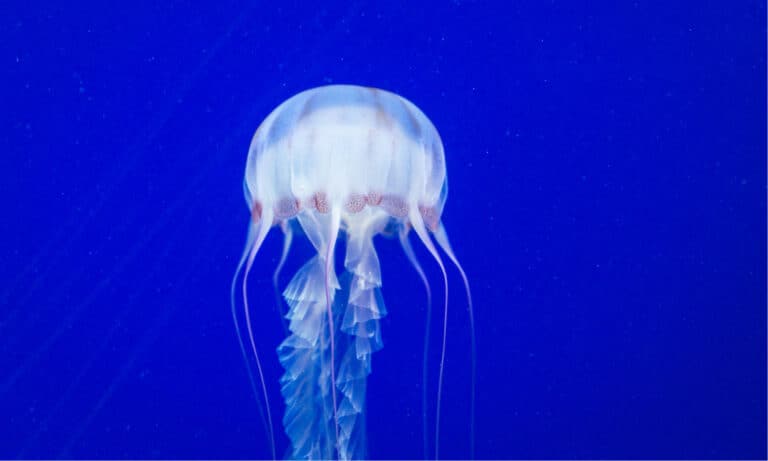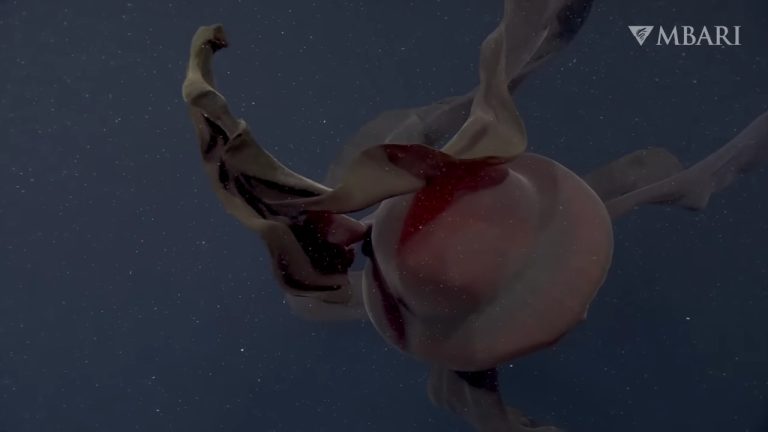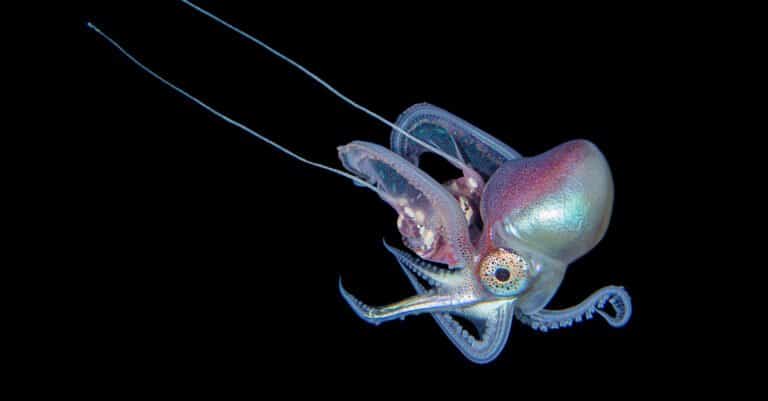

Although they look similar to jellyfish and share some common features, comb jellies are not really jellyfish. They aren’t even closely related. Jellyfish are in the phylum Cnidaria, while comb jellies are in the Ctenophora phylum. However, both have roamed the seas for hundreds of millions of years. A fascinating video from National Geographic UK shows some amazing footage of comb jellies. Watch the video to get an up-close look at the unique way comb jellies catch their prey.

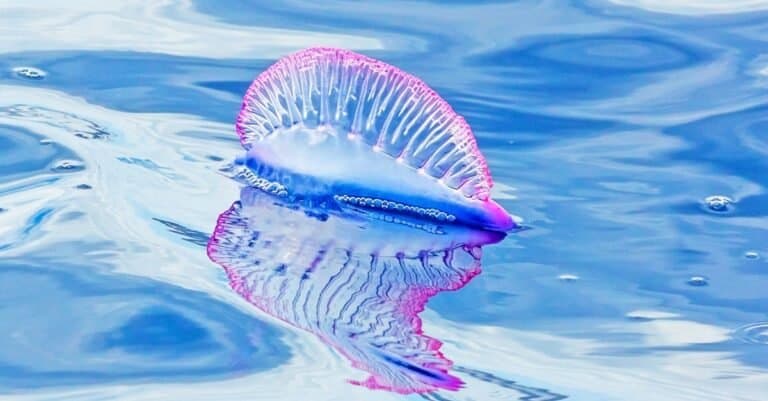
Comb jellies are diverse and come in different colors, including ruby red.
©Takokat/Shutterstock.com
What Are Comb Jellies?
There are around 100 to 150 different species of comb jellies. This diverse group of animals lives in every ocean. Comb jellies, also known as sea walnuts, can be found floating near the ocean’s surface and at depths of over 4 miles. They live in warm coastal waters as well as in the frigid oceans of the Arctic.
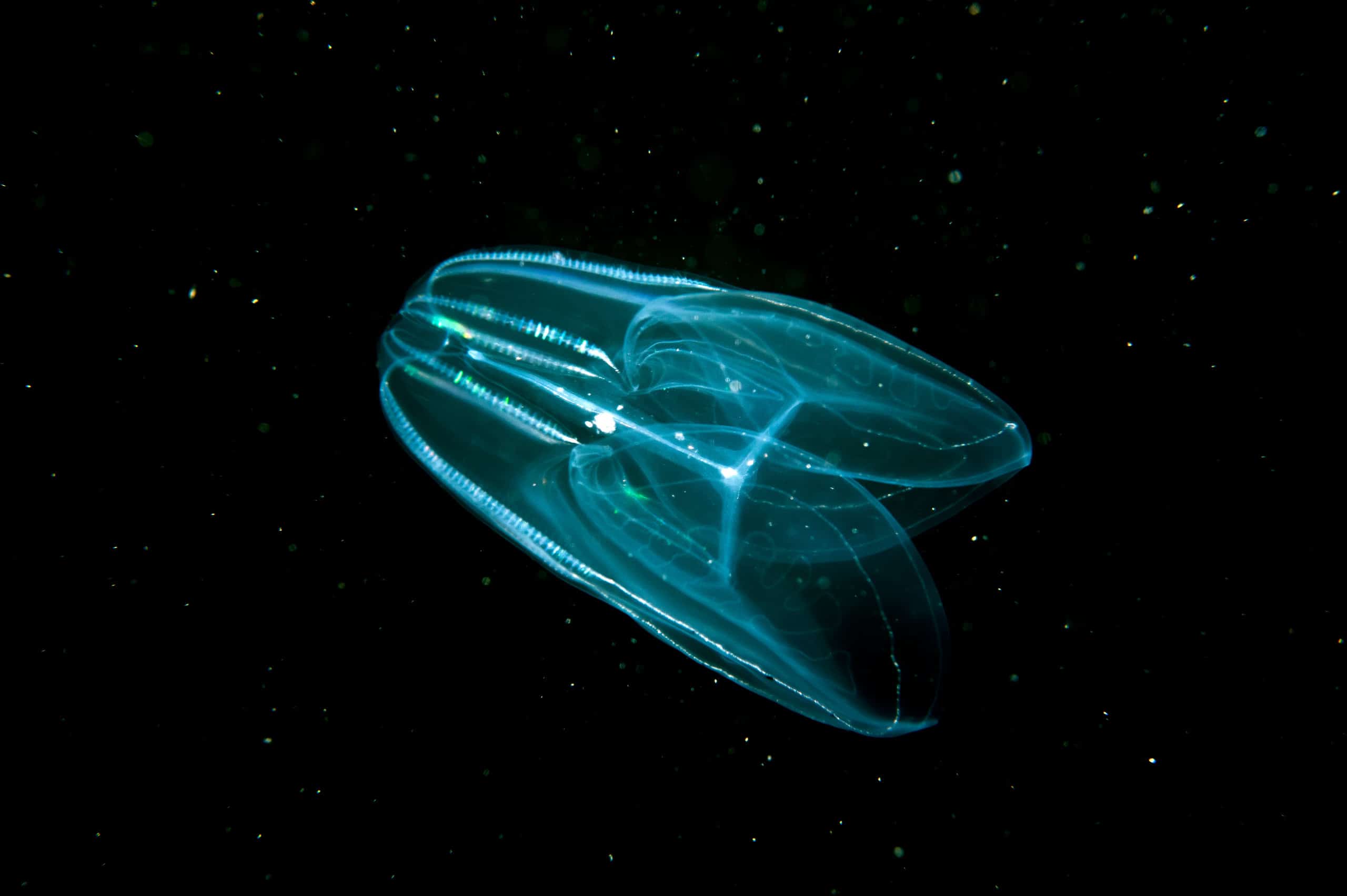
Like jellyfish, comb jellies have gelatinous bodies that are 95% water. Comb jellies are named for the plates of giant fused cilia cells along their bodies, which resemble combs. They use their combs to propel themselves through the water. Although microscopic organisms also use cilia to swim, comb jellies are the largest animals to do so.
Voracious Predators Without a Brain
Comb jellies don’t have a brain or a central nervous system. They do have a nerve net, which looks different in different species. Some comb jellies have tentacles, but they don’t sting like a jellyfish’s tentacles. Some species of comb jellies have sticky structures on their tentacles, which they use to catch prey. After their prey is stuck on their tentacles, they bring it into their mouth to digest.
Other comb jellies have evolved to catch their prey in a different way. The video from National Geographic describes a beroid comb jelly that has no brain, but possesses a primitive neural net around its mouth. Beroid jellies, also known as cigar comb jellies due to their cigar-shaped bodies, are in the family Beroidae. The beroid doesn’t have tentacles. Instead, it uses its simple nervous system to detect chemical traces of prey in the water. When an animal is nearby, the jelly opens its large mouth and completely encloses the animal.

Some comb jellies are deadly predators, using specialized adhesive tentacles to catch their food.
©National Geographic UK / YouTube – Original
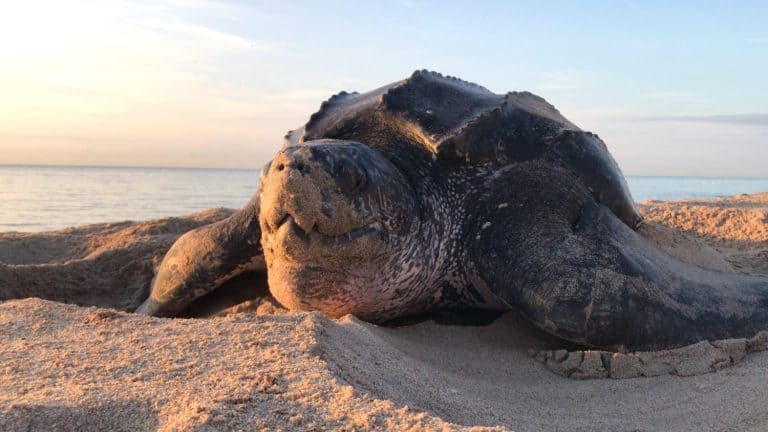
Comb jellies are predators that eat plankton, fish larvae, crustaceans, other small marine animals, and even other comb jellies. Their diets vary based on their species and the oceans they live in. Beroids, for example, mainly eat a diet of other comb jellies. Predators of comb jellies include sea turtles, sharks, marine mammals, and other jellies.
What Else Do Comb Jellies Use Their Mouths For?
Comb jellies use their mouths to catch their food and consume it. However, they also use their mouths for reproduction. Comb jellies are hermaphrodites and release both sperm and eggs from their mouths. The gametes, or reproductive cells, float in the water until they find other gametes and are fertilized.
Because the ocean is vast and gametes may float indefinitely without finding others, comb jellies release gametes every day, increasing the odds that they find each other and create new comb jellies. One species of comb jelly, Mertensia ovum, has even been found to reproduce while still in its larval stage.
Comb Jellies Create a Colorful Light Show
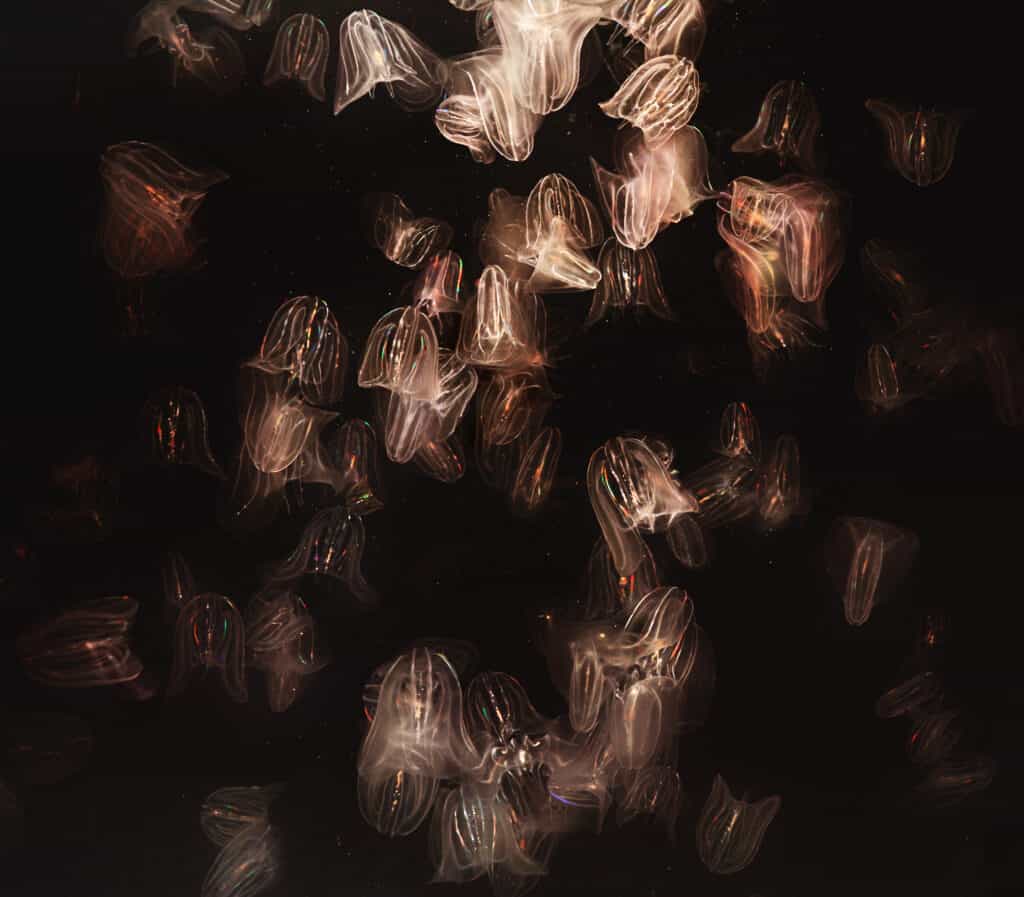
Comb jellies produce a shimmering, beautiful light as they float along in the ocean waters.
©ELEPHOTOS/Shutterstock.com
You can see in the video that the comb jellies produce a beautiful rainbow of colors that reflect through the water. It’s actually the tiny comb-like plates that are diffracting light waves to create the shimmery effect.
While some jellies diffract light to create beautiful colors, others produce their own light through bioluminescence. These jellies may flash a bright blue or green light as a defense to startle predators. For example, the comb jelly species, Beroe ovata, is bioluminescent. This species has no brain or central nervous system, but its nervous system is spread out over its epidermis. Another species, the Leidys comb jelly (Mnemiopsis leidyi), produces light inside its main body.
Comb Jellies Are Invasive in European Seas
Leidy’s comb jellies are native to the American Atlantic coast. In the Atlantic, they fit into their ecosystem, have natural predators, and their population is controlled. However, when this species was accidentally introduced to the Baltic Sea (probably by riding in a ship’s ballast water), it upended the local ecosystem. With few predators, the comb jelly populations grew.
Leidy’s comb jellies have a big appetite for fish eggs and larvae, and have caused severe economic damage to European fisheries. Subsequently, another non-native comb jelly, Beroe ovata, which preys mainly on other comb jellies, spread into the affected waters and has helped reduce the population of Leidys comb jellies.