
Quick Take
- This predator can dramatically increase its reach by wielding several stinging tentacles in addition to its 8 arms.
- Managing multiple stinging tentacles at once presents a unique coordination challenge for the octopus.
- Adopting external weaponry is an unusual behavior among cephalopods, making the blanket octopus stand out among its relatives.
- Careful selection and detachment of man o’ war tentacles is required for the octopus to acquire these stinging whips.
Picking up a live electric wire and swinging it around sounds like a terrible idea. For the blanket octopus, it is a daily survival strategy. As if eight arms were not enough, this species can double its reach by holding extra stinging tentacles in its suckers. This open-ocean octopus grabs venom-packed tentacles from Portuguese man o’ wars and uses them like flexible weapons. The stolen tentacles can sting predators and stun prey, giving the octopus protection it did not evolve on its own. With extreme size differences between males and females, and a flowing web that can tear away as a distraction, the blanket octopus stands out as one of the most ninja-like animals in the sea.
A Life Spent Drifting in Open Water
Blanket octopuses live in warm oceans across the globe, usually far from shore and far from the sea floor. They belong to the genus Tremoctopus and spend their entire lives in the pelagic zone, where there are no rocks, reefs, or caves to hide in. Movement and awareness matter more than camouflage in this environment.
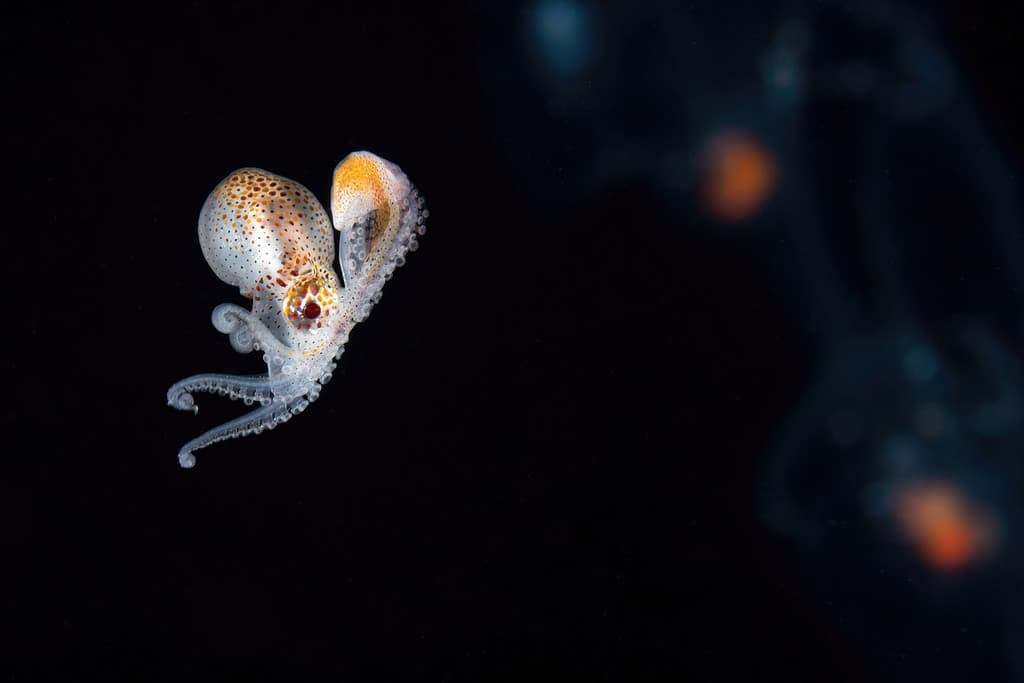
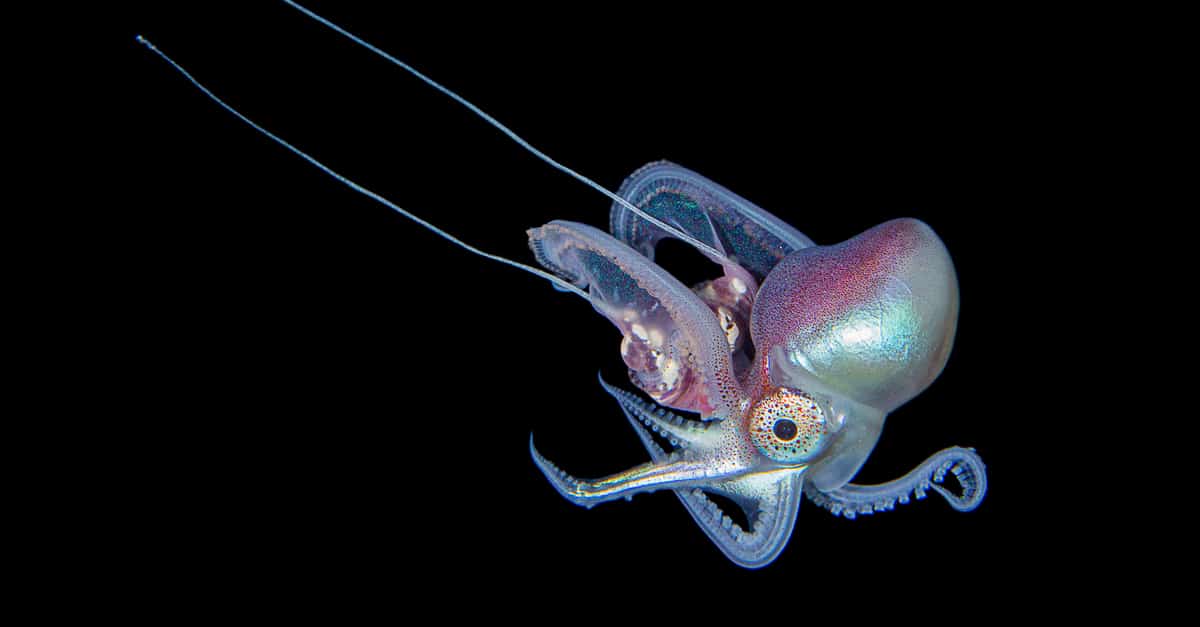
Blanket octopuses spend their lives drifting and swimming in open water, far from reefs or the sea floor.
©Andre Johnson/iStock via Getty Images
Unlike bottom-dwelling octopuses that crawl and squeeze into tight spaces to hide, blanket octopuses swim and drift through open water. Currents shape where they go, and food can be unpredictable. This lifestyle favors animals that can react fast, look intimidating, or borrow defenses from other species when possible.
Extreme “Exfoliation” as a Defense
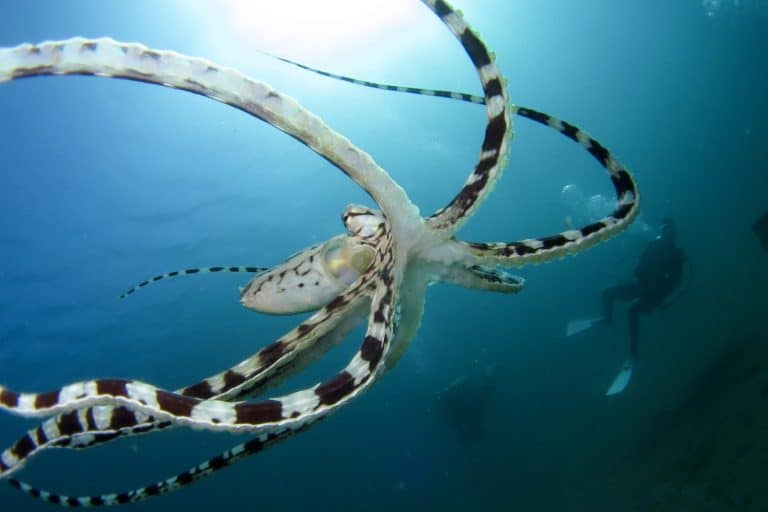
Adult females are the most recognizable members of the species. Their back arms connect through thin, sheet-like webbing that can trail behind them like fabric in water. When relaxed, the web streams gently as the octopus swims. When threatened, it can spread outward in a sudden display. This video has beautiful footage of what that blanket looks like.
This display makes the octopus appear far larger than its body alone. If a predator keeps approaching, sections of the webbing can tear free and drift behind the animal. Those floating pieces distract attention while the octopus jets away. The behavior works much like a squid releasing ink, except it uses detachable skin instead of pigment. Who knew exfoliating could save your life?
Extreme Size Differences Between the Sexes
Few animals show size differences between males and females as dramatic as the blanket octopus. Adult females can reach up to two meters (about 6.6 feet) in total length when their arms are fully extended. Their bodies and webbing make them strong swimmers in open water.
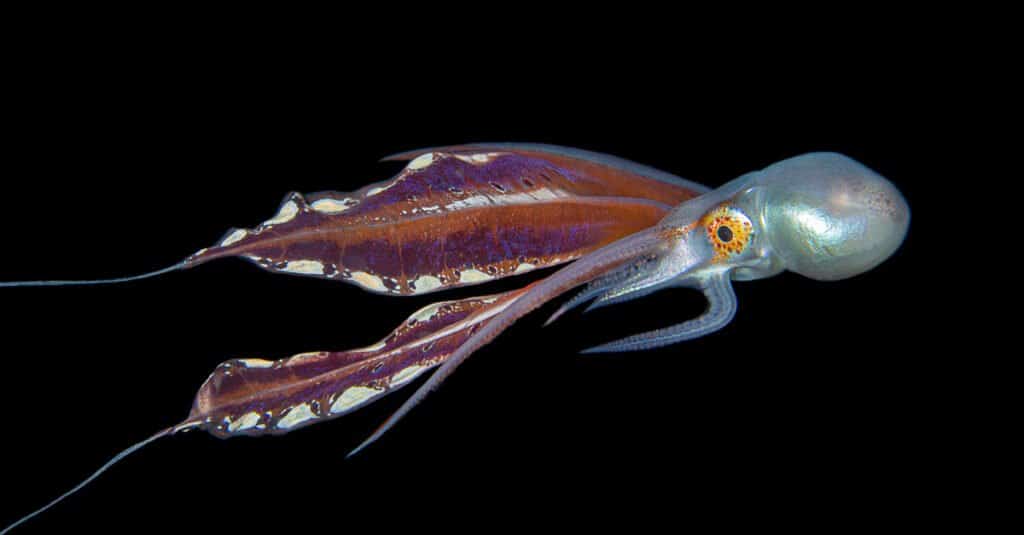
Large female blanket octopus swimming in open water, showing extended arms and webbing.
©Sam Robertshaw/Shutterstock.com
Males, by contrast, are typically less than an inch long, and a single female can outweigh a male by as much as 40,000 times. This difference ranks among the most extreme cases of sexual size dimorphism known in animals of comparable complexity.
Males lack the flowing blanket and do not collect stinging tentacles. Instead, they mature quickly and use a specialized arm to transfer sperm. After mating, males die shortly afterward. Females invest heavily in growth, mobility, and defense, while males invest almost exclusively in reproduction.
The Portuguese Man o’ War Explained
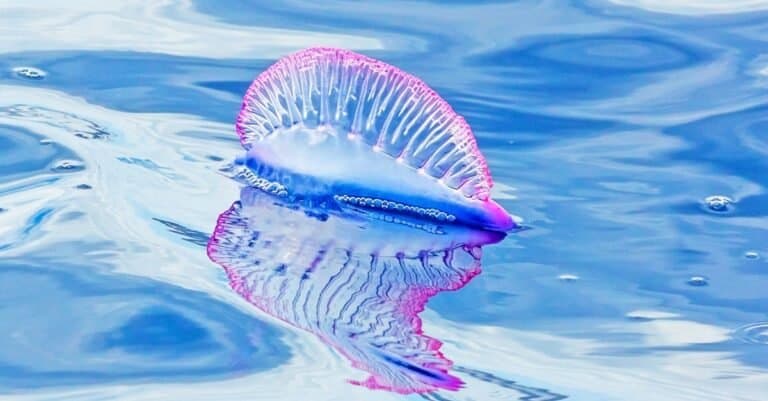
The Portuguese man o’ war often gets called a jellyfish, but it is not a single animal. It is a siphonophore, a floating colony made of many specialized individuals that function together. Some parts focus on feeding, digestion, or defense. One part forms a truly beautiful gas-filled float that sits at the surface, looking like a sailing warship to early explorers, but to us more like a party balloon or a funky gift-shop sun-catcher for your garden. It is, hands down, one of the most otherworldly beautiful living things you may ever see floating on the ocean. It may be tempting to touch, but you should avoid it—and here’s why:
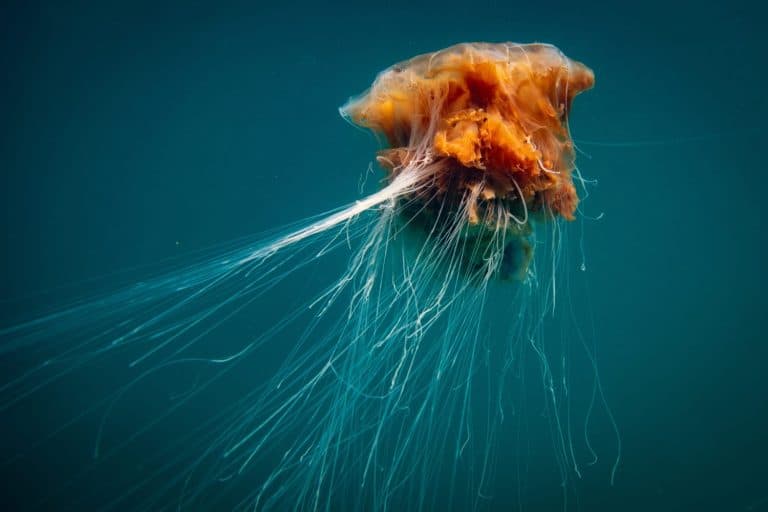
Trailing beneath the floating colony are long tentacles lined with stinging cells called nematocysts. These tentacles can stretch to over 100 feet, with rare reports suggesting they could reach as far as 160 feet. That’s as long as half a football field or the length of a 15-story apartment building laid on its side. And they remain dangerous long after breaking free. For fish and other small animals, contact often leads to paralysis or death. For humans, stings cause severe pain and skin irritation, though they are rarely fatal.
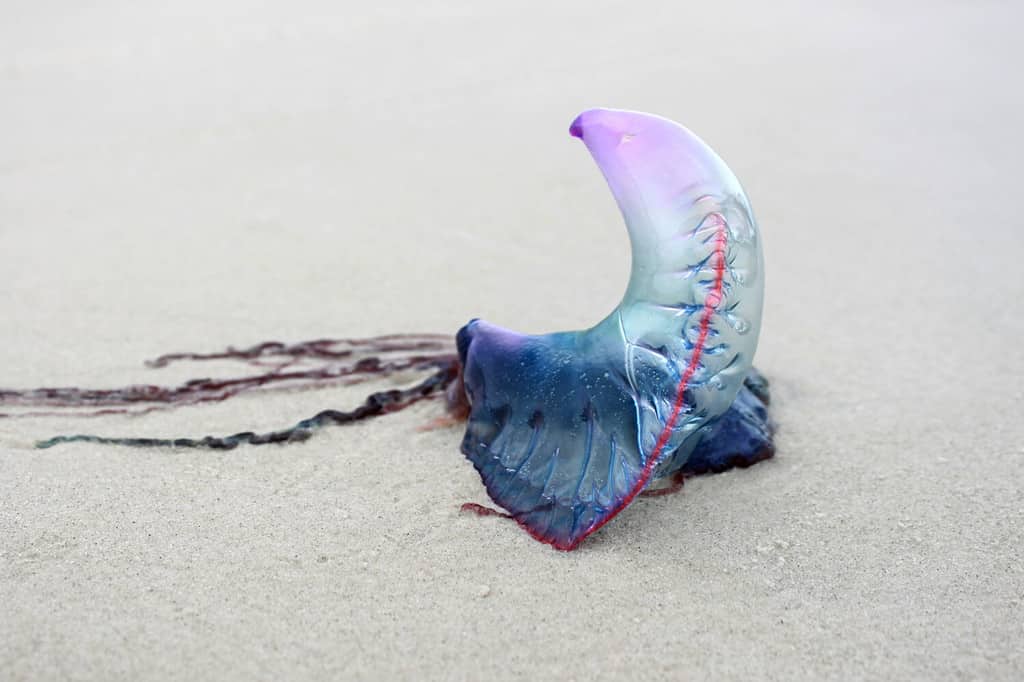
Even after separating from the colony, man o’ war tentacles remain dangerous to touch.
©Pedro Sales Prado/Shutterstock.com
Why the Tentacles Are So Dangerous
Each nematocyst acts like a microscopic spring-loaded dart. When triggered, it fires a barbed thread loaded with venom into whatever had touched it. The venom disrupts nerves and damages cells, making it highly effective against prey. Because the tentacles are thin and hard to see, animals often swim into them by accident. Detached pieces can still sting, which means drifting fragments pose risks long after separating from the main colony. Most animals avoid man o’ wars completely, but the blanket octopus does the opposite.
Stealing Tentacles as a Defensive Tool
Female and juvenile blanket octopuses actively grab man o’ war tentacles and tear off sections using their arms and suckers. They then hold these fragments like flexible whips, letting them trail outward as the octopus swims.
As if eight arms were not enough, carrying extra stinging tentacles effectively doubles the animal’s reach. Any predator that comes too close risks being struck by venom before it can bite. The octopus may also flick the tentacles like whips toward small fish, using the venom to disable its prey before eating it. This behavior allows a soft-bodied animal to gain protection without evolving venom of its own. It is a rare example of an invertebrate repurposing another species’ weapon directly.
Why the Stings Do Not Kill the Octopus

Careful arm and sucker control may help blanket octopuses handle stinging tentacles without triggering their venom.
©Henner Damke/Shutterstock.com
Blanket octopuses are considered to be immune to the venom of the Portuguese man o’ war. This immunity may be due to their skin and suckers lacking the chemical triggers that cause nematocysts to fire, as well as physiological resistance to the venom itself. Some fish that live near man o’ wars show similar tolerance. The octopus may also select tentacle sections that are less reactive or already damaged.
Behavior likely plays a role as well. The octopus handles the tentacles carefully and limits contact with sensitive parts of its body. Whatever the exact mechanism, the result is clear. The octopus can wield one of the ocean’s most painful weapons safely.
Tool Use in an Unlikely Animal
Tool use is rare among mollusks, especially those living far from complex habitats. The blanket octopus stands out because it does not simply mimic another species; it physically collects and reuses a functional weapon. This behavior suggests advanced problem-solving and flexibility. It also shows that intelligence and innovation are not limited to reef-dwelling octopuses that interact with varied environments. Even in open water, where options seem limited, evolution can produce unexpected solutions.
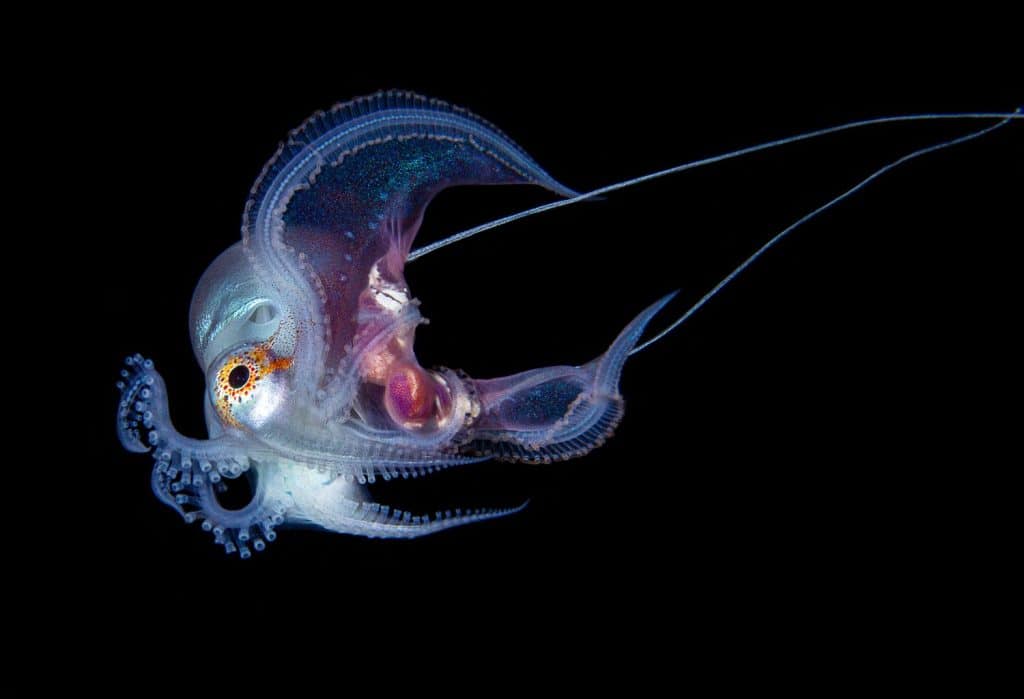
By collecting and reusing stinging tentacles, the blanket octopus shows rare tool use among mollusks.
©Sam Robertshaw/Shutterstock.com
What the Blanket Octopus Teaches Us
The blanket octopus challenges common ideas about how animals defend themselves. It does not rely on brute force or speed alone. Instead, it uses other creatures’ defenses, its own body design, and careful timing. For researchers, it highlights how much remains unknown about pelagic life. For everyone else, it serves as a reminder that the ocean still holds animals whose survival strategies feel more like ninja training than instinct alone.