Camouflage is an amazing feature of the animal kingdom, with some animals blending into their environment so well that not even the human eye can spot them. One of these amazing camouflagers is the potoo bird. Famous for its branch-like behavior and mimicry, the potoo bird has an extremely unique form of camouflage. This YouTube Short by @Forevergreenapp shows this camouflage in action; it may take a second to register what you’re seeing. Read here to learn more about the camouflage of the potoo bird.
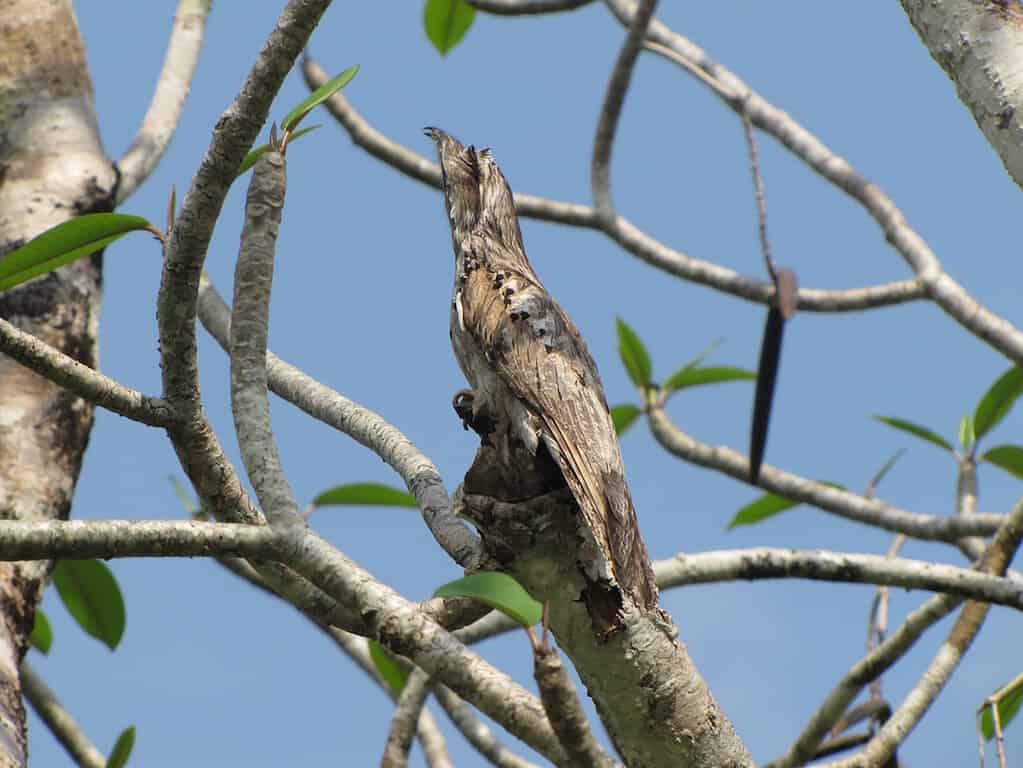
The potoo is a solitary, nocturnal bird with complex plumage of grey, black, and brown that resembles tree bark, allowing it to blend in.
©iStock.com/Natalie Rabinowitz
Potoo Bird’s Camouflage
Native to the tropical regions of the Americas, potoo birds are famous for their masterful camouflage. Potoo birds inhabit forests and woodlands in southern Mexico, Central America, and South America. The dense foliage helps the bird’s amazing camouflage blend seamlessly into the background environment. As seen in the video above, a potoo and its chick are both camouflaged, fooling onlookers. Potoo birds use their stillness and mottled gray and brown feathers to resemble tree branches. By sticking their heads up, they look just like the end of a broken branch. Camouflage is the primary way the potoo bird stays safe, making it important for them to blend in from a young age.
Potoo chicks instinctively camouflage themselves from a young age, relying on their plumage and stillness to blend in with their surroundings. One of the unique behaviors of the potoo bird is its low-maintenance lifestyle. Most bird species build elaborate nests to raise multiple chicks, but potoo birds are different. They lay a single egg on an exposed tree stump or branch, where the chick hatches and remains on the tree. While it may seem unusual for them not to build a nest, this approach actually helps protect the chick through camouflage. As soon as the chick hatches, it begins to blend in with the tree to avoid predation. This camouflage works best in the daylight, as the birds are nocturnal. By blending in during the day, they can safely rest and later hunt at night. To help stay safe during the day, the birds have small slits in their eyelids that allow them to observe their surroundings even while remaining motionless.