
Quick Take
- An animal wrapped in heat-trapping fur and spines has no way to sweat or pant, yet somehow it manages to keep its body cooler than the air around it. See the field discovery →
- Scientists assumed a specific temperature threshold would prove fatal for echidnas, but field researchers found them actively foraging well past it. Explore the temperature findings →
- The echidna's primary cooling trick was hidden in plain sight for decades, and it's unlike anything evolved by any other mammal. Discover the nose-based trick →
- Its spines do far more than deter predators. They are a key part of a multi-layered survival system that baffled researchers for years. See how spines help →
The short-beaked echidna (Tachyglossus aculeatus) doesn’t look like an animal built for blazing hot summers. Covered in sharp spines and thick fur, this egg-laying mammal can’t sweat or even pant. Yet, Australia’s most widespread native mammal thrives everywhere, from scorching deserts to snowy alpine regions.
So how does an animal that can’t sweat or pant survive blistering heat? The answer is one of the strangest cooling strategies in the animal kingdom: it blows snot bubbles.
Defying the Heat
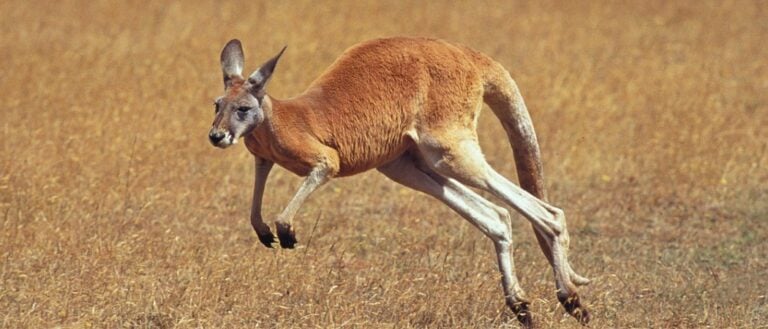
Most mammals have built-in cooling systems. Humans and horses sweat, dogs and cats pant, and kangaroos lick their forearms to cool down through evaporation. But the echidna can’t do any of those things.
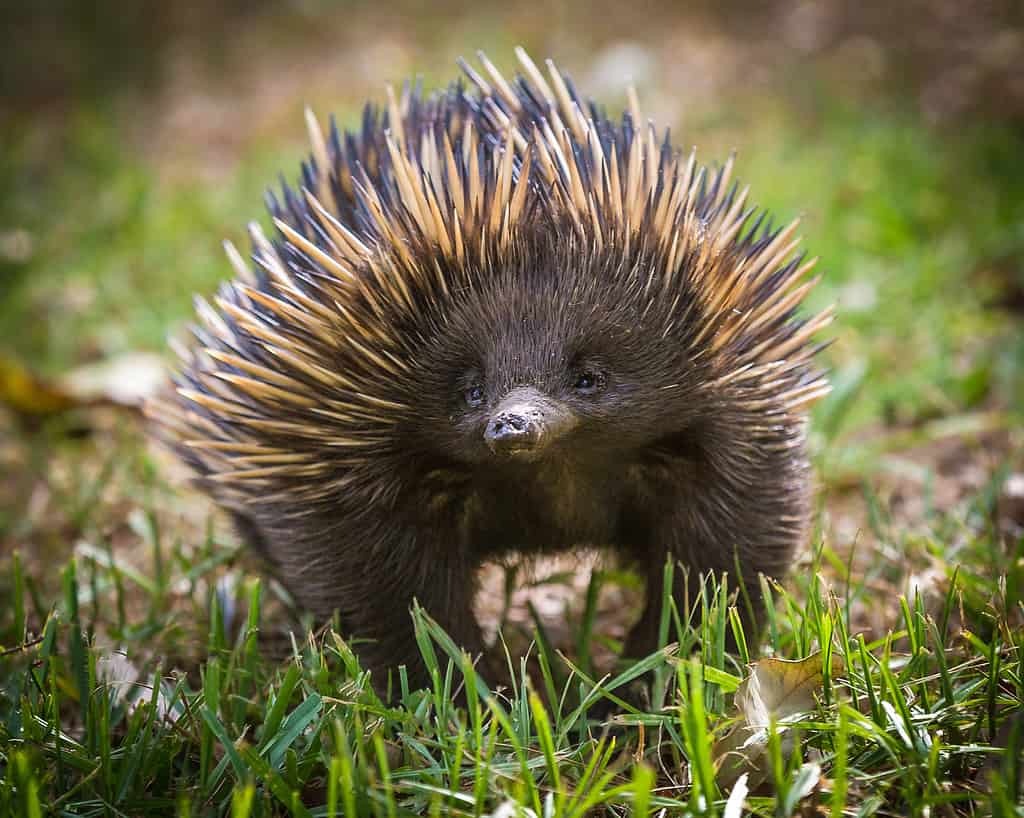
The short-beaked echidna lives in Australia and some areas of New Guinea.
©pelooyen/iStock via Getty Images
To make matters worse, its body is covered in thick fur and hollow spines that trap heat inside. For years, scientists assumed echidnas couldn’t survive extreme heat unless they hid in the shade. Early laboratory tests even suggested that temperatures above 95 degrees Fahrenheit (35 degrees Celsius) would cause fatal heat stress.
However, observations of wild echidnas revealed a very different reality. Researchers found echidnas actively foraging in temperatures up to 99.5 degrees Fahrenheit (37.5 degrees Celsius) while somehow keeping their bodies even cooler than the surrounding air. Clearly, these unique creatures had a hidden survival trick that scientists had not fully appreciated yet.
The “Snot Bubble” Cooling System
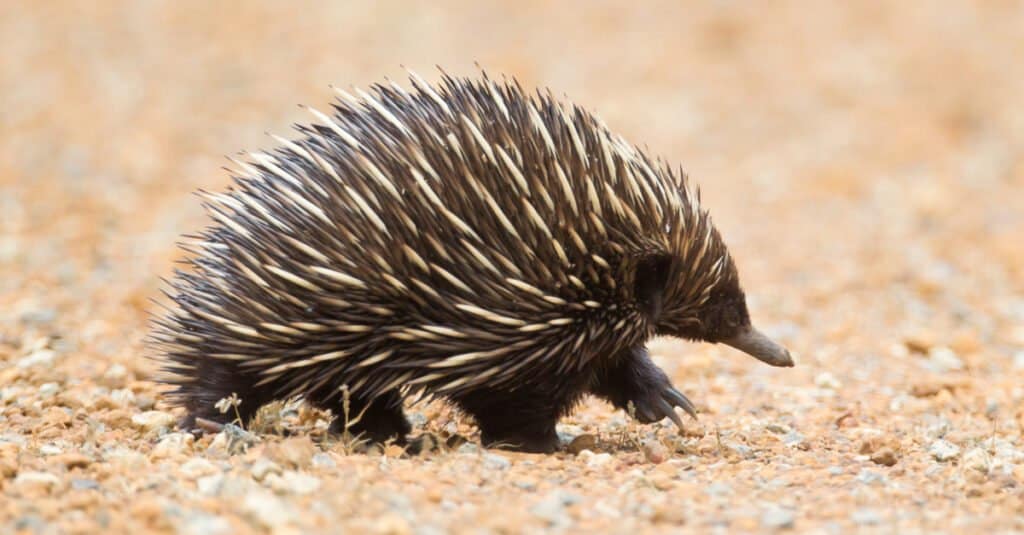
Short-beaked echidnas use their long, sticky tongues to catch termites and ants.
©Jukka Jantunen/Shutterstock.com
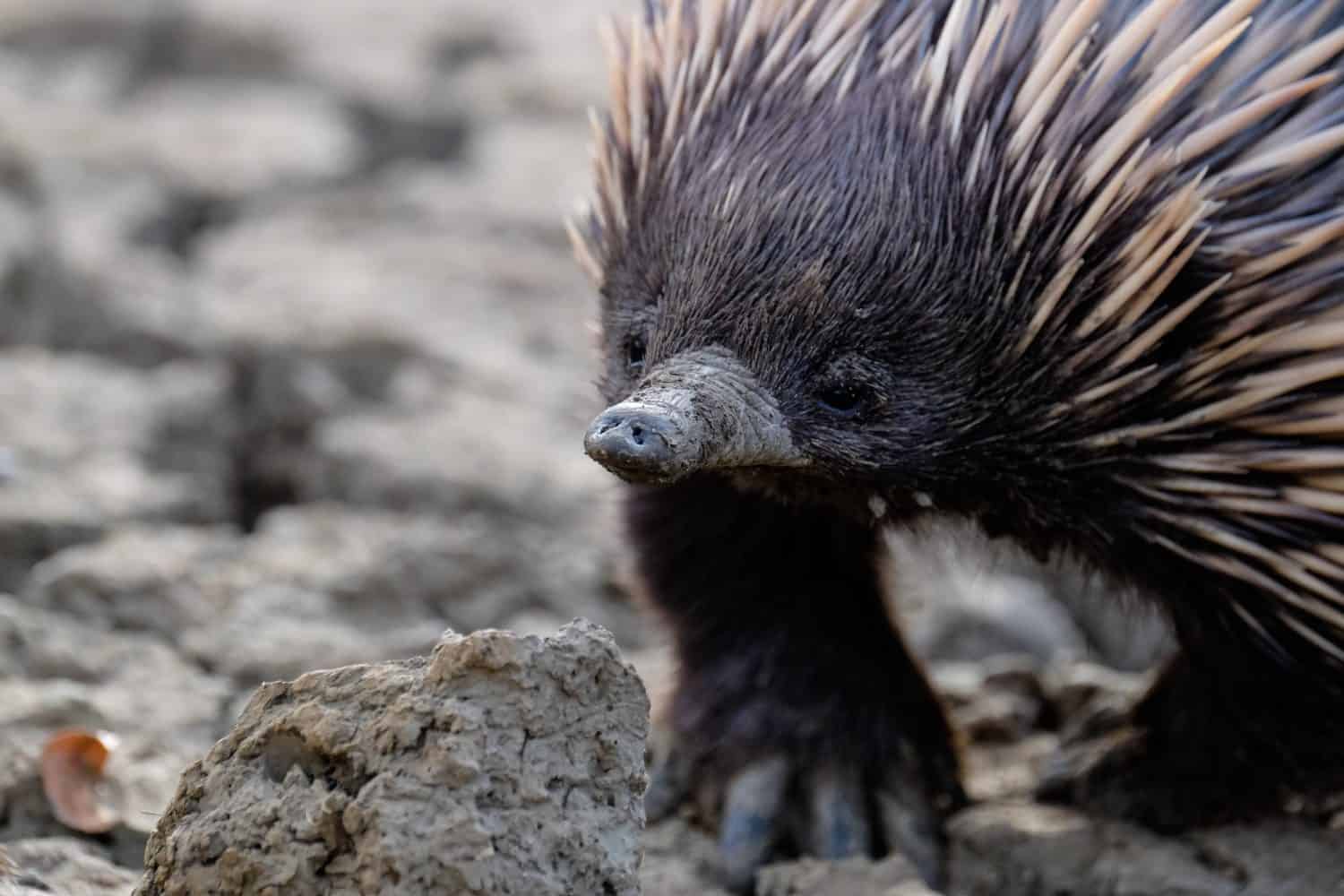
When temperatures rise, the short-beaked echidna turns its snout into a natural air conditioner by blowing mucus bubbles from its nostrils. As these bubbles pop, they coat the tip of its beak with a thin layer of moisture. When that moisture evaporates, it cools the beak — and more importantly, the dense network of blood vessels running just beneath the skin. That cooled blood then circulates throughout the body, helping lower the echidna’s core temperature.
By repeatedly blowing and popping mucus bubbles, the echidna creates its own evaporative cooling system that compensates for its inability to sweat or pant.
Thermal Cameras Reveal the Secret
For decades, scientists knew echidnas could handle extreme heat, but proving how they did it required modern technology. During a 12-month field study, researchers used infrared thermal imaging to track 124 wild echidnas without disturbing them. The cameras revealed a pattern: while the animals’ spiny bodies glowed warm, their wet noses stood out as significantly colder than the rest of their body.
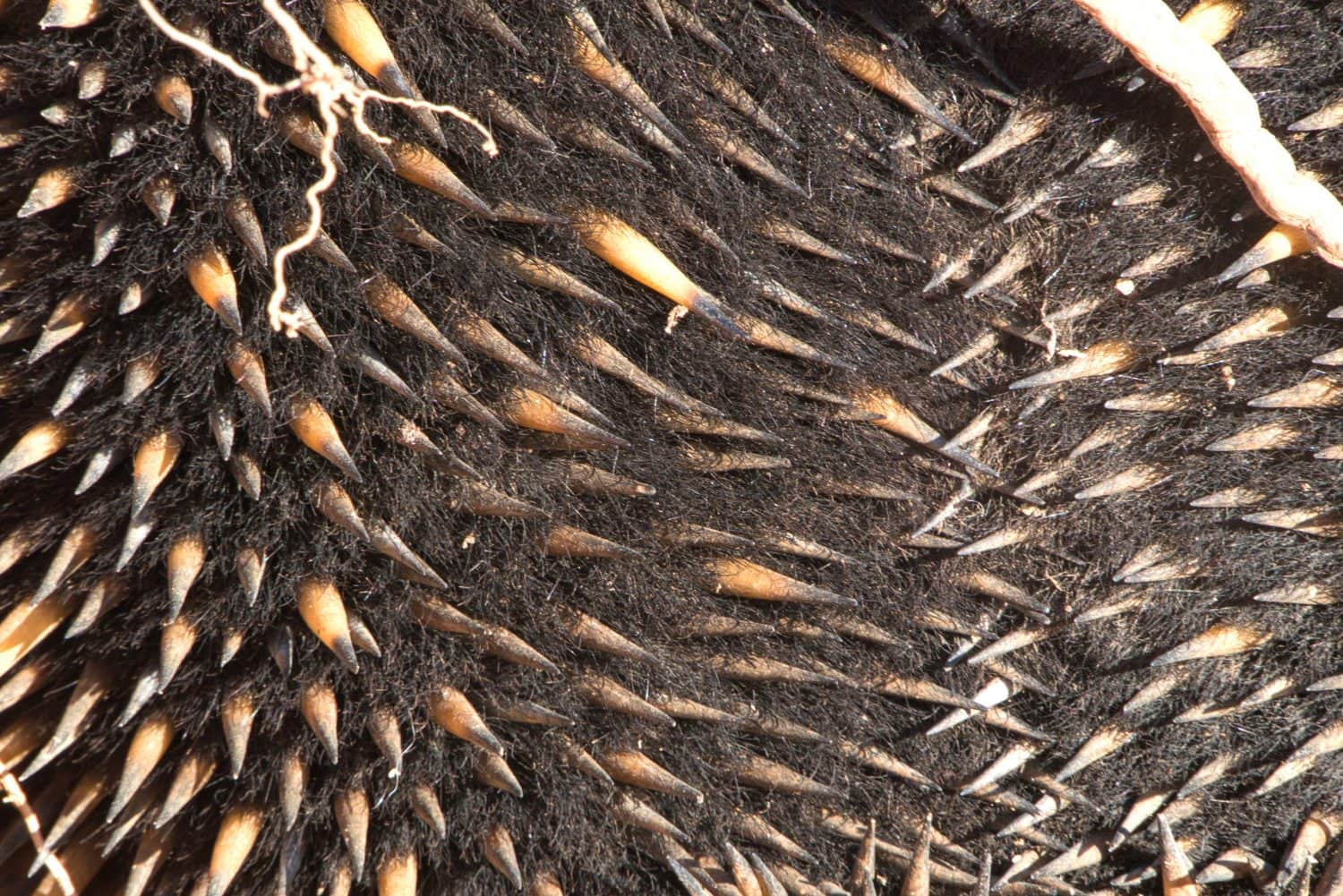
Short-beaked echidnas have coarse fur and sharp spines made of keratin.
©P.j.Hickox/Shutterstock.com
The tip of the beak was measured to be up to 18 degrees Fahrenheit (10 degrees Celsius) cooler than other parts of the body, demonstrating that the mucus bubble process functions as an active evaporative cooling system — not just a quirky behavior.
More Than One Way to Beat the Heat
As efficient as blowing snot bubbles is, the echidna utilizes several different techniques to keep cool. Its hairless belly and inner legs act as “thermal windows.” By pressing this bare skin against cool soil, rocks, or logs, the echidna transfers excess body heat directly to the ground. It can even adjust its spines, raising them to release trapped heat or flattening them to retain warmth.
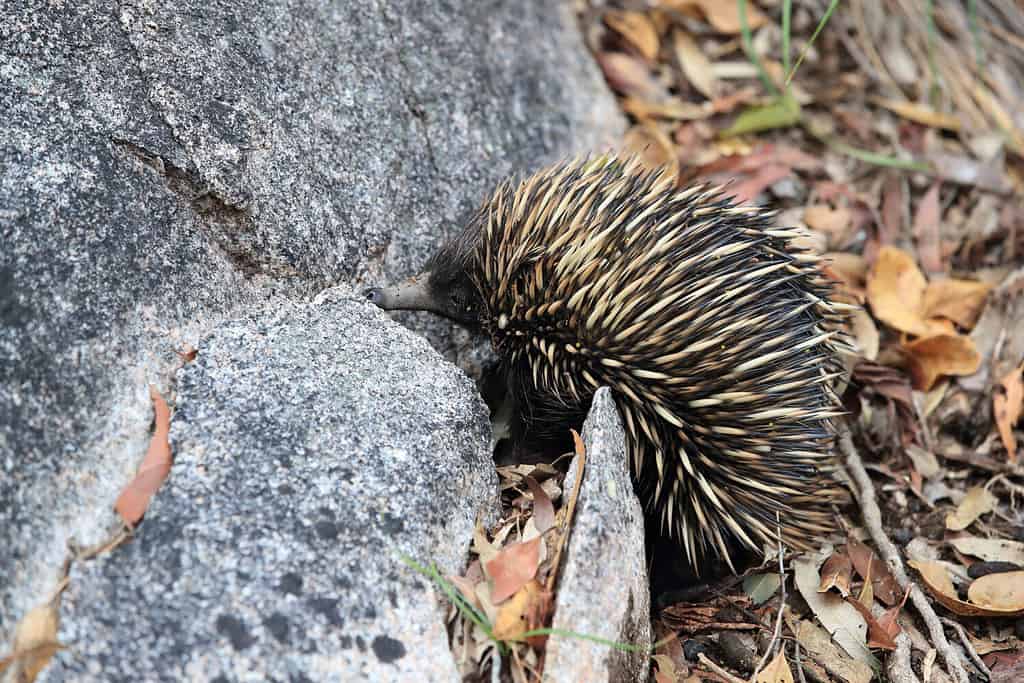
Although it is a mammal, the short-beaked echidna lays eggs.
©Greens and Blues/Shutterstock.com
Behavior plays a big role, too. During scorching weather, echidnas shift their activity from daytime to nighttime, dawn, or dusk, and hide in cool burrows during the hottest hours. They can also cool off by swimming, with only their long snouts protruding above the water like tiny periscopes.
A New Look at an Ancient Mammal
The discovery of the echidna’s cooling strategy has reshaped how scientists view these ancient creatures. Far from being “primitive” or inefficient, the short-beaked echidna has evolved an elegant solution perfectly suited to Australia’s harsh climate.
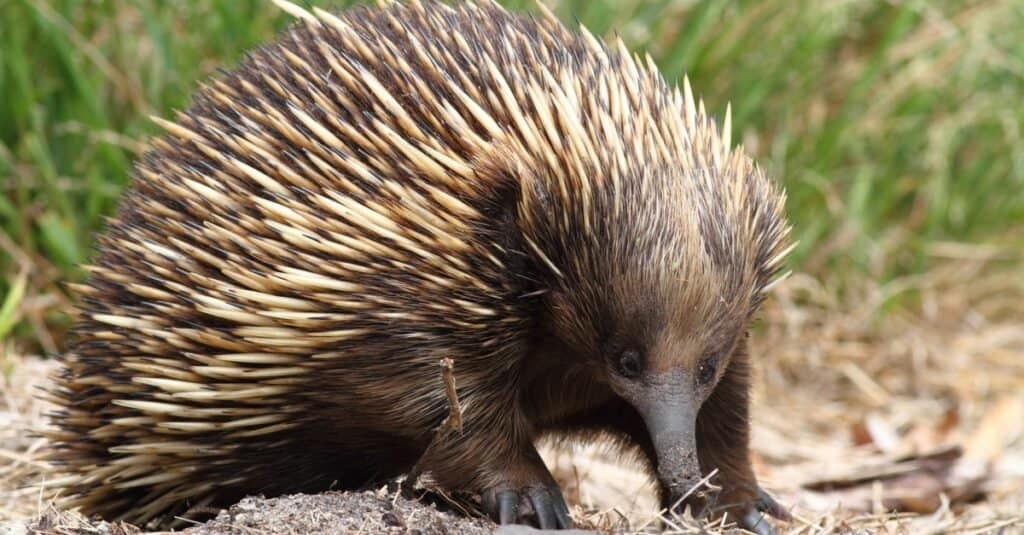
Short-beaked echidnas are good climbers, swimmers, and runners.
©Wayne Butterworth/Shutterstock.com
Its mucus bubbles, specialized blood vessels, adjustable spines, and behavioral adaptations work in sync to solve a problem that most mammals tackle with sweat or panting. It’s a brilliant strategy that explains how this remarkable monotreme has successfully conquered every habitat from desert dunes to snowy mountains — proving that sometimes the strangest survival tricks are also the most effective.