
Quick Take
- Counting the grooves on a sulcata tortoise's shell seems like the obvious way to tell its age, but scientists say that method is fundamentally flawed. Why shell grooves mislead →
- When temperatures become life-threatening, the sulcata tortoise has a cooling trick that no one would predict from looking at it. See the cooling trick →
- That snake-like hiss coming from a sulcata tortoise isn't what it sounds like, and the real explanation changes how you'd interpret it entirely. What the hiss really means →
- Sulcata tortoises can survive weeks in conditions that would kill most animals, and the physiological reason behind it is stranger than simple toughness. How torpor enables survival →
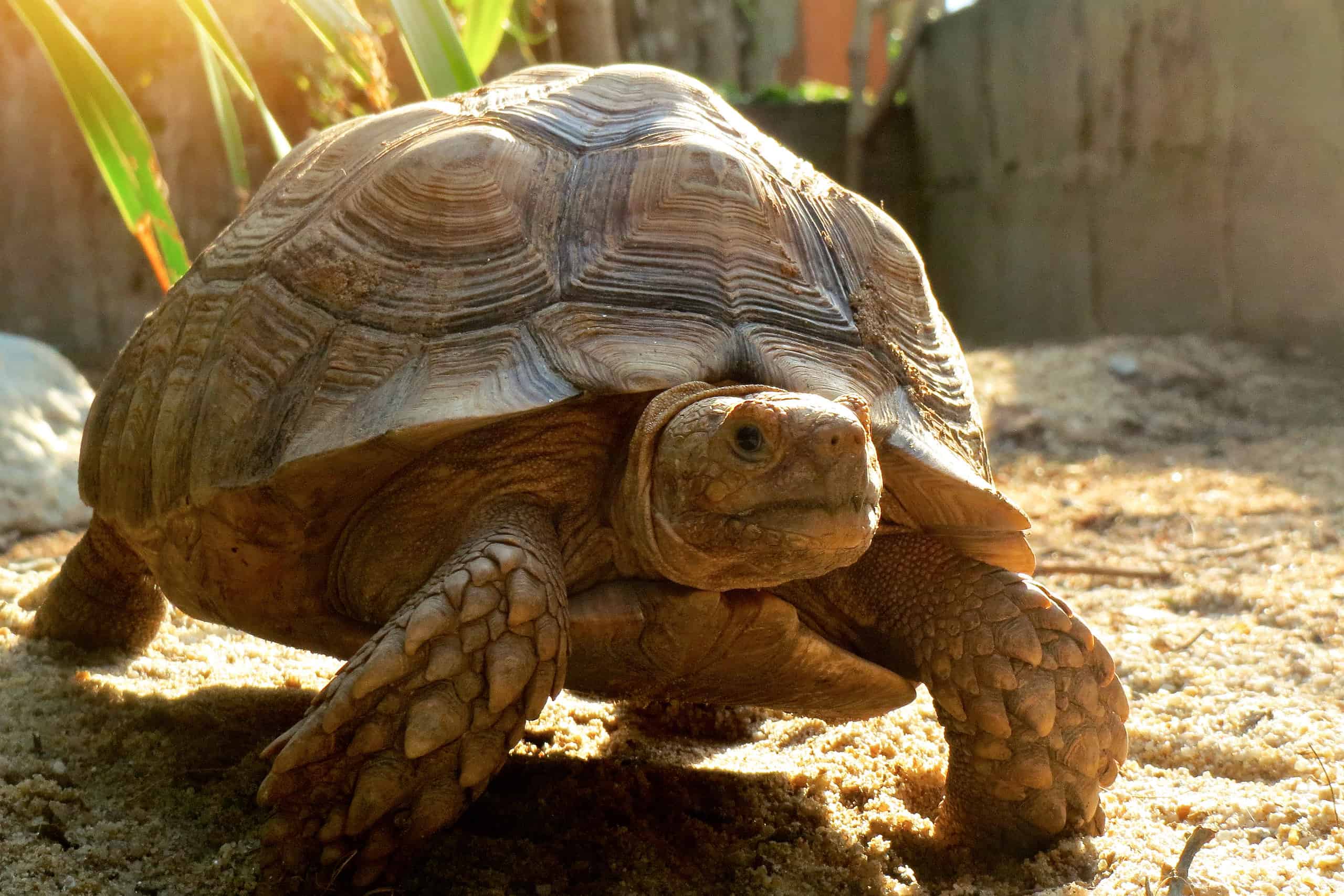
The sulcata tortoise (Centrochelys sulcata), or African spurred tortoise, is native to the dry grasslands along the southern edge of the Sahara Desert. “Sulcata” comes from the Latin word sulcus, meaning “furrow,” which refers to the deep lines between the scutes on their shells. They are also called “spurred tortoises” due to the large, sharp, cone-shaped spurs on their hind legs. Read on to learn 10 incredible facts about the sulcata tortoise.
1. The Sulcata Tortoise Is the Largest Mainland Tortoise Species
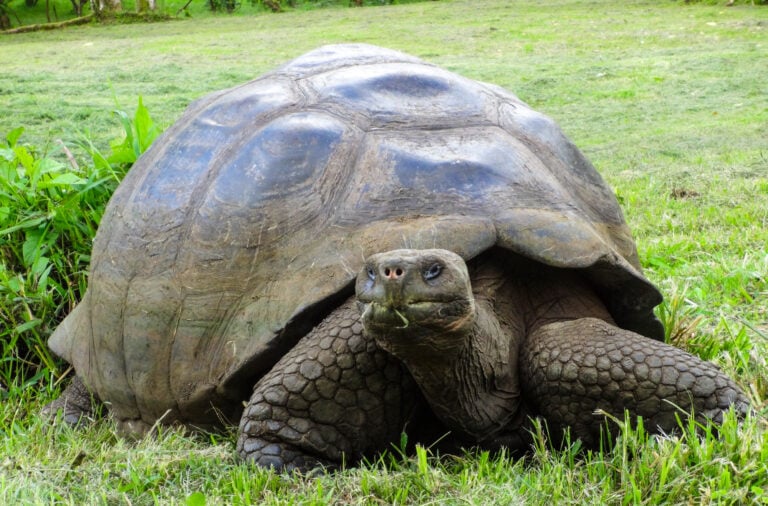
The sulcata tortoise is the third-largest tortoise species overall, but it is the largest mainland species of tortoise. Only the island tortoises from Aldabra and the Galápagos grow larger. Sulcata tortoises can measure up to 30 inches in length and weigh over 100 pounds. Some large males may even reach up to 200 pounds.
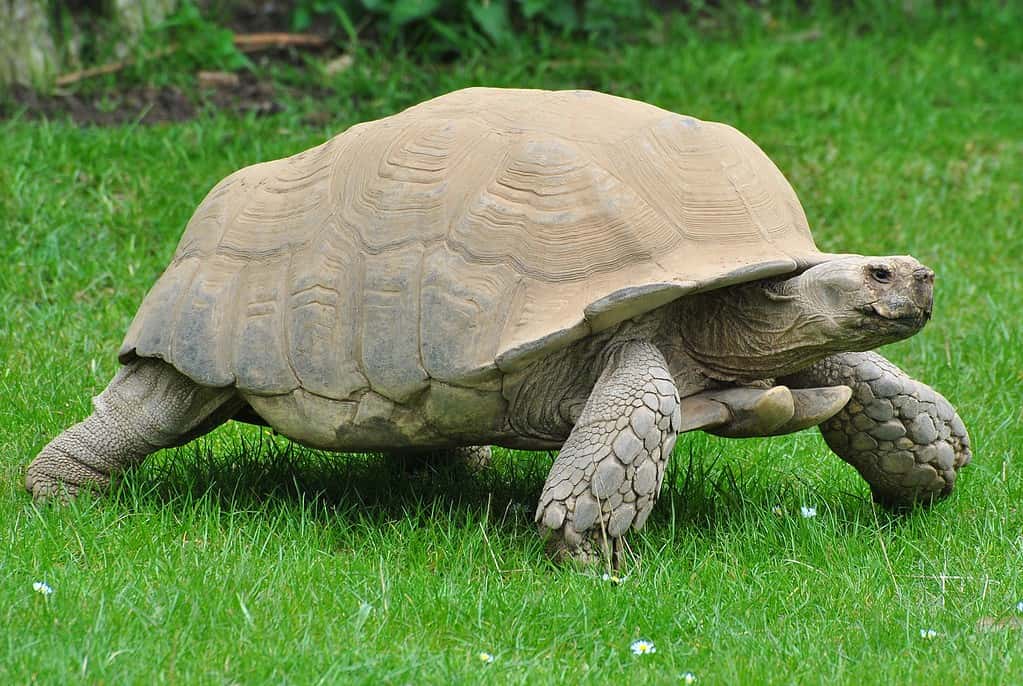
Sulcata tortoises can weigh over 100 pounds, with some large males reaching up to 200 pounds.
©John5199, CC BY 2.0, via Wikimedia Commons – Original / License
2. Sulcata Tortoises Are Burrowers
Since they are native to a habitat that can reach around 120°F when temperatures spike in late spring and early summer, sulcata tortoises dig burrows to get out of the heat. While some dig burrows that are only around 30 inches deep, other tortoises dig dens up to 10 feet deep and can range up to several yards long. Sulcata tortoises use their powerful front legs and sharp claws to loosen the dirt, and their hind legs push the dirt out of the way. The spurs on their hind legs also help them gain traction in the loose earth.
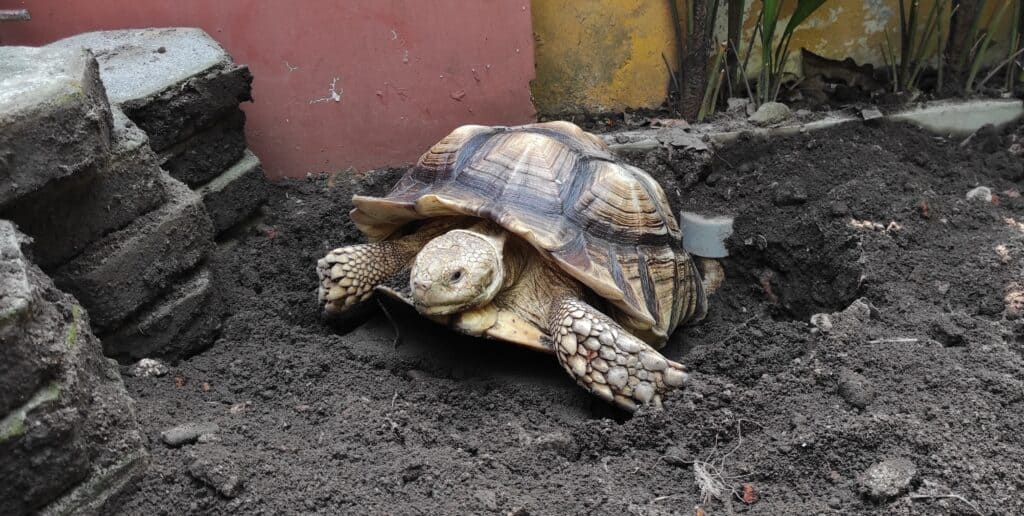
Sulcata tortoises dig burrows that can reach up to 10 feet deep.
©Osa Sumanohara/Shutterstock.com
3. They Can Go Weeks Without Food or Water
A sulcata tortoise will lower its body temperature and slow down its metabolism during the driest, hottest time of the year. This state is called torpor. These tortoises have low resting metabolisms like most reptiles, so they use little energy during this time. They can go for weeks without food or water.
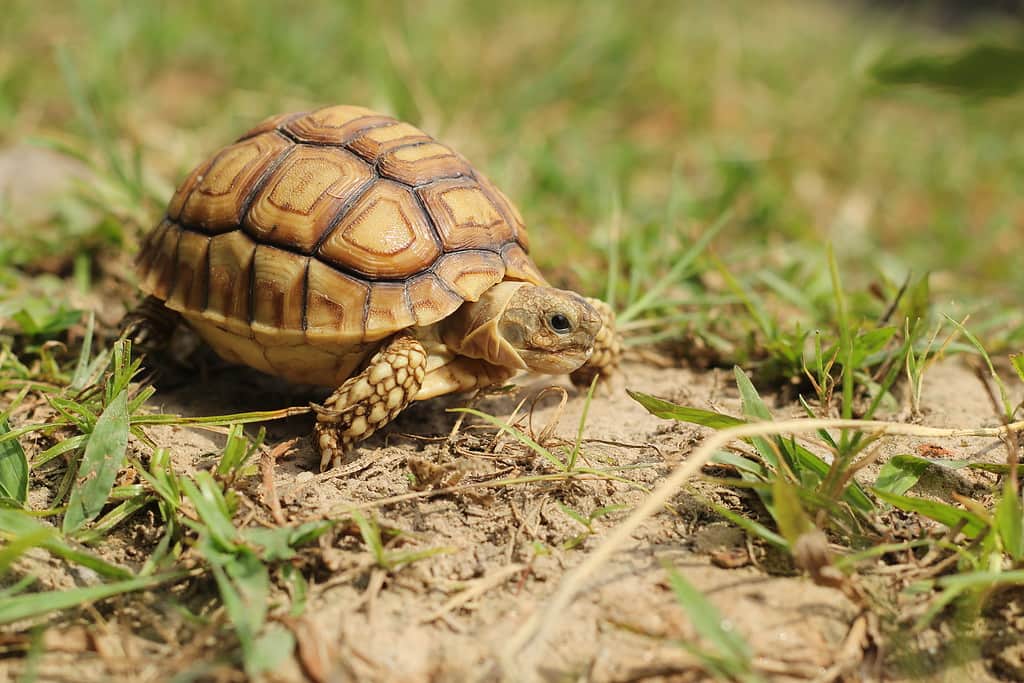
During the driest, hottest months of the year, sulcata tortoises slow their metabolisms to conserve energy.
©Somedaygood/iStock via Getty Images
4. A Sulcata Tortoise Can Live for 100 Years
The sulcata tortoise can live for 70-100 years. They live longer lives in captivity, as they do not have predators and other environmental threats. People once believed they could determine a sulcata tortoise’s age by counting the grooves on its shell. However, further research has determined that the rings most likely reflect variable food and water availability, not a specific growth period. It is not a reliable method to determine age. The best way to know their precise age is through record-keeping.
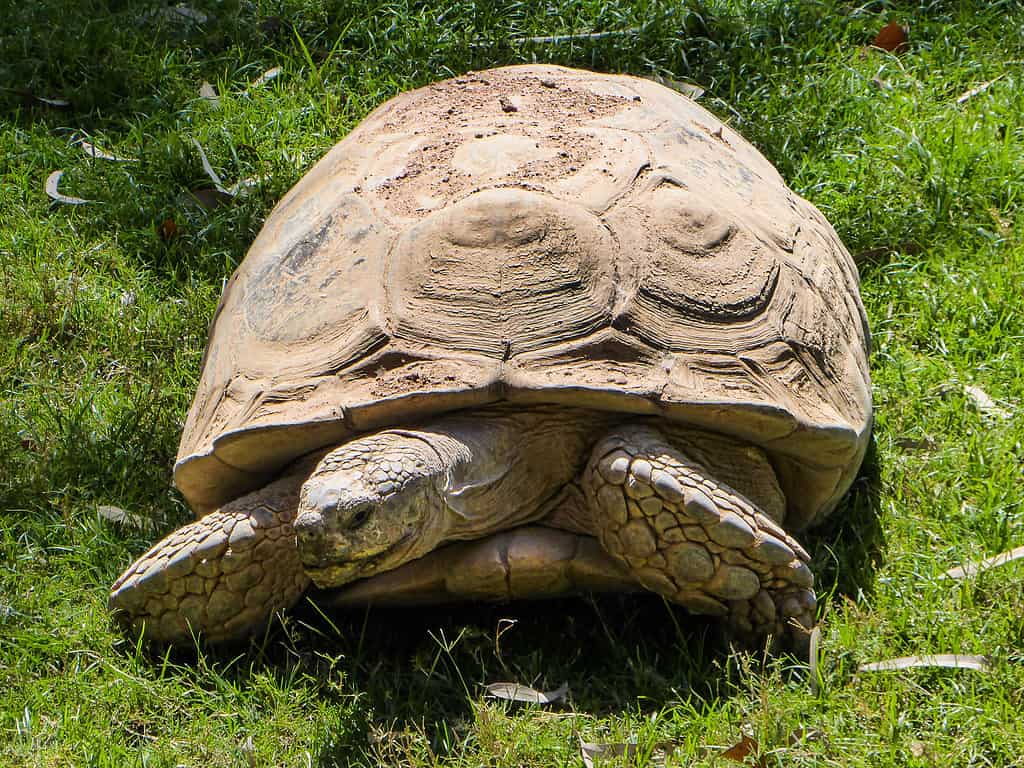
People mistakenly believed that you could tell a Sulcata tortoise’s age by counting the grooves on its shell.
©Wirestock/ via Getty Images
5. They Can Completely Withdraw Into Their Shells
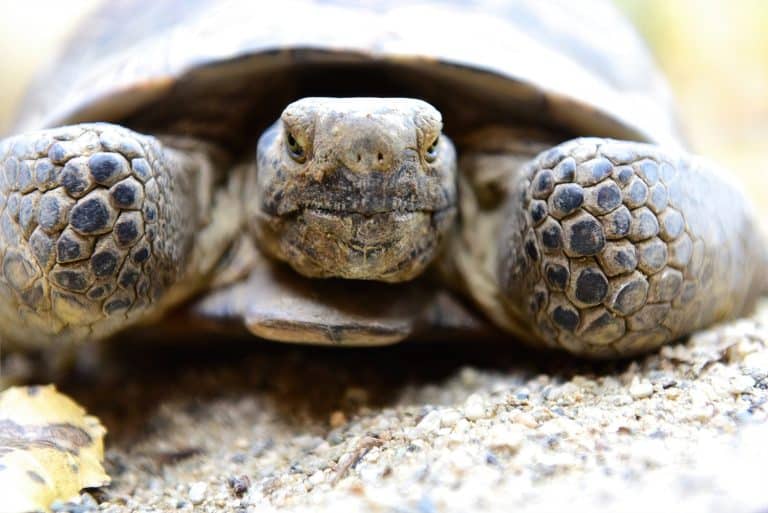
Not all turtles can fully retract into their shells, but many terrestrial species can retract to some extent. Sulcata tortoises can pull their heads, legs, and tails completely inside their shells. Their high, domed shells provide the tortoise with enough interior space to tuck its soft parts inside. They can’t come out of their shells because the shells are part of their spines and rib cages. These tortoises have few natural predators and are generally more threatened by humans and their harsh environment.
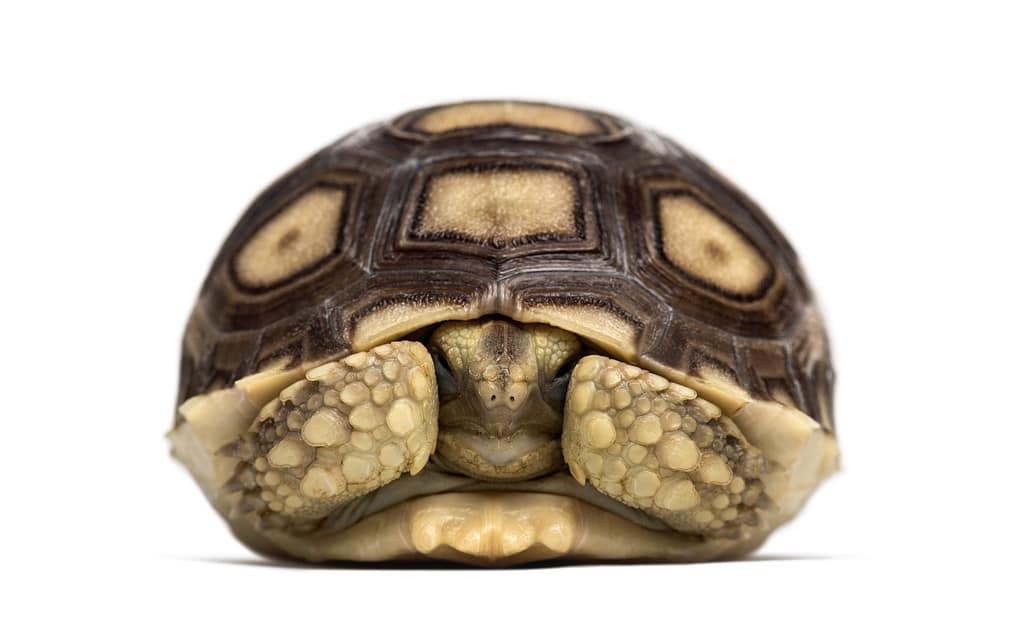
A sulcata tortoise’s high, domed shell provides enough space to protect its head, limbs, and tail.
©GlobalP/iStock via Getty Images
6. Sulcata Tortoises Can Hiss Like Snakes
These tortoises can make a hissing sound like a snake; however, it is not generally an aggressive sound. They do not have vocal cords or a human-like diaphragm, so they make sounds by forcing air through their respiratory tracts. The make hissing sounds when pulling their limbs inside their shells, as this movement forces air from their lungs. Fear or stress may also cause a defensive hiss.
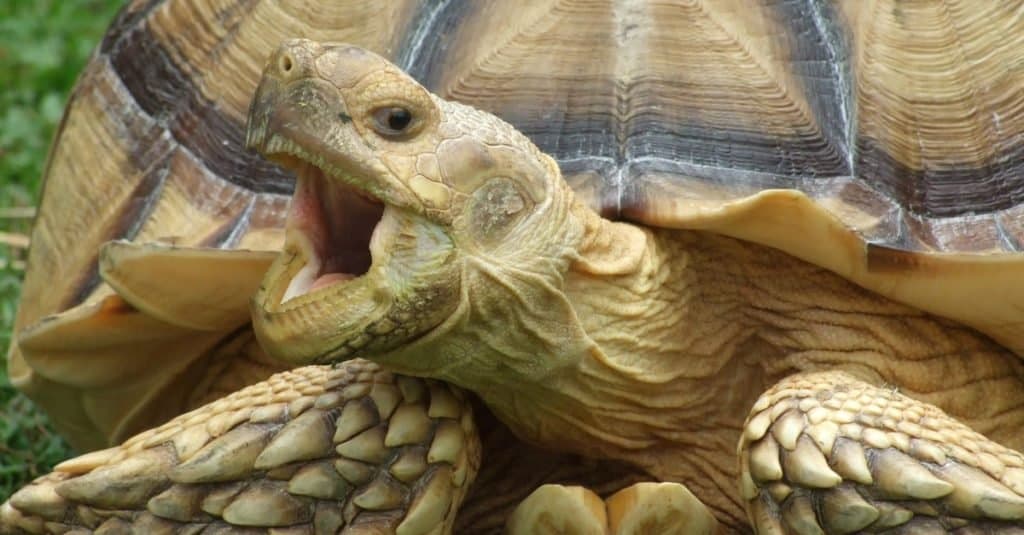
The sulcata tortoise can make a hissing sound when air is forced out of its lungs.
©YapAhock/Shutterstock.com
7. They Do Not Raise Their Young
After sulcata tortoises mate, the female’s search for a good nesting site can take several weeks. When she finds a good nesting area, she digs a nest that is around 2 feet wide and 3 to 6 inches deep. Then, she lays a clutch of about 15-30 eggs. After carefully covering the eggs, the mother’s work is done. In about 8 months, the eggs hatch, and the little turtles are on their own.
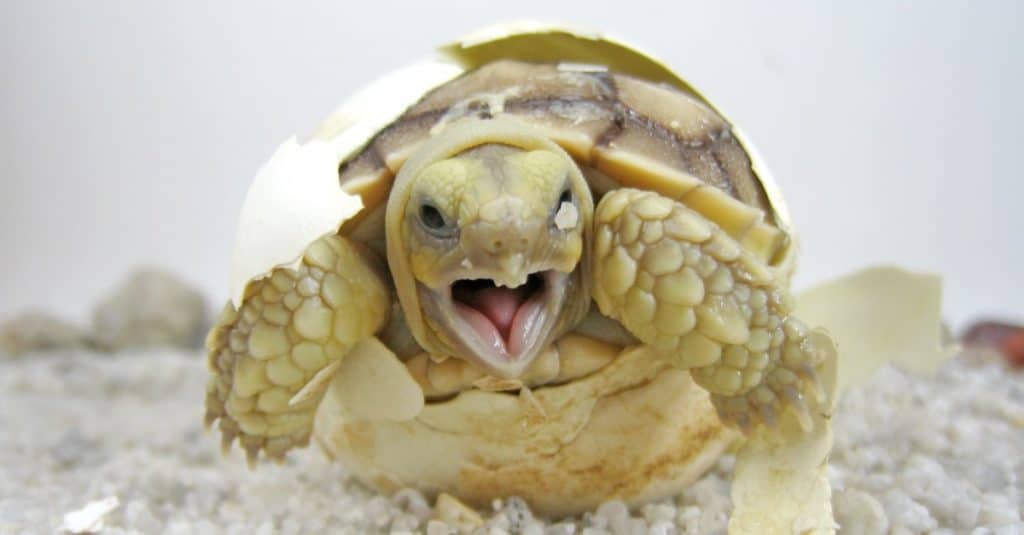
Baby sulcata tortoises are on their own after hatching.
©seasoning_17/Shutterstock.com
8. Sulcata Tortoises Find Mates by Scent
Instead of sniffing like mammals, sulcata tortoises push and pull air in and out of their throats. This causes air to flow over the vomeronasal organ (also called Jacobson’s organ), located on the roof of their mouths. The organ allows the tortoise to “taste” the air for chemical scents and pheromones in the environment. During the breeding season, both males and females leave more scent markers to attract mates.
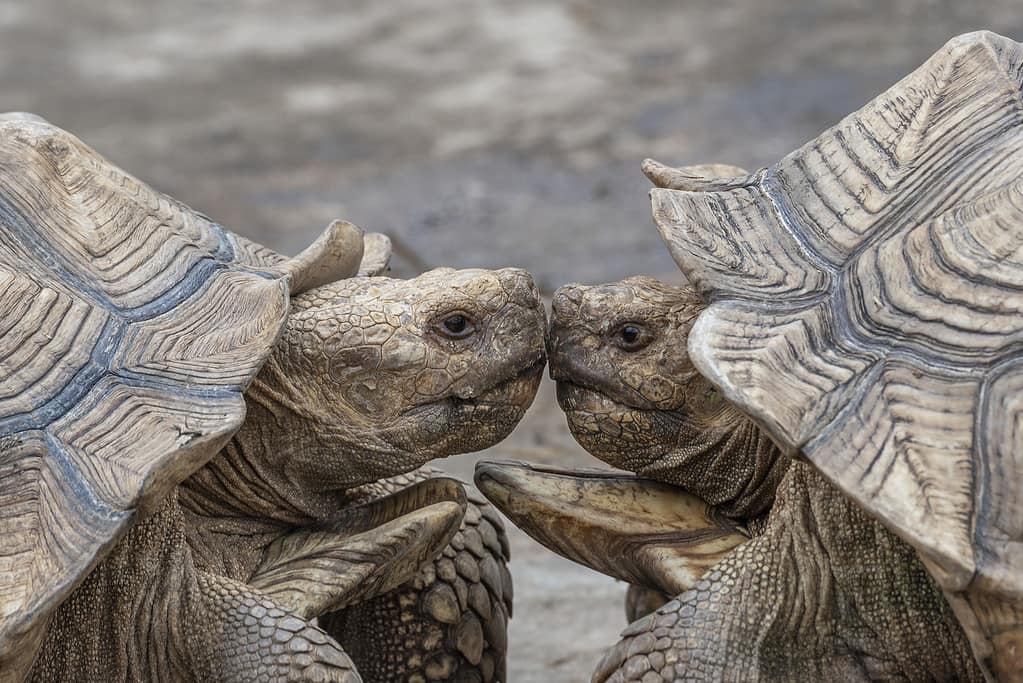
Male sulcata tortoises follow scent markers to locate a female that is ready to reproduce.
©LeeYiuTung/ via Getty Images
9. Sulcata Tortoises Are Very Strong
These tortoises are remarkably strong. They can easily knock over heavy objects, including each other. During the breeding season, males become territorial and competitive. During dominance fights, they often slam into one another to flip their opponent onto its back.
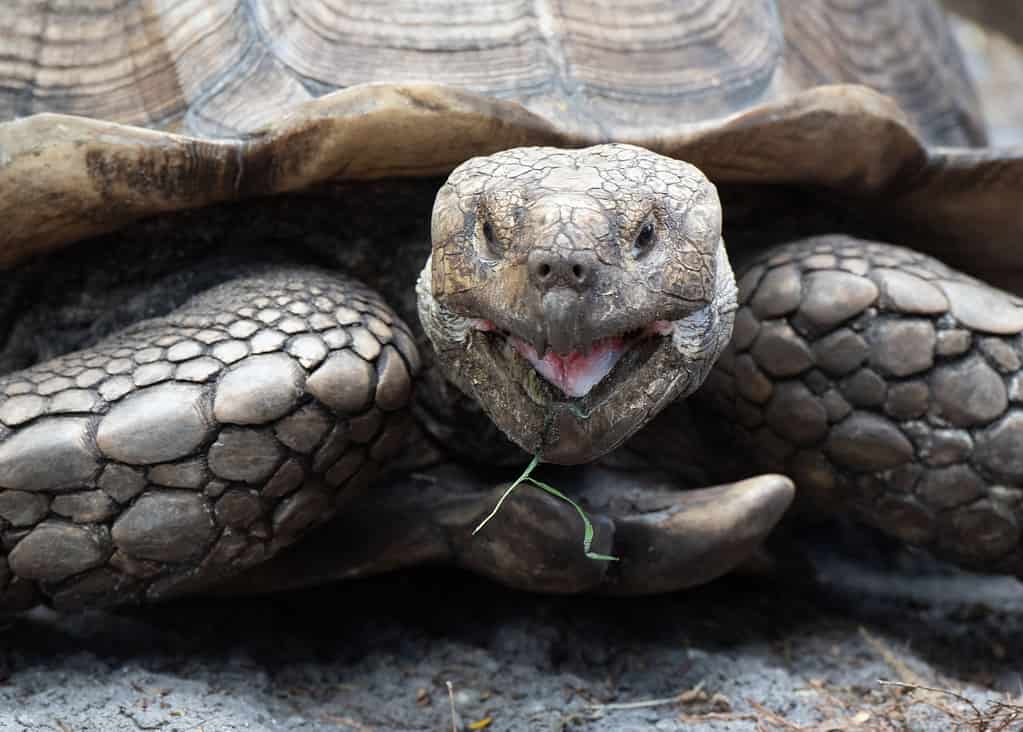
Male sulcata tortoises try to flip their rivals onto their backs during dominance fights.
©Dossyl/ via Getty Images
10. They Drool to Cool Down
Like other reptiles, tortoises are ectothermic. This means that they rely on the outside temperature to regulate their body temperatures. When temperatures get too hot, researchers have found that sulcata tortoises can also regulate their body temperature with saliva. When their body temperatures reach around 105°F, they salivate so much that it wets their heads, necks, and front legs. Like our sweat, their drool cools the tortoises down as it evaporates.
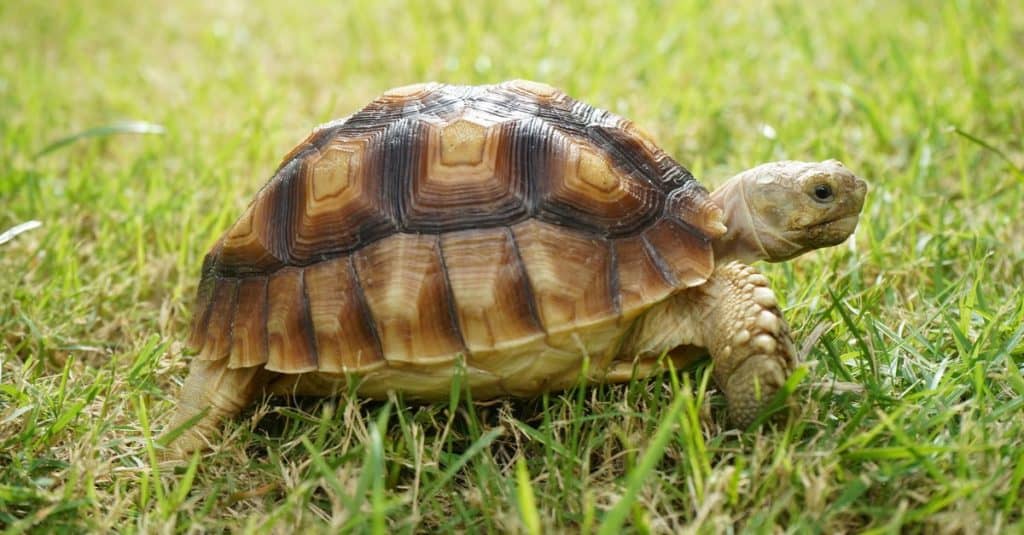
A sulcata tortoise drools on its head, neck, and legs to bring down its body temperature.
©Sutthiphong Chandaeng/Shutterstock.com