
Quick Take
- A global review found that 51% of the world's migratory bird species are declining due to multiple human-driven threats.
- Habitat loss, pesticides and climate change are among the biggest pressures affecting birds throughout their migration routes.
- Scientists now recommend protecting birds across their entire annual migration rather than focusing only on breeding or wintering grounds. See the tracking breakthrough →
- International cooperation and modern tracking technology are helping conservationists identify where action can have the greatest impact. Read the bald eagle recovery →
Every year, billions of migratory birds undertake remarkable journeys between their feeding and breeding grounds. However, a major new global review has found that more than half of migratory bird species are now declining, despite occupying vastly different habitats and having different migratory routes. These findings highlight the growing threats that migrating birds face every year. However, it is hoped that conservation efforts will eventually reverse many of these declines.
Why Migratory Birds Are Declining
Migratory birds travel across the world every year as they move between feeding and breeding grounds. Some of these migrations cover thousands of miles and can last for several months. These journeys are physically demanding, requiring birds to build up enough energy reserves to cope with traveling long distances. However, migrating birds are also at risk during these arduous journeys, as their survival depends on a chain of habitats that may span several countries. Even if conditions are favorable in one part of their migration route, problems elsewhere can determine whether they survive long enough to breed successfully.
A new review has found that 51% of migratory bird species around the world are declining. The review found that migrating birds face a combination of pressures throughout their entire journey, not just at the two endpoints.
Habitat Loss
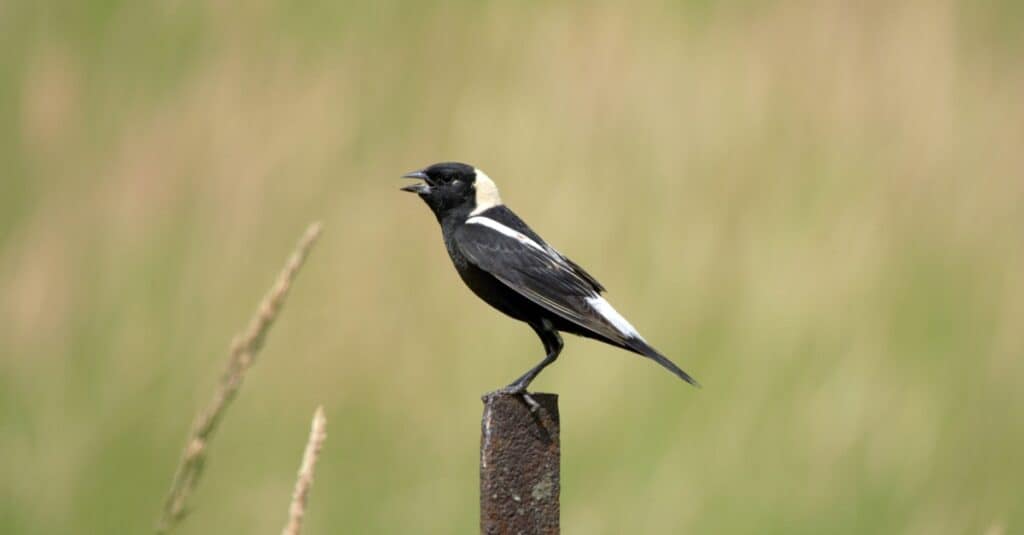
Bobolinks are one of several migratory species threatened by habitat loss.
©iStock.com/Carol Hamilton
Although migratory birds face several threats, the review found that habitat loss remains their most significant challenge. When they migrate, birds rely on suitable habitats on their route to act as stopover areas for them to feed and rest. Habitats such as grasslands, forests, and wetlands are disappearing or degrading. This means that birds have to travel farther to find a suitable stopover. However, the greater distance between resting points means that birds must use more of their energy and fat reserves to reach them.
Once stopovers are reached, the remaining habitats are overcrowded with other birds facing the same problem. This increases competition for food. With higher numbers of birds in one location, food can often become scarce. For example, birds at stopover points in wetlands might rely on specialized prey animals that live there, but populations can quickly become depleted when greater demands are put upon them.
Pesticides
Pesticides are also a significant threat to birds as they are used in many of the grasslands and agricultural areas where they feed. Birds can ingest pesticides by eating contaminated insects and seeds, which then causes several long- and short-term effects. Many types of pesticides cause birds to lose body mass and fat, usually as a result of reduced appetite. Energy and fat are both essential for birds to survive long-distance flights. Pesticides also often cause temporary disorientation in birds. This means the birds are unable to navigate their migration routes, sometimes ending up lost or off course. Long-term effects of pesticides can sometimes affect a bird’s ability to breed. For example, the pesticide DDT caused bald eagles to lay eggs with thin shells, leading to a severe population decline.
Climate Change
Another issue that is becoming increasingly significant for migrating birds is climate change, which affects them in several ways. For example, rising sea levels are causing flooding in coastal mudflats and wetlands. This is destroying feeding and nesting grounds and reducing the amount of viable habitat.
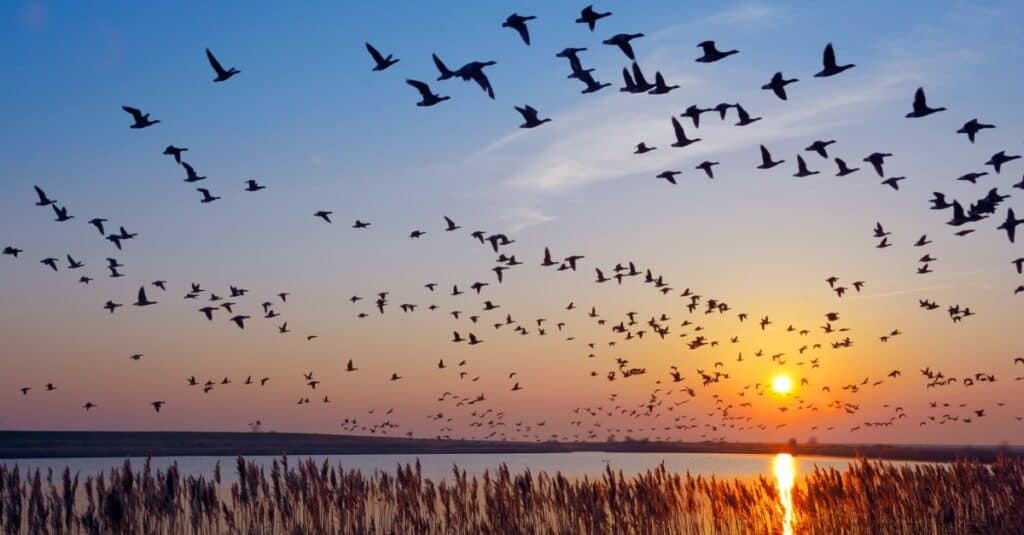
Climate change may cause migratory birds to change the timing of their flights.
©eurotravel/Shutterstock.com
Additionally, changing temperatures and weather patterns are altering the timing of seasonal food availability. Warmer springs can cause plants and insects to emerge earlier in the year. As a result, birds that time their arrival for these events may now find that they have missed the peak period. Hotter summers are also causing droughts, which further reduce food availability. Eventually, these ongoing changes may force some species to alter the timing or route of their migrations.
Looking at the Whole Migration
For a long time, conservation efforts have focused on protecting the most obvious areas for migrating birds, such as their feeding and breeding grounds and the main stopover areas they depend on most. This approach has helped to prevent some extinctions, although a significant number of important migratory sites remain unprotected. However, this approach has often treated each area as a separate conservation problem. Scientists now believe that migratory birds should be considered across their entire migration route. This is because a problem in one location can affect the birds months later in another location. For example, a bird population might appear to decline in its breeding grounds, but the cause may actually originate in their feeding grounds or along the migration route.
Considering the migration as a whole allows conservationists to identify exactly where populations face the greatest risks. Advances in technology have made this far more achievable in recent years. For example, miniature tracking devices now allow birds to be tracked across their entire migration route, making it easier to identify areas of concern. For some species, protecting the breeding grounds might have the greatest impact, while for others, restoring an important feeding area along the migration route may be more beneficial.
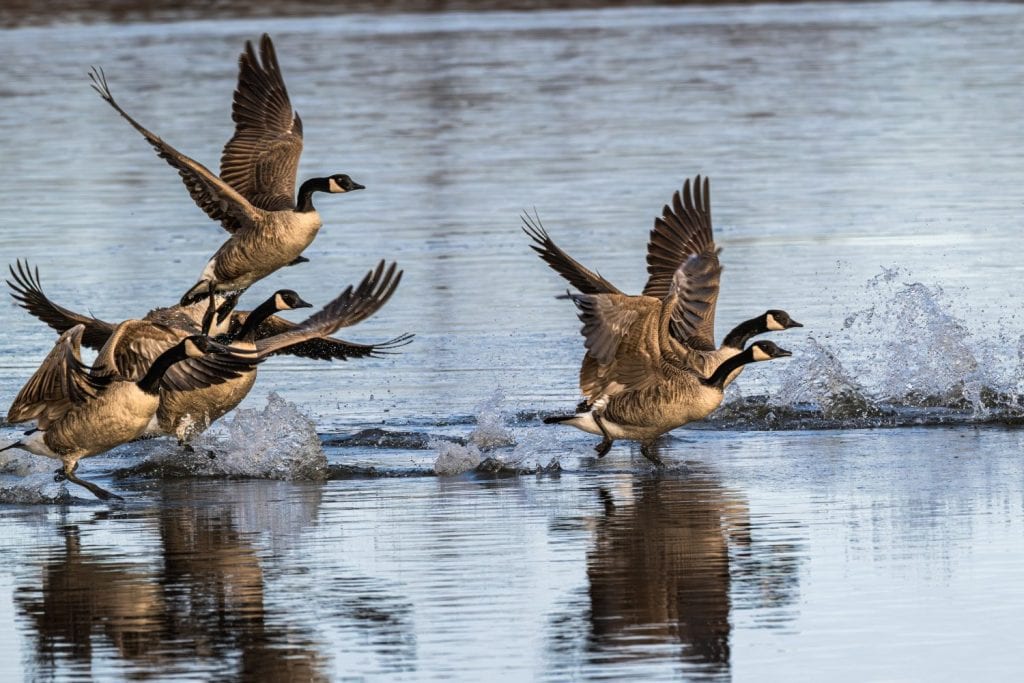
Looking at the entire migration route can help to identify the places that birds need the most help.
©Lecia Michelle/Shutterstock.com
How International Conservation Efforts Can Help
Migratory birds commonly cross several countries along their routes, so protecting them requires a broader conservation strategy. A coordinated approach to conservation is needed among countries so that habitats can be protected and threats reduced across the entire migration route. Fortunately, this approach is already beginning to happen. Initiatives such as Road to Recovery work with scientists, conservationists, governments, and local communities to identify where declining species face their greatest risks before populations reach critical levels. Additionally, around 50 international groups are already working together to develop plans for birds such as bobolinks and yellow-billed cuckoos. These efforts have already resulted in new habitat protections and policy changes.
Although reversing these declines seems like a challenging feat, scientists believe there is reason for optimism. History has shown that birds can recover when major threats are identified and removed. For example, the bald eagle population recovered after the ban on DDT, and the northern bald ibis rebounded after habitat protections were implemented. Therefore, by working together at an international level, it is possible to reverse the declines of many of the world’s migratory birds.