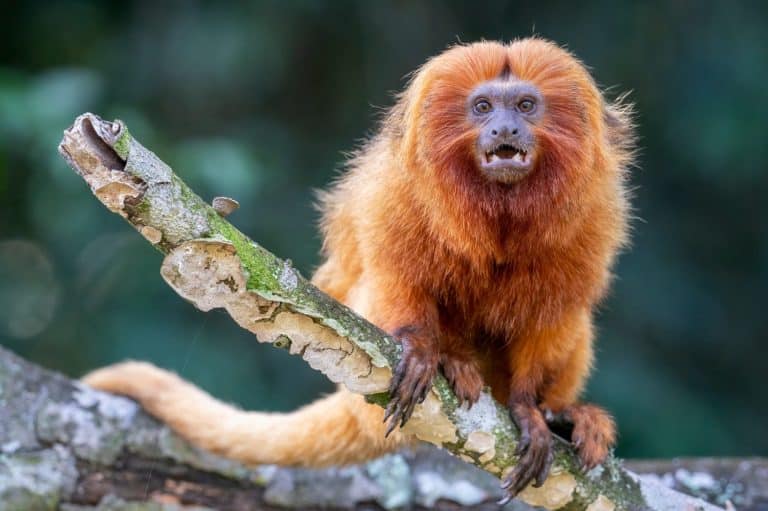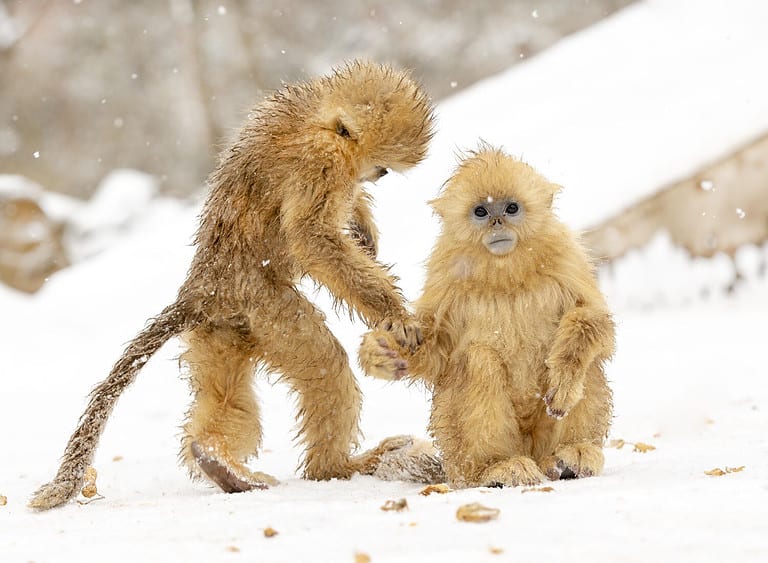

Some animals are so cute, we can’t believe they actually exist in real life. Case in point: the golden snub-nosed monkey, which looks like a cuddlier version of an Ewok — you know, those teddy bear-like creatures from the “Star Wars” franchise that live on Endor and are incredibly cute? Yeah, these cute primates could easily be their earthly cousins. An Instagram account dedicated to monkeys recently shared pictures of these adorable creatures, which are sure to melt your heart.
What Are Golden Snub-Nosed Monkeys?
Instagram user @adorable.monkey posted pictures of golden snub-nosed monkeys, which live in China. “The golden snub-nosed monkey is one of the most unique primates on Earth, found only in the misty mountains of central China🏔️,” they captioned the post.
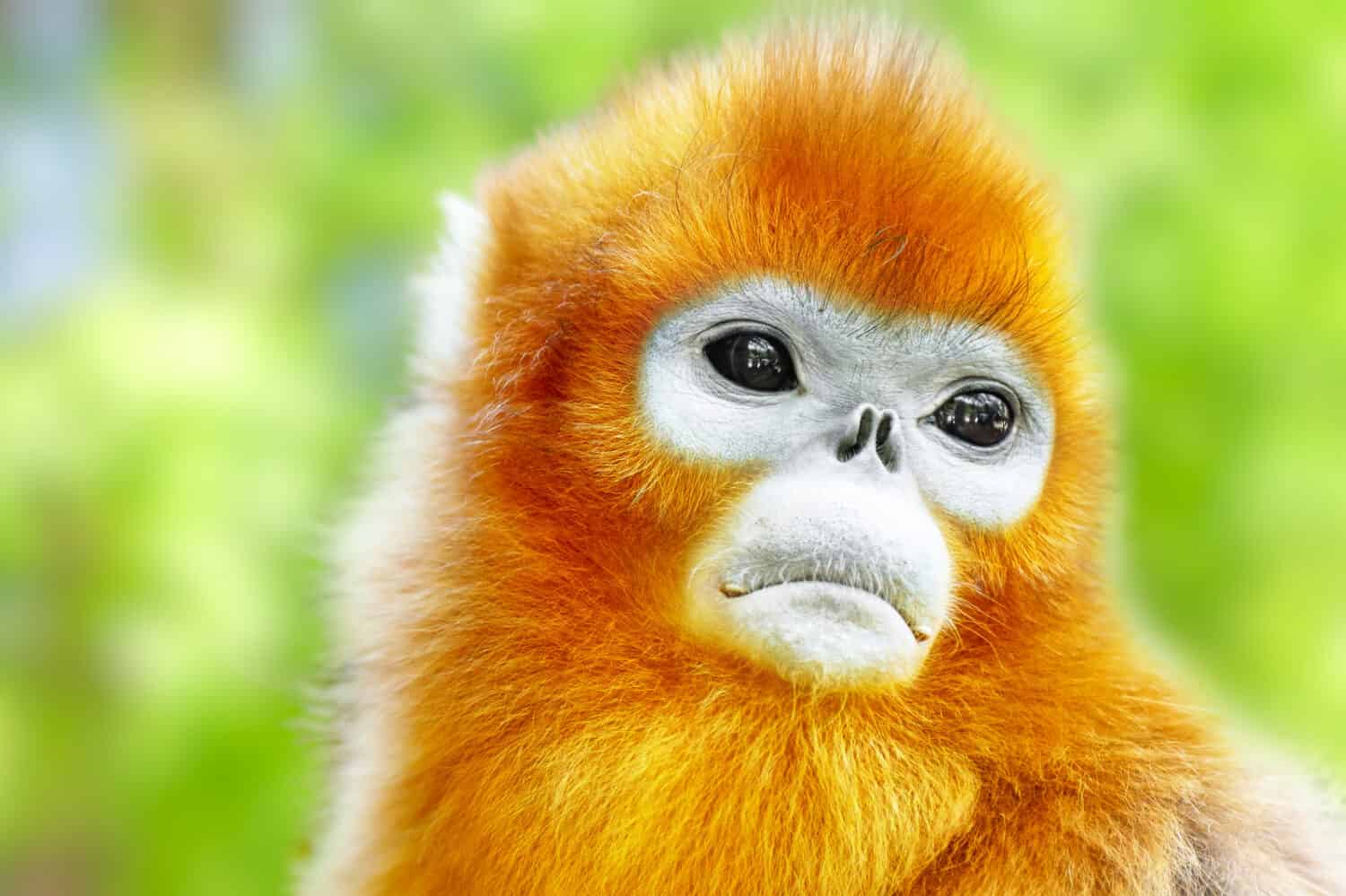
In the pictures, the golden snub-nosed monkey is covered in fur like a little teddy bear, with huge eyes and a blue face that make it truly unique. They are the cutest monkeys we’ve ever seen!
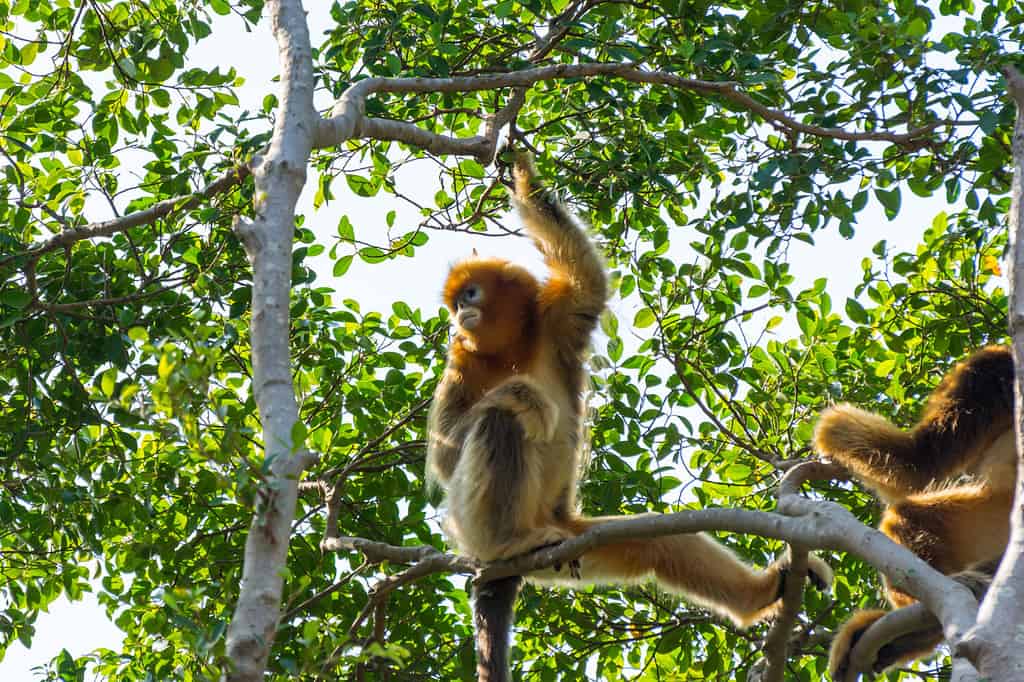
Golden snub-nosed monkeys spend the majority of their time up in trees.
©Victor Jiang/Shutterstock.com
“Their golden fur and tiny blue faces help them stand out in the snowy forests where they live, often huddling together to stay warm during freezing winters. ❄️” @adorable.monkey continued in the caption, adding that the primates live in social groups full of fun and family bonds.
“Sadly, these incredible monkeys are endangered due to habitat loss, making every glimpse of them in the wild a precious moment of beauty and hope 🌿,” they added.
People were amazed by how adorable these creatures are.
“Like a baby Yeti 😍😍,” one person commented. Another person quipped, “I know an Ewok when I see one.”
“I had to Google to make sure it was real. Soooo cute,” someone else commented.
Where Do They Live?
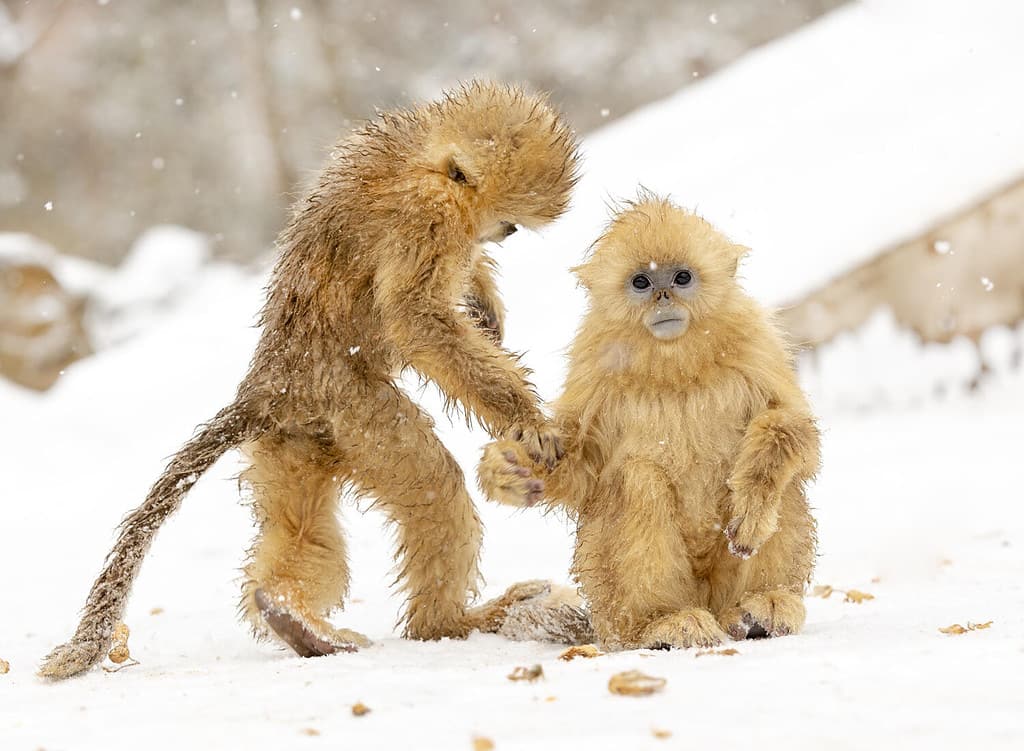
Their long fur and snub noses help protect these primates from cold weather.
©Wang LiQiang/Shutterstock.com
Golden snub-nosed monkeys (Rhinopithecus roxellana) are very real, although rare. They can only be found in the mountain forests of central China, where they endure freezing temperatures and high altitudes. They have long coats to keep them warm and snub noses to help protect against frostbite. In fact, golden snub-nosed monkeys can withstand colder temperatures than any other living primate, as low as 17 degrees Fahrenheit, according to the New England Primate Conservatory.
Distinct Features
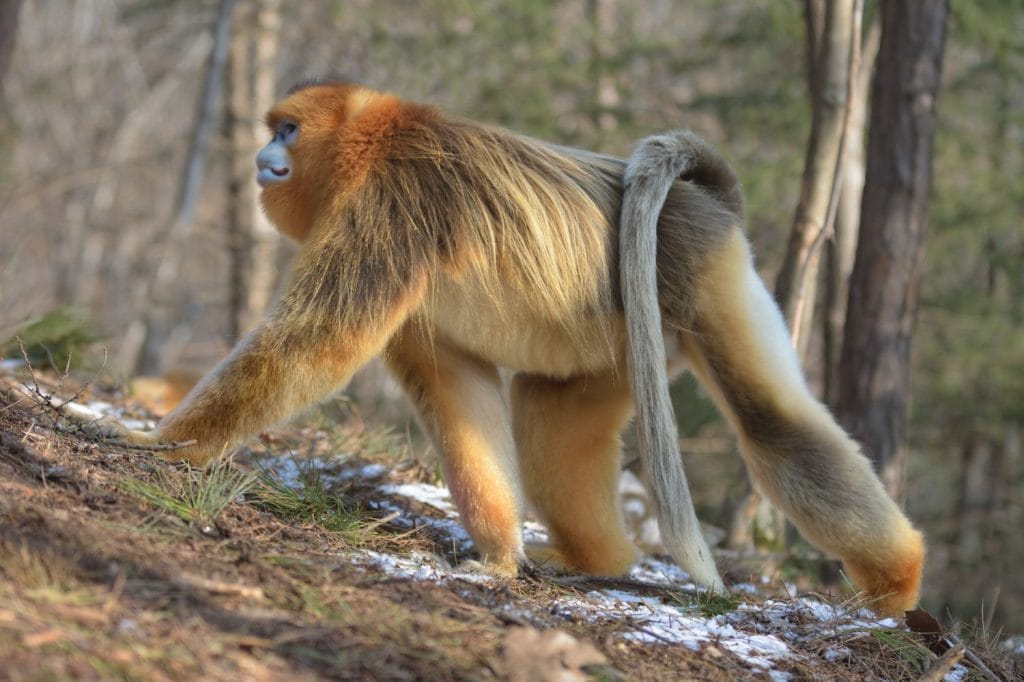
Male golden snub-nosed monkeys are generally bigger than females.
©Hugh Lansdown/Shutterstock.com
When fully grown, male golden snub-nosed monkeys are between 23 and 27 inches long, while females are only 18 to 20 inches long. Males will weigh around 43 pounds, and females will weigh only about 27 pounds.
However, both male and female golden snub-nosed monkeys have a fur coat that changes throughout the year, with a brownish-grey color in the summer and a bright orange coat with thicker hair in the winter. They also have a light blue face that is even brighter around the eyes, a hairless mouth, and a completely flat nose.
Diet and Behavior
These beautiful primates will forage for food, eating fruits, flowers, buds, seeds, tree bark, and twigs. During the colder months, they will survive on lichens and have even eaten snow. The primates will also eat insects and invertebrates, such as cicadas.
Even while eating, golden snub-nosed monkeys will spend the majority of their day in the trees. They will eat, groom, play, mate, and even sleep in trees, swinging from branch to branch and occasionally heading to the ground. They usually form groups led by a dominant male, accompanied by several females, their offspring, and sometimes other families, creating bands of more than a hundred primates in some cases. They are also very vocal animals, calling out to each other and chattering away to communicate.
Endangered Status
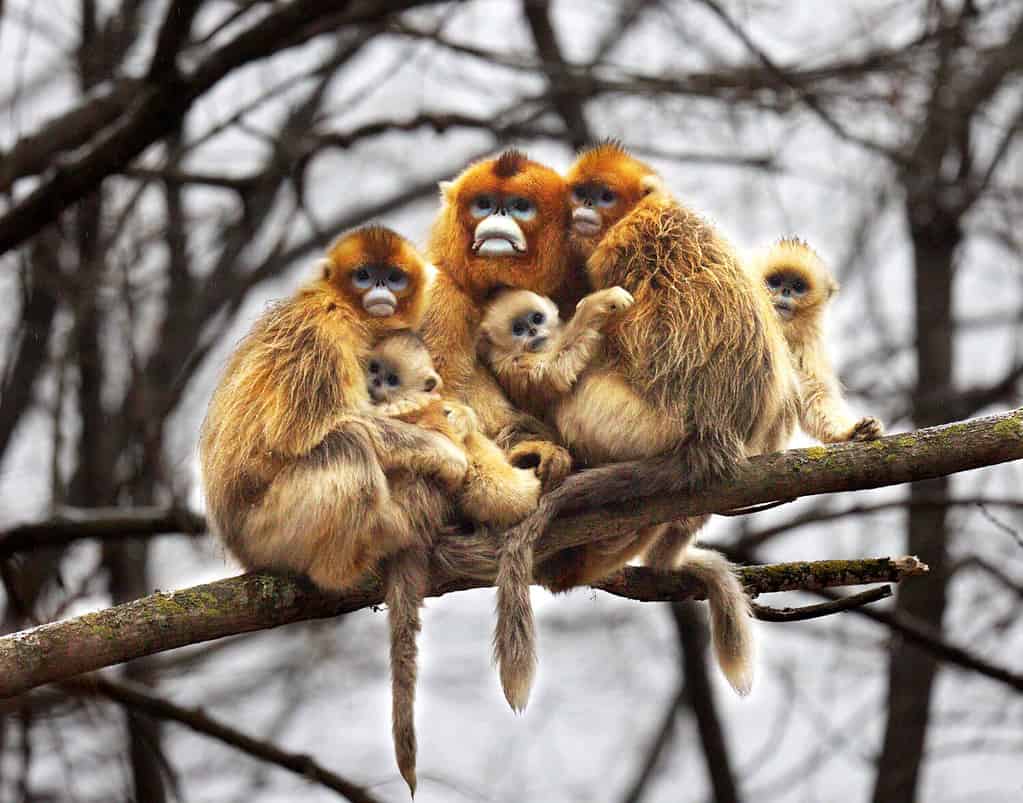
Golden snub-nosed monkeys tend to form social groups.
©Wang LiQiang/Shutterstock.com
The IUCN Red List classifies the golden snub-nosed monkey as Endangered due to threats like agriculture and deforestation, which lead to habitat destruction. They also face threats from tourism, illegal hunting for meat and fur, and climate change, which has pushed them to higher elevations. Although the population has been in decline, conservation efforts are underway to help protect the species.
“The monkeys’ home was being destroyed by logging, so their numbers were going down fast,” Professor Yang Jingyuan, director of the Shennongjia National Park Scientific Research Institute, told the BBC in August. “Now it’s being protected, and the monkey figures are really improving.”
According to the outlet, the monkeys’ population at Shennongjia National Park has increased from around 500 to more than 1,600, with conservationists hoping to raise that number to 2,000 or more in the next 10 years.
Professor Yang told the BBC, “I’m very optimistic. Their home is now very well protected. They have food and drink, no worries about life’s necessities, and, most of all, their numbers are growing.”