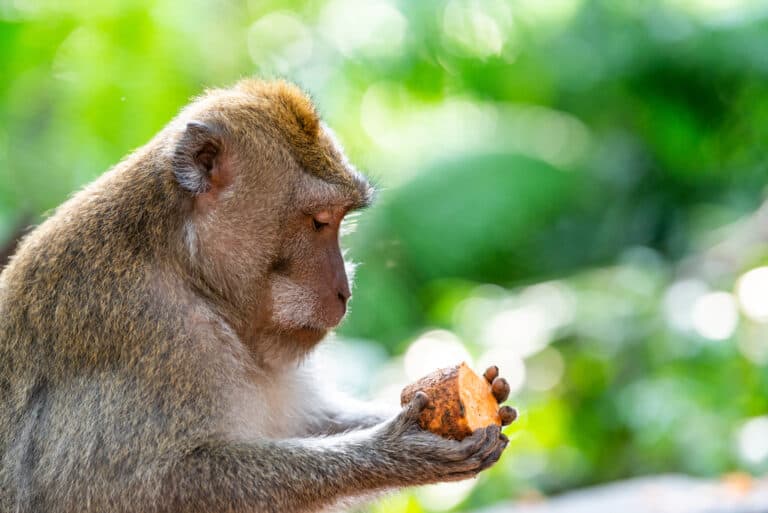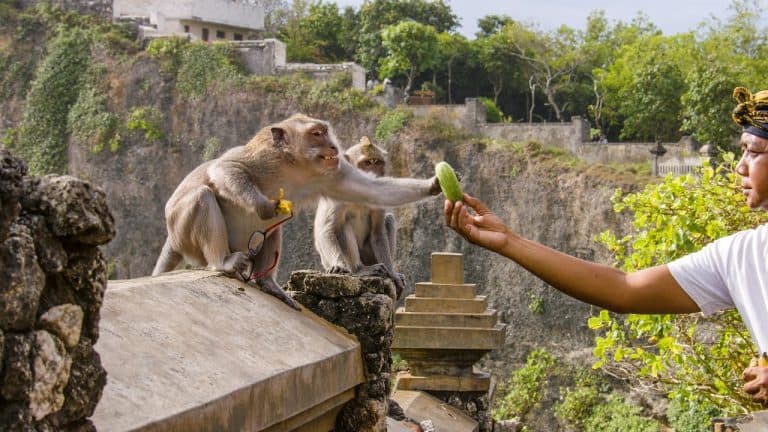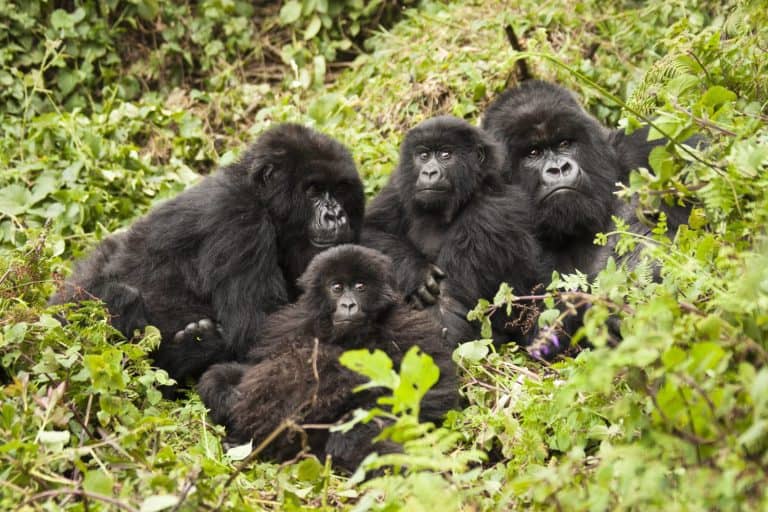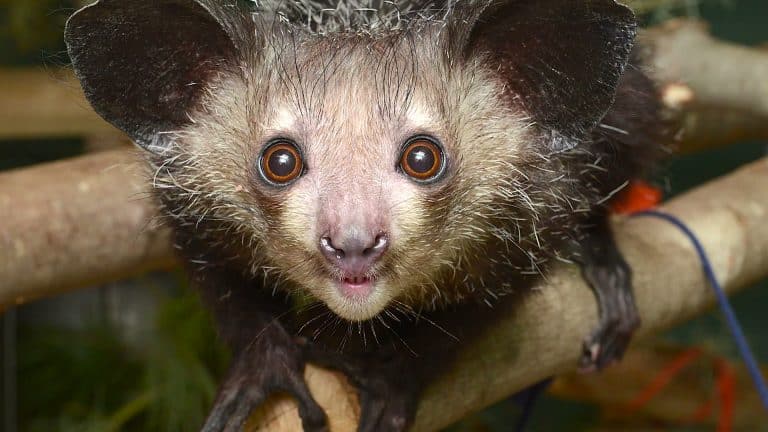

All apes, including humans, chimpanzees, gorillas, orangutans, and gibbons, lack external tails, while most other primates retain them. Millions of years ago, we lost them through the evolutionary process. Most of our primate relatives, however, retained them because they are very useful in jungles and forests. While monkey tails range from short to long, some monkeys have the longest tails in the world.
It doesn’t matter the location or the type of monkey. Old World monkeys may dominate the list, but there are several New World monkey species with prehensile tails, capable of foraging for food or acting like a fifth limb. Let’s discover which primates have the longest tails. The results may surprise you.
Ring-Tailed Lemur
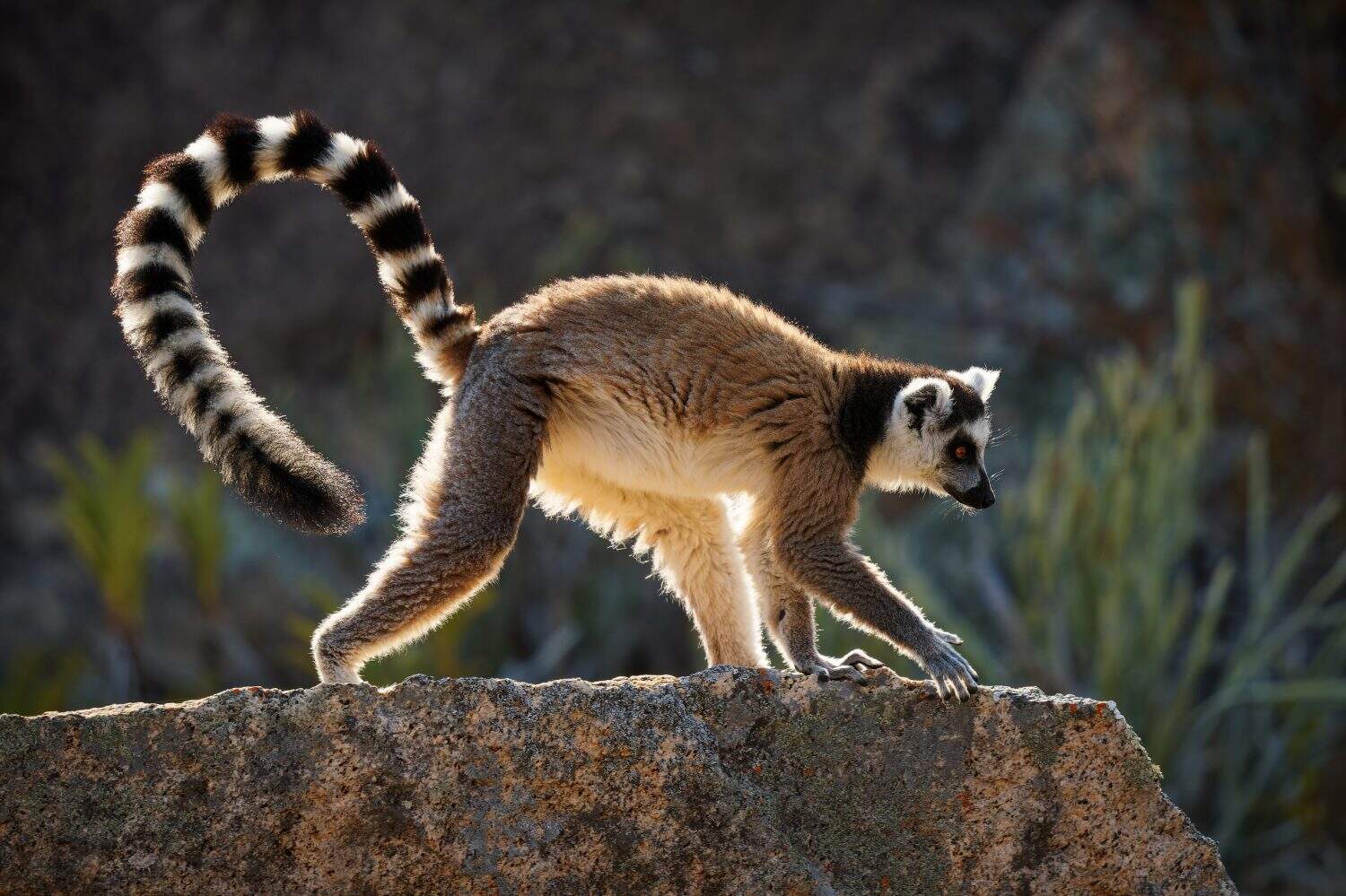
These Madagascar lemurs have long, bushy, raccoon-like tails.
©Martin Pelanek/Shutterstock.com
Ring-tailed lemurs (Lemur catta) are medium-sized lemurs of the wet-nosed variety. Like all lemurs, they are endemic to the island of Madagascar. There, they live highly social lives in the southern part of the island’s forests. While the ring-tailed lemur is a striking-looking creature overall, its long black-and-white tail stands out the most. These lemurs’ ringed tails easily dwarf their bodies. On average, these raccoon-like tails range from 21 to 24 inches long. Their tails play a big part in their lives as they are used for balance and communication with other lemurs.
Red-Tailed Monkey
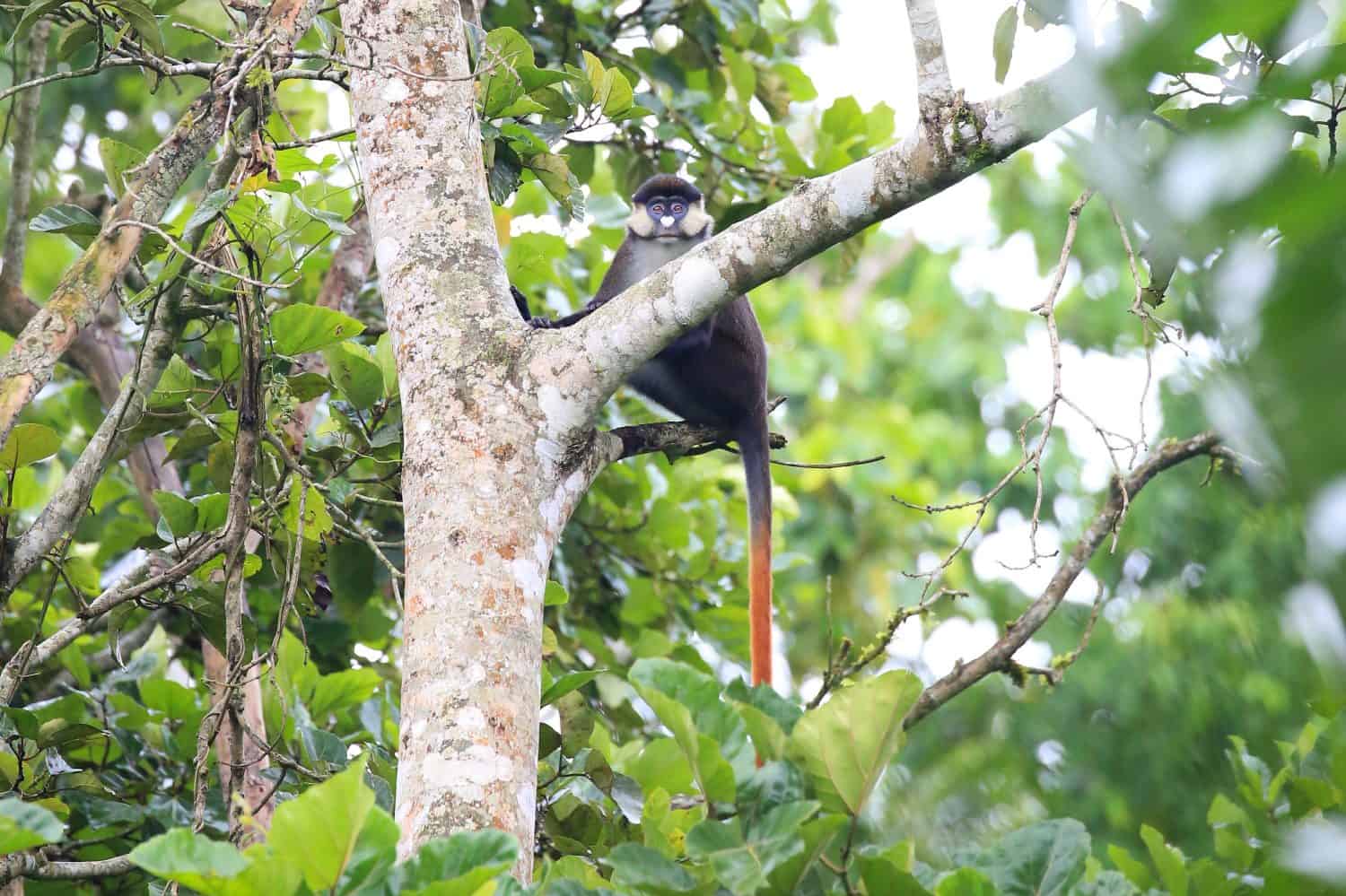
These striking-looking monkeys have tails that are as long or longer than their bodies.
©JordiStock/Shutterstock.com
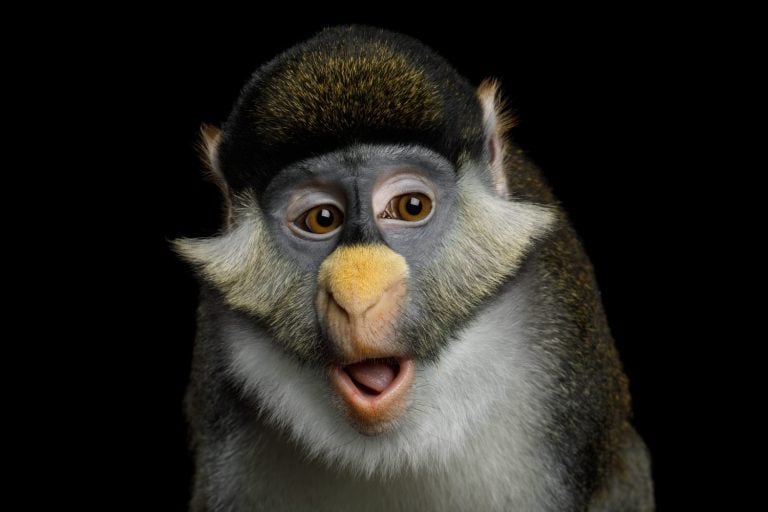
Red-tailed monkeys (Cercopithecus ascanius) are a species of Old World monkey found in several central African countries, including the Democratic Republic of the Congo, Kenya, Angola, and Zambia. They are characterized by dark bodies and heads, except for white mutton chop-like facial markings and vibrant red tails. While their body lengths range from 12 to 24 inches, their tails are even longer.
Indeed, red-tailed monkeys have tails that can easily reach 24 inches long. In rarer cases, red-tailed monkey tails can reach a whopping 35 inches in length. They serve a serious purpose, too: helping these primates keep balance as they traipse through the jungle.
Purple-Faced Langur
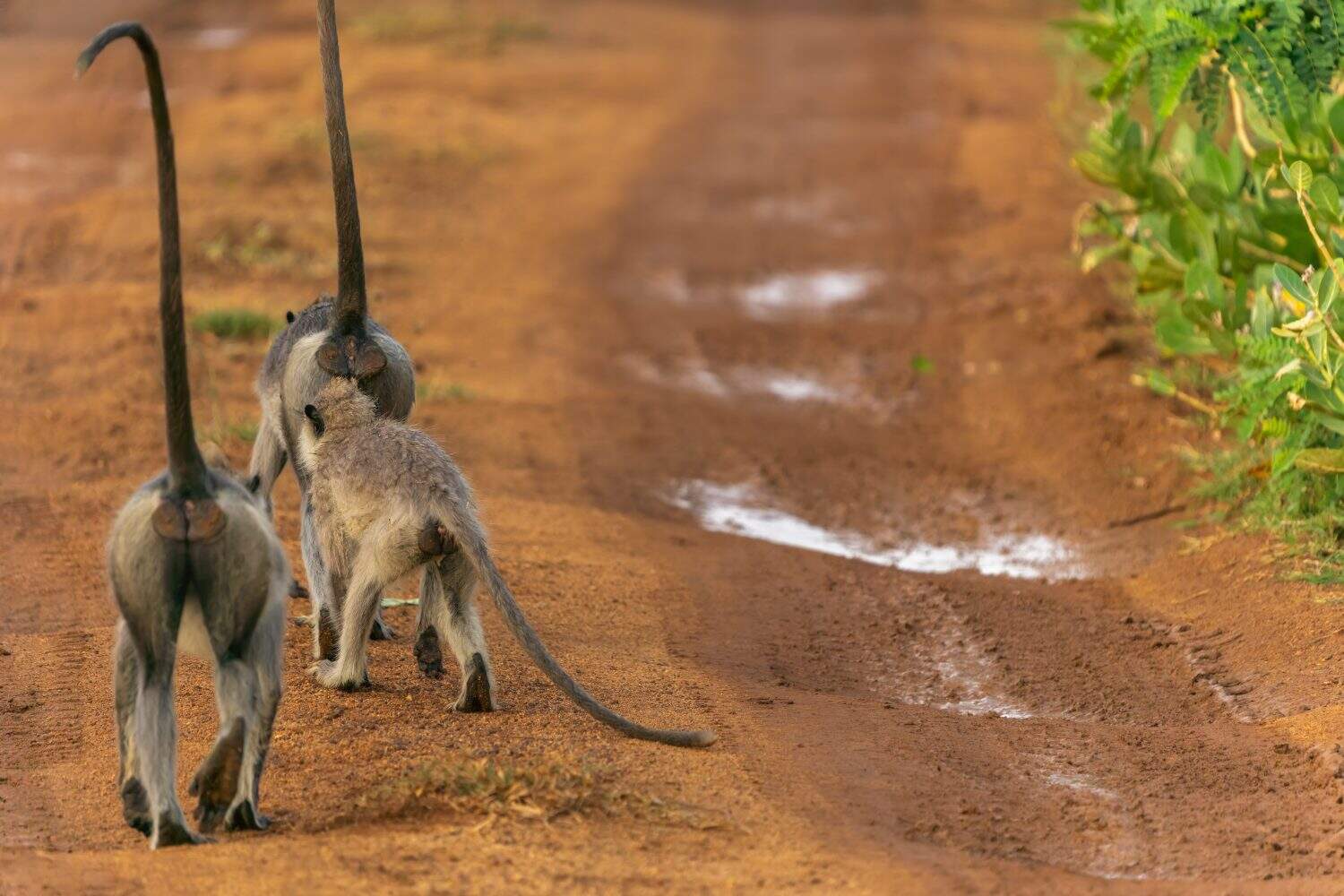
Purple-faced langurs have tails far longer than their two-toned bodies.
©Photos BrianScantlebury/Shutterstock.com
Known scientifically as Semnopithecus vetulus, purple-faced langurs, or purple-faced leaf monkeys, are a species of Old World monkey endemic to Sri Lanka. They are characterized by two-toned bodies, dark on top and light on the bottom of both face and frame.
Along with several related subspecies, purple-faced langurs have especially long tails. Their tails range in length from 26 to 33 inches in males and 23 to 32 inches in females. Despite once being prevalent in Sri Lanka, urbanization has caused their numbers to drop significantly in the last few decades.
Long-Tailed Macaque
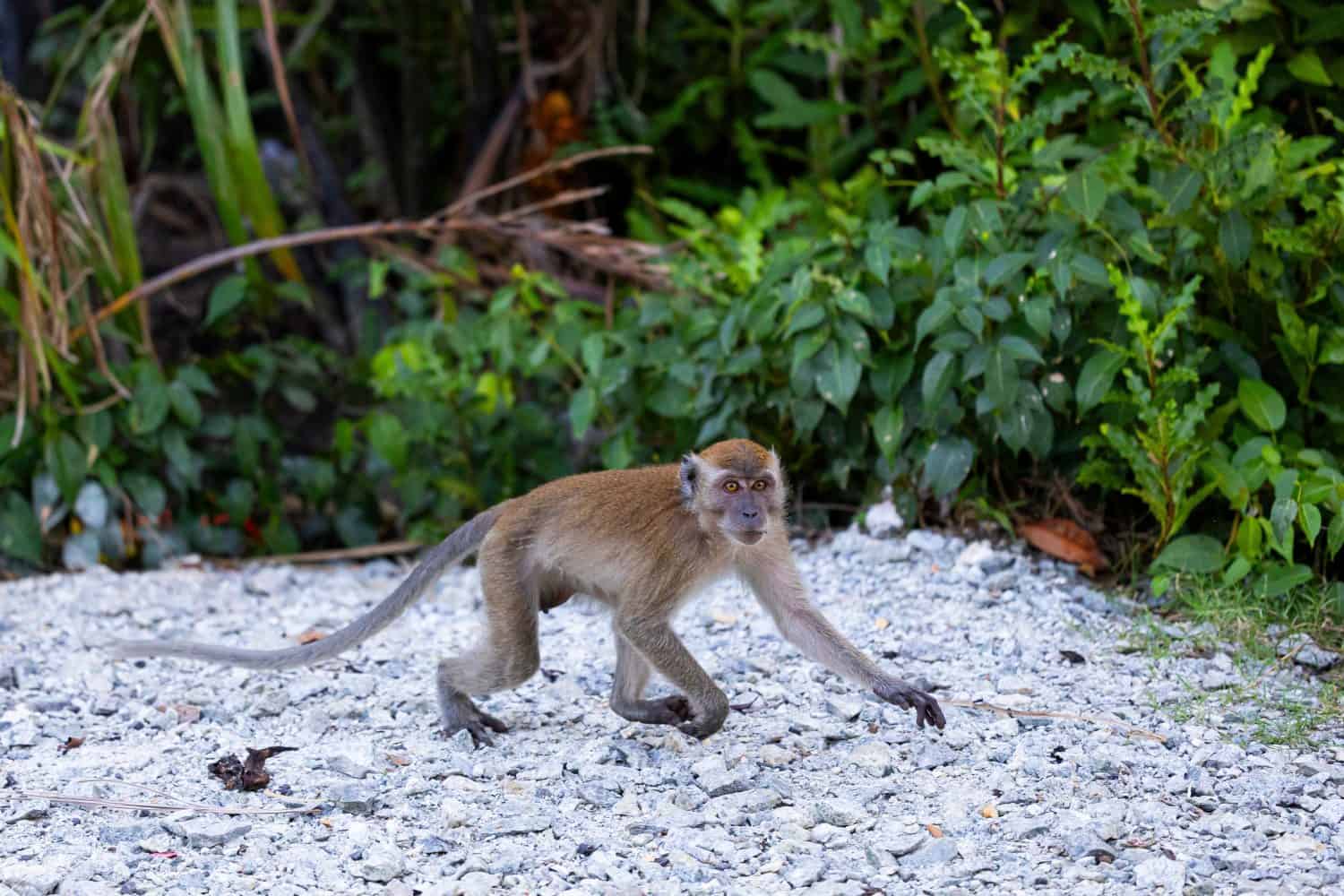
Long-tailed Macaques are one of the few Old World monkeys that use stone tools for food foraging.
©Nik Hisham/Shutterstock.com
The crab-eating macaque, also known as the long-tailed macaque (Macaca fascicularis), is another primate with one of the longest tails. It’s in the name, after all. They are native to Southeast Asia, where they live on the edges of forests, water sources, and human settlements.
They have tails that are impressively long relative to their size: between 1.31 and 2.15 feet. That’s the length of their head and body combined. While long-tailed macaques are considered pests, they are incredibly resourceful. They are one of the few Old World monkey species that use stone tools for daily foraging tasks.
Myanmar Snub-Nosed Monkey
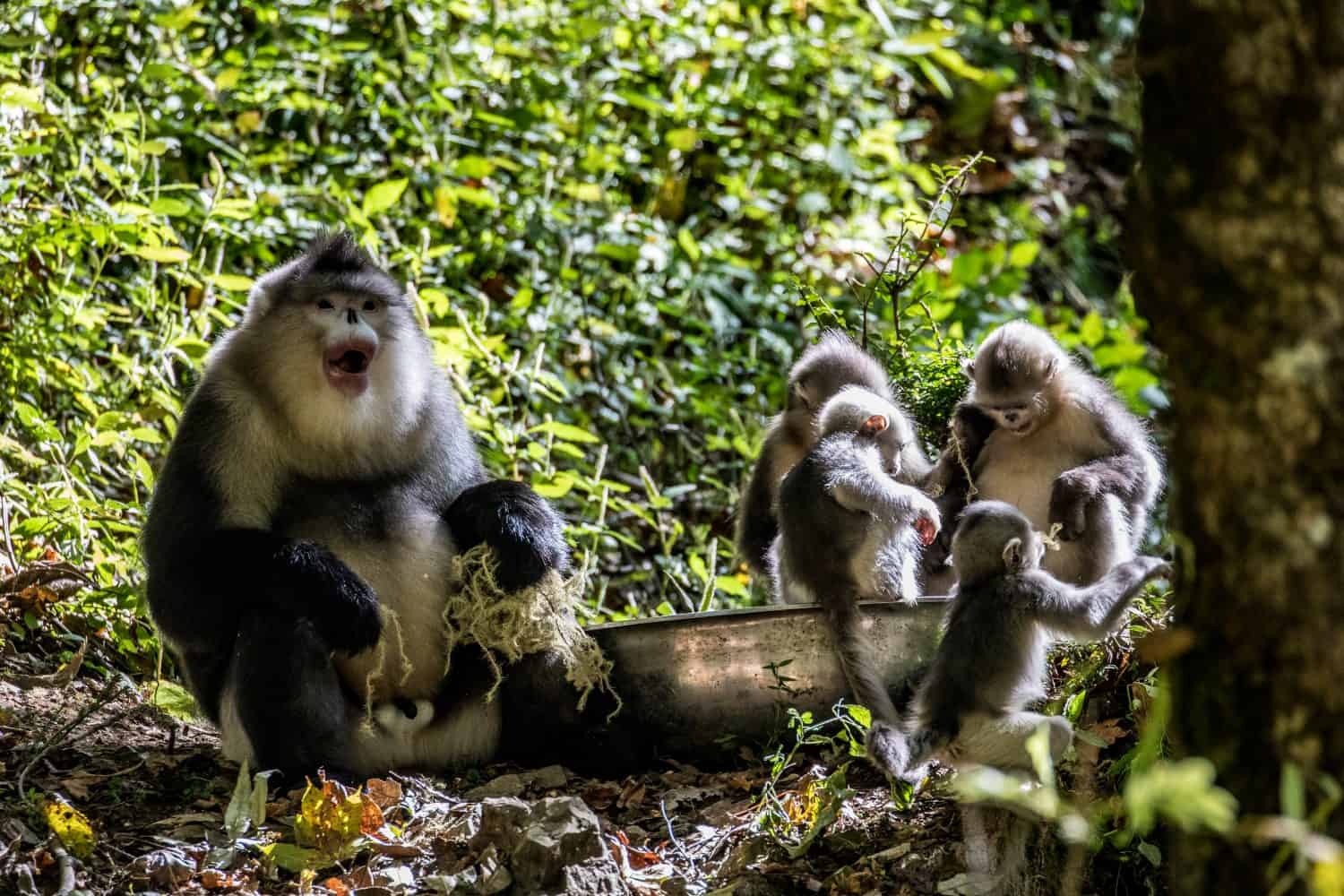
A unique-looking primate, the Myanmar snub-nosed monkey has a tail about 1.4 times the length of its body.
©Danita Delimont/Shutterstock.com
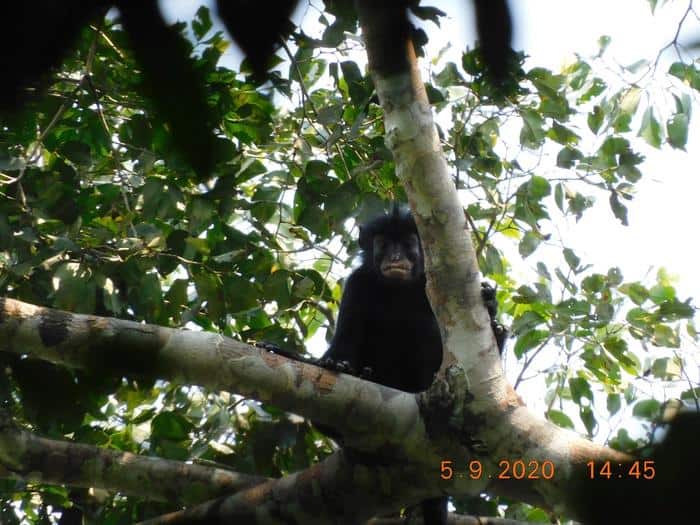
Myanmar snub-nosed monkeys (Rhinopithecus strykeri) are a type of leaf-eating monkey with distinctive snub-nosed, upturned faces. Even though they live in Myanmar, they are not fans of rain and have been observed hiding their faces between their legs during downpours.
They also have gloriously long tails. Myanmar snub-nosed male monkeys have tails that reach up to 31 inches, while females have tails that reach about 25 inches. In either case, their tails are usually about 1.4 times the length of their bodies. As of 2025, the Myanmar snub-nosed monkey (Rhinopithecus strykeri) remains listed as Critically Endangered on the IUCN Red List.
Howler Monkey
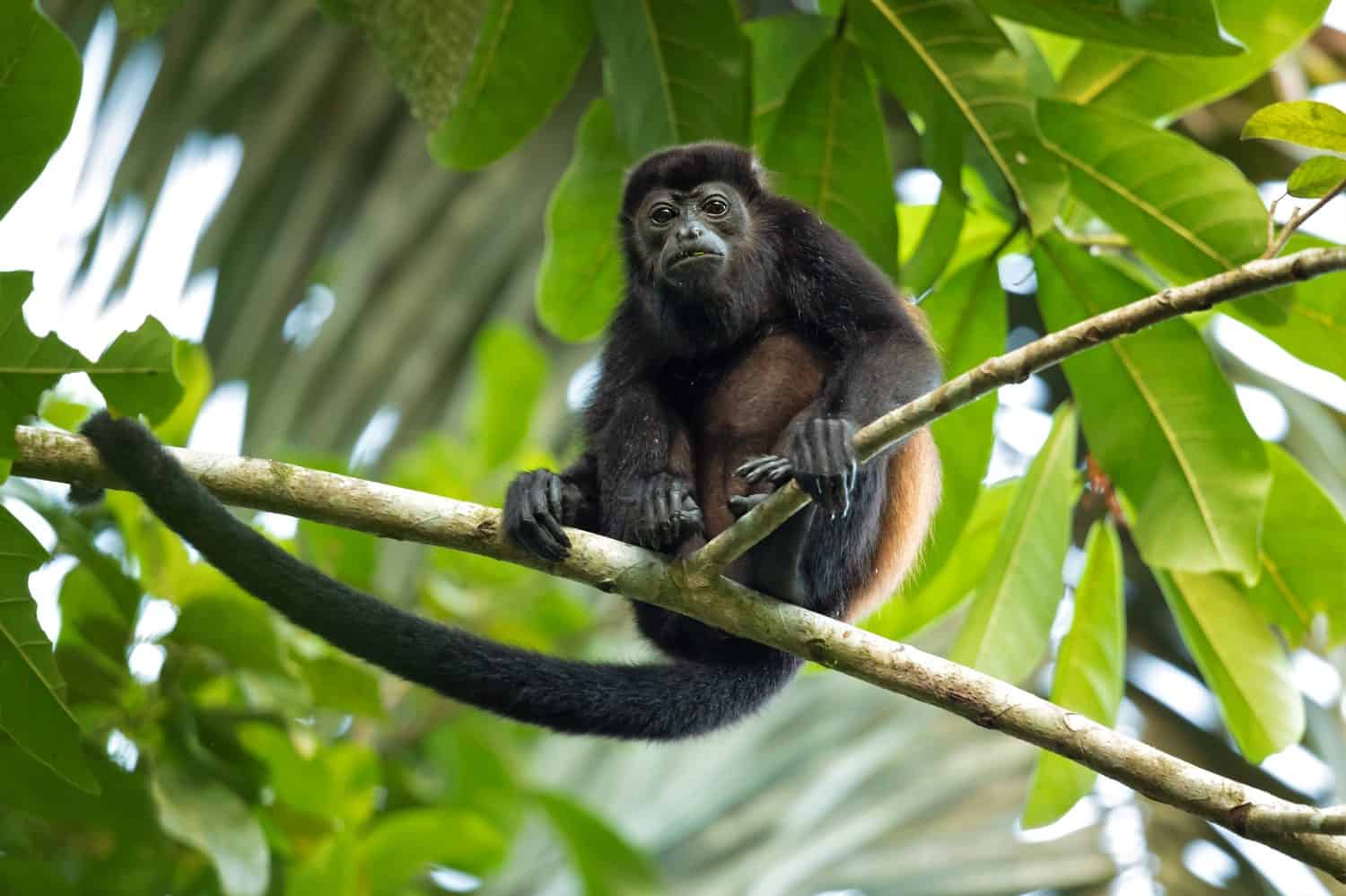
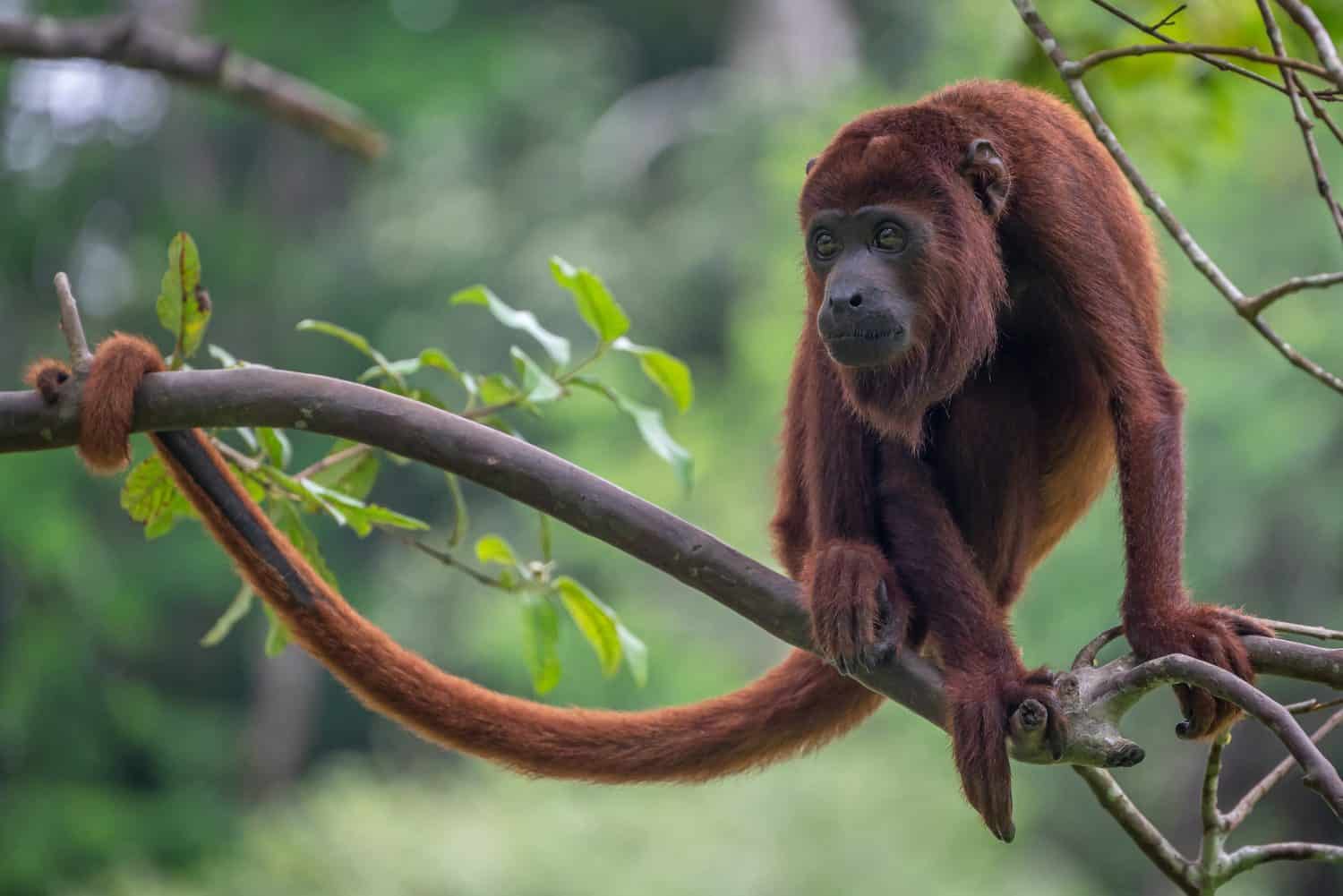
Like other New World monkeys, howler monkeys have prehensile tails.
©Milan Zygmunt/Shutterstock.com
Howler monkeys are one of the most widespread primates in the Neotropics. They account for about 15 different species, many of which are known for their distinctive ‘hoot’ or ‘howl’ vocalizations. They are also known for their incredibly long tails, with lengths ranging between 28 and 37 inches. Their tails are typically about as long as their body or slightly longer. Remarkably, howler monkey tails are also prehensile. They use them to pick fruits and nuts from trees or to hang from branches.
Spider Monkey
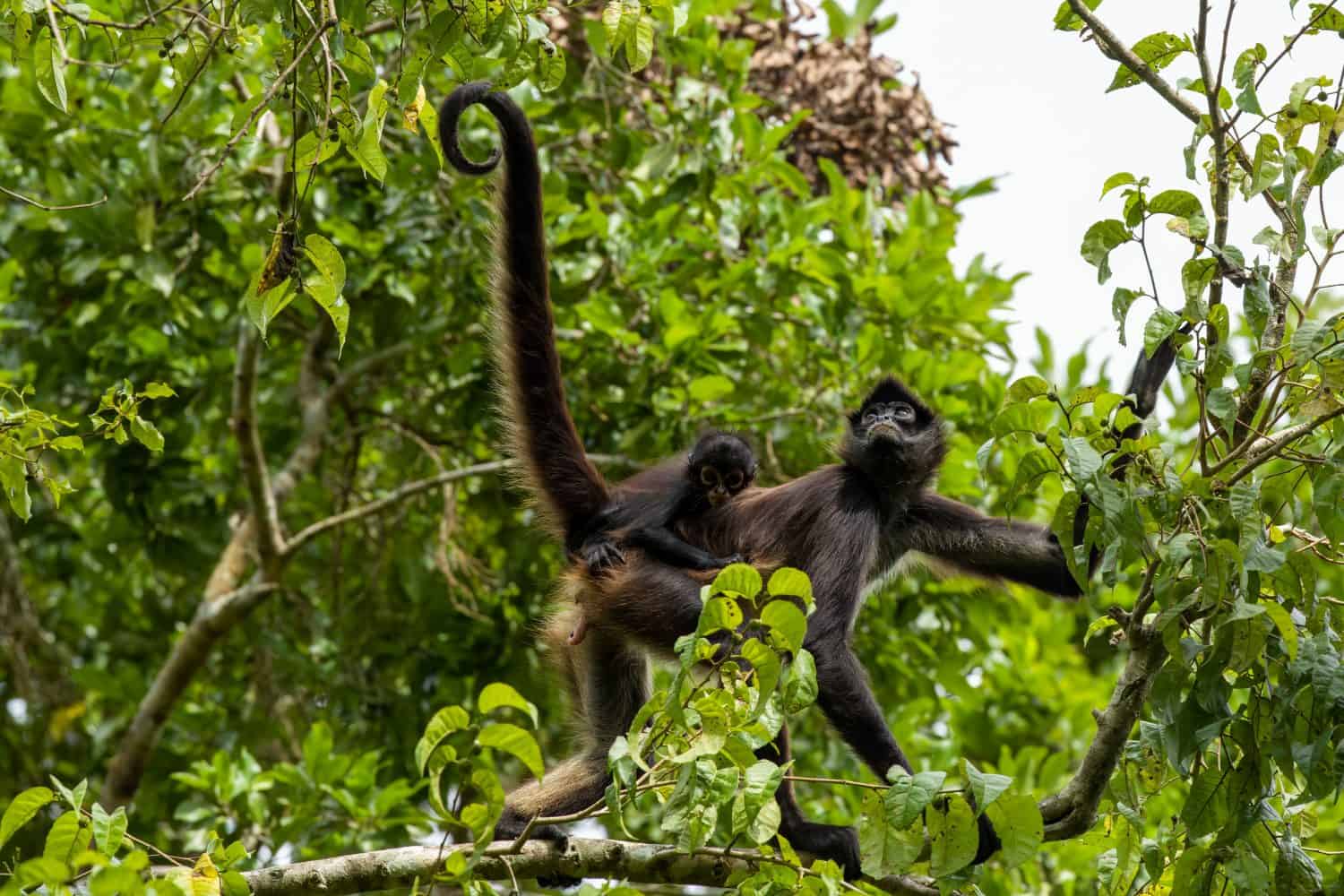
Spider monkeys have long limbs and even longer, prehensile tails.
©Guillaume Angleraud/Shutterstock.com
Like howler monkeys, ‘spider monkey’ refers to several species of New World monkeys. They are characterized by remarkably long limbs and tails. These tails, depending on the spider monkey species, can reach up to 35 inches long. Their tails are also prehensile, which helps them grasp and swing from branch to branch.
Golden Snub-Nosed Monkey
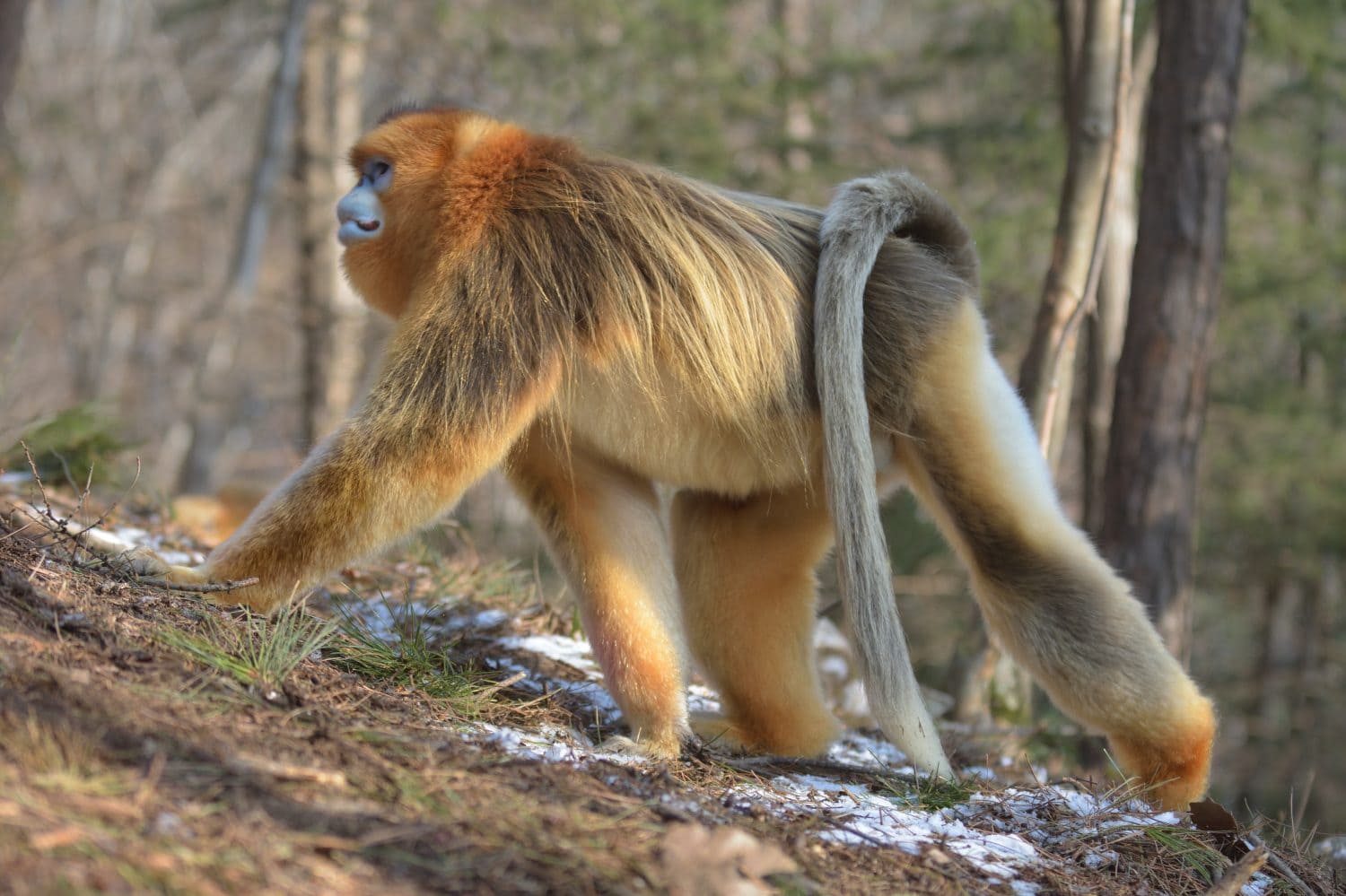
The monkey with the longest tail is likely the golden snub-nosed monkey, but young Hanuman langur monkeys give it a run for its money.
©Hugh Lansdown/Shutterstock.com
Determining which monkey has the longest tail depends on whether you consider absolute tail length or tail length relative to body size. While golden snub-nosed monkeys have tails that can reach up to 38 inches long, Hanuman langur monkeys can have tails up to about 35-40 inches long.