
Quick Take
- Moving a beluga whale requires more than a big truck, and one step that happens mid-flight will genuinely surprise you. See the transport process →
- Canadian officials blocked Marineland's original plan for its whales, leaving the park facing an urgent deadline to find them new homes. Read about the ultimatum →
- The rescue only became possible after U.S. regulators took an unusual step they almost never do. See the fast-tracked permits →
- Five aquariums across two countries coordinated this rescue, and that coalition only formed because one deal fell apart at the last minute. Meet the five aquariums →
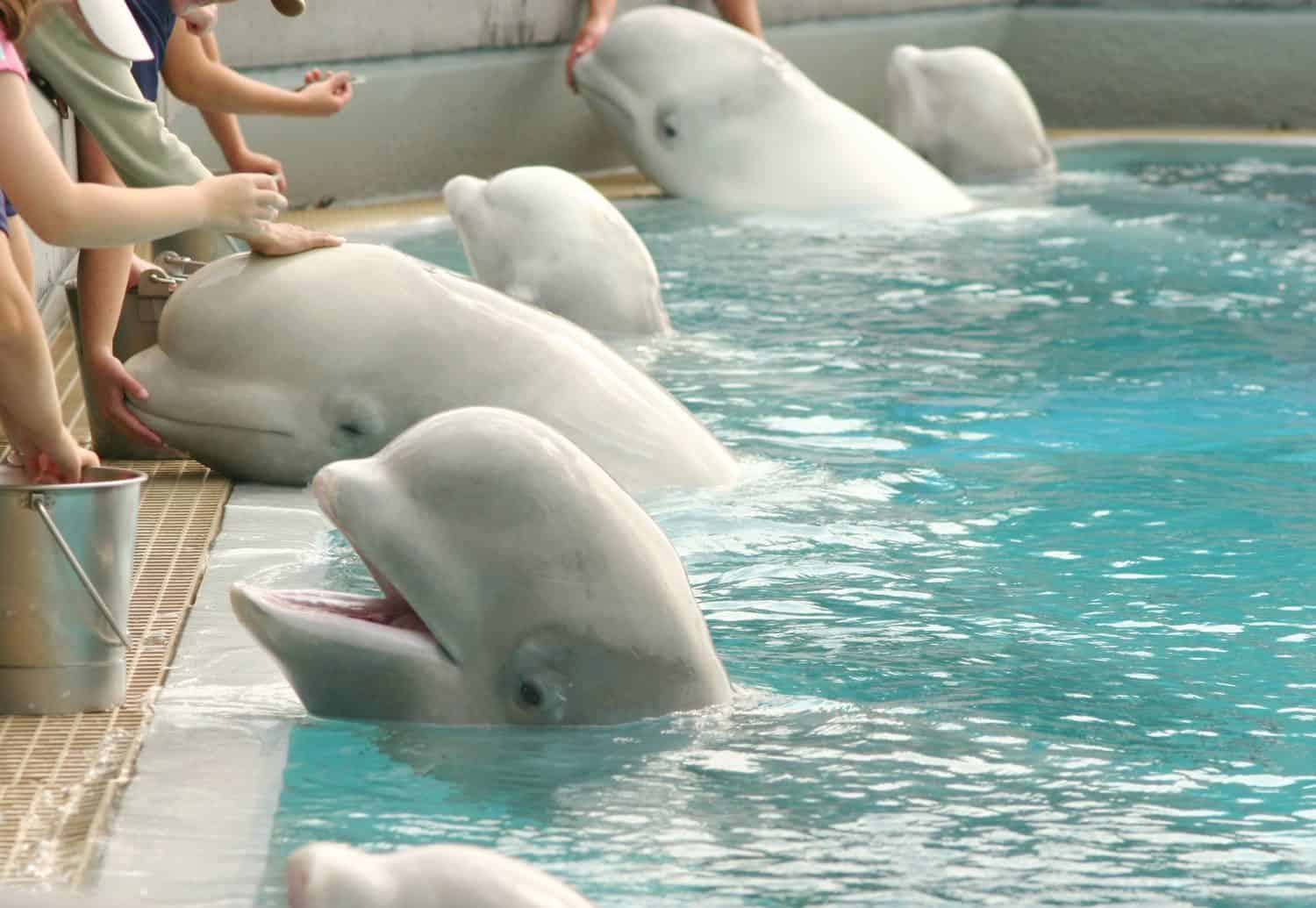
What happens to marine life when their captive home closes? For the beluga whales that lived at Canada’s Marineland theme park near Niagara Falls, it meant moving thousands of miles away.
Their journey involves cranes, planes, and trucks to complete the arduous relocation. Here’s how aquariums across North America and Spain are jumping in to help Marineland’s resident belugas safely relocate to their new homes.
Why Did Marineland Close?
Marineland, a Canadian theme park, was founded by John Holer in 1961. Originally, it was home to several sea lions. Holer had emigrated from the former Yugoslavia to Canada and brought the sea lions with him.
Over the next decades, the park grew and became famous for its killer whale shows and the country’s largest collection of captive beluga whales. However, not everything was as positive as it appeared on the surface.
Beginning in the 2010s, former workers and animal welfare groups accused the park of animal mistreatment. Marineland denied all the accusations. Holer died in 2018. Since 2019, 20 whales, including one orca and 19 belugas, have died at Marineland. No cause of death has been determined. In 2019, Canada passed a law banning new whale and dolphin captivity. The law also banned the breeding, import, export, and display of cetaceans, though existing animals were permitted to remain at facilities like Marineland under provisions of the Fisheries Act.
Holer’s wife, Marie, put the park up for sale in 2024. She died shortly after the park closed permanently. Caretakers have been looking after the remaining whales ever since. However, the park says it’s running out of money and can no longer pay for the whales’ care.
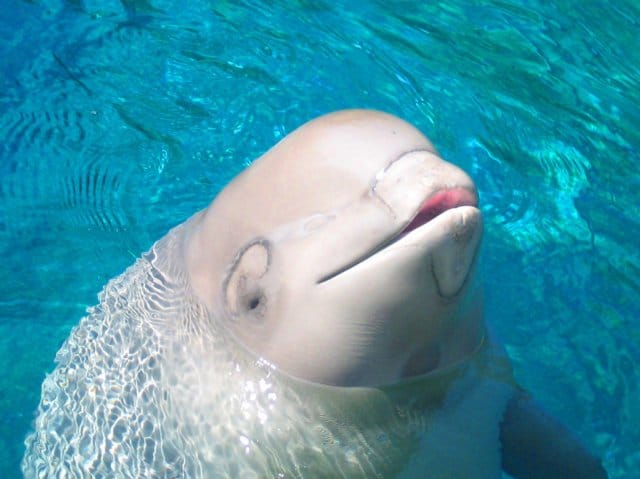
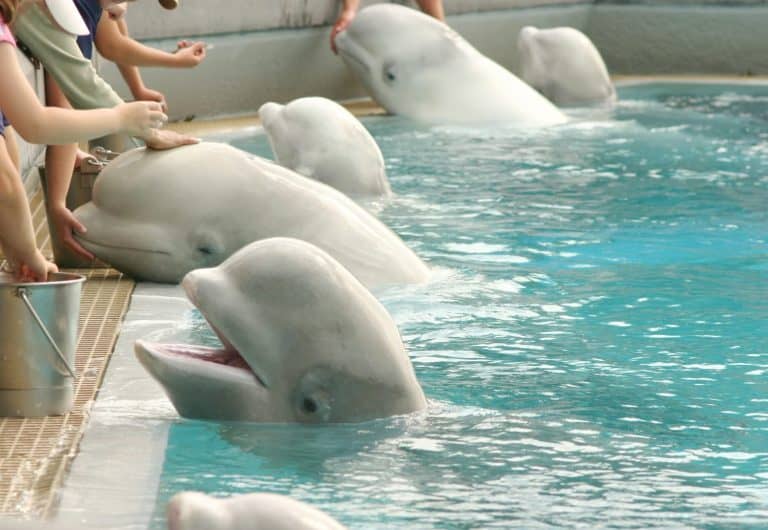
Beluga whales are being rescued from a closed Canadian marine theme park called Marineland.
Where Are the Remaining Residents Going?
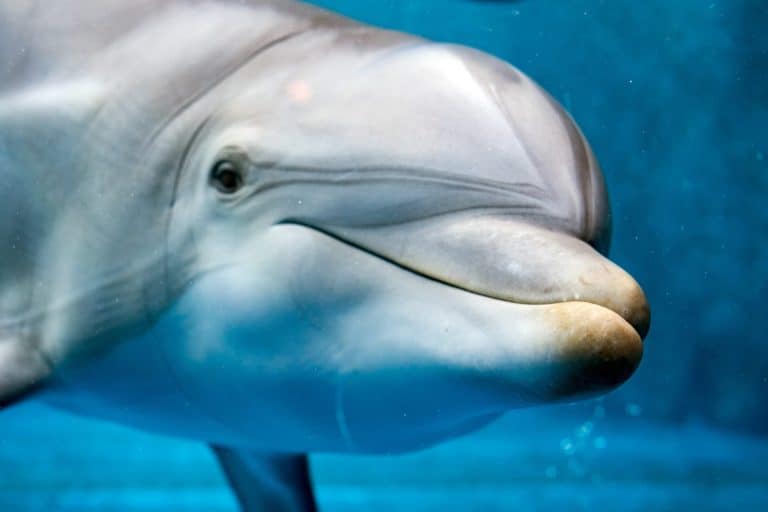
Right now, there are roughly 30 belugas and four dolphins that need to be moved to new homes. Several aquariums are working together to take in the marine life, including Shedd Aquarium in Chicago, SeaWorld San Antonio, SeaWorld San Diego, Georgia Aquarium in Atlanta, Oceanogràfic Valencia in Spain, and Mystic Aquarium in Connecticut. All are members of the Association of Zoos and Aquariums.
Many are moving, at least temporarily, to various SeaWorld facilities. SeaWorld runs one of the largest marine animal rescue organizations in the U.S.
However, finding new homes for the sea life is just half the battle. Getting them there, especially the whales, is another story.
How Do You Move a Whale?
It starts by draining the whale’s existing pool. Once that’s done, each beluga is carefully lifted by crane using a specialized sling. The whale is then lowered into a large tank of water on a custom-built truck, which is driven under police escort to Toronto’s Pearson Airport.
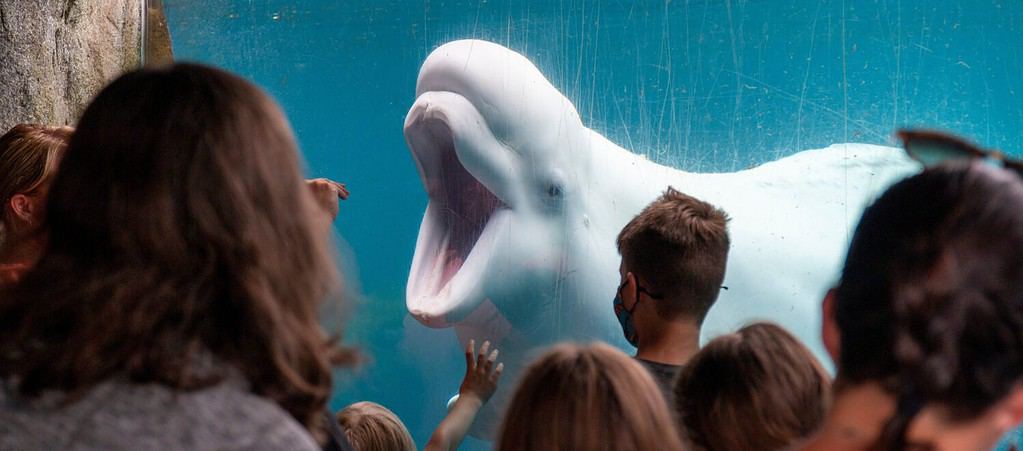
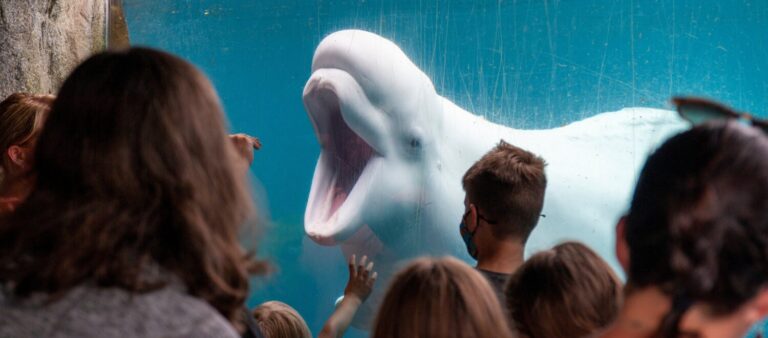
The beluga whales are being relocated to five different facilities.
©WoodysPhotos/Shutterstock.com
From there, the whales fly on cargo planes, typically a 777 aircraft specially outfitted to haul large living cargo, to their new aquarium home. Vets and animal care technicians travel with the whales, sometimes staying in the water with the animals throughout the flight.
For the first move of Marineland residents in July 2026, six belugas went in one trip. Four—Sierra, Acadia, Osiris, and Lillooet—went to Shedd Aquarium, and two—Frankie and Bertie Botts—went to SeaWorld San Antonio.
A Race Against Time
The move to the five different marine parks wasn’t the original plan. Marineland originally agreed to send all 30 whales to a park in China. However, Canadian officials blocked the plan in 2025 due to concerns about breeding and performing.
In response, Marineland threatened to euthanize all the whales unless it found funding or a new plan. This prompted the group of aquariums in the U.S. and Spain to quickly develop an emergency plan to rescue the belugas. That required U.S. regulators to approve emergency import permits. The U.S. National Oceanic and Atmospheric Administration ultimately fast-tracked approval in order to save the whales’ lives.
Where Are the Whales Now?
As of early August 2026, a second move of 13 additional belugas was successfully completed. Six males now reside at Shedd Aquarium. Seven additional whales went to SeaWorld San Antonio, including Xena, Gemini, Skyla, Eve, Neva, and Calypso—though only six are named here. They join two other belugas rescued from Marineland in July.
“Given this is the largest number of belugas being moved at one time, we are so happy that all went well and the second transport of this huge rescue effort is complete,” Steve Aibel, vice president, Animals and Conservation for SeaWorld San Antonio, said in a statement.
According to marine experts who oversaw the relocations, the new arrivals are being slowly introduced to each aquarium’s existing whale populations. Trainers say the first two belugas to arrive in San Antonio began eating within hours.
“Caretakers are letting each whale adjust at her own pace, watching closely for signs that they are eating well, resting comfortably, and beginning to interact with one another and their new surroundings,” SeaWorld San Antonio said in a news release.
The rest of the whales are expected to be moved over the coming weeks and months, with all the belugas relocated by fall 2026. After all the remaining animals have been relocated, Marineland’s property will be sold.