
Mexico is making global headlines after passing sweeping legislation that will free around 350 captive dolphins from entertainment venues across the country. With unanimous Senate approval in June 2025 and firm backing from President Claudia Sheinbaum, the nation is pivoting away from dolphin shows and toward ethical seaside sanctuaries. The law is being hailed as one of Latin America’s most ambitious steps for animal welfare. It’s also an acknowledgment that dolphins, long seen as performers or therapy tools, are sentient, intelligent beings with emotional lives of their own.
Dolphins in the Wild: What They Need to Be Themselves
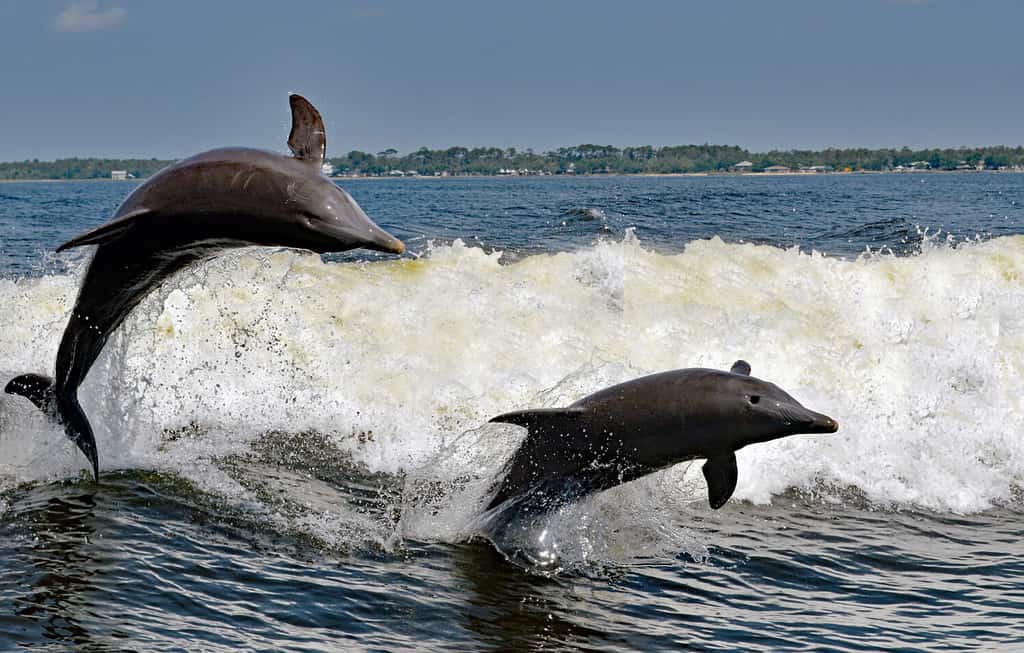
Dolphins frolicking in the surf of the Gulf of Mexico.
©Ed Rahe/Shutterstock.com
Wild dolphins travel tens of miles each day, diving and surfing through constantly changing currents. They live in pods, communicating through clicks, whistles, and posture. Each dolphin has a distinct “signature whistle,” used like a name. Mothers nurse calves for years with help from older relatives. They use vocalizations for echolocation, which requires open underwater spaces where sound waves can bounce off fish and other dolphins, rather than being distorted by tank walls.
Dolphins have developed high intelligence and social skills as a result of living in constantly changing environments. Studies show that their cognitive abilities rival those of great apes: self-recognition in mirrors, long-term memory, and cooperative problem-solving. They even sleep with half the brain awake to keep watch for predators. Most remarkably, they also show evidence of a rich emotional life, displaying joy, playfulness, fear, anger, and even grief.
What Happens to Dolphins in Captivity
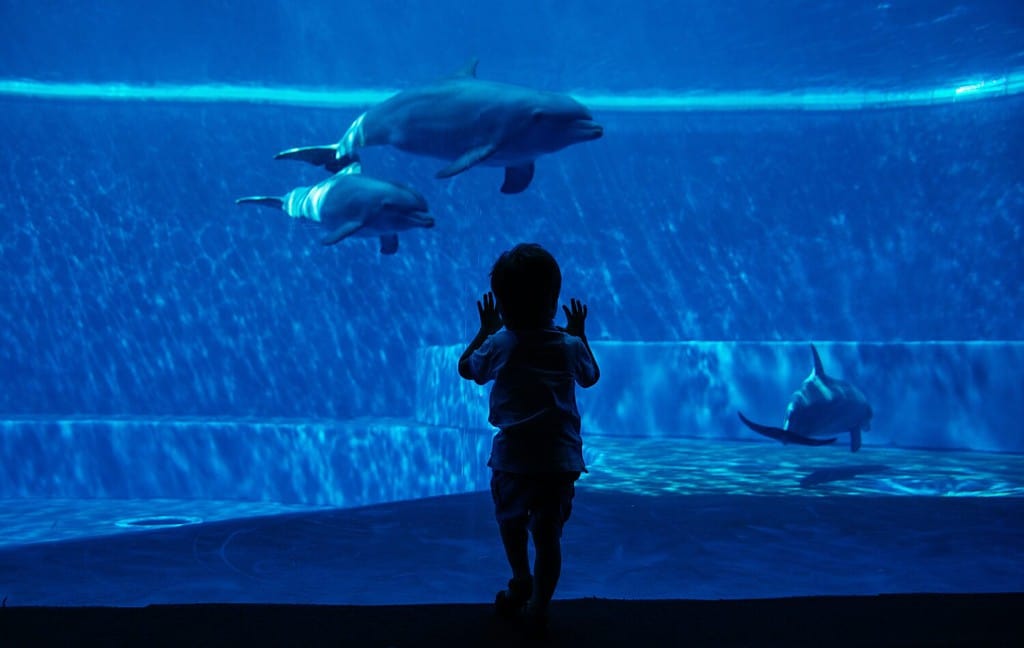
Captive dolphins sometimes show stress-related behaviors such as circling or floating motionless.
©oneinchpunch/Shutterstock.com
Even under “good” management—ample food, veterinary care, enrichment toys—a captive environment cannot replicate natural life for dolphins and it creates intense physical and psychological stress for them.
Physical Problems
In captivity, dolphins live in tanks that represent only a fraction of their natural range, with limited depth, stagnant water, and artificial acoustics that distort their sonar. These conditions take a measurable toll on their bodies. Captive dolphins suffer elevated rates of pneumonia, ulcers, and other stress-related illnesses that are rarely seen in the wild. Chlorinated or chemically treated water irritates their skin and eyes, while constant exposure to the surface sun leads to sunburn and blistering they can’t escape by diving. Many develop tooth damage from gnawing on gates or tank walls, and necropsies often reveal organ failure—especially in the liver and kidneys—linked to chronic stress and the use of medication. Their immune systems weaken under persistently high cortisol levels, making infections like sepsis and respiratory disease common causes of death.
Psychological Problems
The psychological strain of captivity runs just as deep. Deprived of open space and stable pod structures, dolphins lose the ability to form or leave social groups naturally. The constant echo of sound bouncing off tank walls overwhelms their sensitive sonar, adding to frustration. Many display stereotypic behaviors—endless circling, head bobbing, or floating listlessly for hours. Others show signs of aggression, biting companions or striking trainers, or sink into depression-like withdrawal, refusing food or interaction. Some dolphins resort to self-harm, ramming walls or grinding teeth until they break. Trainers sometimes administer sedatives to manage anxiety or aggression, but these measures mask the symptoms without addressing their cause. In essence, captivity reduces complex, intelligent beings into passive or reactive versions of themselves—bodies alive, but minds confined.
The Push That Changed History

Barceló Maya Grand Resort on the Caribbean coast of the Yucatan Peninsula, Mexico.
©Asra Rehman/Shutterstock.com
Public anger reached a peak in 2024 after multiple dolphins died at the Barceló Maya Grand Resort’s dolphinarium. Video of suffering animals spread across social media, fueling the #LiberenALosDelfines (“Free the Dolphins”) movement. Activists, scientists, and ordinary citizens flooded lawmakers with petitions. Animal-welfare experts testified before Congress, presenting data on stress-related disease, abnormal behaviors, and poor regulation in commercial dolphin programs. By June 2025, Mexico’s Senate voted unanimously to end commercial dolphin entertainment. The victory reflected not only years of activism but a broader public awakening about how animals are treated within tourism.
What the New Law Does
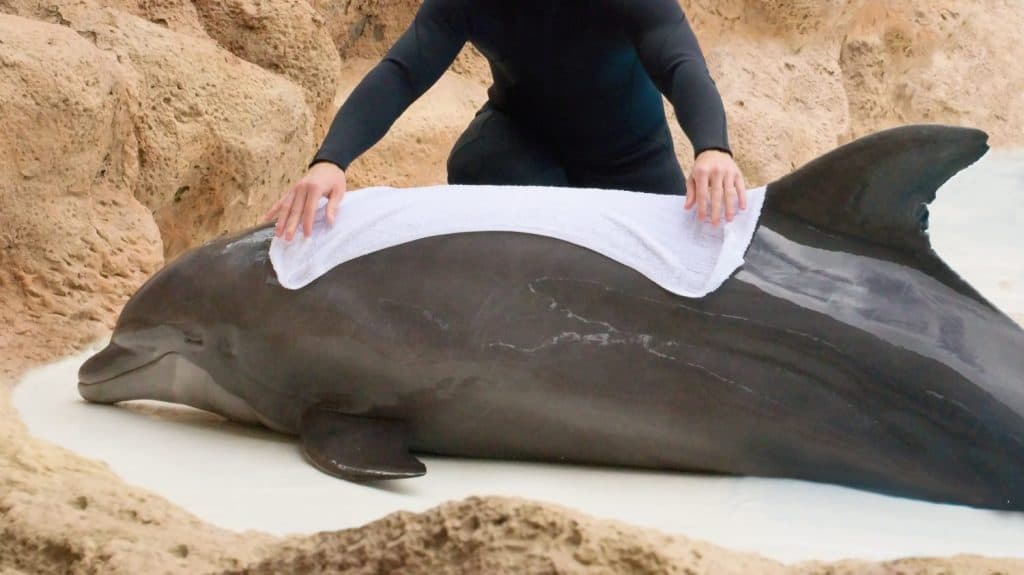
Under the new Mexican legislation, entertainment venues must transfer dolphins to sea pens within 18 months and monitor their wellbeing.
©Tunatura/Shutterstock.com
The new legislation bans the following uses of dolphins:
• Public performances and shows not tied to legitimate conservation or research.
• Swim-with-dolphin programs and for-profit “therapy” sessions.
• Breeding in captivity except for accredited conservation work.
• Physical interaction in tourism programs.
All facilities must close, and roughly 350 dolphins will be relocated to monitored seaside sanctuaries within 18 months. Operators are required to submit health records, identification photos, and microchip data within 90 days. The Ministry of Environment and Natural Resources (SEMARNAT) will oversee transfers, certify sanctuaries, and enforce penalties. Fines can exceed 75,000 times Mexico’s UMA (Unit of Measurement and Update)—a financial blow large enough to deter violations.
From Tanks to Sea Pens

This is an example of a dolphin sea pen on the Red Sea in Eilat, Israel.
©Luciano Santandreu/Shutterstock.com
Not all dolphins can return fully to the wild. Many were born in captivity or have chronic conditions. So under Mexico’s plan, dolphins will move to coastal “sea-pen” sanctuaries—large, semi-natural ocean enclosures with tidal flow, shade, and open space. These areas allow animals to swim in real currents, hunt live fish under supervision, and rebuild social bonds. Early relocation sites include protected zones in the Bay of Campeche on the southern shore of the Gulf of Mexico, as well as sections of the Pacific coast. Mexico’s sanctuaries are modeled after pilot projects in places like Greece and the U.S. Virgin Islands, which are designed to balance care with freedom—offering dolphins a ‘retirement at sea’ rather than lifelong confinement.
New Ethical Guidelines for Research
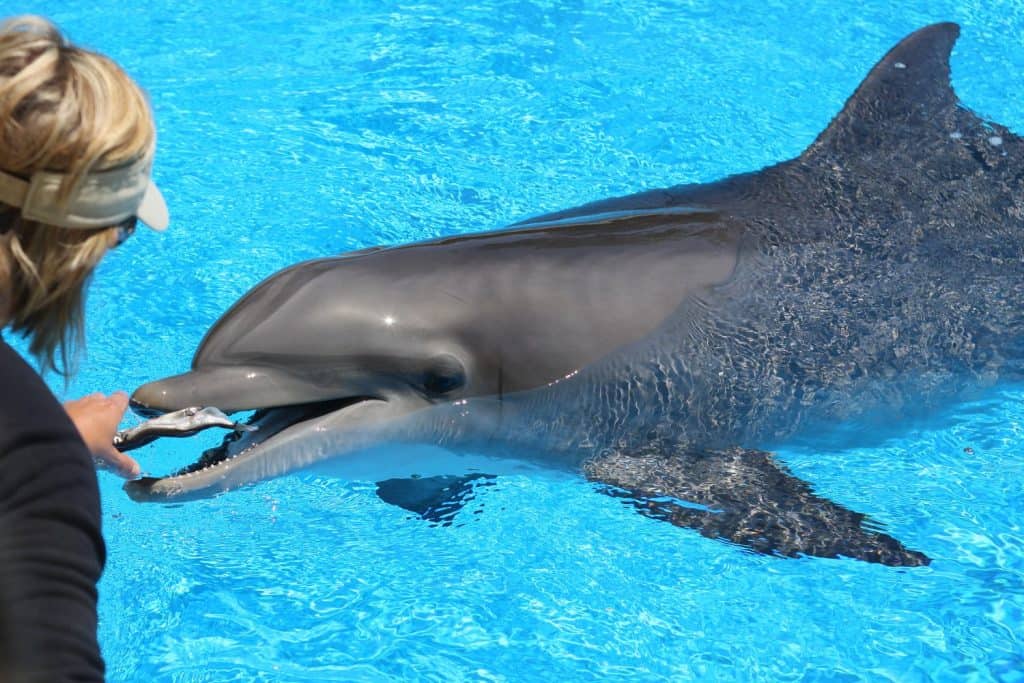
New laws will allow only dolphin research related to conservation, rehabilitation, or health.
©Dennis W Donohue/Shutterstock.com
Under Mexico’s new law, research is still allowed but only when it benefits dolphins directly—projects tied to conservation, rehabilitation, or health. Commercial “research,” once used to justify shows, is banned. SEMARNAT aims to make the sanctuaries hubs for ethical study, where scientists can observe cognition and social behavior in near-natural settings. However, the use of dolphins for entertainment, breeding (except for conservation purposes), and any other commercial activities is banned.
Implementing the Law
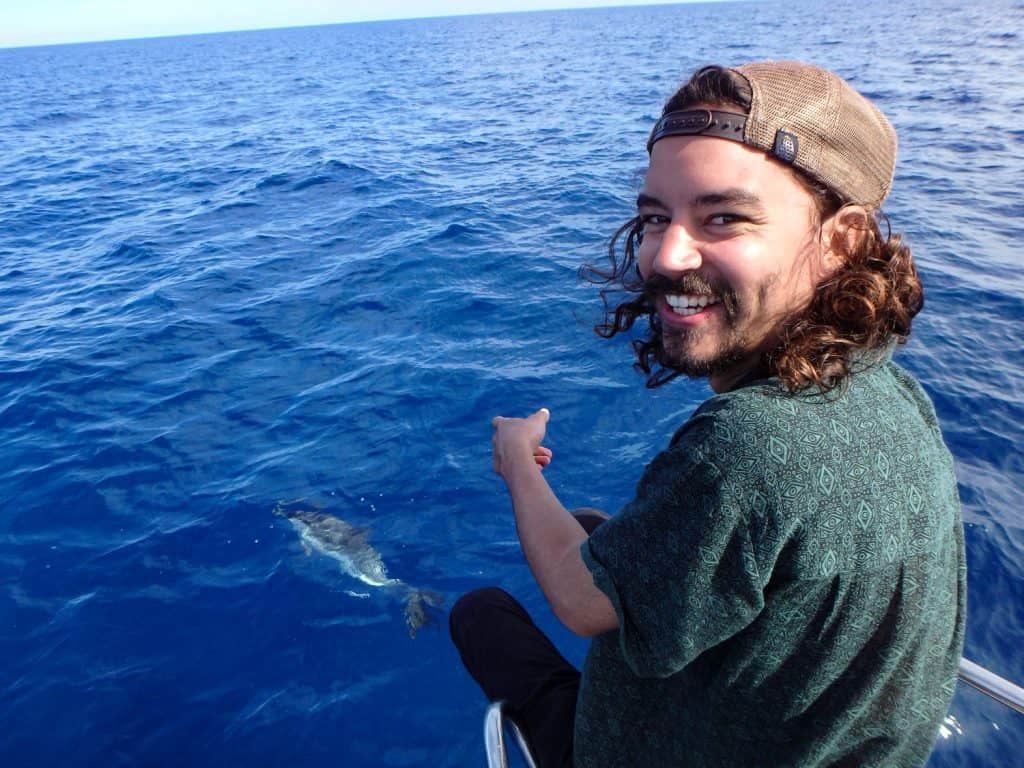
A tourist enjoying watching dolphins in their natural habitat.
©David Jara Bogunya/Shutterstock.com
Implementing the reform will be complex. Some facilities are requesting extensions or claiming exceptions for ‘rehabilitation’ purposes. Authorities and NGOs are building a public database to track every dolphin’s status and health. Economically, coastal regions will need to adapt. Many resorts are pivoting toward eco-tours that let visitors observe wild dolphins instead of swimming with captive ones. Similar transitions succeeded in New Zealand and the Azores, where wildlife tourism now earns more revenue than shows once did.
Dolphin Captivity in the United States

SeaWorld, California, still has popular dolphin shows.
©f8grapher/Shutterstock.com
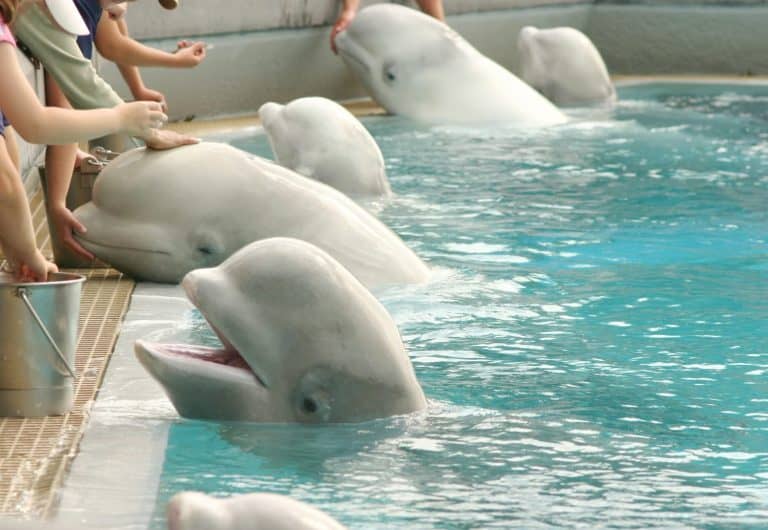
How does Mexico’s situation compare with the United States? In the U.S., about 220 to 250 dolphins remain in captivity across roughly 20 marine parks, aquariums, and research facilities. Most are bottlenose dolphins, kept primarily for public display, educational programs, and interactive “swim-with” experiences. A small number live in research settings such as the U.S. Navy Marine Mammal Program and accredited aquariums.
Facilities must comply with the Marine Mammal Protection Act and the Animal Welfare Act, which set standards for enclosure size, water quality, veterinary care, and enrichment activities. All research or display institutions require federal permits and oversight by Institutional Animal Care and Use Committees (IACUCs) to ensure welfare and minimize harm.
While some U.S. states—like California and South Carolina—have banned breeding and new captures, there is no national plan to phase out captivity or release existing dolphins. A few non-profit groups are developing sea-pen sanctuaries for retired dolphins, but most are still awaiting federal approval. For now, American facilities operate under the claim of education and conservation, yet growing public sentiment and global precedents like Mexico’s 2025 law are renewing debate over whether these dolphins, too, should one day swim free.
An Emerging Global Norm
There are about 3,700 dolphins, porpoises, and whales in captivity around the world. In addition to the U.S., Japan, Russia, the UAE, and the Dominican Republic also have large dolphin entertainment industries. China holds the largest number of captive dolphins: over 1,300 across 99 facilities.
Mexico’s decision adds weight to a growing global trend: over a dozen countries worldwide have banned or are phasing out dolphin captivity, including the U.K., France, Canada, Chile, Costa Rica, India, Brazil, and others. Mexico’s action is a major step toward strengthening an emerging global norm of ethical treatment of these remarkably intelligent and sensitive creatures.