
Quick Take
- The method scientists used to fight sea lampreys sounds counterintuitive, yet it is what finally broke their grip on the Great Lakes. See the control efforts →
- Sea lampreys aren't dangerous everywhere, so what makes them so catastrophic in the Great Lakes specifically? Explore their Great Lakes impact →
- One phase of the sea lamprey's life cycle makes the species nearly invisible, and this is exactly what makes it so hard to stop.
- A single sea lamprey does far more damage before adulthood than most people realize, and the numbers are truly alarming. See the damage numbers →
Bodies of water are full of strange and scary creatures. One example is the lamprey, which is better known as the vampire fish. They get this haunting nickname for good reason, and they are pretty terrifying to look at. This Instagram post by @cnnclimate shows videos of these creepy fish up close while providing important information about them. Read on to learn more.
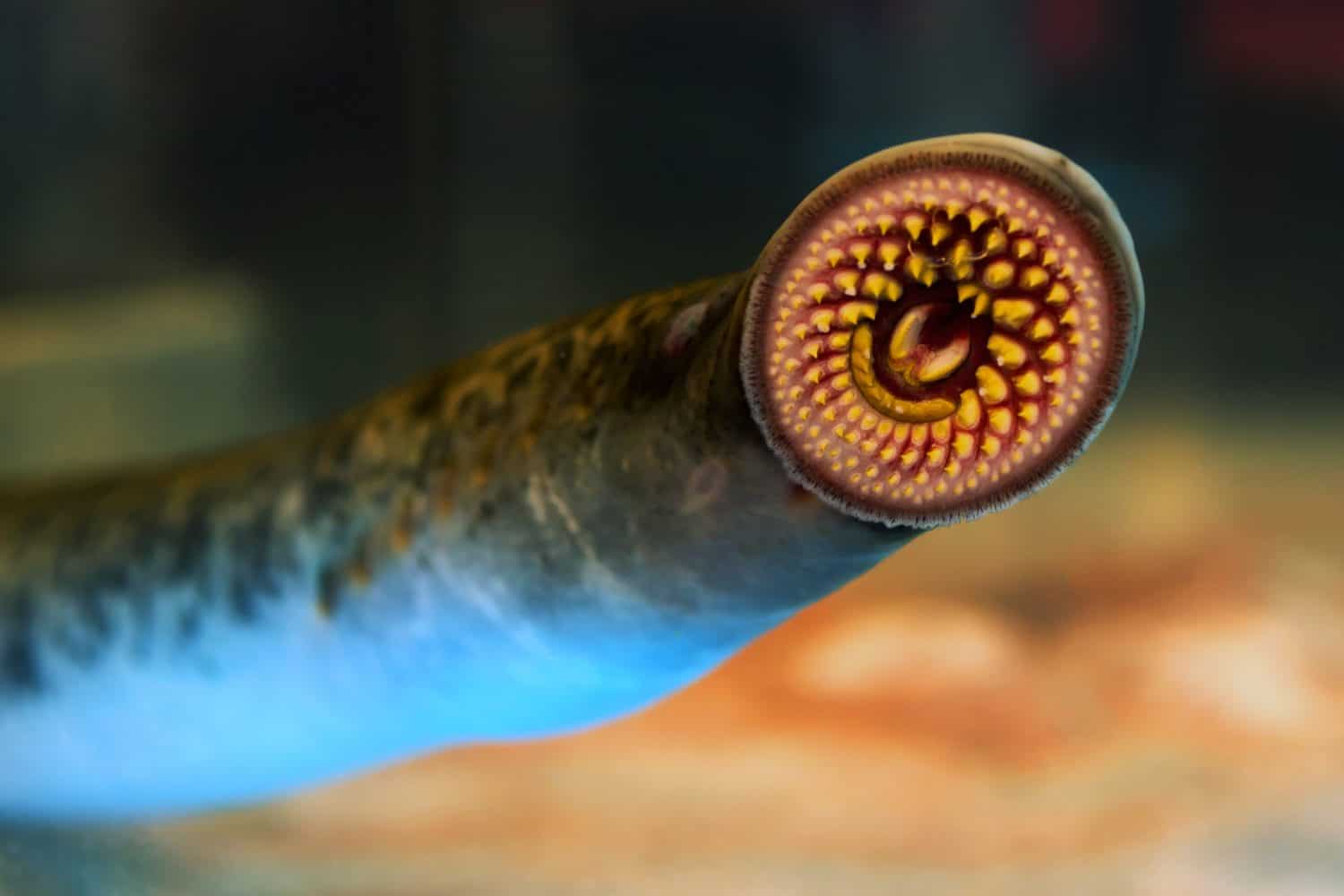
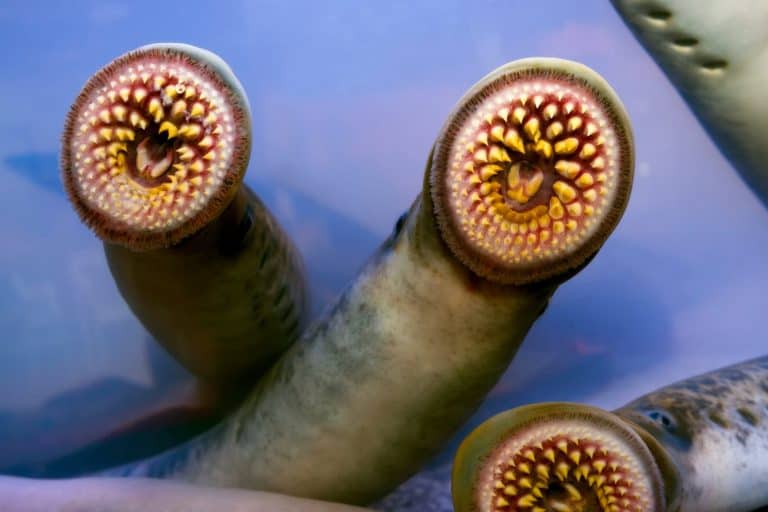
Sea lampreys suction themselves onto prey to feed on their blood and body fluids.
©Gena Melendrez/Shutterstock.com
About Sea Lampreys
Sea lampreys have a long history in the United States dating back to the 1800s. These fish are native to the Atlantic Ocean, but invaded the Great Lakes, and by the mid-1900s, other fish populations like salmon and trout were facing population collapse. However, in 1956, scientists discovered a compound called TFM that kills the young of these fish while leaving other native species unharmed. In their natural habitats, sea lampreys are just one predator within a larger, balanced ecosystem. However, as an invasive species in the Great Lakes, they have caused significant harm. While they are extremely harmful to other fish, they thankfully don’t pose a major threat to humans. So why are sea lampreys so dangerous?
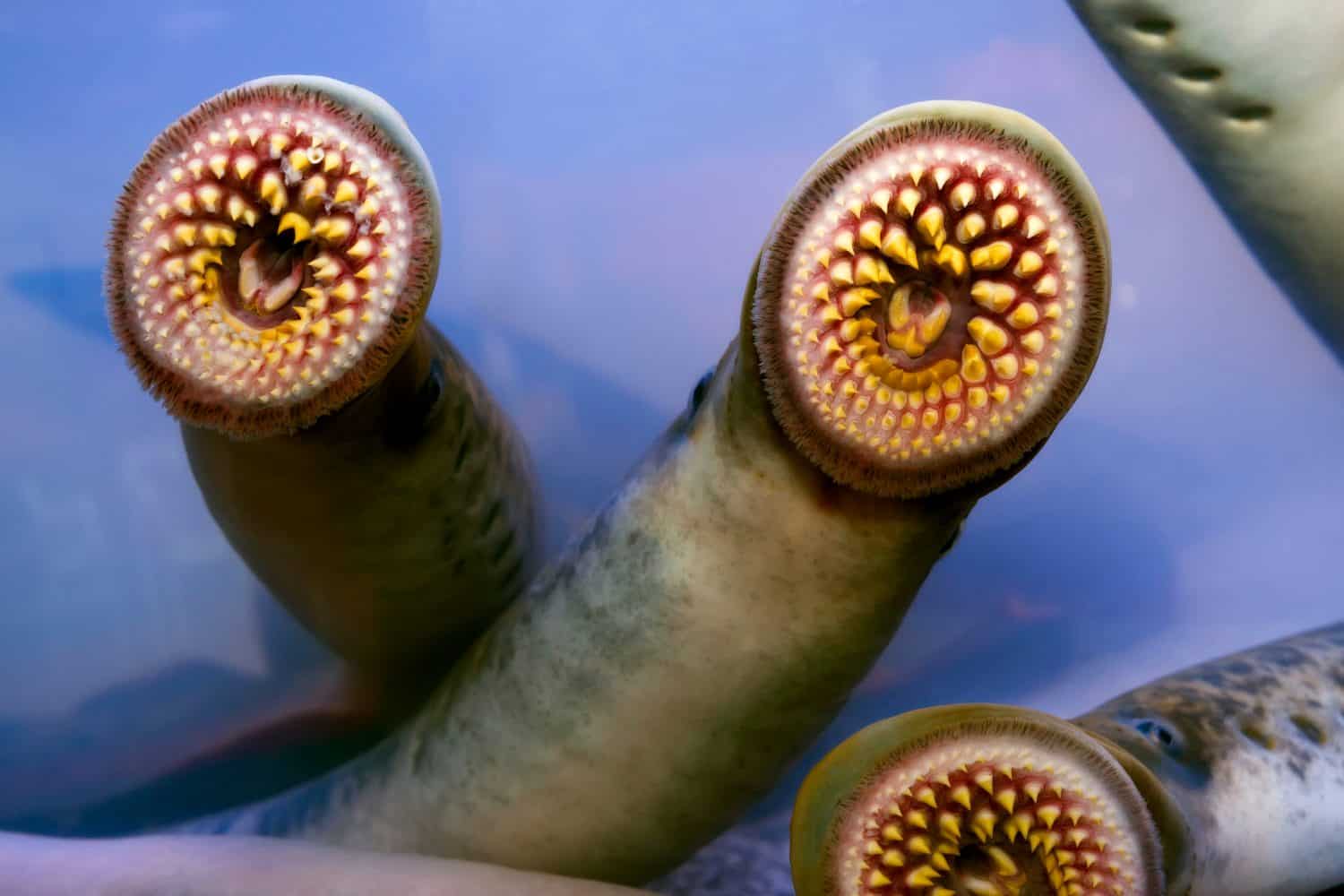
Sea lampreys are fish that act just like a parasitic vampire, making them terrifying. To survive, these fish use their sharp teeth and suction-cup mouth to latch themselves onto other fish like salmon, whitefish, and trout. After attaching, they aggressively feed on the host fish’s blood, body fluids, and tissue. Truly acting like a vampire, their feeding style leaves many fish with severe blood loss and infections that ultimately kill the fish. Because of this, scientists have made it an important goal to control them in their invasive habitats. In addition to using compounds like TFM, scientists also employ barriers and traps to physically capture sea lampreys. Due to their efforts, sea lamprey populations have gone down by roughly 90%, helping other native populations to rebound.