
Quick Take
- A native Australian rat has developed a surgical trick for eating one of the country's deadliest invasive species, and it targets the most dangerous ones first. See the surgical technique →
- This rodent may be doing as much conservation work as any government program, yet its own survival is far from guaranteed. Rakali conservation threats →
- Camera traps near Sydney Harbor caught footage that hints the rakali's appetite for invasive species goes well beyond cane toads. Camera trap findings →
- Scientists still can't agree on whether the rakali learned its most impressive skill or always had it, and the answer to that question changes everything for conservation. Learned or innate behavior →
Rats are not always viewed in a positive light. Scientists are becoming increasingly aware, however, that the Australian water rat could play a vital role in keeping some invasive species in check in parts of the continent. This rodent could be more useful to conservation than we have given it credit for.
Introducing the Rakali
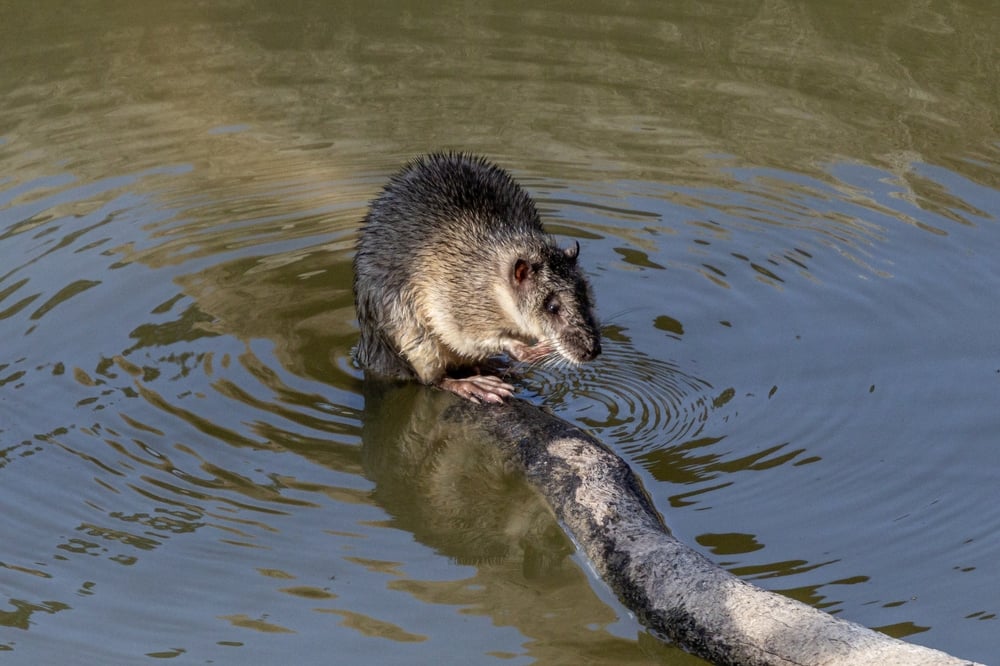
The water rat or rakali (Hydromys chrysogaster) is one of Australia’s largest rodents and one of only two amphibious mammals in the country. As you’ve likely guessed from its name, you’ll spot it near permanent bodies of water.
Their bodies can reach a length of 14 inches, with a 13-inch tail that has a distinctive white tip. They also have distinctive chisel-shaped incisors with hard yellow enamel on their front surfaces, small eyes and ears, and webbed hind feet.
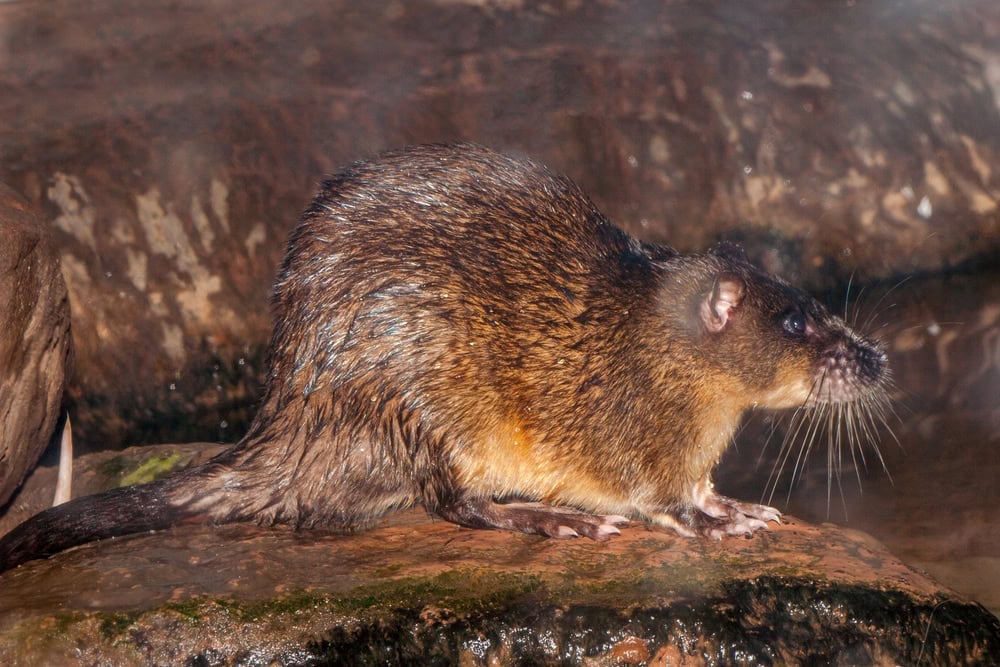
Rakali are adapted for an aquatic lifestyle.
©Ken Griffiths/Shutterstock.com
This water rat is found in Queensland, New South Wales, Victoria, Tasmania, South Australia, Western Australia (south-west and north), and the Northern Territory. Their habitats are located near fresh or brackish water. Here, they forage for food by swimming underwater. Their diet is made up of crustaceans, fish, frogs, lizards, and water birds. It is their ability to catch both aquatic and terrestrial prey that has brought them to the attention of conservationists in recent years.
Water Rats vs Cane Toads
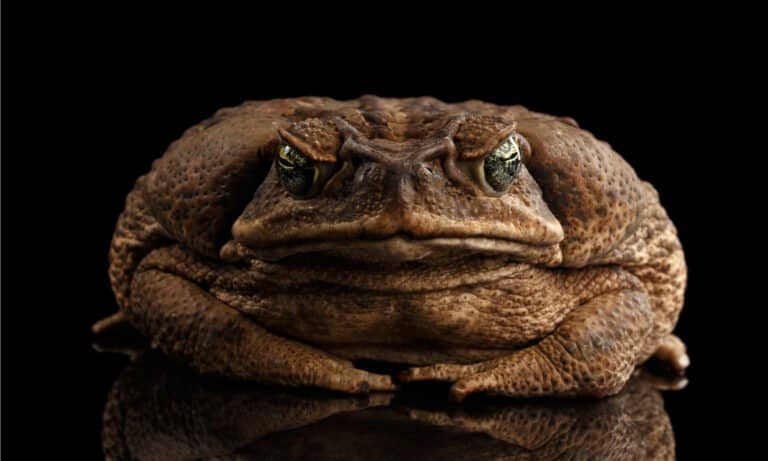
Cane toads (Rhinella marina) were first introduced into Queensland, Australia, in the 1930s. These toxic invaders poison wild animals and pets that eat them. They have been devastating many local species and driving some to extinction. The toads had reached Western Australia by 2011, but met an unexpected predator that is staging a fight back!
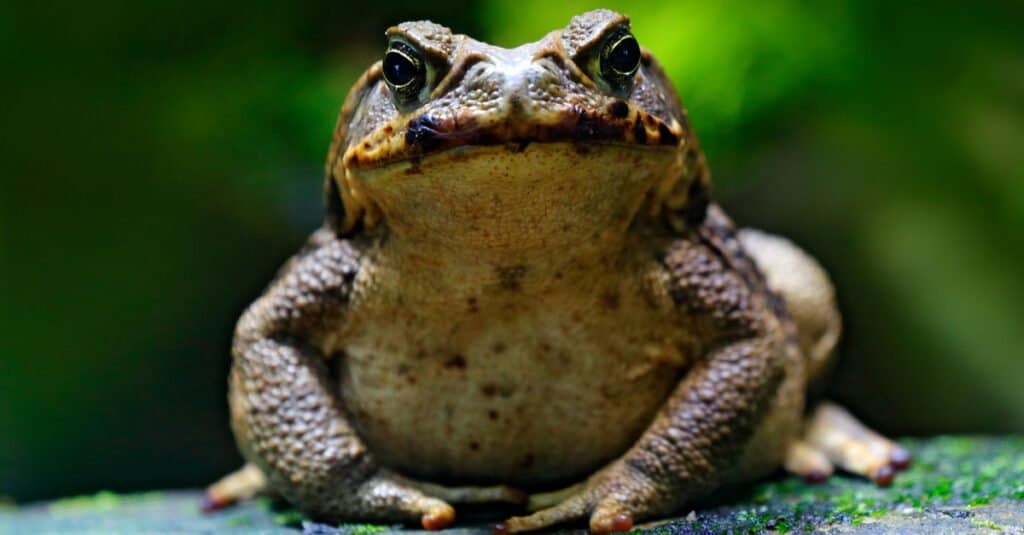
Cane toads are toxic to wildlife and pets.
©Ondrej Prosicky/Shutterstock.com
Rakali are able to cut open cane toads in a clever way. These intelligent rodents can flip the toad over and make a neat cut down their chest. They remove the gallbladder, which contains toxic bile salts, and leave it outside the body. The rats eat the heart and liver, but strip the toxic skin from one or both legs so they can safely eat the non-toxic thigh muscle. This precision cutting appears to take place while the toad is still alive. There is also some evidence that rakali are targeting larger toads.
These large rats use their size and strength to overcome larger toads and are rewarded with a bigger meal. It may also be easier to avoid the toxic organs in larger toads. This is good news for conservation because it is the larger toads that are more toxic and dangerous to other animals. If rakali in other parts of the country could learn the same skills, they might make a useful contribution to controlling the cane toad population. Experts are not sure whether the rakali rapidly learned this behavior or if they adapted it from hunting native frogs. However, the fact that rakali parents spend a long time caring for their offspring means there is plenty of opportunity for them to pass on the technique to their young.
Water Rats vs Black Rats
Recent research has suggested that it is not just the fight against cane toads that is benefiting from the efforts of water rats. Some studies have found that they also feed on invasive fish species, and black rats may even be in their sights. Black rats (Rattus rattus) arrived in Australia with European settlers and are now found widely around coastal areas. They impact native wildlife negatively.
Camera traps set up in the bushland on the foreshore of Sydney Harbour captured footage of aggressive interactions between rakali and black rats. This suggests that the former may play a positive role in biotic resistance against invasive black rats.
Rakali Conservation
During the 1930s Depression, the ban on importing furred skins was bad news for the water rat, as they were seen as a useful alternative. The price of their pelts increased into the 1940s, and by the 1950s, many populations had been decimated. It is listed as ‘secure’ in the Action Plan for Australian Rodents, but that does not mean that all local populations are safe.
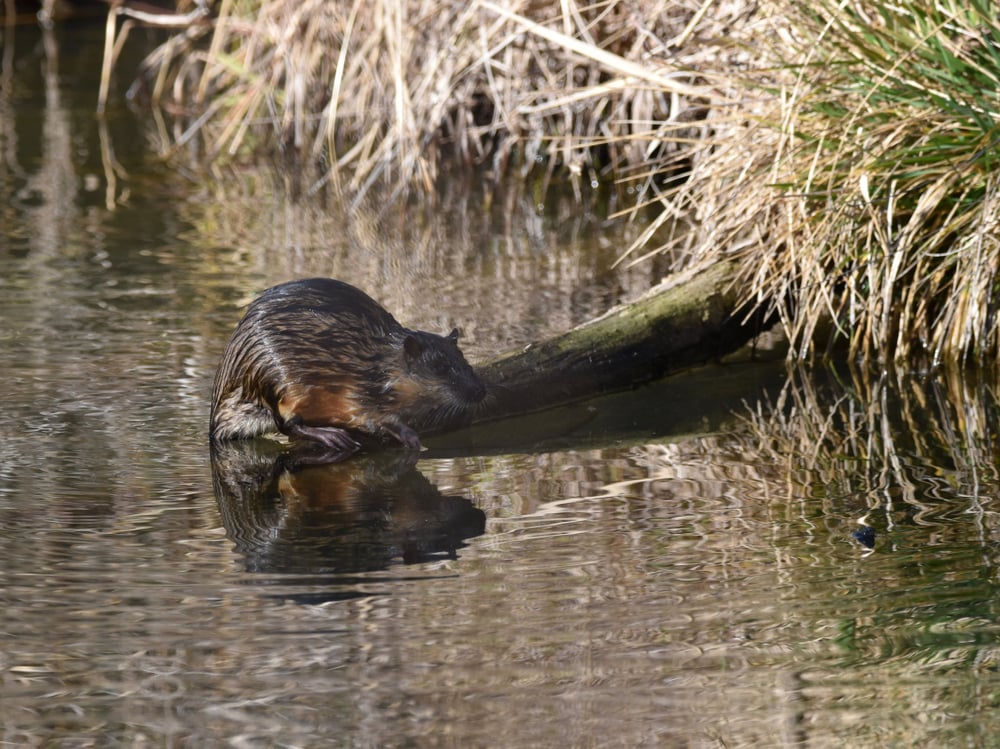
Wetland conservation is important for rakali.
©D.Cunningham/Shutterstock.com
They are the keystone species in many aquatic environments, as they are the top-order mammal predator. Their survival depends on healthy wetland ecosystems. Research has shown that some Australian wetlands no longer contain rakali. These wetlands have been in decline for many years; nutrient and salinity levels have risen, and some toxins and pollutants have entered the habitats. This, together with declining rainfall, has put wetland ecosystems under significant strain. Some wetlands are drained completely for urban development.
If these water rats are confined to small areas, they will likely suffer from a lack of genetic diversity and limited breeding opportunities. All of this means that the conservation and promotion of rakali, including in urban environments, is more important than ever.