Quick Take
- A swarm big enough to cover Texas twice was somehow wiped out in under 30 years, and the people responsible had no idea they were doing it. How farmers did it →
- Farmers tried fire, gunpowder, and government-mandated labor to stop the locusts, but none of it worked. The actual solution was something else entirely. The real cause of extinction →
- A species can dominate an entire continent and still vanish without a trace, and there is an ecological reason that makes that possible. How the locust vanished →
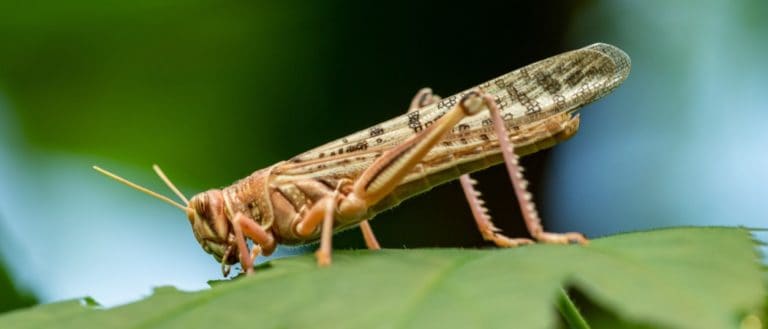
Sometimes, what seems like an impending disaster can become an afterthought in the blink of an eye. Surprisingly, it’s often our unwitting actions that have the most profound impact on preventing unwanted outcomes. Take the Rocky Mountain Locust, a species of grasshopper once capable of forming the largest insect swarms in recorded history. These grasshopper gatherings grew so big they resulted in the infamous 1875 “Albert’s Swarm,” a sea of locusts estimated at 198,000 square miles.
North American farmers in the late 19th century regarded Rocky Mountain Locusts as the greatest agricultural threat. And just like that, this great plague disappeared. Let’s learn more about this forgotten grasshopper menace, the leading theory of how farmers contributed to their extinction, and how a species that appears limitless can easily be exterminated without a broad ecological foundation to rely on.
A Growing Plague
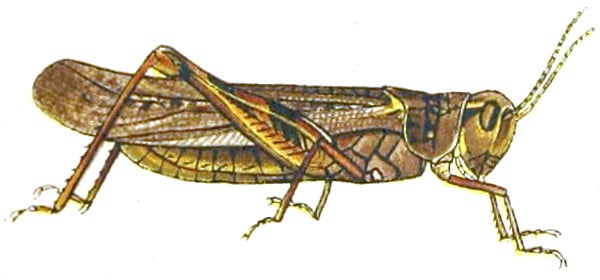
Rocky Mountain Locust swarms covered thousands of square miles before they mysteriously vanished.
©Julius Bien (1826–1909) / public domain – Original / License
It’s hard to say exactly how long the Rocky Mountain locust haunted the Midwestern states, but the earliest known fossils suggest they had been in Nevada since the Late Pleistocene era (about 14,000 years ago). By the time westward expansion brought settlers to what is now Colorado, Utah, and Nevada, the Rocky Mountain Locust had established itself on both sides of the Rocky Mountains and in the surrounding prairies.
Similar in appearance to other locust species, Rocky Mountain locusts bred in sandy areas and easily survived the hot, dry conditions of the western states. As eager farmers arrived to till fresh land, the locusts made their presence known. Outbreaks of varying severity occurred throughout the mid-19th century, including in 1828, 1838, 1846, and 1855. Later, locust plagues spread to more eastern states, such as Minnesota and Nebraska.
The biggest swarms, however, occurred in the 1870s. Indeed, between 1873 and 1877, Rocky Mountain locust swarms caused $200 million in crop damage in states including Colorado, Kansas, Minnesota, Missouri, and Nebraska. The locusts seemed to eat everything, from crops to leather, wood, and even the clothes off people’s backs. The plagues became almost biblical; trains skidded to a halt after running over millions of locusts. Farmers used fire and gunpowder to try to stop them. One witness at the time said experiencing a swarm seemed like “a big snowstorm, where the air was filled with enormous-sized flakes.”
Gone Like a Ghost
It got so bad that an 1877 Nebraska law decreed that anyone between the ages of 16 and 60 had to work at least two days a week combating locusts at hatching time or face a $10 fine (over $300 today). Other states established locust bounties. Whatever people were doing began to work, as the locust problem slowly faded over the ensuing years. By the turn of the 20th century, the Rocky Mountain locust had become a ghost. So much so that, by 1904, scientists had trouble finding any specimens of this once-great menace. What had once been North America’s most feared agricultural pest had effectively vanished. Why?
Extinction Theories
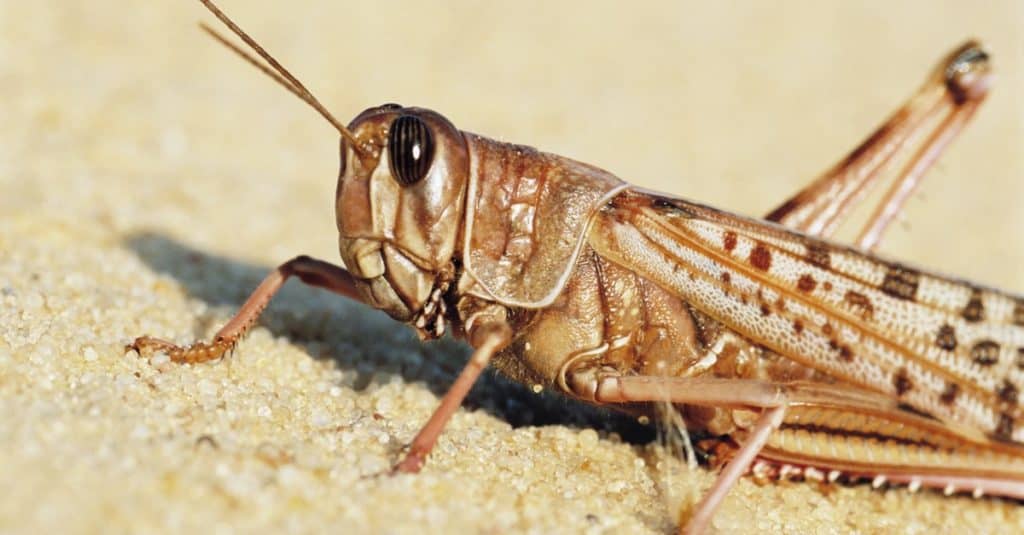
Farmers destroyed Rocky Mountain locust breeding grounds without even realizing it.
©sirtravelalot/Shutterstock.com
No one is entirely sure why the Rocky Mountain Locust went extinct. Some believe it was a case of mistaken identity, suggesting that Rocky Mountain locusts were actually members of another, still-living locust species. Most scientists, however, believe it had to do with the very thing that farmers were trying to protect: agriculture.
Though these locusts swarmed across the Great Plains, they only bred along the riverbanks, streams, and upland slopes of the Rocky Mountains. As settlers moved westward during the era of Manifest Destiny, farmers fundamentally changed the landscape. They plowed riverside soils, unwittingly destroying billions of locust egg pods. Next, they built irrigation networks, further disrupting locust breeding grounds. Finally, they introduced livestock, whose trampling compacted the soil so much that no locust eggs could survive.
It seems the only way farmers were able to stop the growing Rocky Mountain locust plague was by doing what they were already doing: planting, tilling, and harvesting the land.