
Quick Take
- While most Antarctic species collapse as ice vanishes, Adélie penguins are actually growing in number. The reason has nothing to do with luck or genetics. See how they adapt →
- Adélie penguin populations have plummeted up to 80% in some regions, yet the species is expanding overall. This paradox reveals something surprising about how animals survive climate change. Explore the population paradox →
- Two-thirds of penguin species are threatened, but Adélie penguins keep bucking the trend. The social behavior behind their survival is something researchers didn't fully expect. Discover the survival behavior →
- For Adélie penguins, disappearing sea ice isn't only a threat. In certain conditions, it may actually work in their favor. See how ice loss helps →
As climate change continues to alter Antarctic frozen landscapes, animals that live there have had to adapt. Those who are incapable of doing so face population decline or, worse, extinction.
Adélie penguins are one of the species that have adapted to climate change. Researchers have specifically observed that Adélie penguins use their colony as a foraging network. By avoiding depleted foraging grounds and sharing information, the penguins conserve energy and thrive, highlighting the importance of adaptability in a changing environment.
Adélie Penguins Shift Practices When Foraging Is Unsuccessful
Adélie penguins are one of four penguin species that breed in the Antarctic and are the most widespread among them. These charismatic penguins have overcome the odds in their ice-covered home and have managed to thrive as the Antarctic loses ice at unprecedented rates. Researchers attribute this success to Adélie penguins’ ability to adjust their foraging practices based on information learned from their colony, especially when previous foraging locations are no longer productive.
According to a new study published in The Royal Society Publishing Proceedings B, Adélie penguins that live in colonies experience higher survival rates and better reproductive success. This is due to the sharing of information about foraging grounds among colony members. When foraging sites become depleted, the penguins do not repeatedly return, hoping to find prey. Instead, they travel together in groups to search for new, more productive foraging sites. The penguins then share this information with colony members who did not make the journey, preventing them from wasting time traveling to depleted locations.
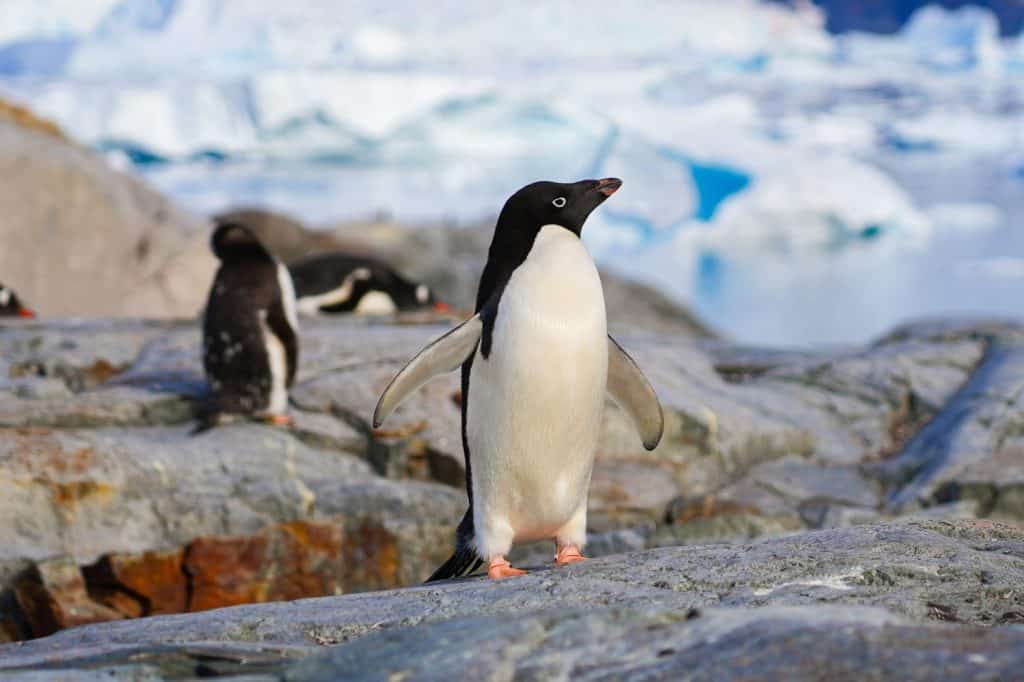
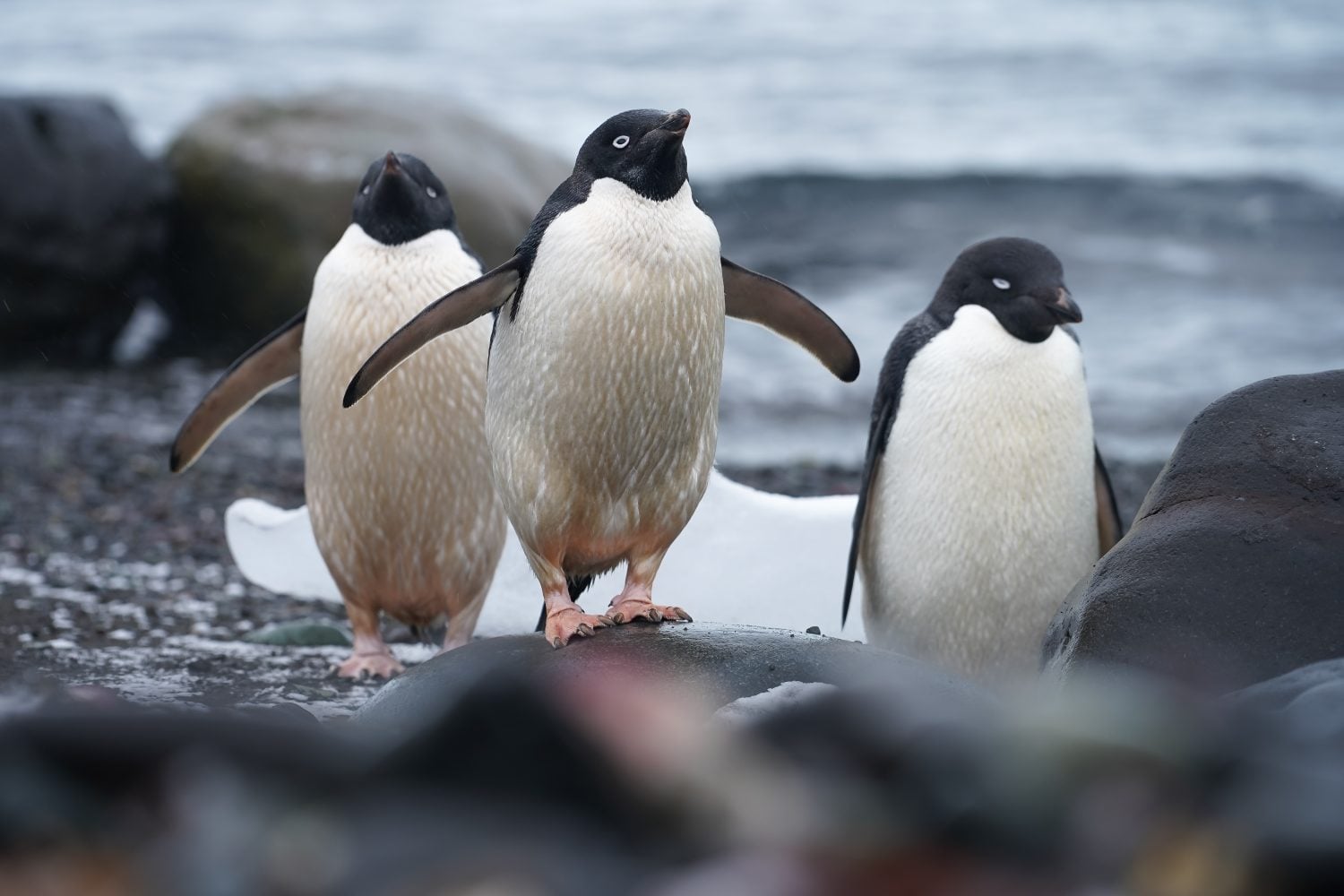
Adélie penguins work together in the colony to provide up-to-date information about foraging sites.
©Alexandre.ROSA/Shutterstock.com
To determine how Adélie penguins operate, researchers observed a colony of 135 breeding pairs in Torinosu Cove, Lützow-Holm Bay, Antarctica. Of those colony members, 96 to 116 members were tracked using GPS in a total of 653 foraging trips.
Researchers found that the penguins followed the paths of their colony members’ previous successful journeys to foraging grounds. However, when the foraging grounds did not produce enough prey, the next outing led to the penguins heading to new locations. If the new foraging sites had ample prey, other colony members would also go to those locations to feed, rather than returning to previously depleted sites.
Researchers believe this ‘win-stay, lose-shift’ strategy may help explain why Adélie penguins have remained resilient despite environmental change.
Foraging Efforts May Allow Adélie Penguins Longevity Despite Climate Change
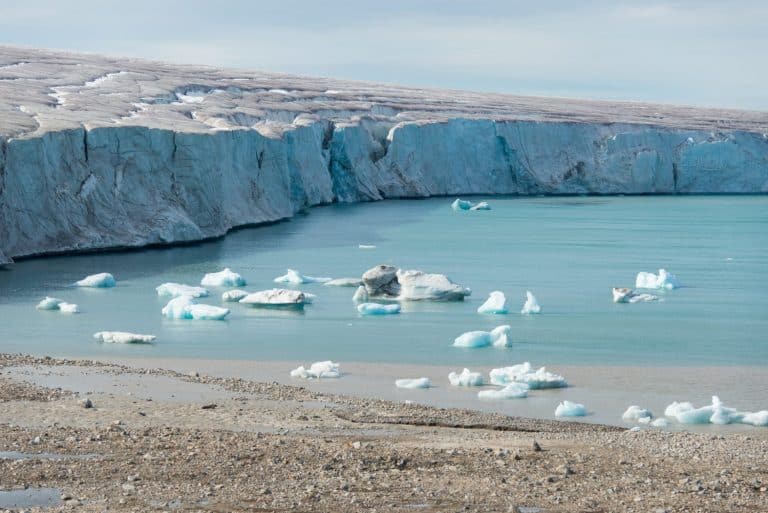
The Antarctic is feeling the effects of climate change more than anywhere else on the planet. This is because the region is warming at five times the rate of other regions around the world. Consequently, three trillion tons of ice were lost between 1992 and 2017. This has led to declines in krill populations in the ocean and in Adélie penguin populations along the Antarctic Peninsula.
Despite the regional population decline of approximately 50% to 80% over the last four decades, the overall population of Adélie penguins is increasing, according to the IUCN. The fact that the population is increasing is directly tied to the penguins’ ability to abandon hunting grounds that are not producing prey.
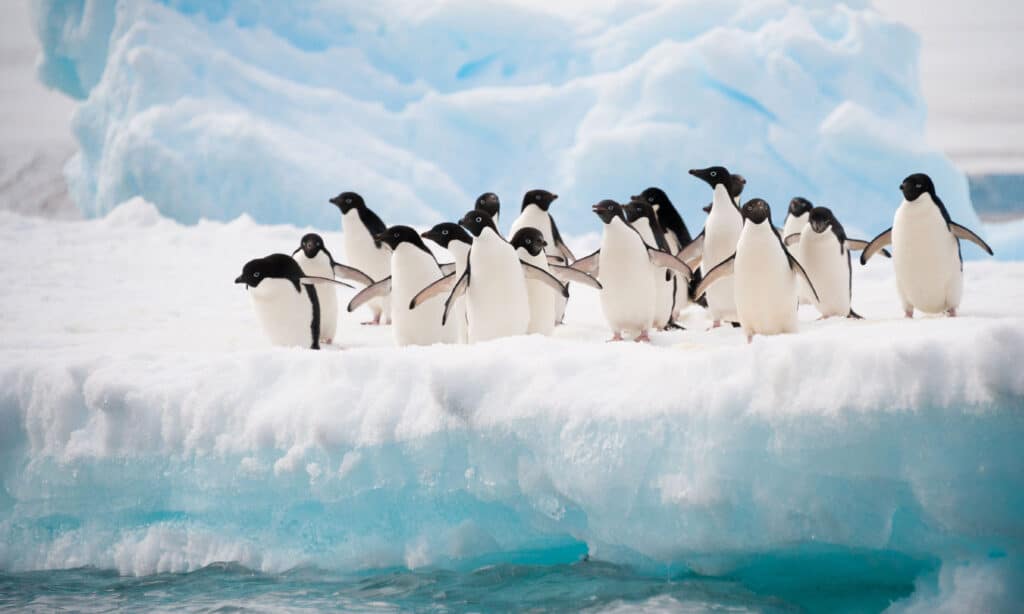
Adélie penguins’ ability to change foraging grounds may be the key to their survival in the ever-changing Antarctic.
©iStock.com/axily
Adélie penguins typically walk to and from their traditional foraging grounds. While this journey takes time, it is worthwhile when prey is abundant, ensuring both adults and chicks are well-fed. However, if prey becomes scarce, the energy spent hunting outweighs the benefits, prompting the penguins to seek new hunting grounds, sometimes in areas without ice.
According to a 2020 study, some Adélie penguin populations thrived in ice-free environments. This occurred, according to researchers, because it took less energy to swim to a foraging site than to walk. Additionally, with no long stretches of ice, the penguins did not need to find air holes while foraging, thereby using even less energy.
By not being constrained to traditional foraging sites, Adélie penguins benefit by finding sites with more abundant krill. As climate change significantly reduces Antarctic sea ice, Adélie penguins must conserve energy and obtain enough sustenance not only to survive but also to raise the next generation and continue increasing their overall population.
Is Flexible Foraging What Has Kept Adélie Penguins from Becoming Endangered?
Currently, two-thirds of penguin species are considered to be threatened or endangered. Despite their icy home in the Antarctic continuing to lose sea ice, Adélie penguins are not one of those species. In fact, their overall population is increasing.
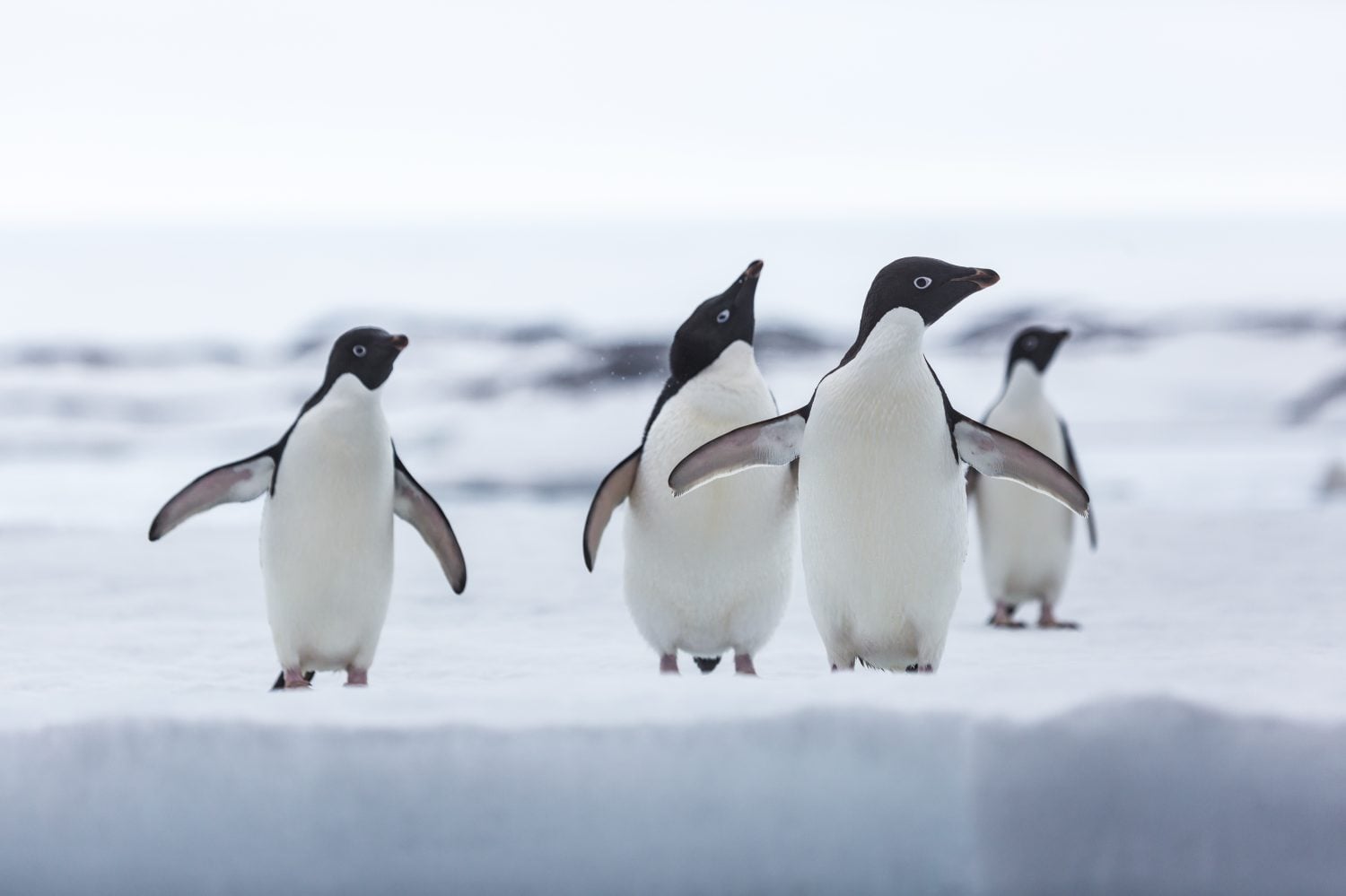
Adélie penguins have increased their population in the Antarctic at a time when other species have experienced population declines.
©Dominic Hall/Shutterstock.com
The fact that Adélie penguins engage in flexible foraging has been directly linked to population growth. A 2021 study highlights the reasons why flexible foraging is the key to Adélie penguins’ survival. The reasons include:
- Ability to exploit multiple patches of prey to keep feeding grounds from becoming overfished
- Energy can be conserved by locating new prey grounds rather than attempting to find prey in areas that have been exhausted
- Chicks become more robust and can survive harsher conditions thanks to prey always being found
- Flexibility enables Adélie penguins to exploit a wider range of hunting grounds during years when prey is scarce in traditional locations, supporting the survival of both adults and chicks.
Despite the challenges posed by climate change, Adélie penguins continue to thrive, making them one of the hardiest penguin species in the Antarctic.
Threats Adélie Penguins Face
Adélie penguins are very adept at changing foraging practices, which has served their population well. However, the penguins are not completely out of the woods. The Adélie penguins still face threats as wild animals. Some of these threats come from natural predators, while others are caused by human activities.
The threats the Adélie penguins face today include:
- Predation from leopard seals, orcas, and skuas
- Overfishing krill
- Loss of sea ice
- Pollution
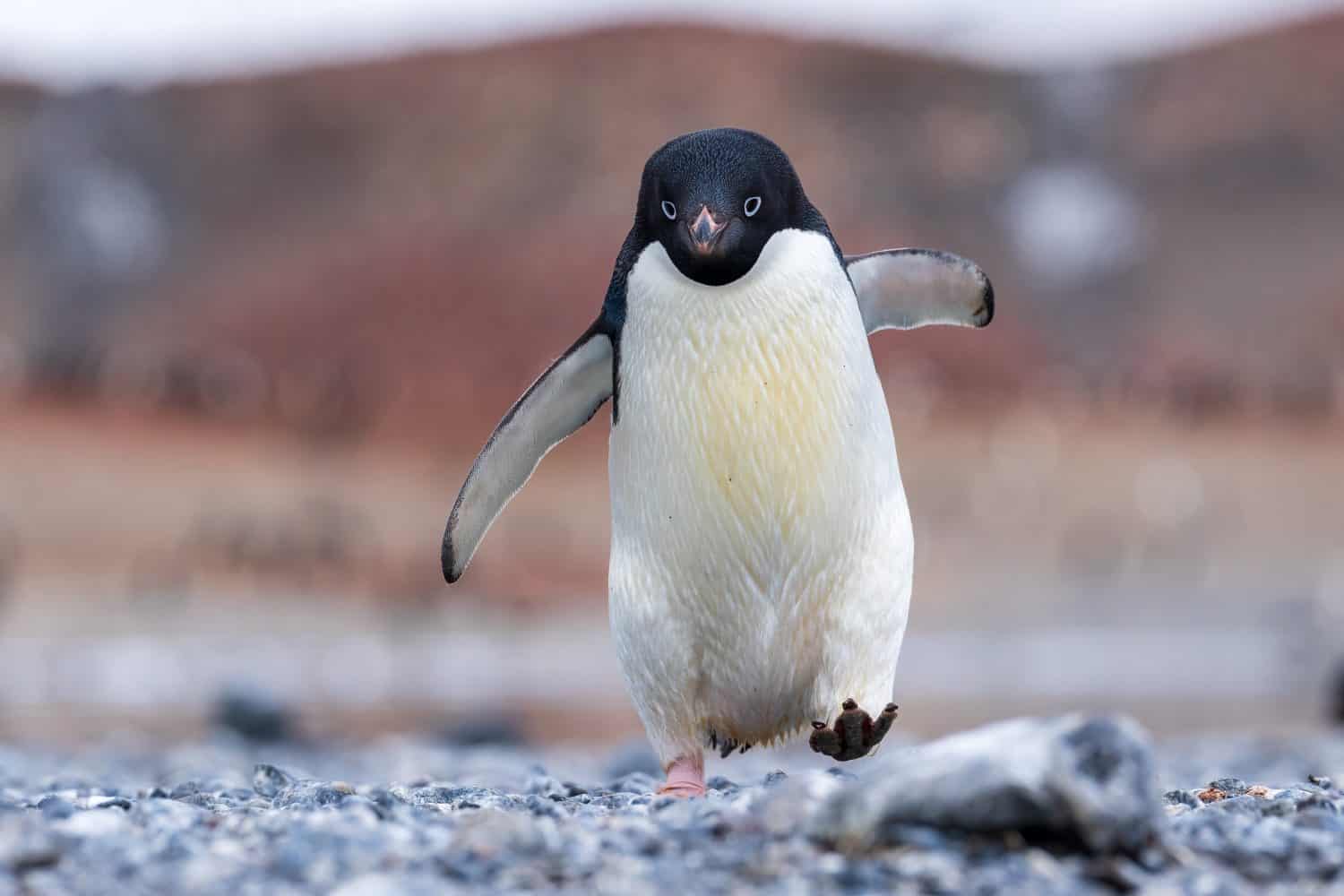
Adélie penguins have fared better than other penguin species, but they still face threats in the Antarctic.
©Risto Raunio/Shutterstock.com
The Adélie penguins are among the few penguin species that have found a way to thrive in the wake of climate change. This does not mean they will be capable of doing this in the long term, however. As the ice continues to melt at an alarming rate in the Antarctic, both foraging grounds and nesting grounds will become harder to come by. Signs of this are already being seen in regional population declines.
If Adélie and other penguin species that inhabit the Antarctic are to survive, the loss of sea ice must be addressed. If sea ice continues to decline, many Antarctic species could face severe population declines, and some may struggle to survive in the long term.