
Quick Take
- Cicadas do not form swarms.
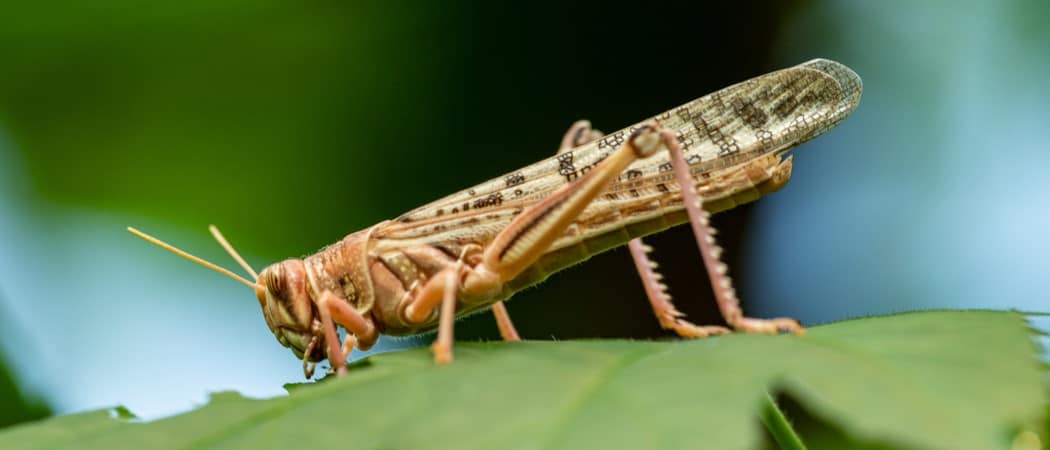
- Locusts are short-horned grasshoppers that swarm in great numbers and can reach up to 4 inches in length.
- Some periodical cicadas spend up to 17 years underground as nymphs.
Although they share some similarities and their names have been improperly used interchangeably almost since cicadas were first discovered in North America, locusts and cicadas are not the same. A cicada is a stout-bodied insect with prominent eyes, known for its loud buzzing sound, while a locust is a type of short-horned grasshopper that can form massive, destructive swarms. Beyond their inability to swarm, cicadas differ from locusts in size, appearance, diet, and lifespan. Continue reading to discover more about what sets these two insects apart.
Order
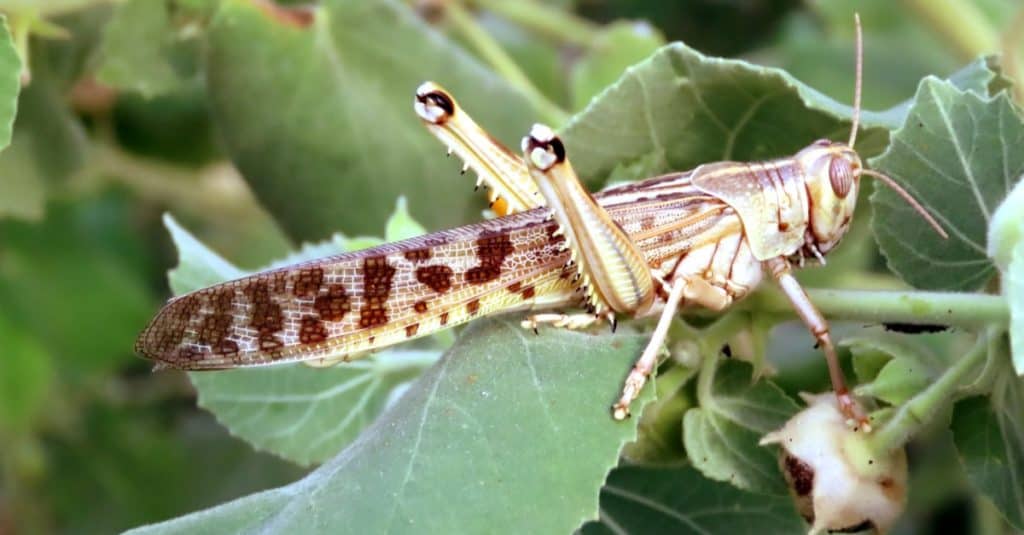
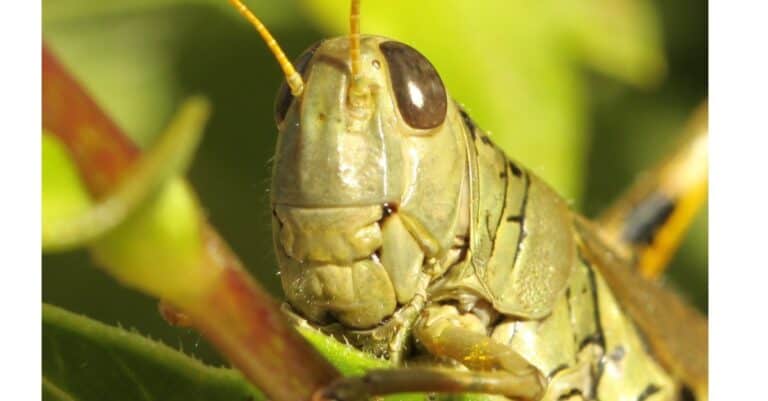
A giant locust is feeding on the leaves of a plant.
©Ali Moussa/Shutterstock.com
Cicadas are a type of Hemiptera or true bug. Although they are much larger, cicadas are similar to aphids, which are also in Hemiptera. Common traits include specialized piercing-sucking mouthparts used for feeding, a segmented body, antennae, six legs, and a diet that is often plant-based, though some are predatory.
Locusts belong to the order Orthoptera. This order is divided into two suborders: locusts and grasshoppers comprise the suborder Caelifera, while crickets belong to the suborder Ensifera.
Family

Cicadas have broods that appear at distinct intervals.
©Gerry Bishop/Shutterstock.com
Cicadas are in the family Cicadidae, which includes any bug that makes a sound, has prominent eyes, two membranous pairs of wings, and both compound and simple eyes.
Locusts are Acrididae. This family designation refers to any short-horned grasshoppers that swarm in great numbers.
Size
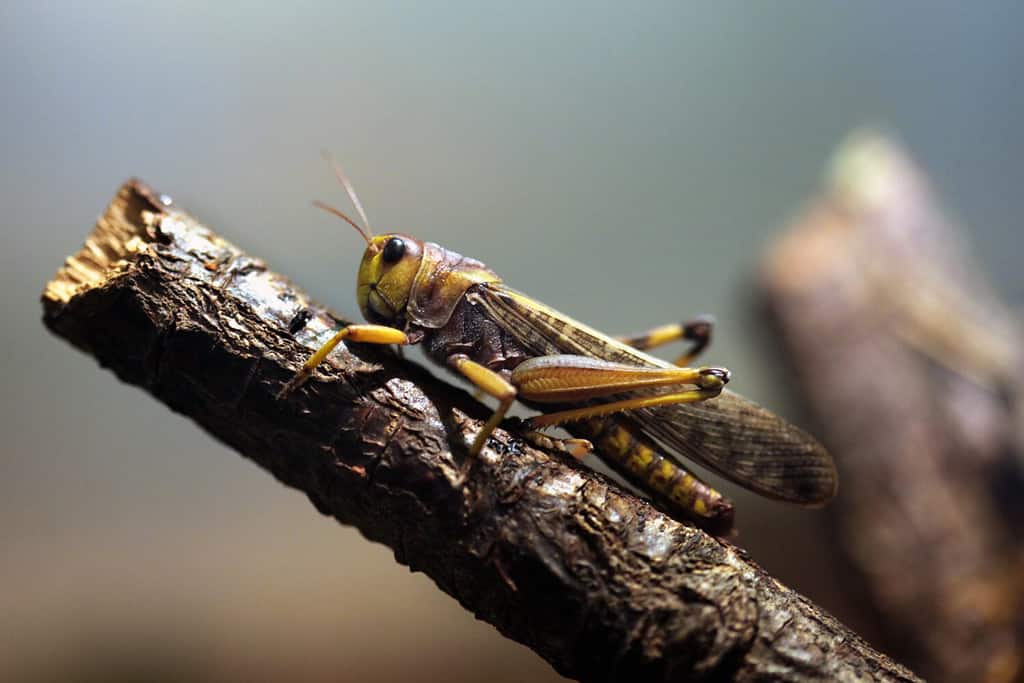
Some locust species are migratory.
©Vladimir Wrangel/Shutterstock.com
Cicadas are typically about two inches long and half an inch across. Locusts can reach up to four inches long, though some species are less than half an inch in length.
Diet
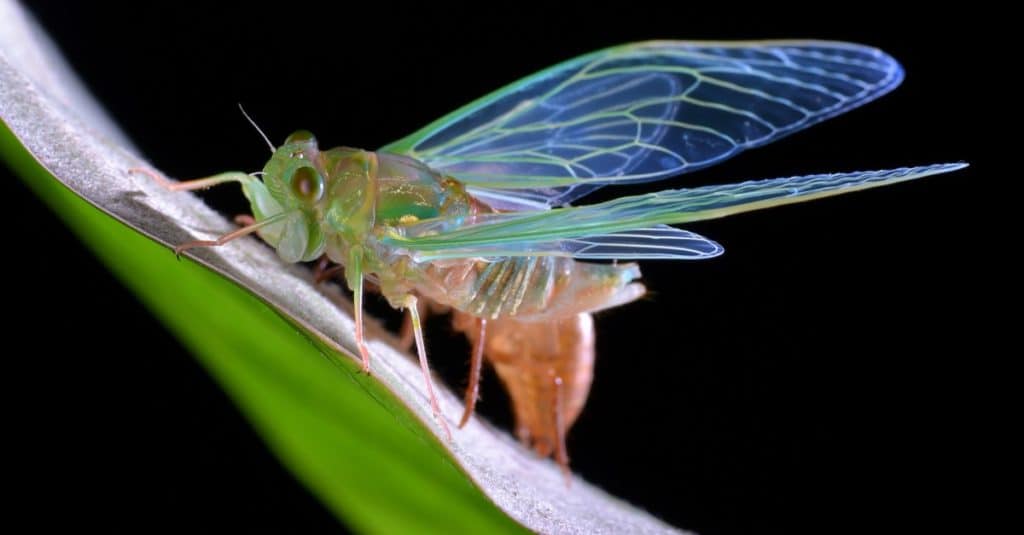
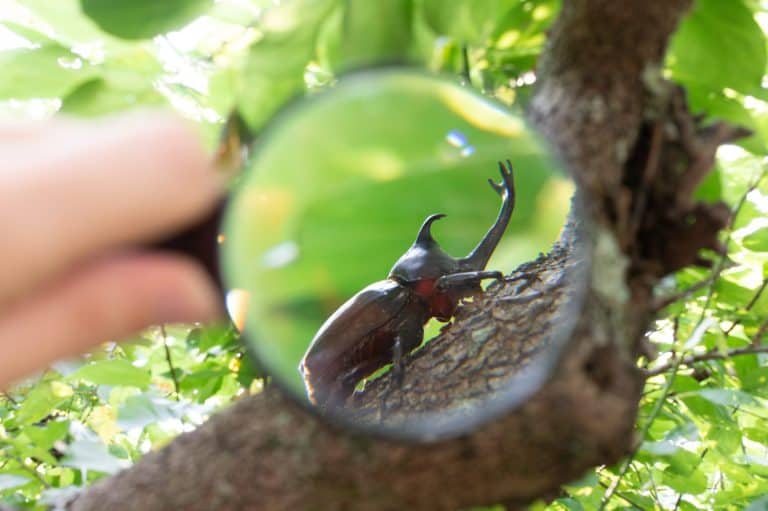
A newly emerged Cicada is sitting on a branch.
©SIMON SHIM/Shutterstock.com
Cicadas drink the liquid from the inside of the stems, roots, and branches of plants. Locusts eat the leaves and any of the softer segments of plants, which is why they are so destructive to crops when they swarm in plagues. They leave very little behind.
Lifespan
The cicada life cycle is very interesting. They lay their eggs on plants. When the eggs hatch, they become nymphs, which drop down to burrow into the ground where they live for most of their life. While underground, a cicada nymph can live up to 17 years. Once they emerge, they shed their outer shell. After laying eggs, they die, which is about six weeks after emergence.
Locusts have a much more mundane life cycle. They lay their eggs on the ground. Once they hatch, locusts typically live between three to five months, but during that time, they may lay as many as 1,000 eggs.
Collective Name
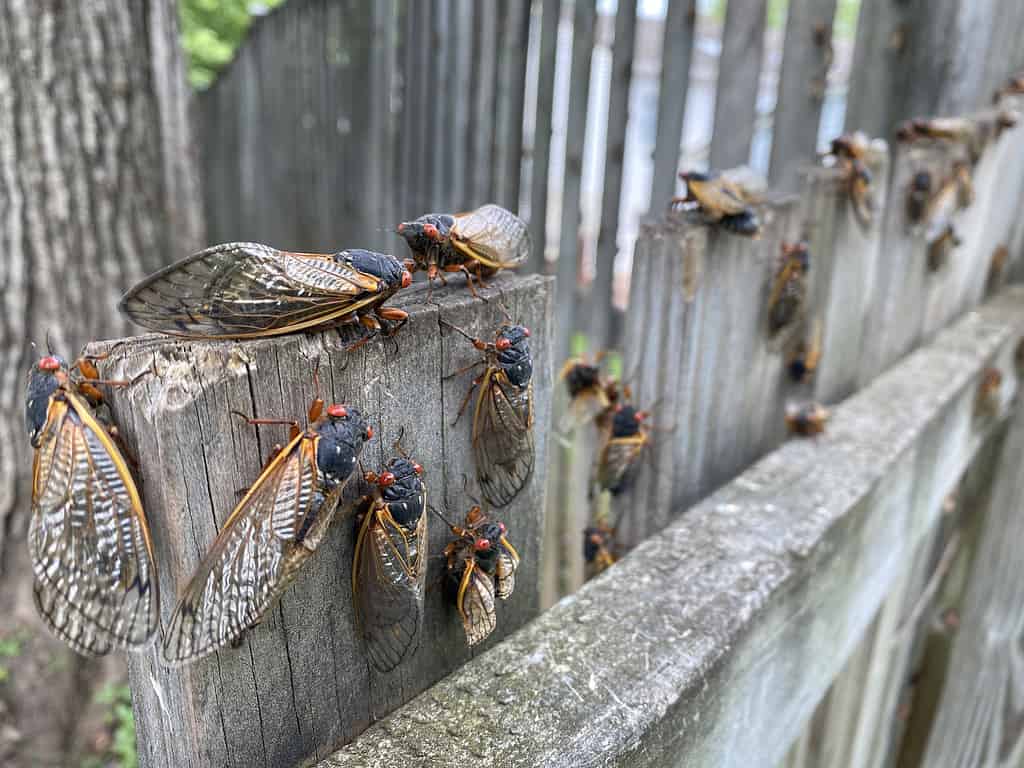
A group of cicadas is called a brood.
©Jeff Herge/iStock via Getty Images
A group of cicadas is known as a brood. In the United States, these broods have been given letter names according to their life cycle and which years they will hatch, such as Brood X, which hatched in 2021.
A large swarm of locusts is called a plague.
Distinguishing Features
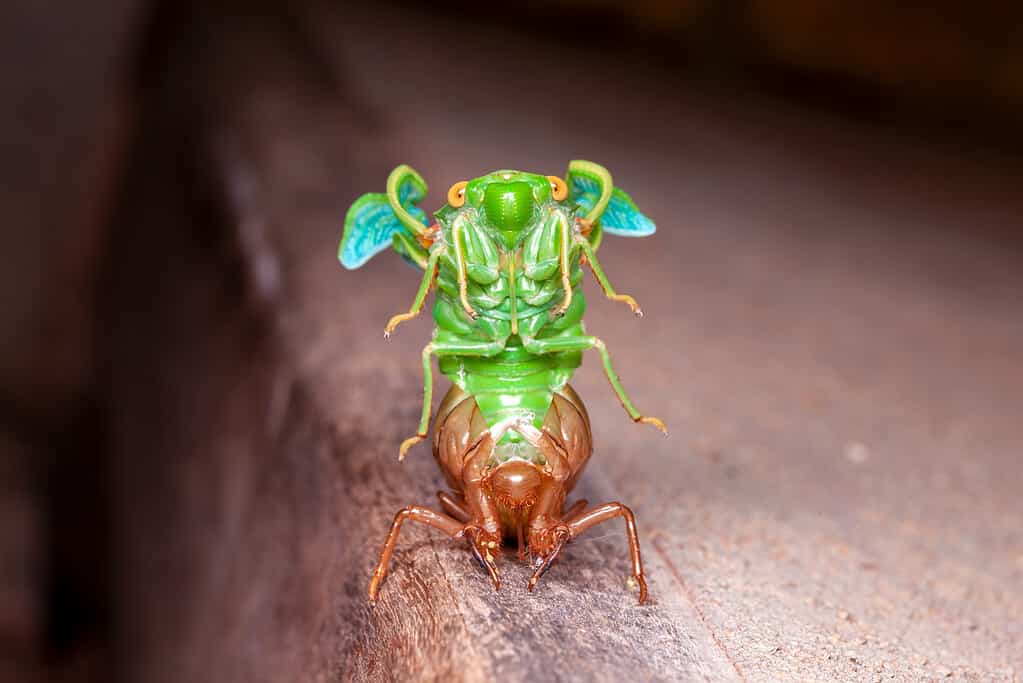
Cicadas spend most of their lives underground before emerging to reproduce and die.
©Tacio Philip Sansonovski/Shutterstock.com
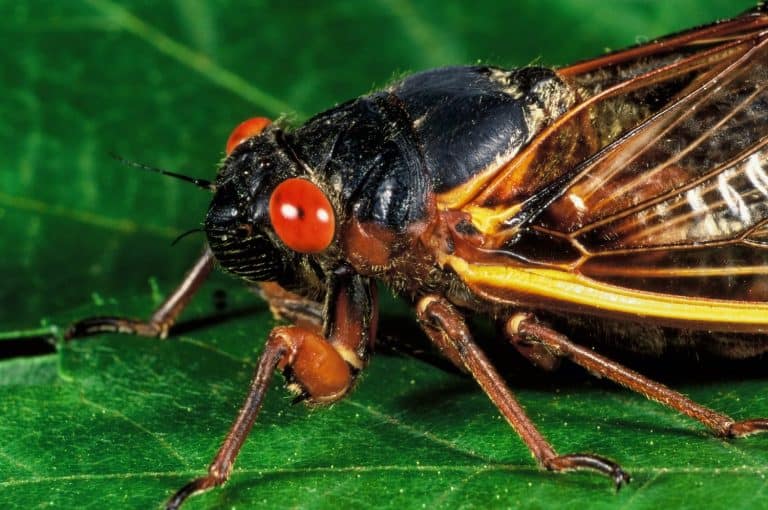
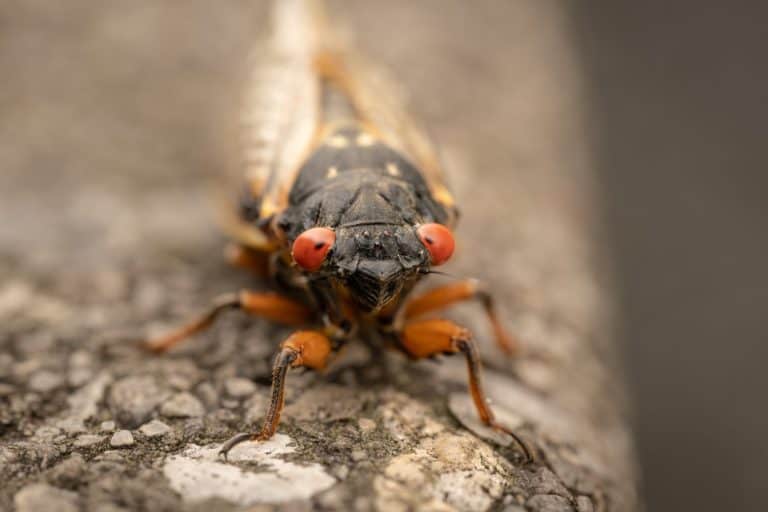
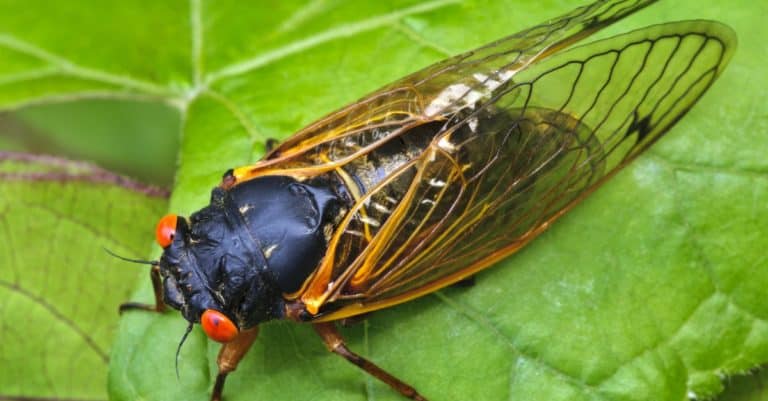
Periodical Cicadas are most commonly black with bright red eyes, and the annual species have a very beautiful blue-green and black striped pattern. They are similar in size to the average human thumb. Their wings are a transparent yellow-orange color and extend beyond the end of their abdomens, protecting them from water and bacteria. The males use a pair of organs known as tymbals to make a very loud buzzing vibration that resonates through their mostly hollow bodies. The buzz of cicadas can reach up to 100 decibels.
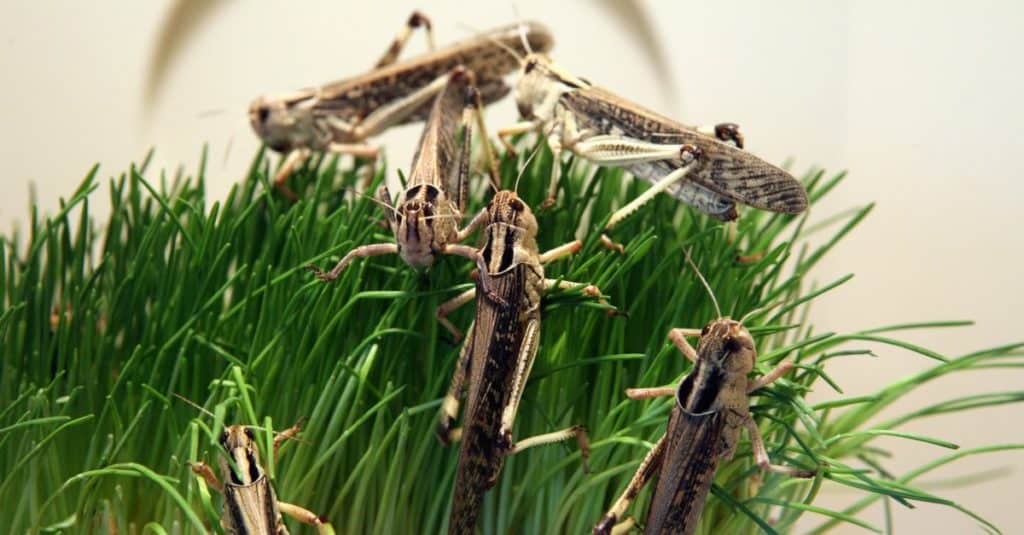
Although they are herbivores, in swarming conditions, locusts can become cannibalistic and eat other locusts.
©Vladimir Wrangel/Shutterstock.com
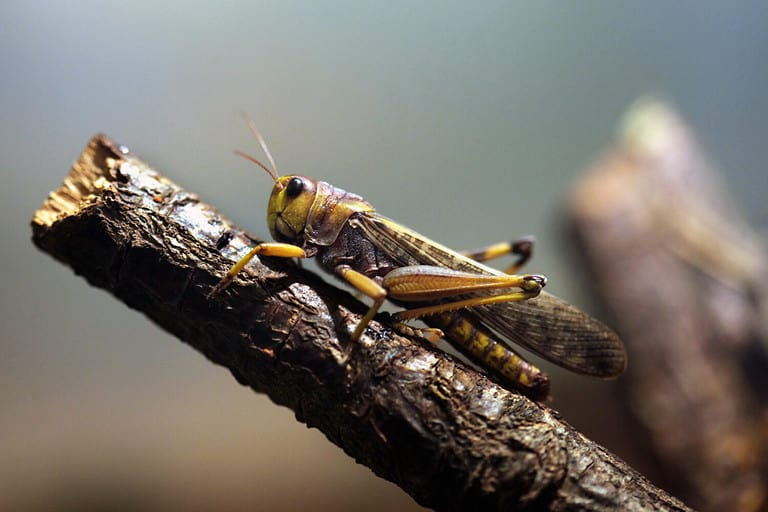
Locusts are very similar in appearance to grasshoppers. They tend to be green before they go into their swarming phase, at which point their heads shrink and they change to brown and black or black with orange spots. Locusts have two long, pointy antennae on the top of their heads and very long back legs, which remain bent in half when they are at rest. They are much quieter insects that make sounds by rubbing two of their body parts together to create a buzzing or sometimes a snapping sound.
Which is the Most Feared by Humans?
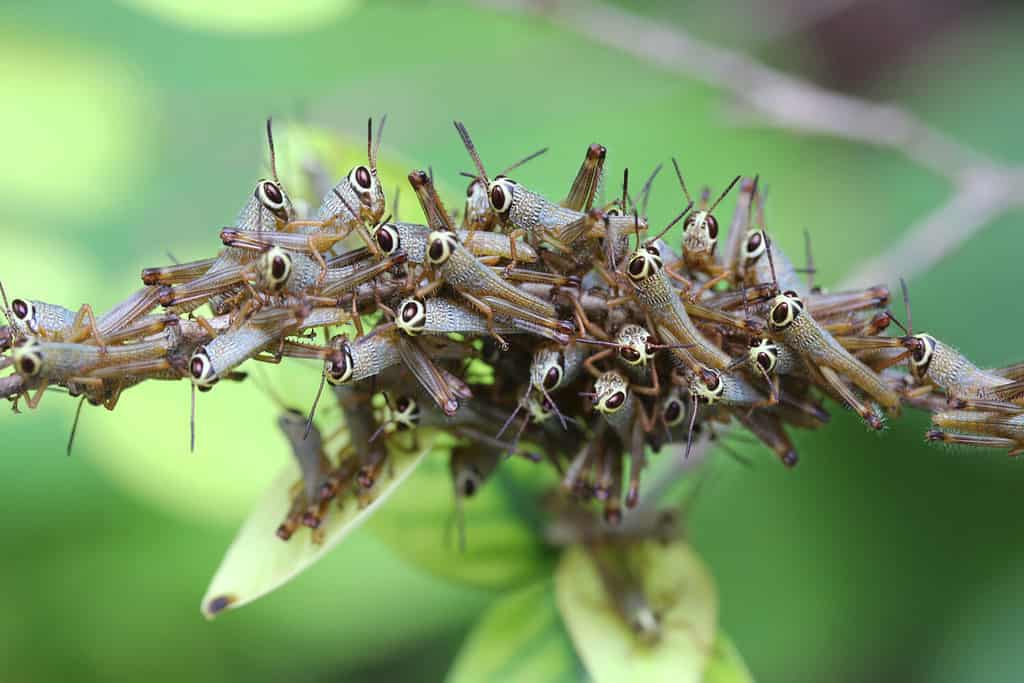
A plague of young locusts is on a tree branch.
©K Abejuela/Shutterstock.com
While locusts and cicadas pose no physical threat to humans, one outranks the other as a threat to human crops. The appetite of a locust is voracious, and a plague of locusts about 1/3 of a square mile in size can consume food that would feed up to 35,000 people. One of the most costly locust outbreaks in recent history took place between 2003 and 2005 in Africa, costing $2.5 billion in damaged crops. The largest locust swarm ever recorded was Albert’s Swarm of Rocky Mountain locusts in North America in 1875.
Because locust outbreaks are unpredictable and the time between outbreaks can be years or decades, many countries do not properly prepare to fight the plagues when they occur, which can lead to complete devastation. However, many countries have improved monitoring and preparedness in recent years, though outbreaks can still be difficult to predict and manage.