
Forget the adorable miniature goats you may have seen in yoga classes, and say hello to the majestic markhor, the largest wild goat on Earth! These supersized animals grow 4.5 to 6 feet long and weigh up to 240 pounds. As you can see in this YouTube video, their heads are also crowned with spectacular, spiraling horns that can stretch longer than your arm. While certainly eye-catching, what do these dramatic horns actually do for the markhor?
Horned Majesty

The markhor has a great sense of smell and excellent eyesight.
©YouTube/Rewild with ABD
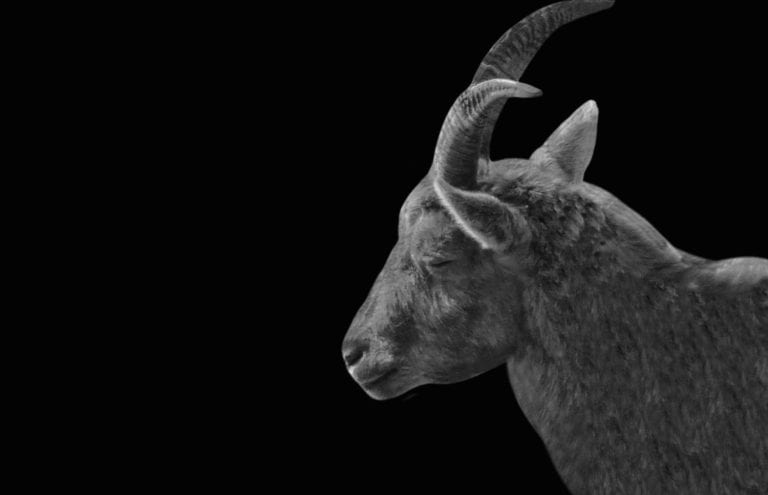
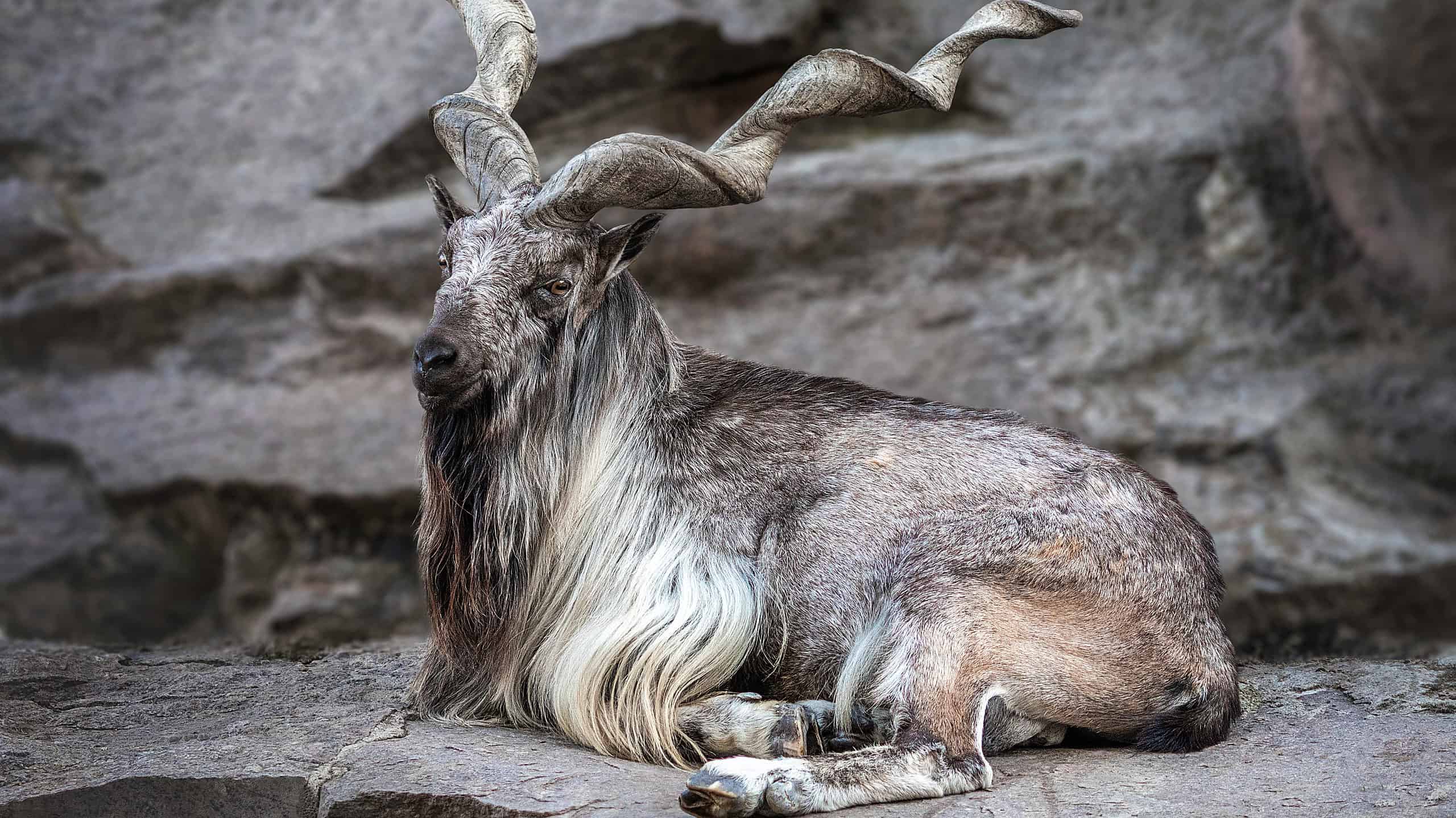
A markhor’s most distinctive feature is undoubtedly its horns. Just like the markhor in this YouTube video, a male’s horns are tall, majestic, and can grow over 5 feet long! Female markhor also have horns, but theirs are smaller and thinner, usually less than 10 inches long.
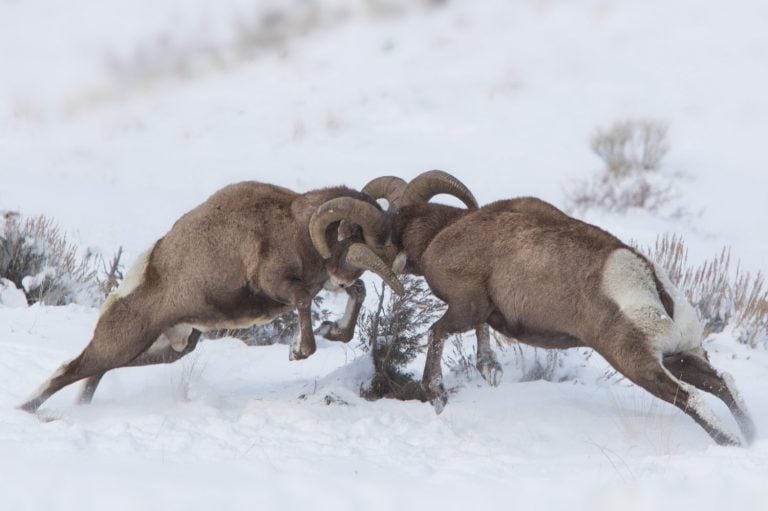
Markhor use their horns for several things. During mating season, males use their enormous horns to battle one another. Markhor also use their horns to scrape bark from trees or to dig for food. Since they don’t shed their horns, older markhor typically have larger horns with more curves.
“Markhor” comes from Persian and Pushto and means “curly” or “snake-like,” referring to the unique twist of the animal’s horns. Ancient stories also call markhor “snake-killers,” and some people believed the cud the goats spit out could help treat snake bites.
Mountain Hooves

Markhor have been spotted munching on leaves in trees 20 feet off the ground!
©YouTube/Rewild with ABD
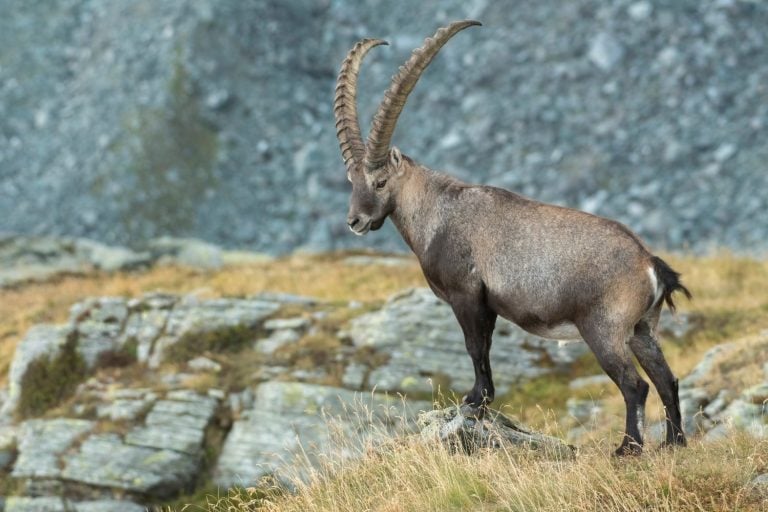
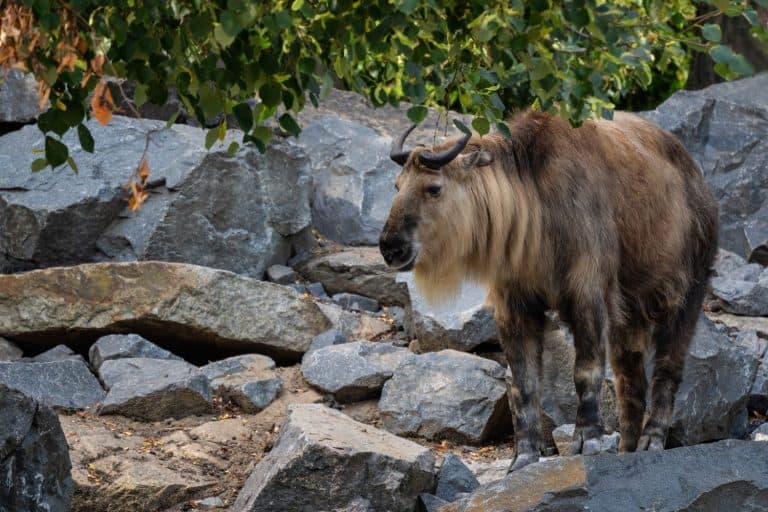
Despite their enormous horns, markhor are strong and well-built for navigating tough terrain. Their wide hooves provide balance for their large bodies as they climb and run across high, rocky cliffs, and even in trees. These hooves are flexible and have rough edges for better grip. Markhor also have tough pads on their knees like large calluses, providing extra support while they climb. These athletic animals are surprisingly fast; even on rocks and steep slopes, they can move at up to 10 miles per hour. This agility is crucial for escaping predators like snow leopards, wolves, and Eurasian lynx.
Shaggy Chic

Markhor are herbivores and eat grasses, twigs, leaves, and shrubs.
©YouTube/Rewild with ABD
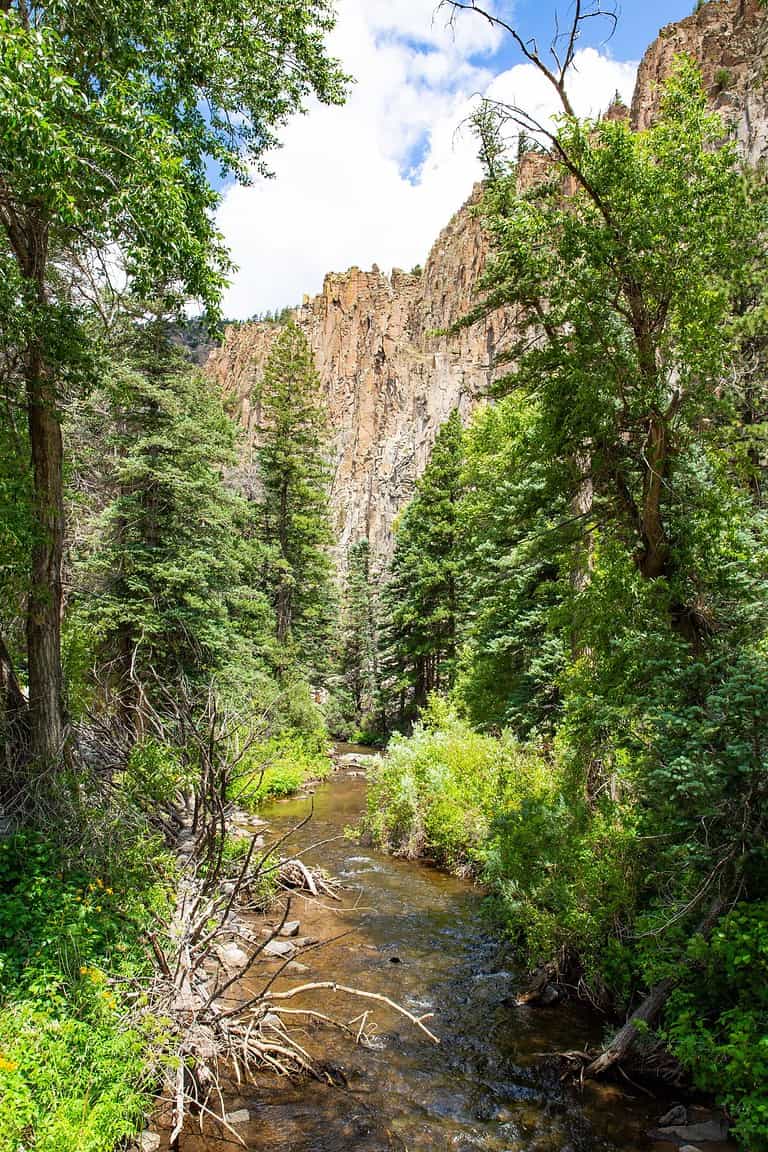
Markhor are found in Asia, mainly in Pakistan, the Himalayas, and the Karakoram Mountain range. They make their homes in mountainous regions, usually between 2,000 and 11,800 feet above sea level. Their thick fur provides warmth and protection during the cold winter months, which they shed in exchange for a lighter coat in the summer. Their winter coats are grey, while in summer they are shorter and more of a reddish-grey color. Male markhor have long, distinct beards, while females have shorter, less noticeable ones.
Unique But Under Threat
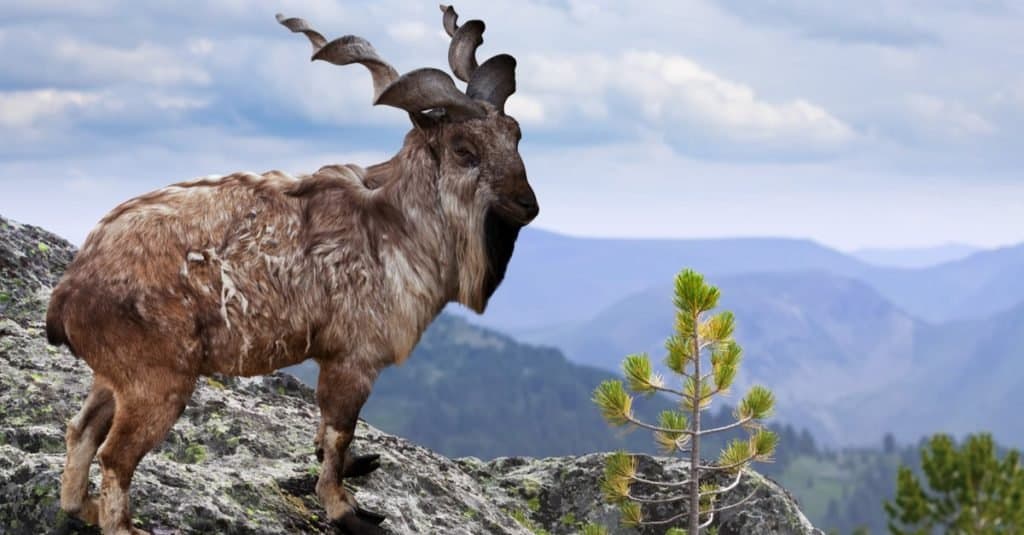
The markhor is Pakistan’s national animal.
©BearFotos/Shutterstock.com
Unfortunately, the very features that make the markhor so unique also contribute to why there are so few left in the wild today. Humans commonly hunt markhor for their horns, skin, meat, and skulls, drastically reducing their populations. In addition to poaching and overhunting, habitat loss and livestock grazing are also major threats to these animals. As a result, markhor are considered a near-threatened species, and many subspecies are endangered or critically endangered.