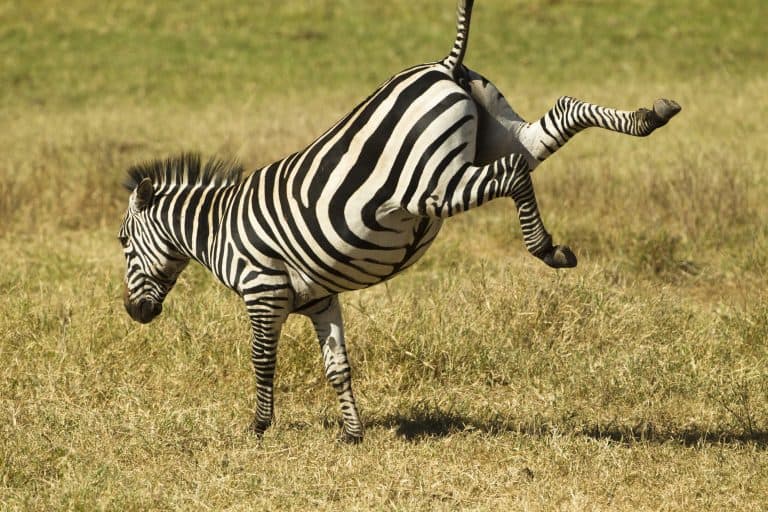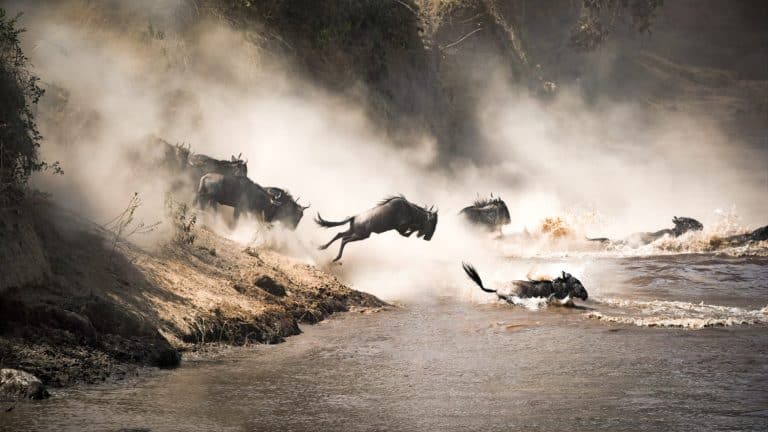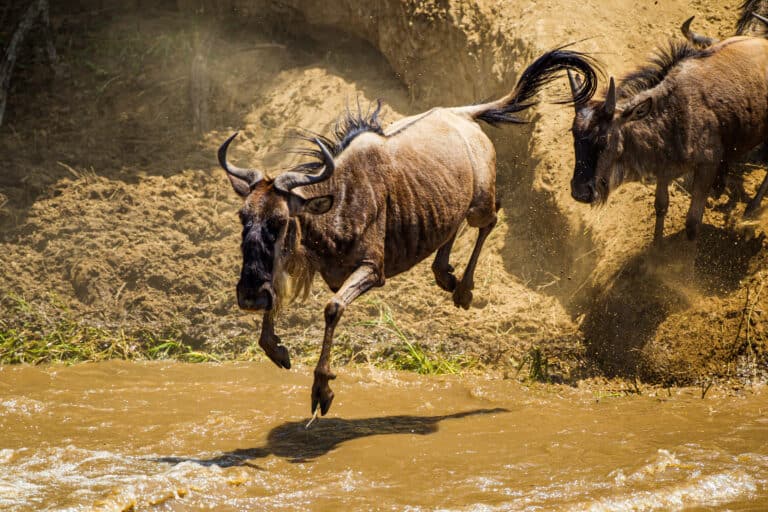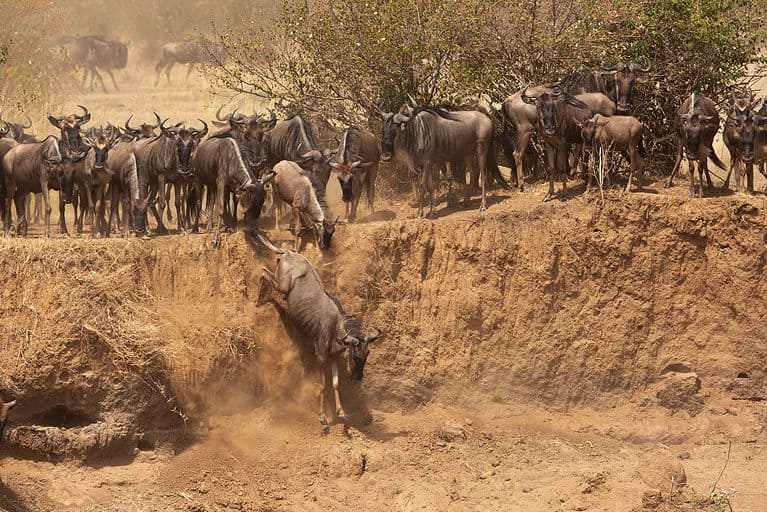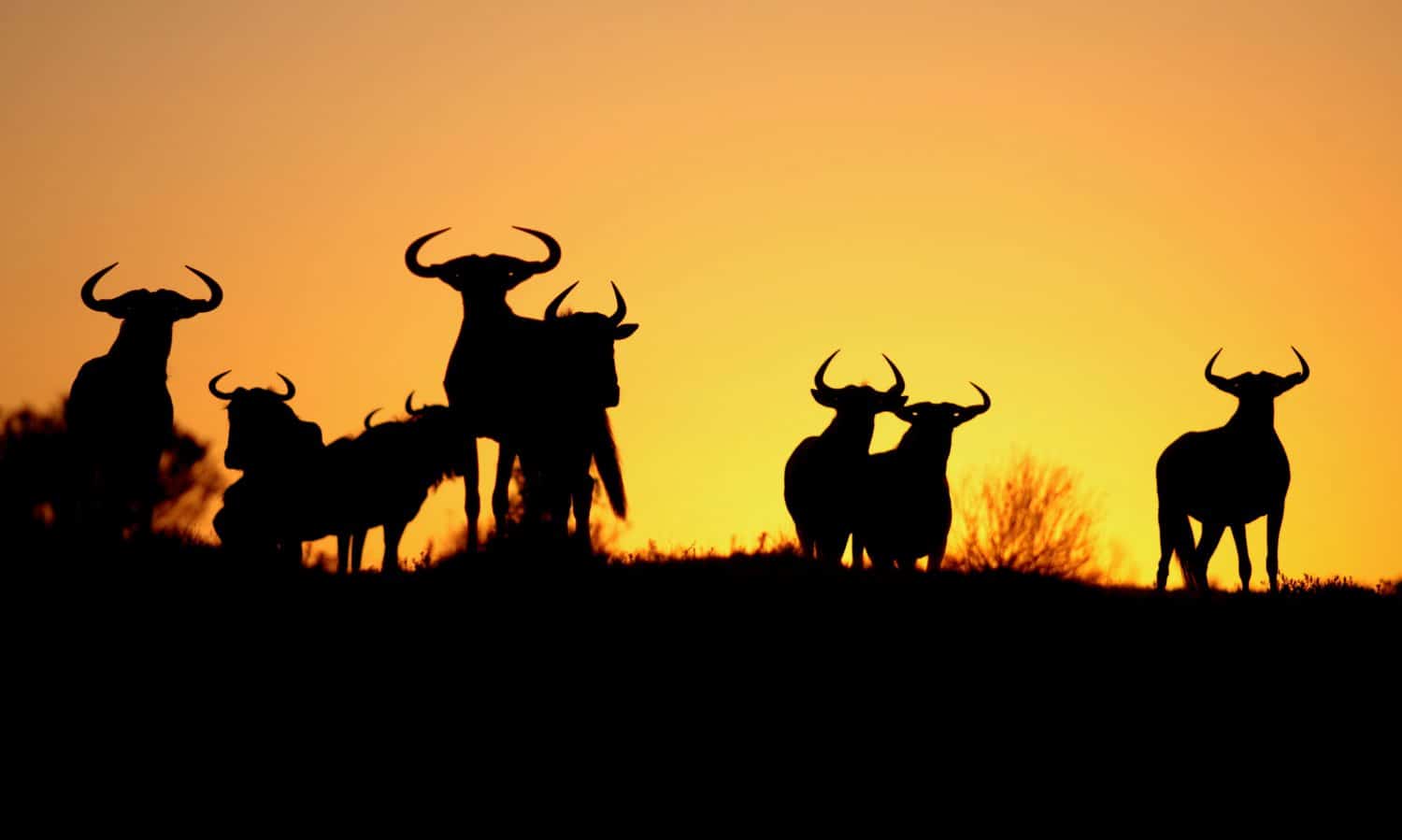

The annual migration of around 1.2 million wildebeests and 200,000 zebras (with some Grant’s gazelle and Thompson’s gazelle thrown into the mix) is a spectacular sight. As these animals trek for hundreds of miles from their dry season feeding grounds to their wet season habitat (and back again), they exert a huge effect on local ecosystems. From the animals that hunt them when they are alive to those that pick apart their carcasses when they die, every single creature has a role to play. So, put aside the awe-inspiring images of a wildebeest leaping across the Mara River and let’s meet some of the unsung heroes of the Great Migration.
Giant Eland (Taurotragus derbianus)
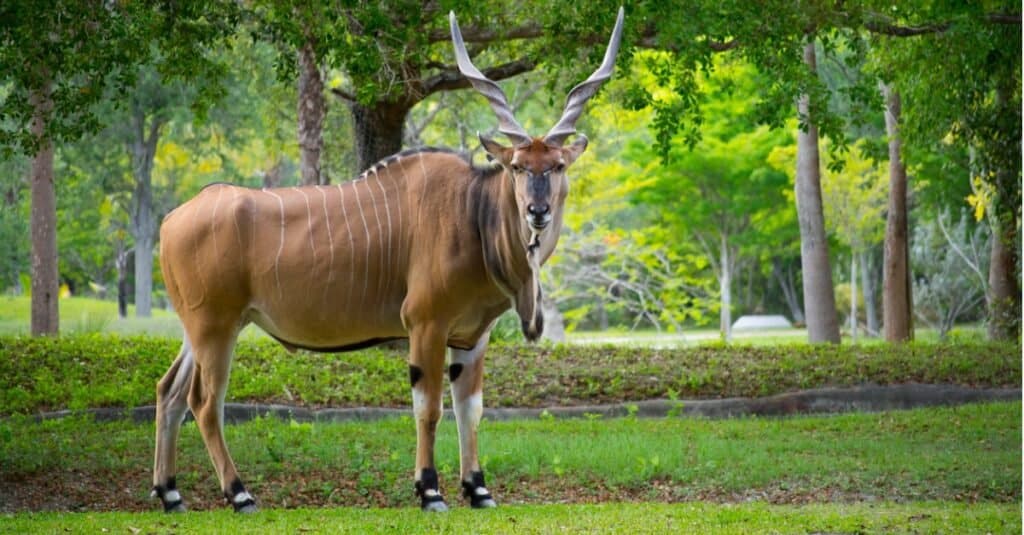
Giant elands are the largest antelopes in the world.
©iStock.com/Jose_Gonzalez_Jr
Giant elands are large members of the Taurotragus genus. Males are larger than females and can reach around 5 feet to their shoulders. Elands play a crucial role in stabilizing ecosystems. They are the largest antelope species on the African continent; their range stretches from Senegal through southern Sudan. They live in herds of around 25 individuals. These herbivores feed on leaves and fruit from trees as well as grasses and herbs, so they are both browsers and grazers. They enrich the soil with their dung and promote vegetation by recycling plant material. Eland herds will spread nutrients across open plains and grasslands to the benefit of migrating wildebeests and zebras. Eland herds only reach around 50 in number.
Impala (Aepyceros melampus)
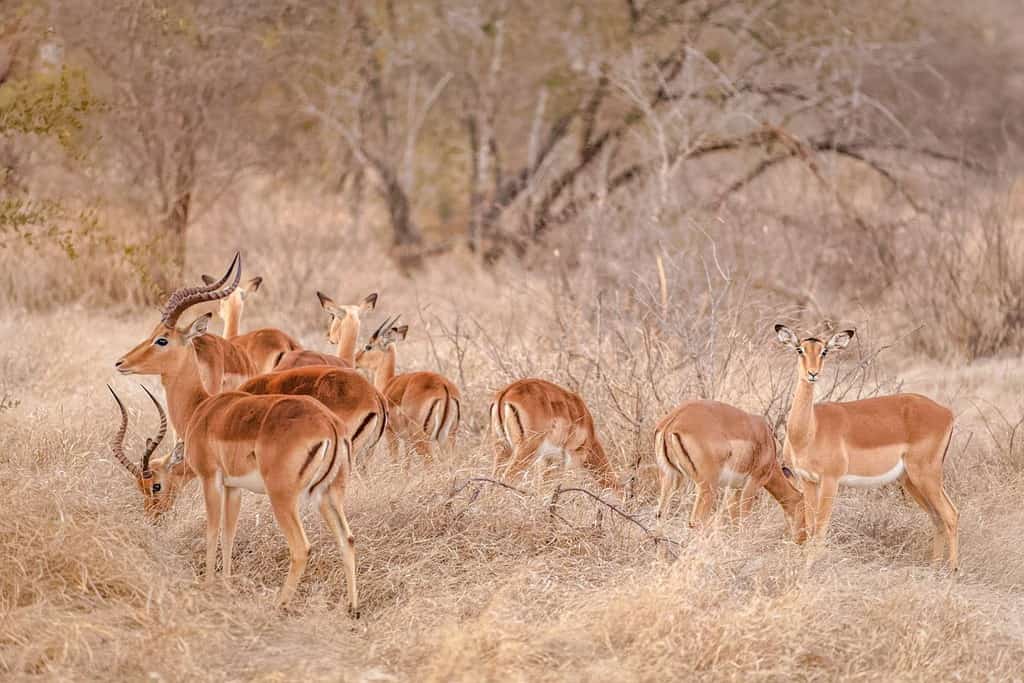
Impalas are very alert to predators.
©Gunter Nuyts/Shutterstock.com
Impalas do not migrate. Instead, they forage for a mixed diet and focus on browsing wood, bark, and stems when the grass dries out. These antelopes are a constant and graceful presence on Africa’s grasslands, forests, and wetlands. Their selective feeding habits help to regulate vegetation and promote plant diversity. Impala droppings assist in nutrient recycling and disperse seeds. Impalas are also a key prey species for predators such as lions and therefore maintain the balance of the savanna ecosystem food web. However, they are a very alert species, and this can make it more difficult for lions and other predators to hunt successfully. This is good news for the zebras and wildebeests.
Grant’s Gazelle (Nanger granti)
Grant’s gazelles do take part in the Great Migration, but in much smaller numbers than zebra or wildebeests. They are a medium-sized antelope species with tan or light brown coats and white bellies. These herbivores are native to East Africa and live on open grasslands and savannahs, including semi-arid regions with scarce water sources. In general, they avoid areas of dense vegetation where they find it harder to spot predators. As they are primarily browsers rather than grazers, their diet is made up of leaves and stems. They also help prevent the overgrowth of plant species and provide a food source for predators.
Lion (Panthera leo)
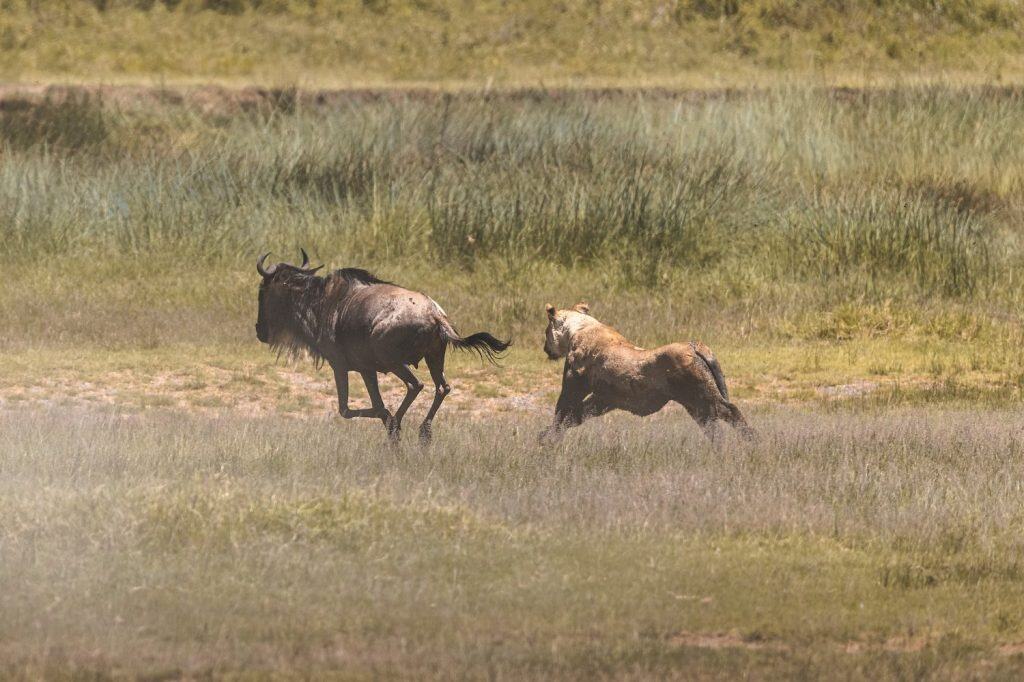
Lions hunt wildebeests during the migration.
©ANDRES MENA PHOTOS/Shutterstock.com
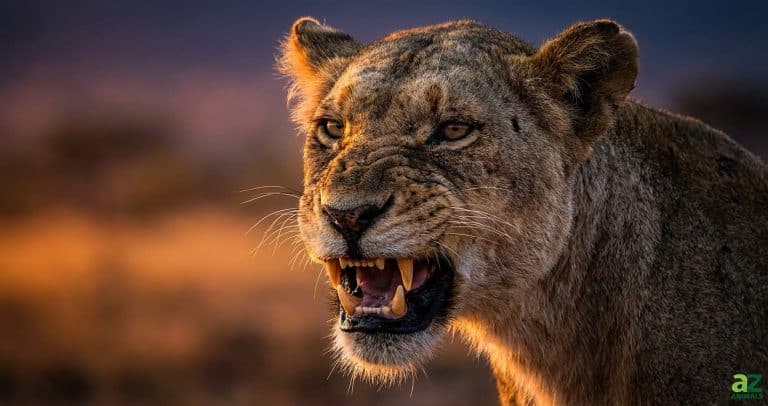
The Great Migration is a fabulous feeding opportunity for predators such as lions. African lions live in most of sub-Saharan Africa in the plains or savanna. They live in prides of between 2 and 40 individuals, comprised of related females with a resident male or males. Lions are predatory carnivores and hunt the migrating species, including wildebeests, zebras, and elands. Each pride tends to have a preference for a particular prey and become experts in hunting them. However, the concentration of prey in one place during the Great Migration makes the kill a lot easier! Lions hunt on land but can also pick individuals off as they emerge from rivers at pinch points and bottlenecks. They will secure the animals that are easier to catch, and these are often the weakest members of the herd, ensuring that it is the stronger individuals that make it to their destination. Lions don’t eat the whole carcass, and what’s left provides food for scavengers.
Spotted Hyenas (Crocuta Crocuta)
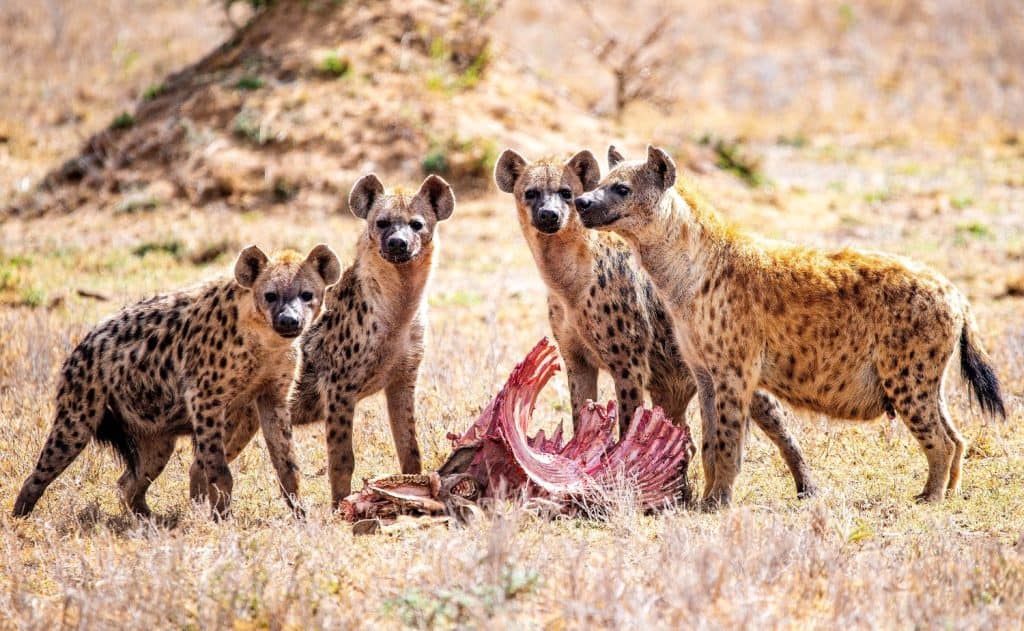
Spotted hyenas eat the whole carcass.
©Sean Clee/Shutterstock.com
There are three hyena species living in Africa, including the spotted hyena. They live in open, dry habitats, such as semi-desert, savannah, acacia bush, and mountainous forest. Here, they live in social groups called clans, comprising between 3 and 80 members. They spend most of their time foraging for food alone, but join together at kills and when defending their territory. Hyenas obtain most of their food by hunting and will target migratory species such as Grant’s gazelle, wildebeest, and zebra. Migration behavior means that these species are not found in the hyena’s territory for large parts of the year. So, the hyenas travel long distances to find them.
When it comes to clearing up after accidental deaths and lion hunts on the migration route, hyenas play a vital role. They will scavenge and polish off the entire wildebeest or zebra carcass, including skin and bones. This prevents carcasses from being left to rot on the ground, which could spread disease, and efficiently and immediately recycles the nutrients.
Nile Crocodiles (Crocodylus niloticus)
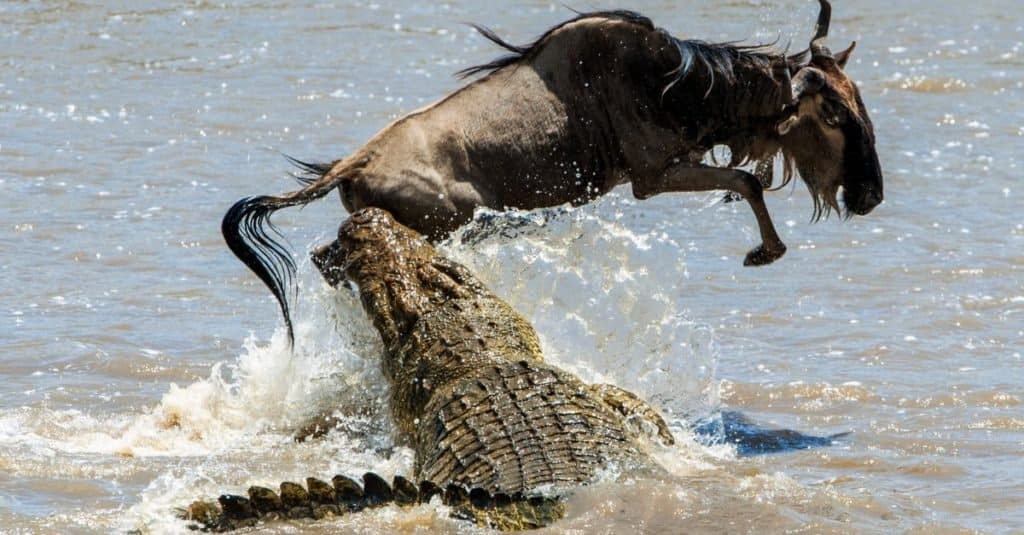
Wildebeest have to leap around to avoid Nile Crocodiles.
©Sergey Uryadnikov/Shutterstock.com
Nile crocodiles are a challenge that migrating animals have to face once they enter rivers. These huge reptiles inhabit lakes, rivers, and streams within their range, where they submerge themselves in water for long periods. Given their dark olive-green, bronze to brown, or gray bodies, they are hard to spot, especially amongst the chaos of a mass migration!
These crocs are opportunistic feeders and will eat a wide range of prey. They are more than happy to take advantage of thousands of animals streaming down the river banks. As the prey enters the water, the crocs launch themselves at them, dragging them under the water. They take hold of the stricken animal and rotate until a portion of flesh is torn away. Two crocodiles will help to rip apart the prey together if needed. Nile crocodiles will also scavenge on carcasses of animals that have been killed in the crush in the water.
This may sound brutal, but the crocs are more likely to overcome the weaker animals, so that it is the stronger individuals that make it across the rivers. That said, more animals die from drowning than from crocodile attack.
Avian Scavengers
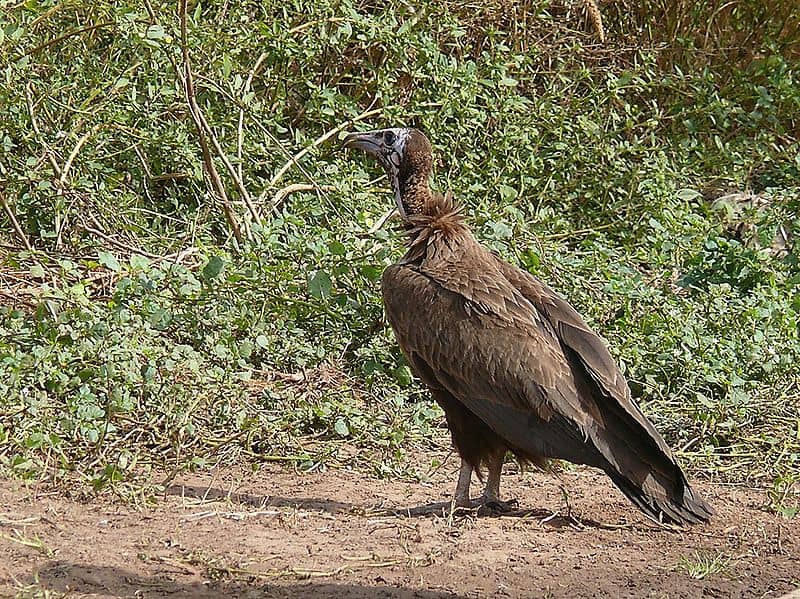
Vultures recycle nutrients.
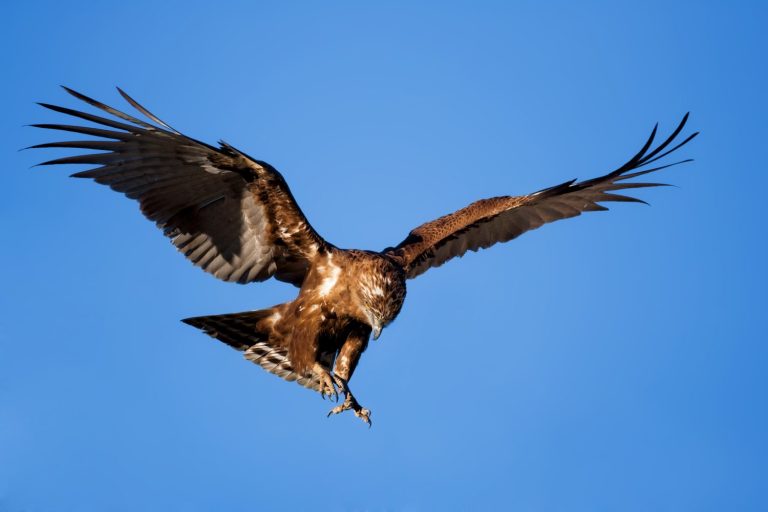
Thousands of migrating animals die during the epic trek, and mass drownings in rivers are recorded. This leaves piles of rotting carcasses in the water, but nature has a way of dealing with this! Avian scavengers include Marabou storks (Leptoptilos crumenifer), white-backed vultures (Gyps africanus), Rüppell’s vultures (Gyps rueppellii), and hooded vultures (Necrosyrtes monachus) clear it all away.
Marabou storks are large and rather unusual-looking birds with very long, grey legs. They scavenge in groups and rely on the carcasses of dead animals for most of their nutrition. The same is true for the vulture species. This may not be the most glamorous way of feeding, but it is essential to stop the mass migration littering up the environment with dead bodies!
Fish
The relationship between wildebeest and fish may not be an obvious one, but fish are one of the unsung heroes of the Great Migration. This is because of the mass drownings that regularly take place in the rivers. Wildebeest, in particular, get trampled and pushed under the water as thousands of animals try to cross rivers at the same time and in the same place. Studies have shown that wildebeest carcasses are assimilated by scavenging fish such as Bagrus docmak (a large catfish) and Labeobarbus altianalis (Ripon barbel fish). This ensures that nutrients are recycled and are kept in this ecosystem rather than being washed downstream.
Dung Beetles
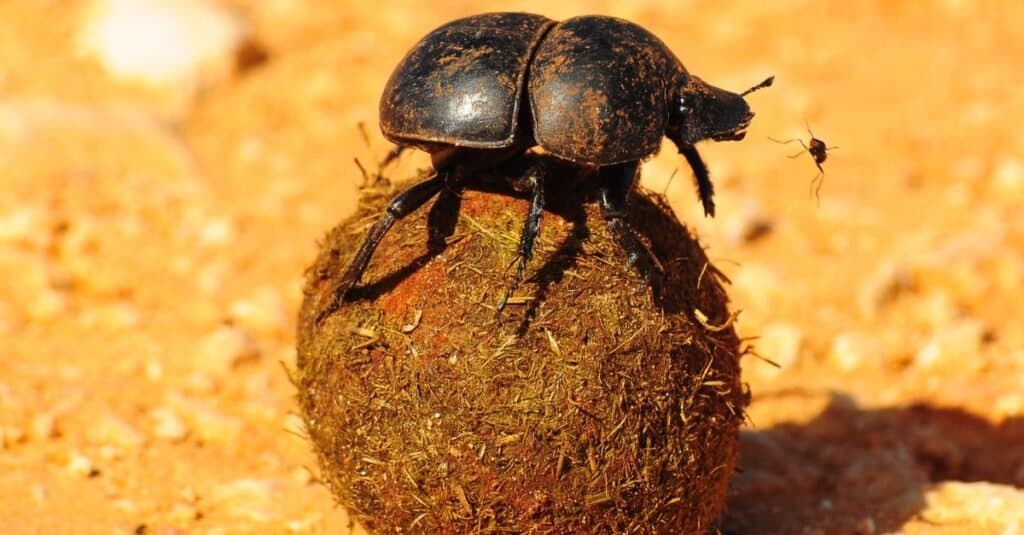
Dung beetles improve soil quality.
©Michael Potter11/Shutterstock.com
When over a million ungulates move around the country, there is inevitably going to be a lot of dung! Thankfully, nature has a remedy for this, too, and they are truly the unsung heroes of the Great Migration. There are hundreds of different species of dung beetle in Africa, but they all make sure that the piles of dung are soon decomposed and the nutrients recycled. By rolling up piles of dung and burying them underground, they improve the physical and chemical properties of the soil, making it more fertile and able to grow a new crop of grass to feed the next animals that pass this way on the Great Migration!