
Quick Take
- Every 2.5 acres of Serengeti soil holds 4,400 pounds of carbon dioxide.
- The Great Calving in February is directly responsible for creating the Serengeti carbon sink.
- A rinderpest virus outbreak once decimated the wildebeest population to 200,000.
- Wildebeests grazing keeps the Serengeti ecosystem healthy by decreasing wildfires and increasing tree growth.
Every year, a massive migration takes place in the Serengeti. Many animals participate in the migration, but the wildebeest stands out due to its crucial role in storing large amounts of carbon in the grassland soil. That animal is the wildebeest.
It may seem strange to think that the Serengeti is an important ecosystem for carbon dioxide storage. Yet, it is because of the “Great Calving” of February that the region is home to the world’s most powerful carbon sink. If wildebeests did not migrate and produce thousands of calves over several weeks, the Serengeti would not retain as much carbon dioxide in its soil, which would negatively impact both the ecosystem and the planet.
What Is a Carbon Sink?
There are ecosystems around the world that retain more carbon dioxide than they release. When this happens, the environment is known as a carbon sink, which is very important to the health of the planet.
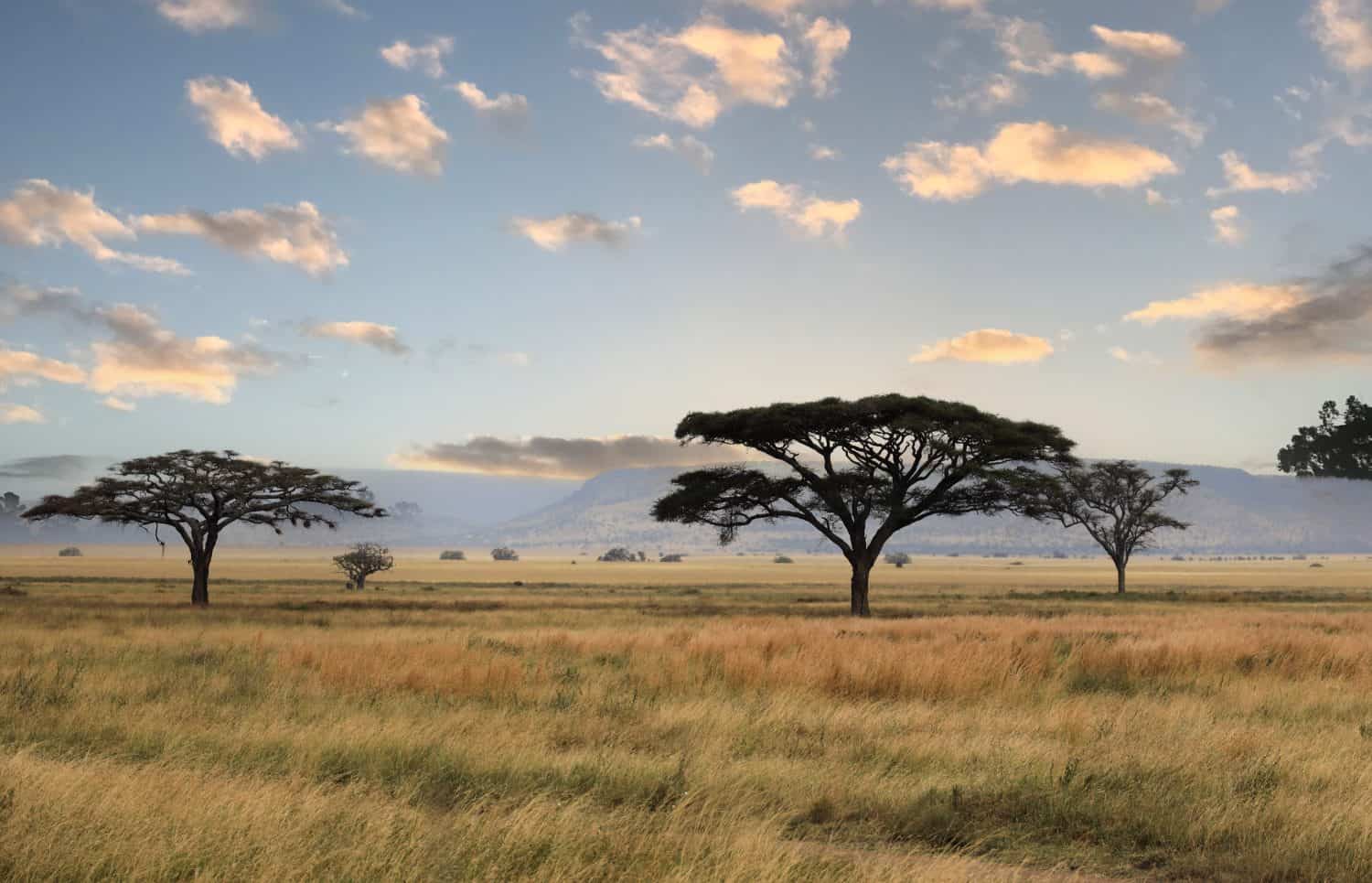
The Serengeti holds 4,400 pounds of carbon dioxide in every 2.5 acres of soil, creating a carbon sink.
©Marc Stephan/Shutterstock.com
Some of the most common habitats that create carbon sinks include:
- Forests
- Oceans
- Soil
- Wetlands
In addition to these environments, the Serengeti is also a massive carbon sink. The soil in the grassland savannah traps up to 4,400 pounds of carbon dioxide per 2.5 acres in the Serengeti. With the Serengeti covering approximately 3.7 million acres, it is a massive carbon sink that helps regulate atmospheric carbon dioxide levels. Factors such as the biodiversity of the Serengeti and global temperature regulation are also directly tied to the carbon sink the Serengeti provides.
What Is the “Great Calving” Event in the Serengeti?
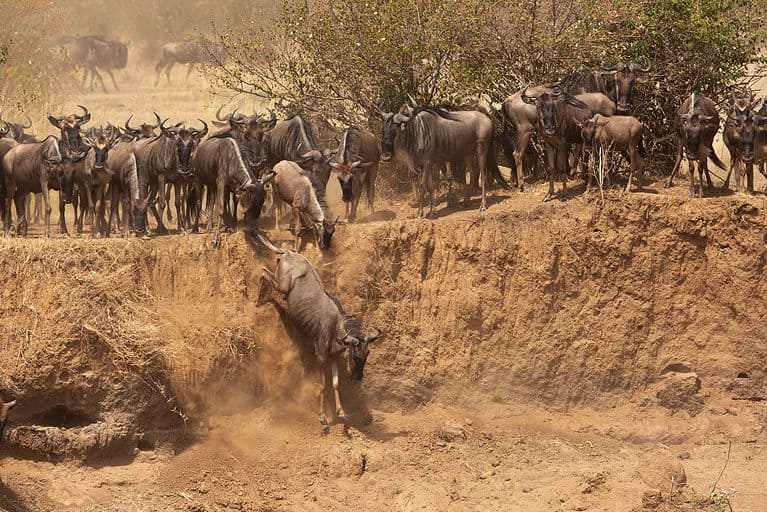
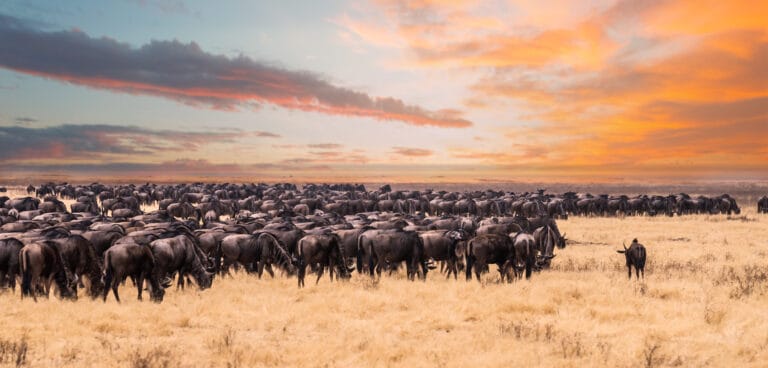
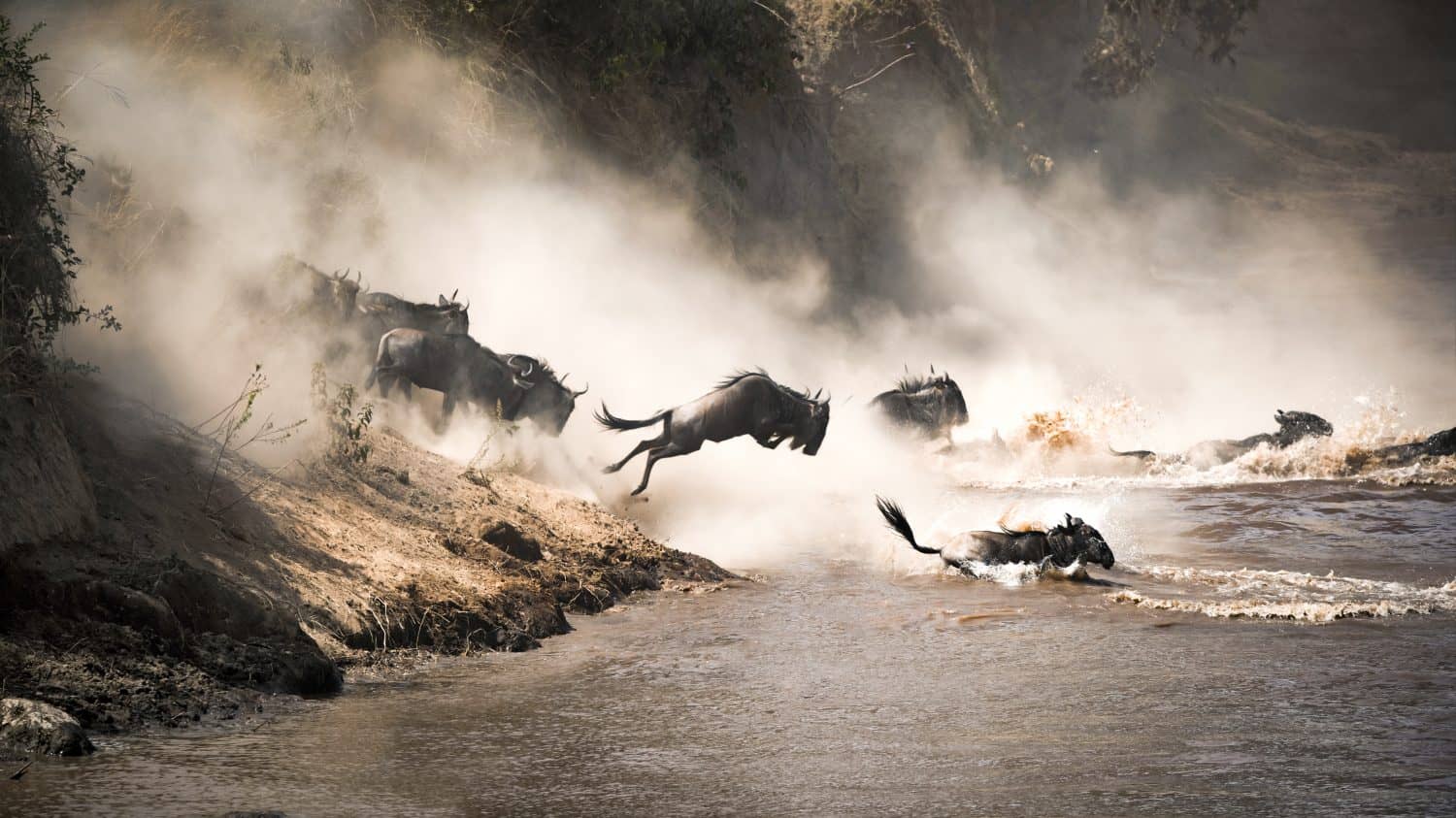
The “Great Calving” event occurs in the Serengeti as part of the Great Wildebeest Migration that takes place annually between December and April. During this time, 1.5 million wildebeests, as well as zebras and gazelles, travel over 600 miles in a clockwise direction. Once they reach the southern plains between January and March, the Great Calving event begins.
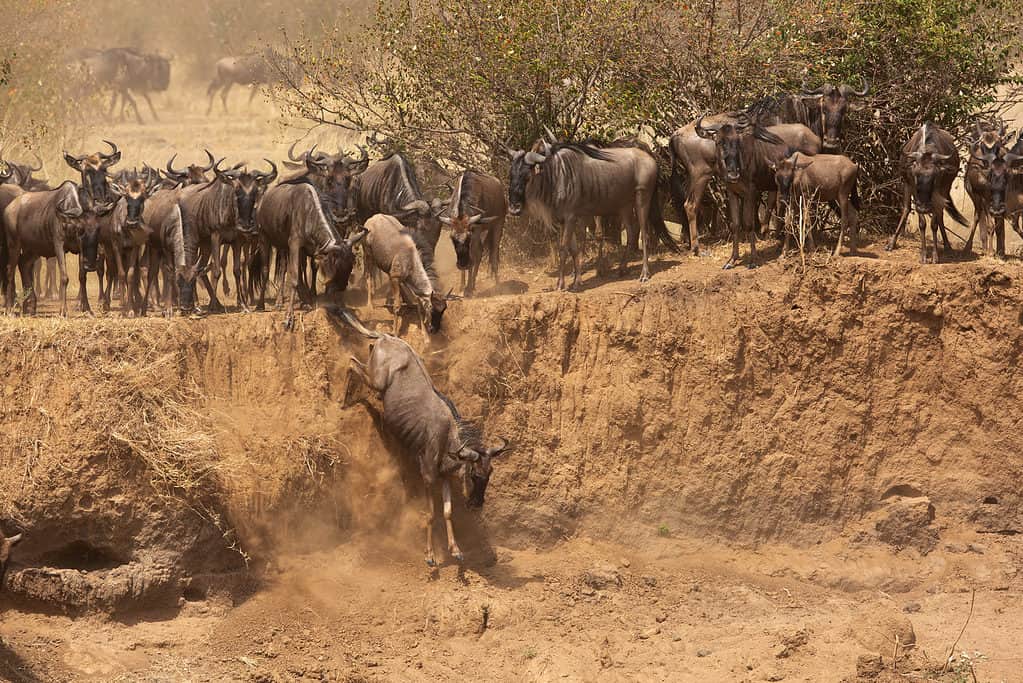
During the Great Calving event, up to 8,000 wildebeest calves will be born each day.
©Dr Ajay Kumar Singh/Shutterstock.com
During the Great Calving event, up to 8,000 wildebeest calves can be born per day. The reason so many are born at one time is intentional. This is because the goal is to have so many babies that predators have a hard time singling out just one calf as they hunt. Does this mean the calves are all safe from predators? Unfortunately, no. Some fall victim to the predators that roam this region of the Serengeti during the Great Migration. However, most calves survive predation because they are able to stand and run with the herd within three days of birth.
In total, it is estimated that during the Great Wildebeest Migration and, subsequently, the Great Calving event, about 250,000 wildebeests lose their lives each year. However, when calving is successful, the population remains stable, allowing the wildebeests to continue to contribute to the Serengeti, retaining carbon.
How Wildebeests Contribute to the Serengeti Retaining Carbon
By migrating to the southern plains to give birth to large numbers of calves, wildebeests play a direct role in enabling the Serengeti to retain significant amounts of carbon, making it a vital carbon sink.
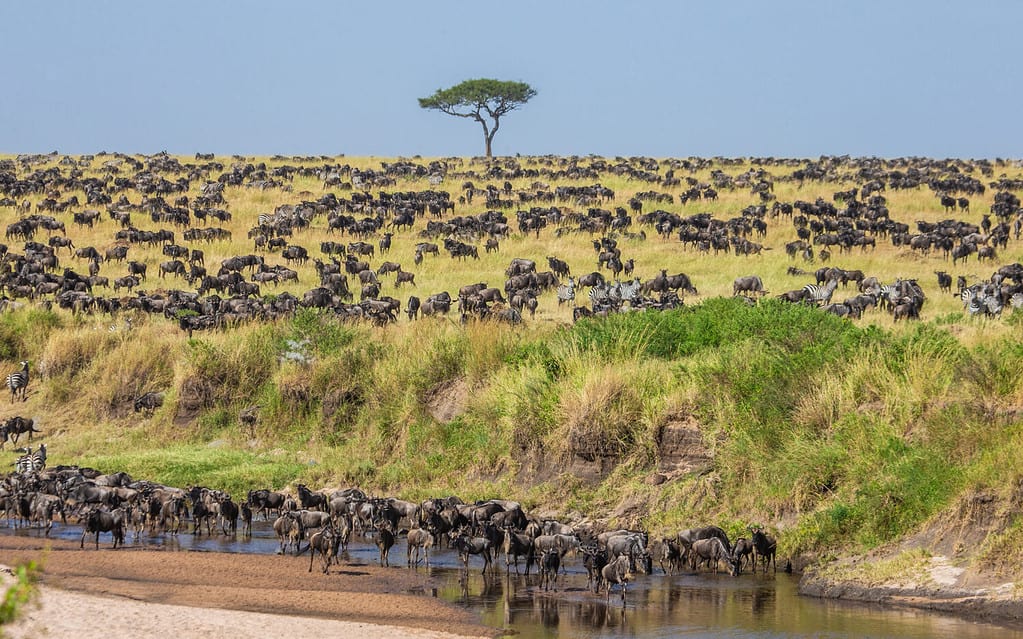
Wildebeests aerate the soil while mixing in dung and other organic matter, creating carbon reserves.
©GUDKOV ANDREY/Shutterstock.com
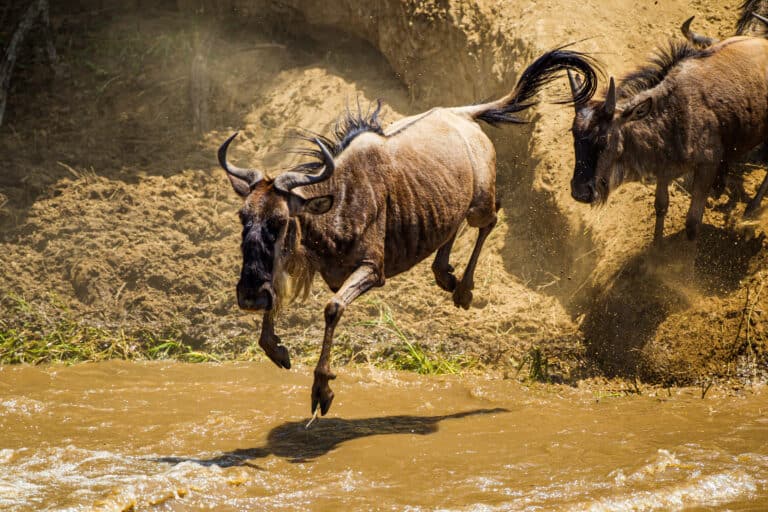
Traveling through the Serengeti, the wildebeests both aerate and fertilize the soil. As wildebeests move, their hooves redistribute nutrients and pack the soil, which becomes mixed with their dung over time. The combination of soil, dung, and other organic materials creates carbon reserves in the soil.
Given that soil can trap three times as much carbon as vegetation, the Serengeti is a very important ecosystem for planetary health. The carbon will remain in the soil for centuries and can be replenished with each migration, making the Serengeti an incredibly vital carbon sink on the planet.
Contributing to the carbon sink may be the most important task for wildebeests in the Serengeti, but it is not the only way these hoofed animals keep the grassland savannah thriving. Consequently, without wildebeests, the Serengeti terrain would appear much different from what it does today.
In addition to aerating the soil, wildebeests also help reduce the number of fires the Serengeti experiences each year. By grazing on vegetation, wildebeests reduce the amount of plant material available to fuel fires, making it harder for fires to start and spread. Not only is this important for creating healthy ecosystems for all the animals that call the Serengeti home, but it also supports the carbon sink. This is because soil that is not burned will retain more carbon than soil that has recently experienced wildfires.
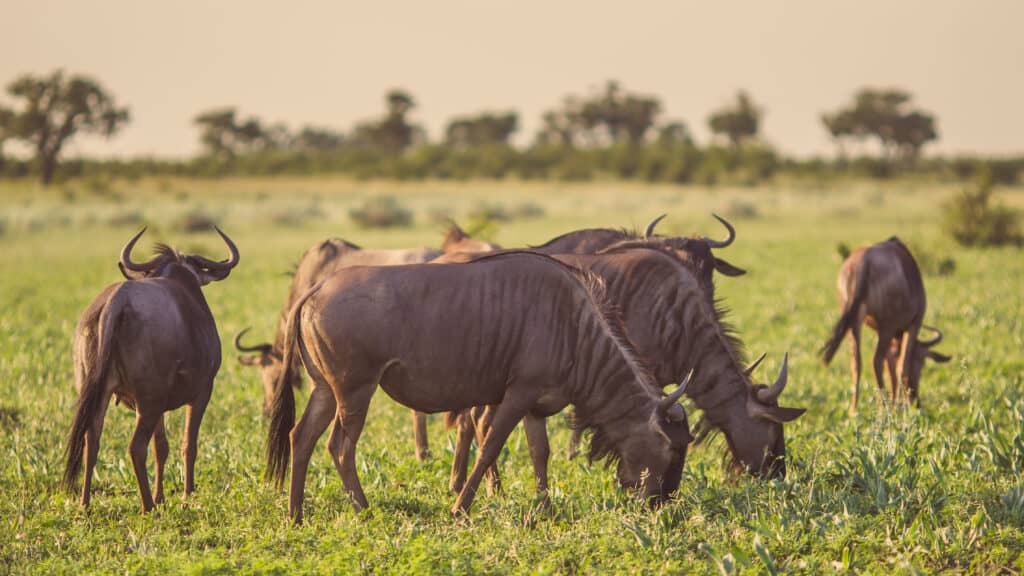
Wildebeests reduce fires and increase tree growth as they move through the Serengeti grazing.
©iStock.com/CreativeNature_nl
As grasslands experience fewer fires, more trees can grow. Tree coverage in the Serengeti changed dramatically before and after 1960, a period when the wildebeest population was struggling. The rinderpest virus wiped out the wildebeests, leaving only 200,000 roaming the Serengeti. With fewer wildebeests, the Serengeti ecosystem became less diverse.
Fortunately, a vaccine for rinderpest was developed, helping the wildebeest population rebound. As more wildebeests wandered the grasslands, more trees appeared. This benefited other creatures in the Serengeti, making it the robust ecosystem it is today.
What Would Happen to the Serengeti If Wildebeests Disappeared?
Given the role wildebeests play in the Serengeti ecosystem, it is not surprising that they are considered a keystone species. This means that if wildebeests were to disappear from the savannah grassland habitat, the entire ecosystem would struggle to survive.
Thanks to soil aeration, not only is carbon dioxide trapped, but nutrient cycling also occurs. When this happens, there are more opportunities for a diverse range of plant species to grow. Wildebeests are not the only animals that benefit from this. Everything from other grazing animals to insects, birds, and even predators benefits when there are abundant plant and tree species in an ecosystem.
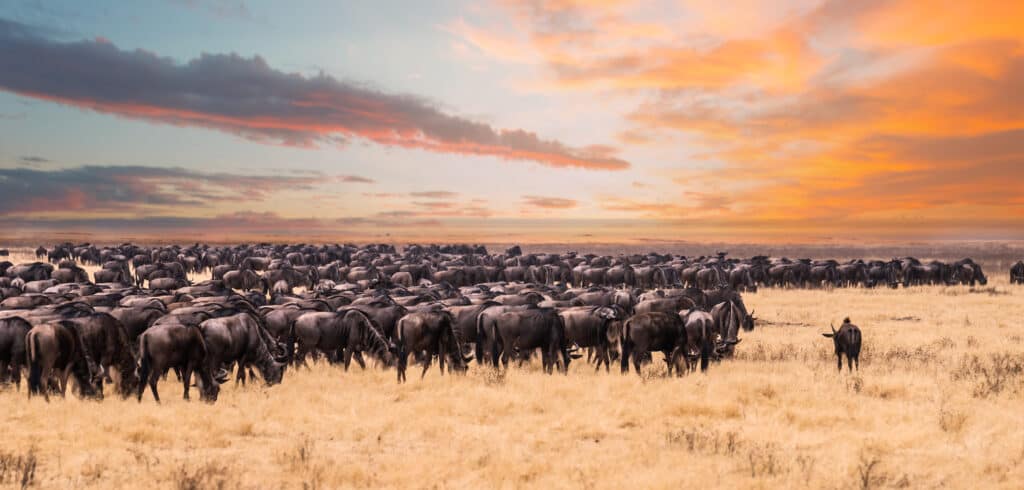
If wildebeests were to disappear from the Serengeti, the entire ecosystem would suffer for it.
©iStock.com/MrRuj
Additionally, wildebeests serve as prey for the predators that call the Serengeti home. Lions, cheetahs, leopards, hyenas, and more all prey on the wildebeest. If the wildebeest population were to decrease or disappear, there would be far fewer animals for these predators to hunt. Consequently, the populations of predators would decline.
Even the animals that help to clean up the Serengeti rely on the wildebeests. Vultures help break down decaying animals, making the soil rich in nutrients while reducing the risk of disease spread. Dung beetles break down and recycle waste. This also makes the soil fertile, allowing for plant and tree growth. In both cases, if wildebeests were to disappear, there would be less carrion for vultures to survive on and less dung for the beetles to work with. Both species would begin to disappear from the Serengeti.
Wildebeests are an incredibly important part of the Serengeti ecosystem. By migrating hundreds of miles to give birth—helping the region function as a carbon sink—reducing the risk of grassland fires, and maintaining the balance of the ecosystem, wildebeests may be the unsung heroes of the savannah grassland.
Conservationists underscore the importance of reestablishing migratory routes and removing fences from the Serengeti so that wildebeests can do their job. With so much of their habitat lost, the population has already declined. If the population decreases further, not only will the wildebeest suffer, but all the animals of the Serengeti will as well.