
Quick Take
- Completing the 500-mile loop is a non-negotiable requirement for 2 million wildebeests every year.
- Navigating a 15-foot sheer cliff creates a technical constraint that compromises the entire riverbank structure.
- The herd’s preference for dangerous descent points contradicts standard survival assumptions during migration.
- Surviving the southern Serengeti transition requires precise weather-dependent triggers before any river crossing occurs.
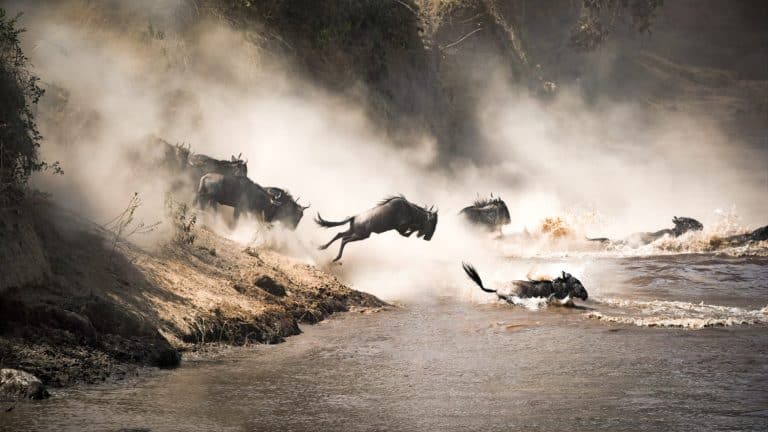
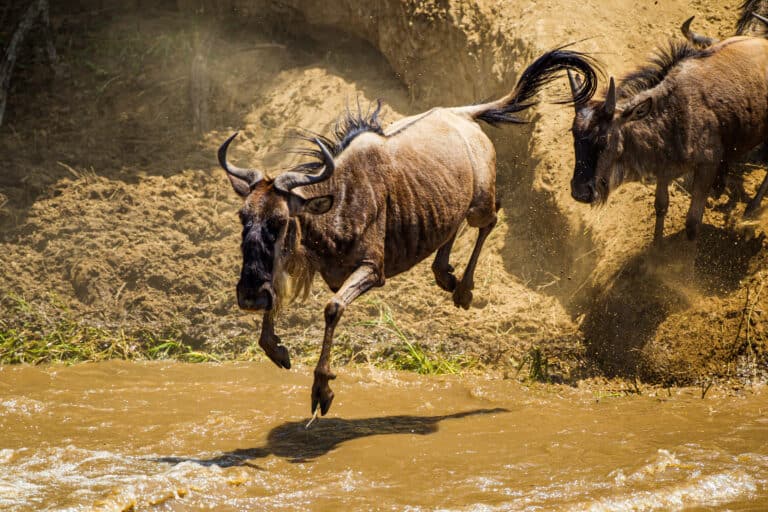
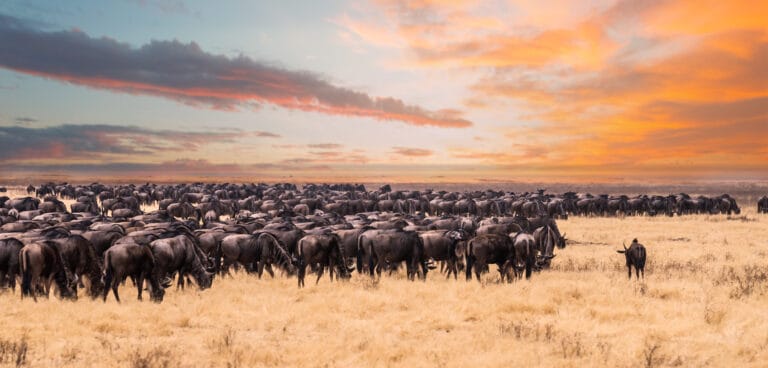
The amazing Serengeti National Park is located in northern Tanzania and stretches over 5,700 square miles. It is famous for its stunning wildlife, but the most spectacular sight of all is called ‘The Great Migration’. This is when millions of wildebeests, zebras, gazelles, and elands make the journey from the Southern Serengeti northwards to greener pastures and then back again. The wildebeest are the key players in this spectacular sight – around two million of them on the move at the same time. The journey involves several river crossings, and this is when things can get hazardous. As this extraordinary clip shows, getting across a river can be very risky. Take a look at the wildebeest migrating across a river in this Instagram post.
Wildebeest Migrating Across A River
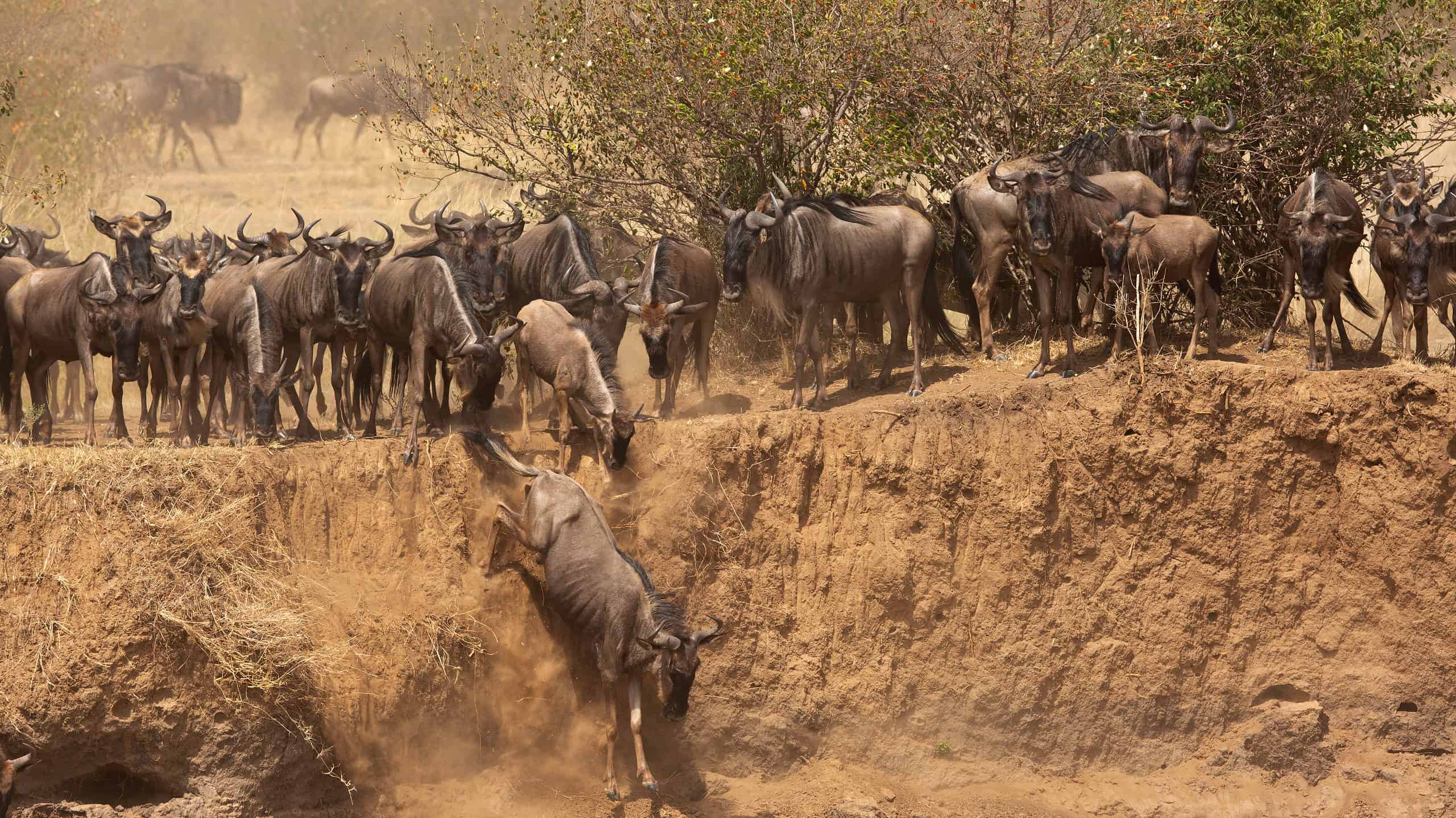
Watching the Instagram clip, you cannot help but wonder if there was a safer place for these wildebeest to cross! It shows a large herd at the top of a steep riverbank. Many are walking past, but some decide to try to cross the river at this point. They scramble down a sheer cliff that is at least 15 feet high. Some land on their feet, but others lose their footing and tumble into the river.
As more and more animals decide to take this route, the riverbank erodes further and becomes more treacherous. This does not put the wildebeest off. They continue to hurl themselves down the bank. In the foreground, you can see them trotting through the river safely.
Why Do Wildebeest Migrate?
According to the experts at Springfield Museums, the African Great Migration is the largest overland movement of wild animals on the planet. It is one of the seven natural wonders of the world.
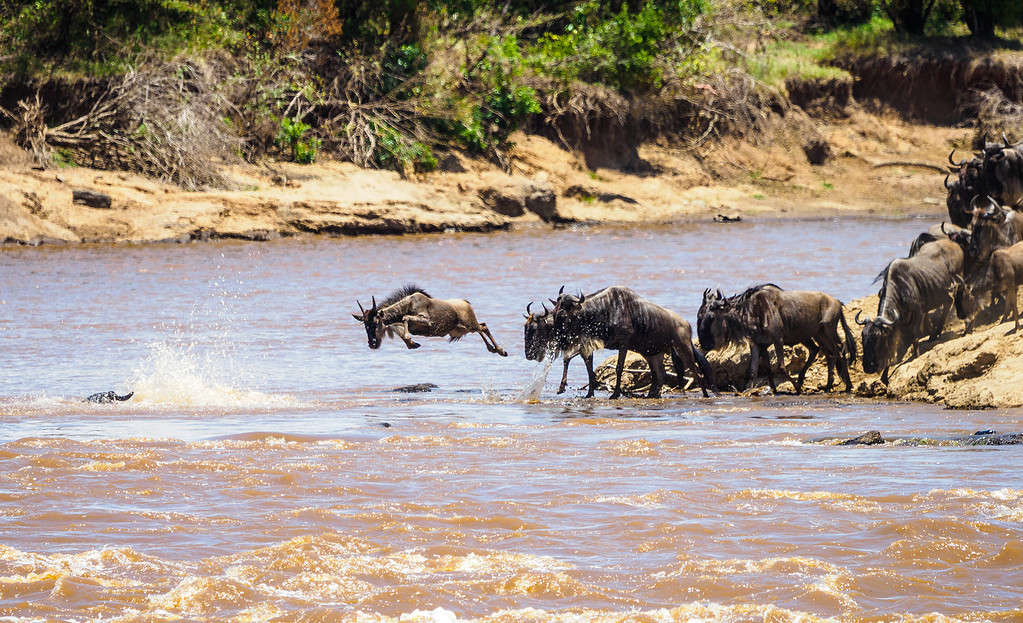
Each year, roughly 1.2–1.5 million blue wildebeest, joined by hundreds of thousands of zebras and gazelles, move in a continuous loop between Tanzania’s Serengeti and Kenya’s Maasai Mara in search of fresh grass and water.
The blue wildebeest spend January to March feeding on the Savanah grasslands of the southern Serengeti, where there is rich green grass. However, around April, the grasslands dry up. The wildebeest follow rain patterns in the southwest in a 500-mile loop. The exact timings are weather-dependent, but they typically move again in May and June, and in October, they head back to the southern Serengeti.
What Dangers Do Migrating Wildebeest Face?
As well as the obvious physical challenges featured in the above clip, other dangers are lurking for the wildebeest. On land, predators, including lions and cheetahs, are waiting to catch them. Packs of hyenas and wild dogs will also target wildebeest. Even when they get into the river, they are not safe. Nile crocodiles are well aware that hundreds of potential prey are racing past them every minute. They wait in the water, ready to grab a passing meal. If you want to find out more about this spectacular phenomenon, we have all you need to know in our A-Z article The Great Migration in Africa: A Complete Guide to This Amazing Phenomenon.
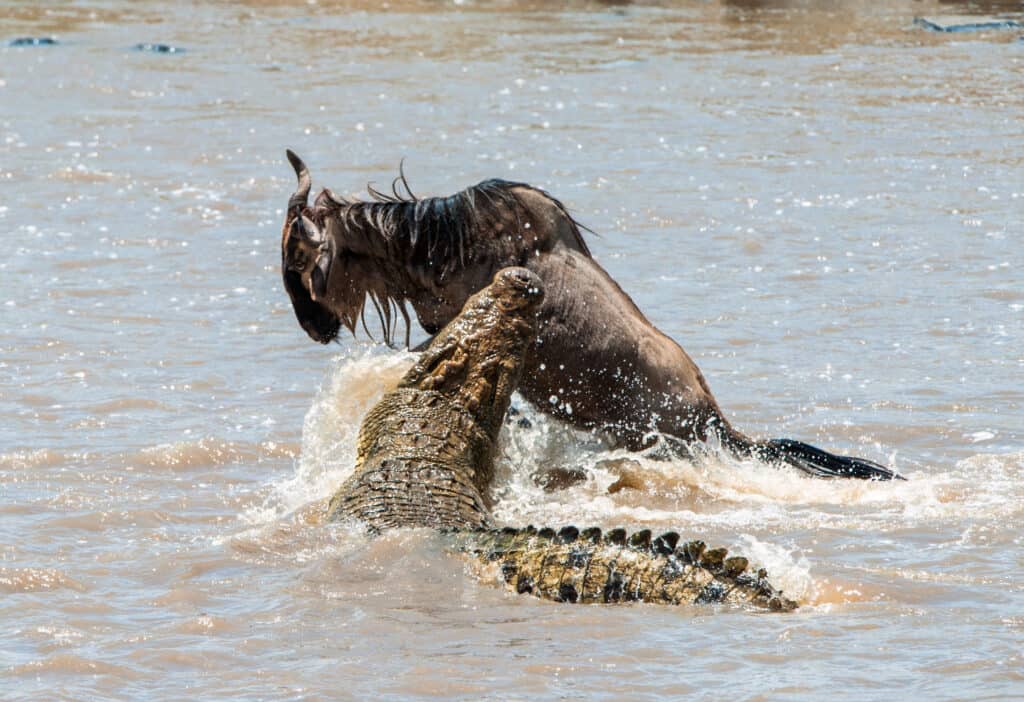
Crocodiles lie in wait for migrating wildebeest.
©iStock.com/USO