
Quick Take
- New fences across ancient routes have blocked wildebeest herds from their annual migration to reach fresh grazing land.
- Wildebeest population size is linked to the ability to migrate for food and water.
- The lack of migration triggers several different ecological effects on the landscape.
- Without migration, wildebeest populations are becoming restricted to limited areas.
For generations, the movement of animals across Africa on seasonal migrations has been one of the best-known natural phenomena. Each year, thousands of animals move across the landscape, following the same ancient routes that their predecessors used. However, in recent years, this fascinating event has been threatened – so much so that one wildebeest migration has declined so dramatically that it’s changed the herd forever. Keep reading to discover what is causing such a massive change!
The Mara-Loita Wildebeest Migration
For decades, the Greater Mara ecosystem in Kenya has been the site of one of the most important wildlife migrations in East Africa. Although it is separate from the better-known and much larger Masai Mara and Serengeti migrations, the Mara-Loita migration is critical for thousands of white-bearded wildebeest.
Every year, these wildebeest travel across the Mara ecosystem between their wet-season grazing lands in the west and their dry-season range on the Loita Plains to the northeast. During the wet season, the western region provides enough grass to support the needs of the calving season. After this, the herd moves to the Loita Plains, where the landscape allows the grasses to last longer into the dry season.
The Mara-Loita migration occurs annually, with the westward movement and Mara River crossing typically beginning in March. In the summer, herds participating in the Great Migration through the Masai Mara arrive in the same area, but the two groups do not merge. As grasslands begin to dry up, the wildebeest that form the Mara-Loita migration begin their trek to Loita from October.
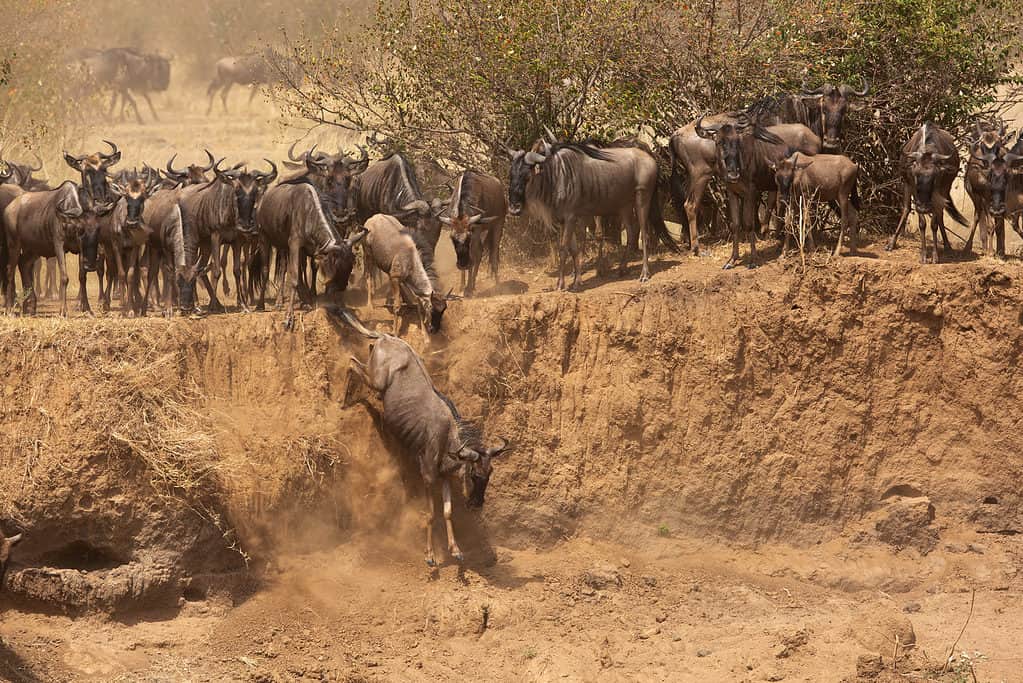
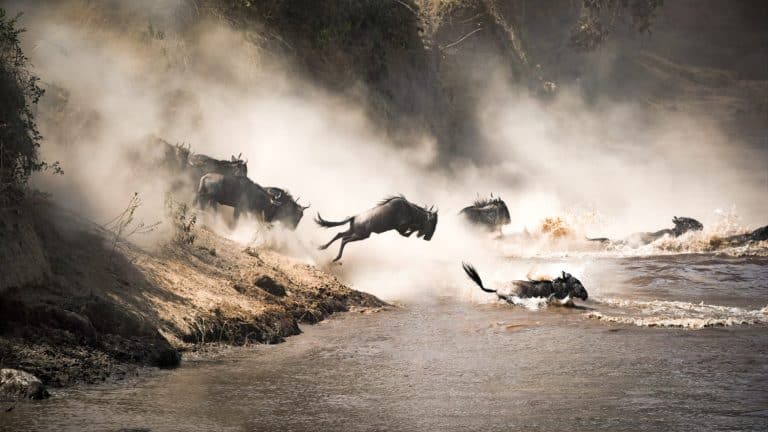
More than 100,000 wildebeest used to travel the Mara-Loita migration route.
©Dr Ajay Kumar Singh/Shutterstock.com
Historically, more than 100,000 wildebeest used to migrate along this route, driven by the seasonal rainfall and the constant need for fresh grazing land. The migration route isn’t random, as the animals follow the same route that has been used for generations. Wildebeest learn this route from a young age, following the herd with their mother from their very first migration.
How Fences and Development Stopped the Migration
Although wildebeest have followed the Mara-Loita migration route for generations, in recent years it has been heavily disrupted by changes to the landscape. Large areas of land along the route are being changed for uses such as agriculture and human infrastructure. As a result of this development, barriers and fences have been erected across many parts of the traditional migration route. These barriers effectively prevent wildebeest herds from accessing their seasonal grazing lands.
While wildebeest and other ungulates have historically adapted to natural changes, physical barriers present a much more permanent threat. Unable to move freely across the landscape, many wildebeest herds are now forced into a resident lifestyle, relying solely on the resources available in a single location for survival. This means that they are much more vulnerable to food shortages and the effects of drought. Even in areas where fences do not completely block access to grasslands, tracking studies show that they still disrupt wildebeest movement, causing the animals to travel shorter distances and abandon their traditional migration routes.
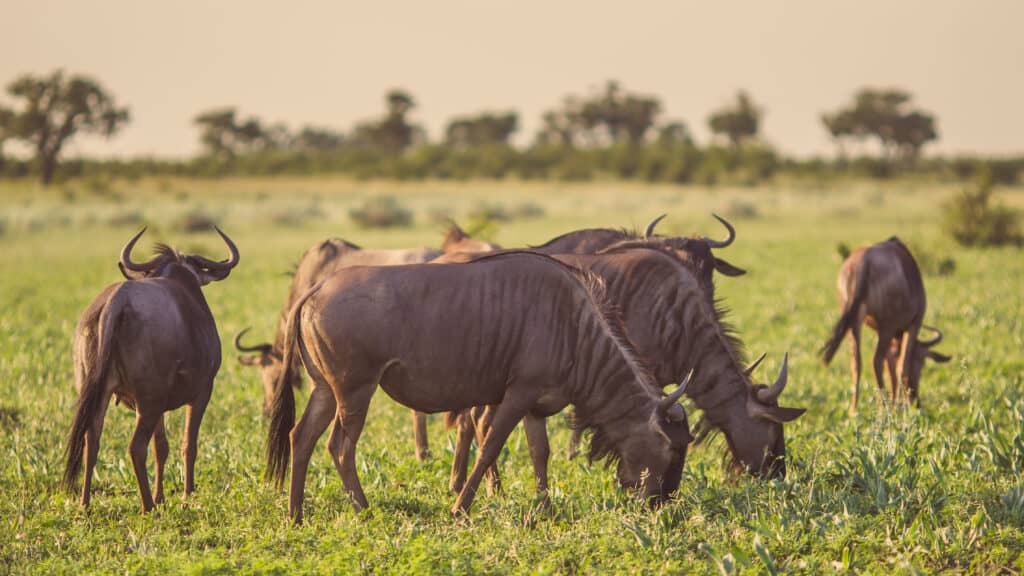
Due to fencing blocking migration routes, wildebeest are transitioning to a resident population.
©iStock.com/CreativeNature_nl
These changes have serious consequences for the herds. A recent study led by researchers from the Smithsonian’s National Zoo and Conservation Biology Institute, in collaboration with the Global Initiative on Ungulate Migration, shows that the Mara-Loita wildebeest migration has lost nearly 90% of its migratory area since 2020. This is one of the largest migration collapses to ever be observed in real time. Unfortunately, as the number of migrating animals has dropped, the overall wildebeest population has also declined. Current estimates suggest that the population of Mara wildebeest has declined from 100,000 to just 25,000.
Why Migration Matters
Migration is more than just the movement of animals from one place to another. When migration is disrupted or disappears, it affects much more than just the herds that migrate. Long-distance migrations allow herds to track seasonal rainfall and access fresh grazing. When herds become resident populations, they are confined to smaller areas, leading to increased competition for food and greater pressure on grasslands and water sources. This results in overgrazing, leaving the land without sufficient time to recover. Pregnant females and those nursing young are particularly affected, as they have the greatest nutritional needs.
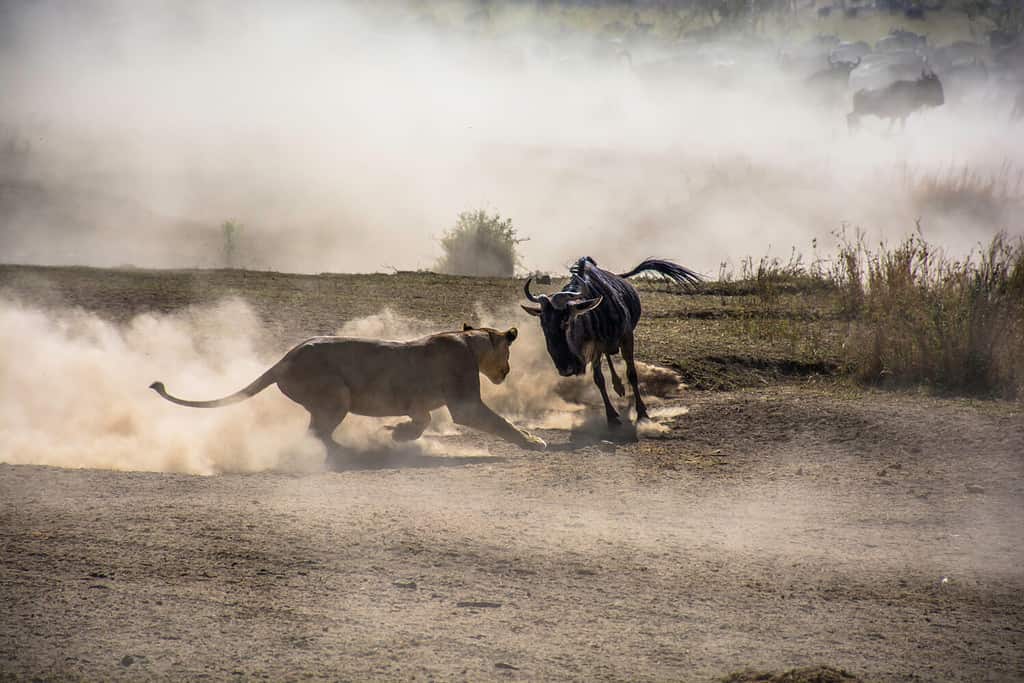
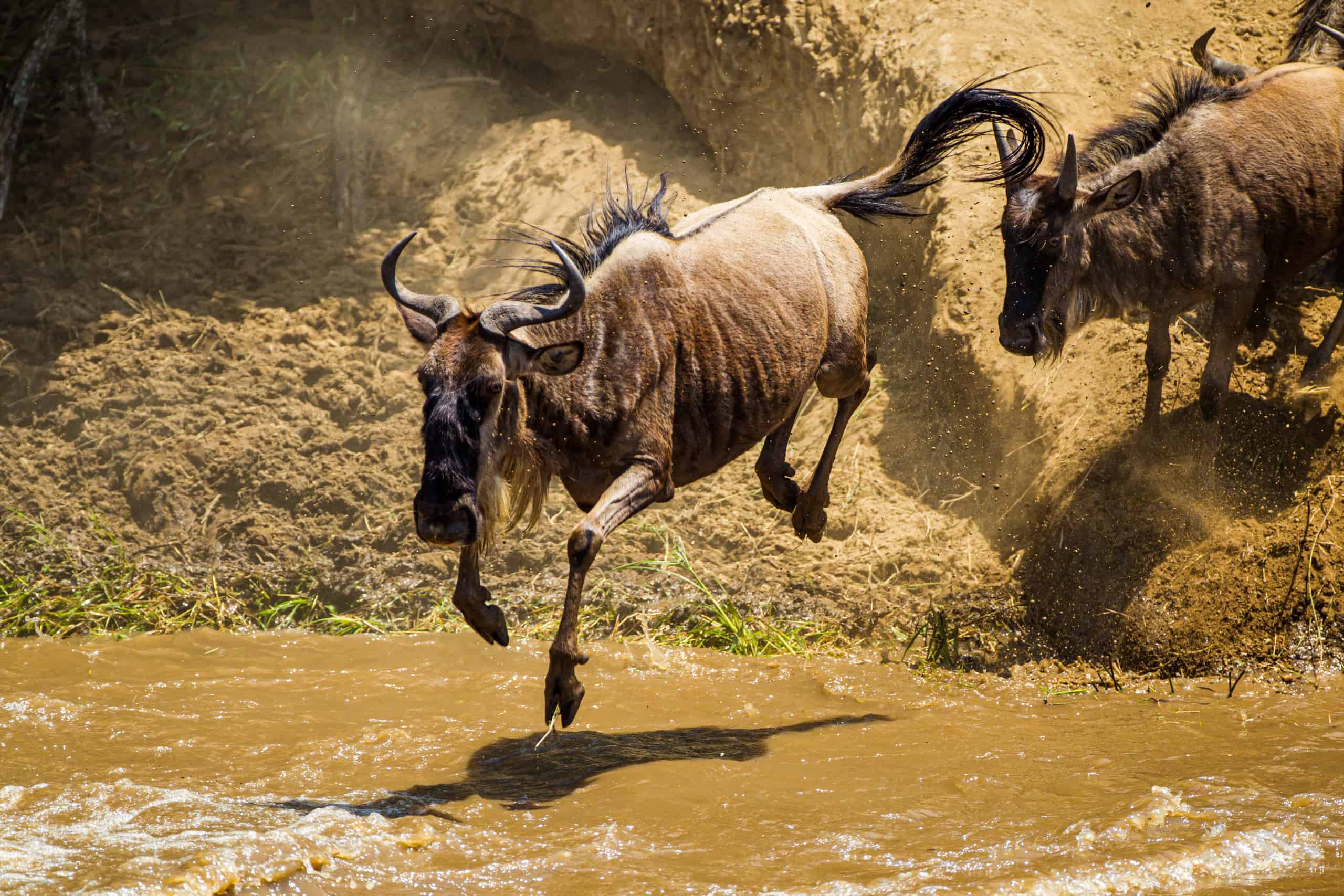
Animals such as lions are affected by the declining wildebeest population.
©Karl Weller/Shutterstock.com
Research shows that wildebeest populations are directly affected by the decline in movement across the ecosystem. The decline in prey animals also has a cascading effect on the predators that depend on them. Animals such as lions, cheetahs, leopards, and hyenas rely on the migrating herds for food. The reduction in prey populations leads to food shortages and increased competition among predators. Additionally, the new barriers can fragment habitats, creating further challenges for animals that once moved freely across the landscape.
Another significant concern is that traditional migration routes are lost when they are no longer taught to juveniles. These routes are not easily rediscovered even if fences are eventually removed. In most cases, this knowledge disappears within a single generation. Research shows that wildebeest and other migrating ungulates often rely heavily on land outside of protected conservation areas, making conservation efforts particularly challenging. However, key movement corridors must be restored or maintained through careful planning to ensure that no more routes are lost entirely.