Out of all the mating rituals in the wild, this is easily one of the weirdest. In the coral reefs of the ocean, flatworms practice a strange way of breeding. The ritual is a process called hypodermic insemination, or in simple terms, penis fencing. This video by the BBC shows this mating ritual in practice and is a sight to behold. Read here to learn more about this strange mating practice.
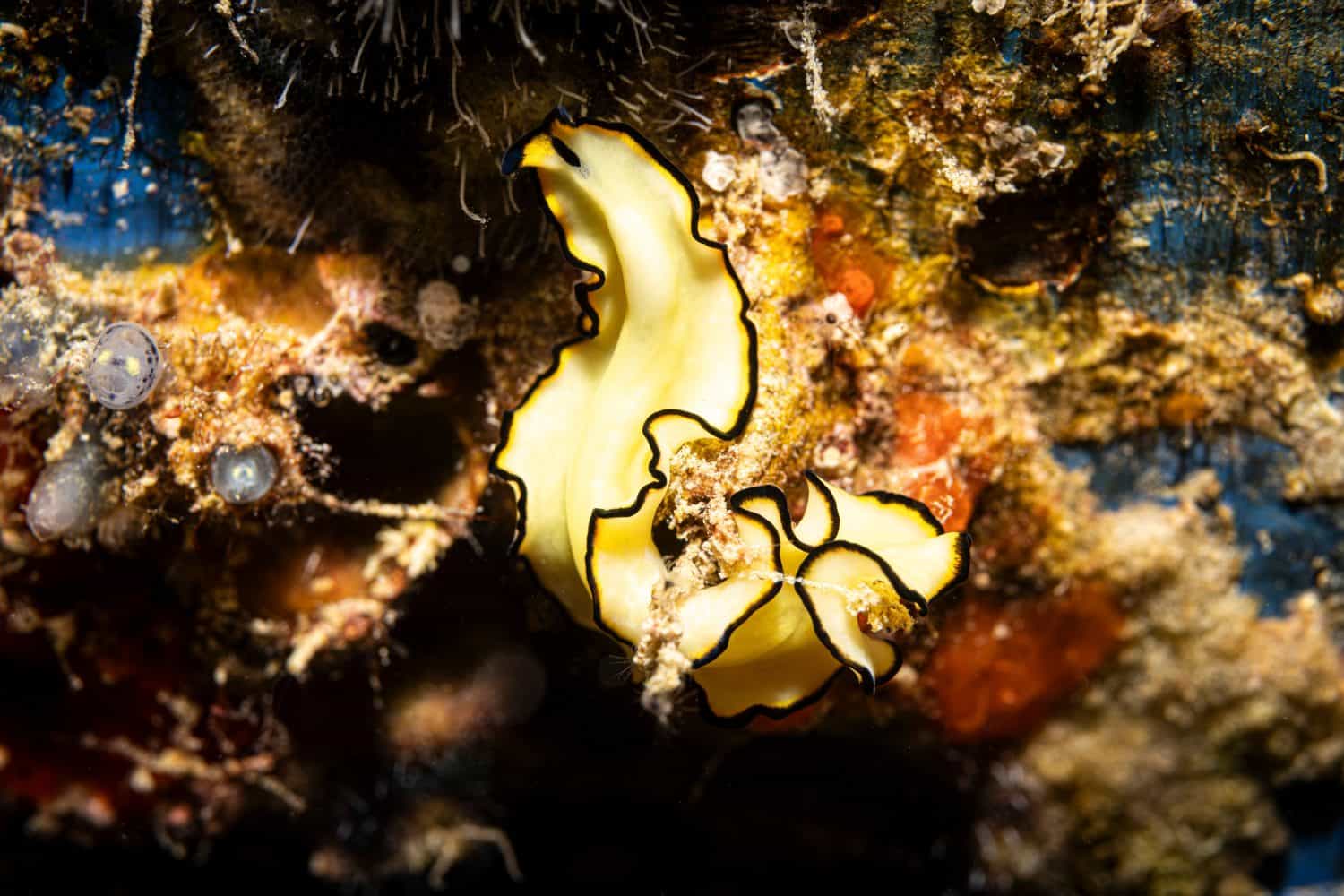
A yellow flatworm traversing a coral reef.
©Travel Tips and Stories/Shutterstock.com
Flatworm Mating
As seen in the video above, flatworms practice a style of mating known as hypodermic insemination or traumatic insemination. While this is well-documented in flatworms and bedbugs, traumatic insemination is also found, though rarely, in some species of spiders and snails. Although it is a brutal practice, the organisms that engage in it have evolved this way to avoid competition. It often comes at the cost of infection and tissue damage, making it a not-so-pleasant competition. This occurs in flatworms because they are simultaneous hermaphrodites, meaning that each flatworm has both male and female reproductive systems. Due to the energy required to produce and nurture eggs, the worms prefer to use their male reproductive role to avoid the responsibility of giving birth. As a result, the worms fight each other for the role of inseminator.
The video above shows this fight in action. Flatworms fight each other to avoid insemination. Whoever “wins” this fight can pass on their genes without bearing the responsibility of offspring, which is advantageous for them. This is known as a unilateral exchange, where only one worm succeeds in creating offspring. In other cases, a bilateral exchange occurs, meaning both worms are inseminated and both produce offspring. Because their goal is unilateral insemination, the worms’ fencing can last for up to an hour. This strange evolution has few benefits for the loser. While they experience bodily damage and incur greater energy costs, facing strong opponents means their offspring may be stronger. Although this behavior is unusual, it plays an important role in the flatworms’ ongoing evolution.