
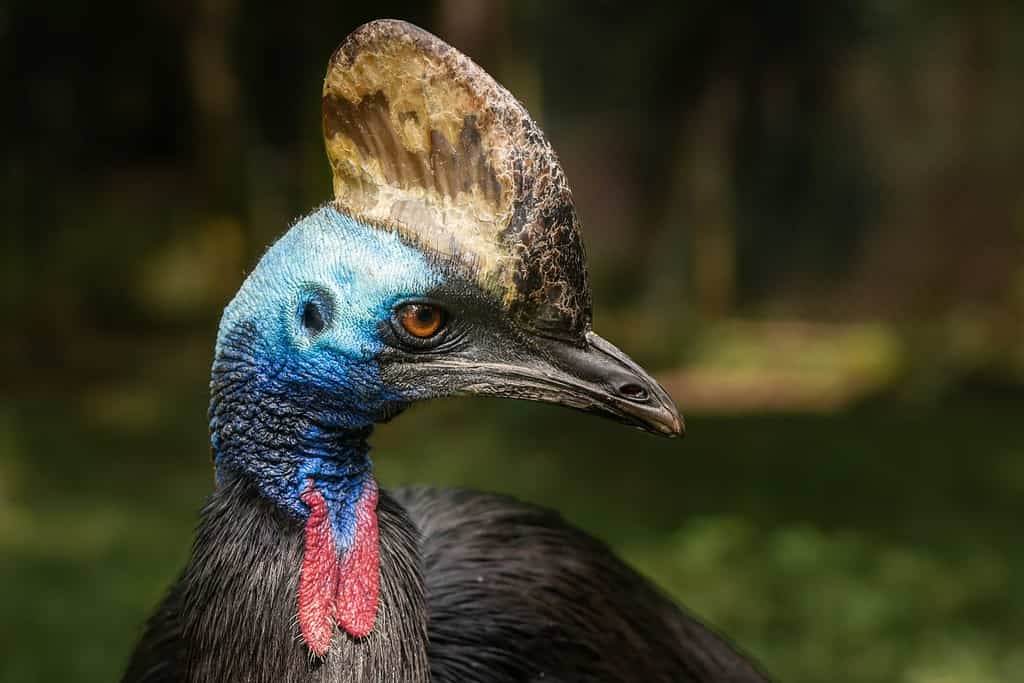
The cassowary is a strange-looking creature. This Australian bird is known for the odd helmet-like structure, called a casque, perched atop its head. For centuries, experts have been stumped as to the purpose of this bizarre feature.
In honor of World Cassowary Day on September 26th, we’re unraveling the mysteries of this unique bird — starting with the casque. Could it be for protection against predators? Is it used in mating rituals? Or, could this hard-headed bird just be sporting the most unique hat in the animal kingdom? It seems scientists may now know the answer, and the answer is “none of the above.”
The Strange Nature of the Cassowary
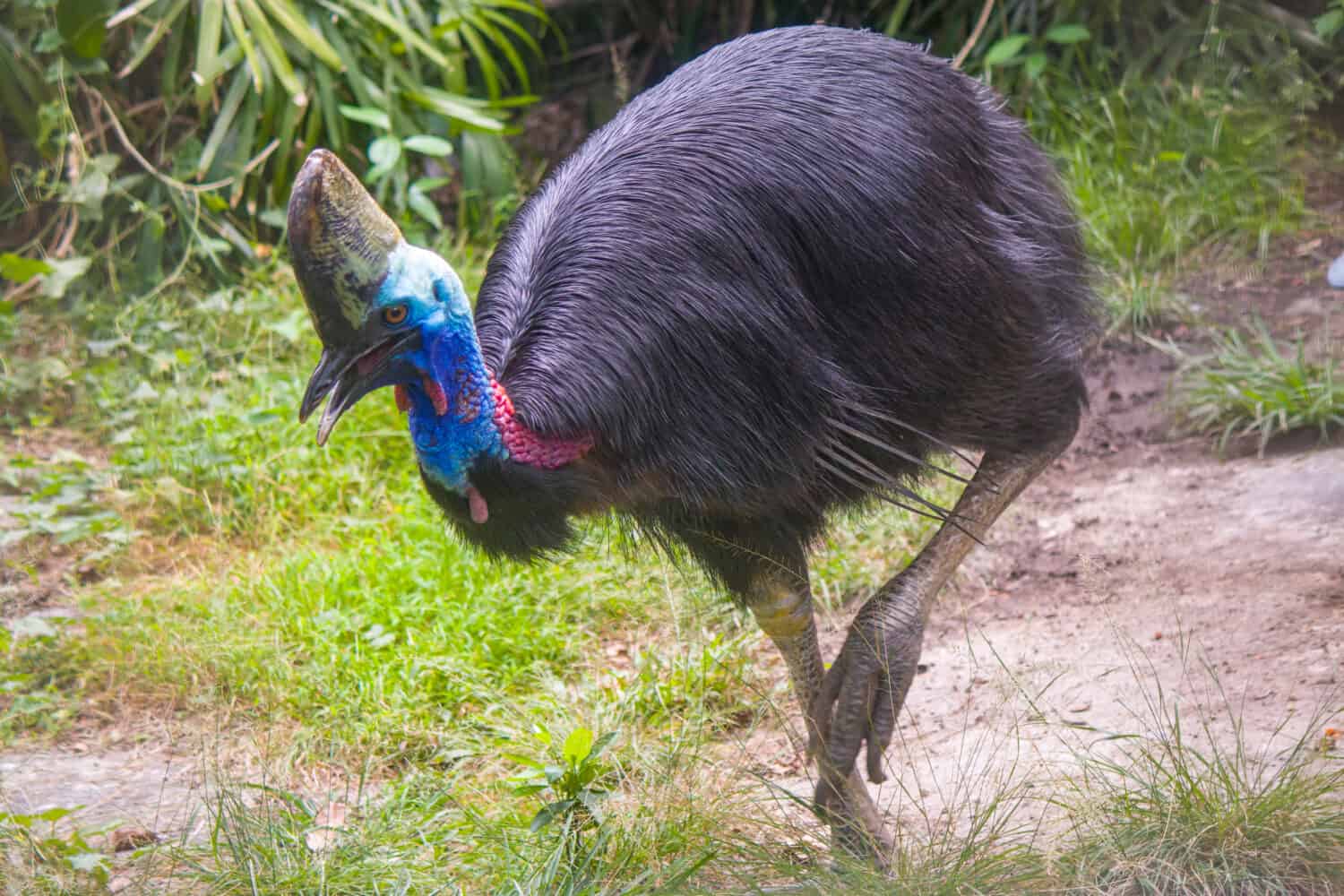
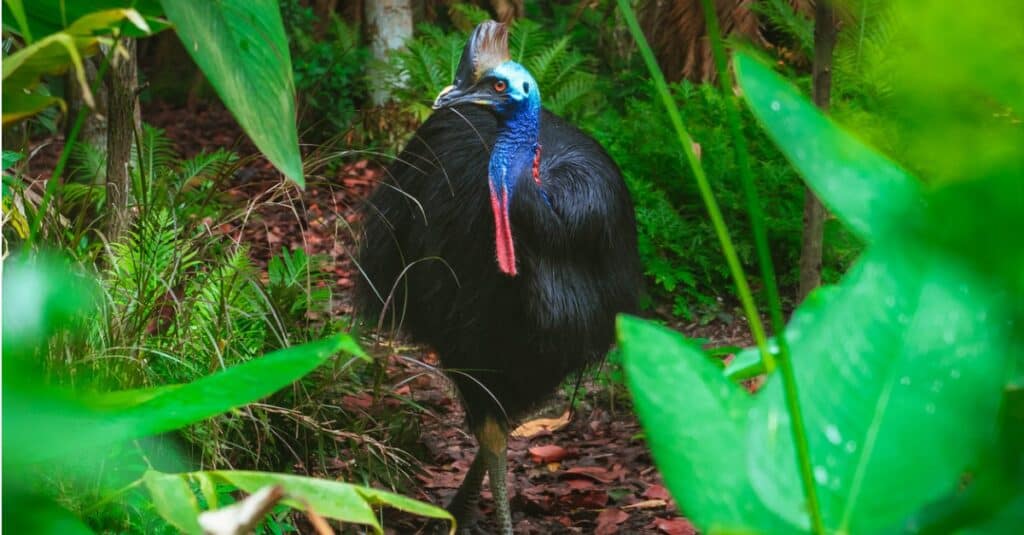
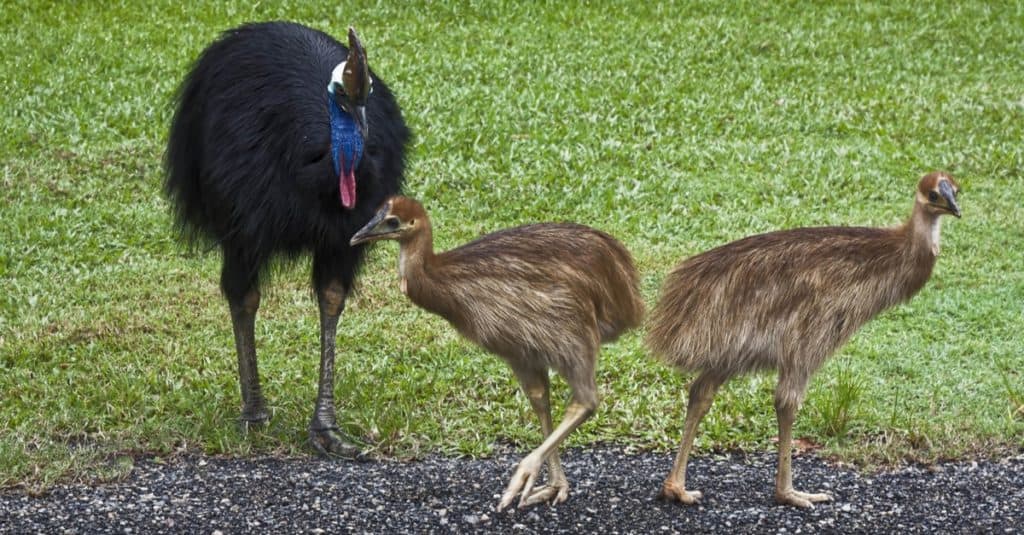
The cassowary is easily recognized first by its vibrant coloring. Its neck is bright blue, while its body is covered in black feathers. It has a bright reddish-orange wattle, similar to that of a turkey. A cassowary is typically around 5.6 feet, and can weigh upwards of 150 pounds. This makes them a formidable contender against potential predators, and even humans. Their pointed beaks and sharp talons make them even more intimidating. Cassowaries are not inherently aggressive, but they won’t hesitate to protect their young or their nests.
©Honza123/Shutterstock.com
The flightless bird’s most powerful attribute is its legs. It can jump seven feet into the air and evade predators with grace and speed. Cassowaries have been clocked running up to 31 miles per hour, making them nearly as fast as a car. This is not a bird any human would want to run into, let alone fight. The last cassowary-human fatality was in 2019; however, incidents are rare. Because of this, it’s easy to believe the casque on top of the cassowary’s head is used for self-defense. However, it serves a very different purpose.
Cassowary Casque: Mystery Solved
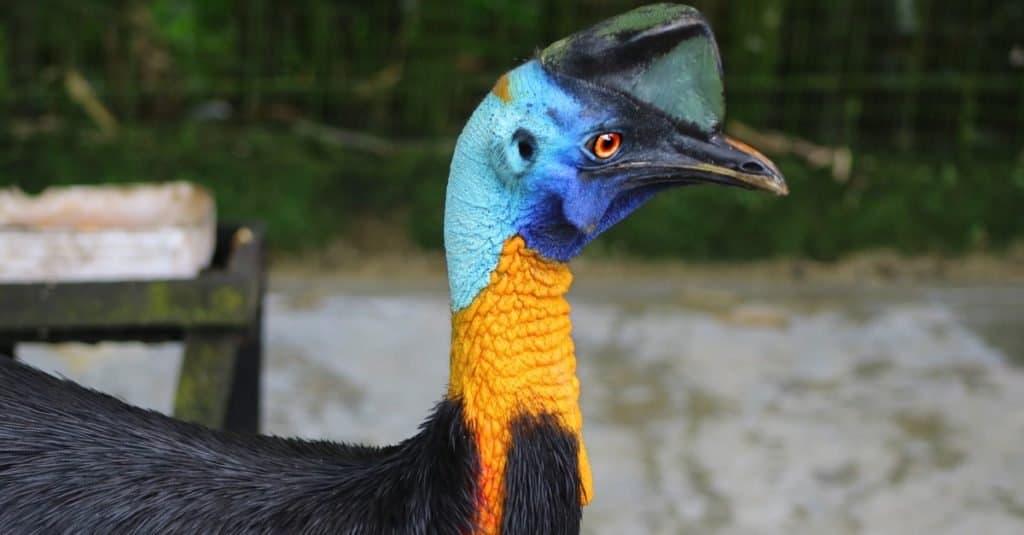
Cassowaries might be the world’s most dangerous birds, but their casques have nothing to do with their reputation. Their dinosaur-like appearance actually serves a more practical purpose. The casque is made up of keratin. This is also what makes up a horse’s hooves, and can be found in bird feathers and human hair. A scientific study published on Nature.com in 2019 finally solved the mystery of the cassowary’s casque. Rather than being a protective measure in birds, keratin is used in temperature regulation.
©iStock.com/Henry Soon
For a dark-colored bird like the cassowary, temperature regulation is essential. It lives in a tropical climate characterized by high temperatures and humidity. Therefore, the ability to maintain its internal homeostasis is crucial. Experts were curious enough about this to test the theory that a cassowary’s casque can regulate its body temperature. The study focused on 20 cassowary birds and how their casques responded to different ambient temperatures. By the end of the study, it was determined that the casque responds to temperatures based on the needs of the bird.
Casswary Casque: A Highly Adaptive Internal HVAC System
Besides keratin, the casque contains blood vessels that serve the cassowary’s circulatory system. These blood vessels dilate or constrict depending on the area they serve. In cold weather, blood vessels constrict, which keeps the cassowary warm. As blood remains in the casque, its head becomes the epicenter of its heat source. In warm weather, the blood vessels in the casque dilate. This allows blood to circulate freely, with cooler blood replacing warm blood within the casque.
©RonnyDesign/Shutterstock.com
Scientists have also determined that the casque heats up in sections, rather than all at once. Heat starts at the back of the cassowary’s casque and works its way to the front. According to Aubuchon, this is because each section is connected to a different part of the circulatory system. However, this has not been confirmed yet.
Studying the Cassowary Is Challenging
In the wild, cassowaries lead relatively long lives. They can also live up to 50 years in captivity. While this is good news, it also makes studying them a challenge. To study the casque further, scientists need a freshly deceased specimen. Since these are difficult to come by, it still leaves many questions unanswered about the cassowary’s casque.
©electra/Shutterstock.com
With further studies, scientists might be able to draw connections between the cassowary and its earliest living ancestors. The familial connection between the cassowary and pterosaurs could reveal more about how these dinosaurs lived. Since birds are the closest living relatives, the cassowary’s casque could reveal more than just thermal regulation. Some experts also believe the cassowary might be capable of more with its unique casque. It has been compared to the toucan, whose beak is structured in the same way as the cassowary. While the toucan uses this to peel fruit, experts believe the cassowary may also use its casque in more ways than one.