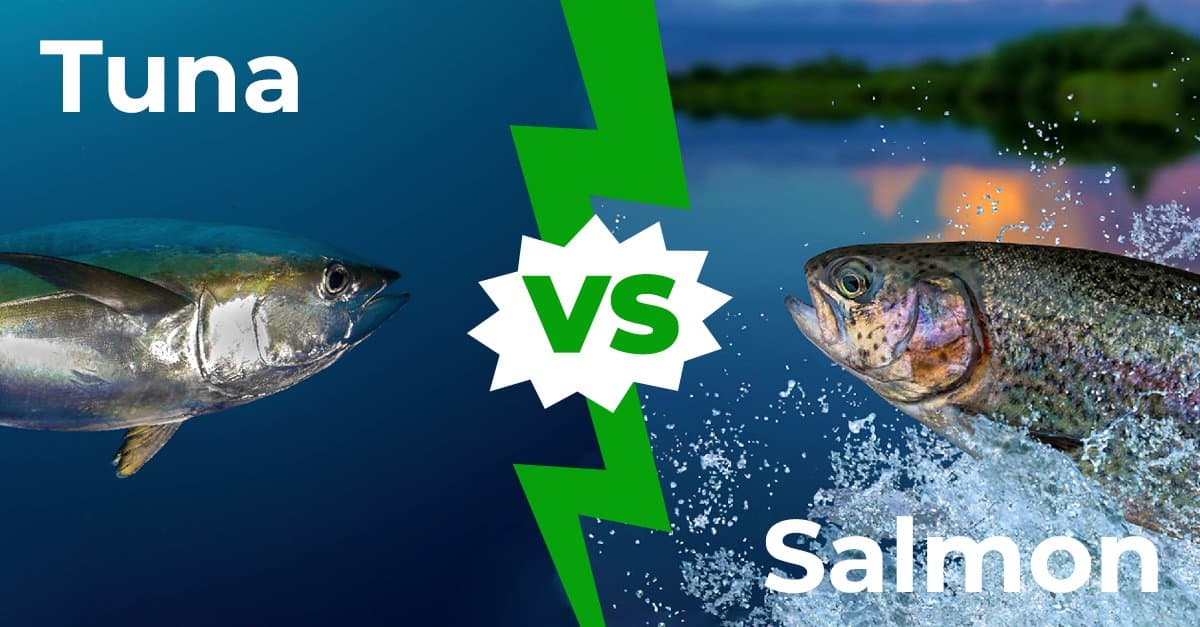

Tuna and salmon aren’t the same kinds of fish, but one tends to come up in a conversation about the other. Many people have opinions on both, whether they’re prepared fresh, canned, or frozen, and whether they’re farmed or wild-caught, as they’re widely available. They are both carnivorous, fatty fish with a strong flavor and firm texture.
It turns out you can tell them apart in both appearance and flavor, and there are unique recipes for each in addition to one being a substitute for the other. Let’s explore what sets these fish apart from each other now.
Comparing Tuna vs. Salmon

Tuna has crescent-shaped tails, while salmon has forked tails.
©Guido Montaldo/Shutterstock.com
| Tuna | Salmon | |
|---|---|---|
| Habitat & distribution | Saltwater; tropical & temperate around the globe | Fresh and saltwater; Atlantic & Pacific oceans |
| Body | Sleek, round body, round head, 2 dorsal fins, 7-10 yellow fins to tail, crescent-shaped tail, blue dorsal & whitish/silvery ventral, many spots | Long, slender body, angled head, forked tail, rayed fins, scarce spots |
| Size | Bullet 1.6 ft & 4 lbs to Atlantic bluefin 15 ft & 1,508 lbs | Pink 2 ft, 6 in & 15 lbs to Chinook 4 ft, 11 in & 135 lbs |
| Taxonomy | Thunnini tribe of the Scombridae family | Family Salmonidae |
| Commerce | Twice as much sold as salmon in the U.S.; 5/8 species | Expensive; considered a delicacy; 6/7 species |
| Cuisine | Raw, spread, soup, sandwich, cured, smoked, steamed, grilled, baked | Raw, spread, sandwich, brined, cured, smoked, steamed, grilled, baked |
| Nutrition | Protein; lower calories, fat, cholesterol | Omega-3 fatty acids, vitamin D, vitamin B12, calcium |
| Flavor & Color | Lean, oily, meaty, dark; dark pink when cooked | Rich, oily, moist; pink or orange with soft bones; pink or whitish when cooked |
The 6 Key Differences Between Tuna and Salmon
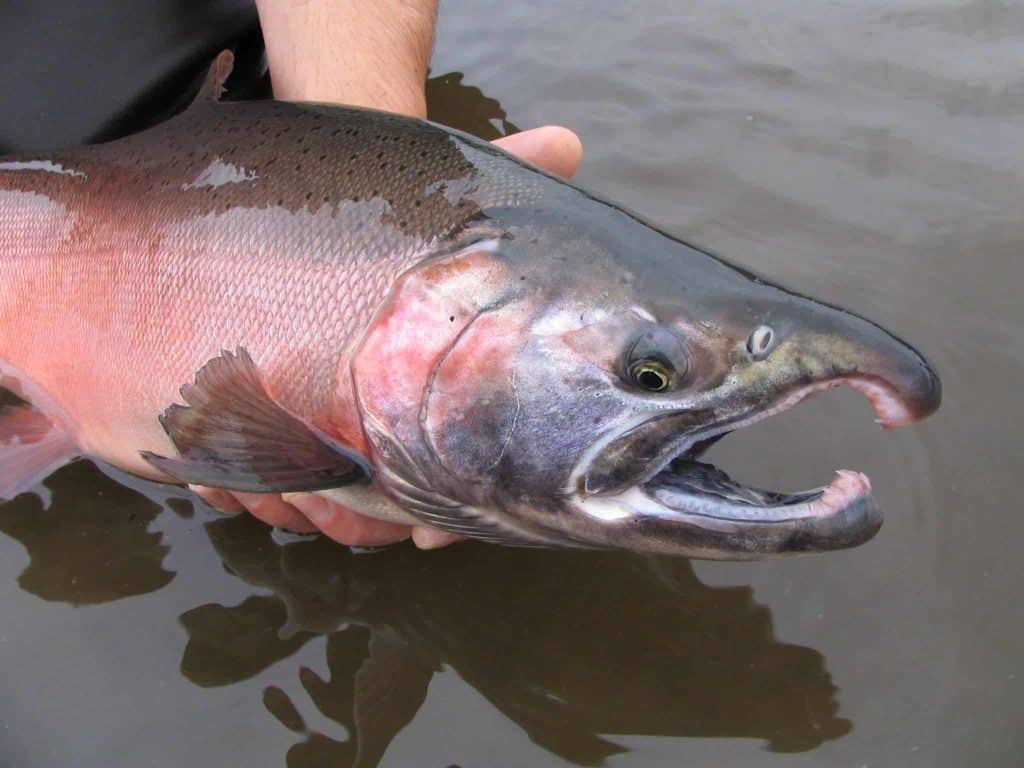
Tuna inhabits solely salt waters, while salmon inhabit both salt and fresh water.
©United States Fish and Wildlife Services / Wikimedia Commons
There are many distinct and notable differences between tuna and salmon. These fish have different habitats, appearances, and nutritional breakdowns for culinary purposes, alongside other differences. Let’s highlight the details of these differences now.
1. Habitat & Distribution
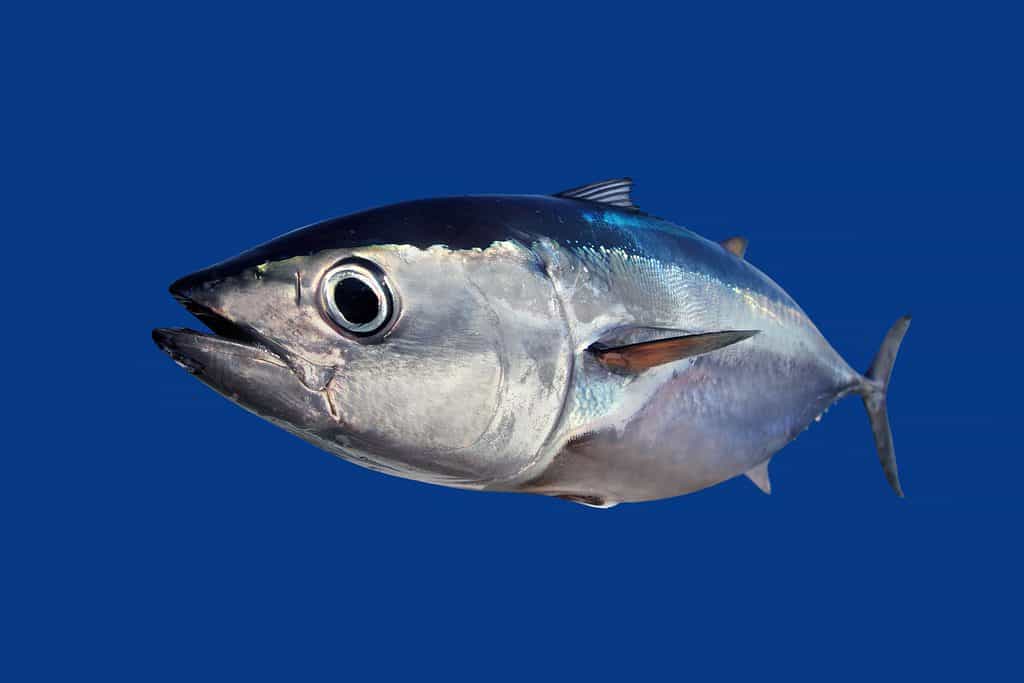
Tuna tends to be heavier than salmon overall, though this depends on the species.
©lunamarina/Shutterstock.com
Tuna and salmon overlap in the Atlantic Ocean. But tuna is found in tropical and temperate salt waters around the world, and salmon inhabits both salt and fresh water in the Atlantic and Pacific Oceans. Tuna is more common, but salmon is more popular for recreational fishing.
2. Physical Appearance

Salmon and tuna come from different scientific families.
©Evan Linnell/Shutterstock.com
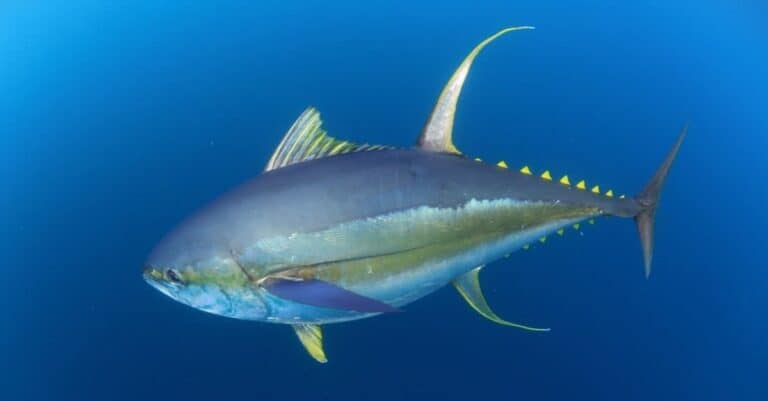
In a comparison of tuna vs. salmon, it’s fairly easy to tell the two fish apart. The tuna has a sleek, round body compared to the long, slender body salmon have. Tuna has a round head instead of the salmon’s angled one, and many spots instead of few or none at all. It has a crescent-shaped tail rather than a forked one and tends to be longer and heavier than salmon.
3. Taxonomy
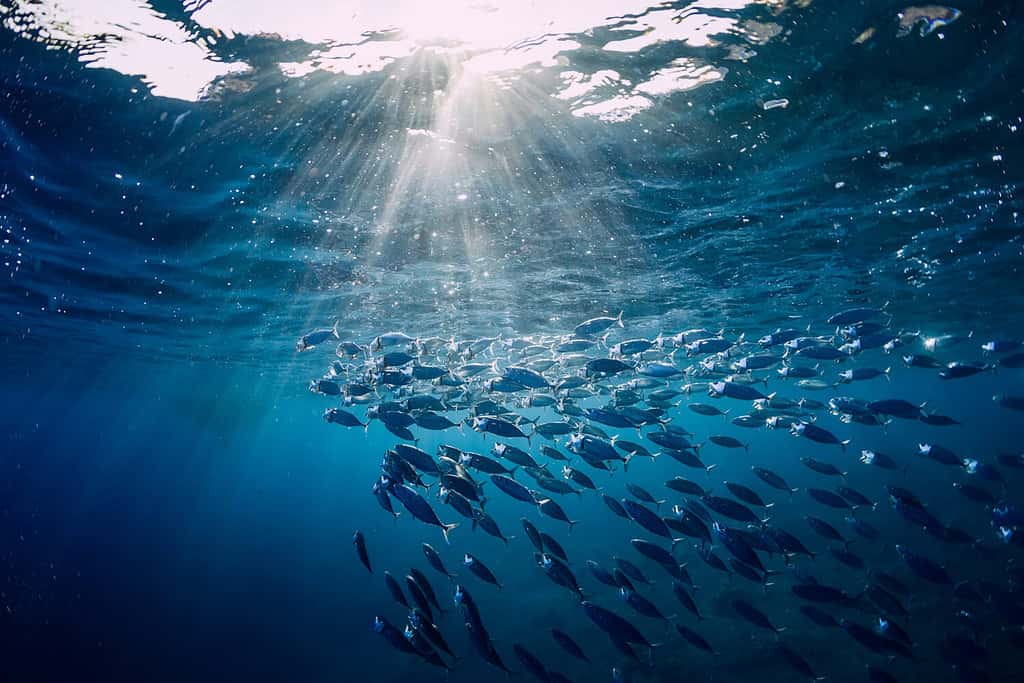
The round body of the tuna helps distinguish it from the more slender, beaked salmon.
©Wonderful Nature/Shutterstock.com
Tuna is a bony fish in the Scombridae family along with mackerel and bonito. Salmon is a ray-finned fish in the Salmonidae family along with trout, freshwater whitefishes, chars, and graylings. Both are in the class Actinopterygii of ray-finned fishes, a subdivision of bony fishes.
4. Commerce
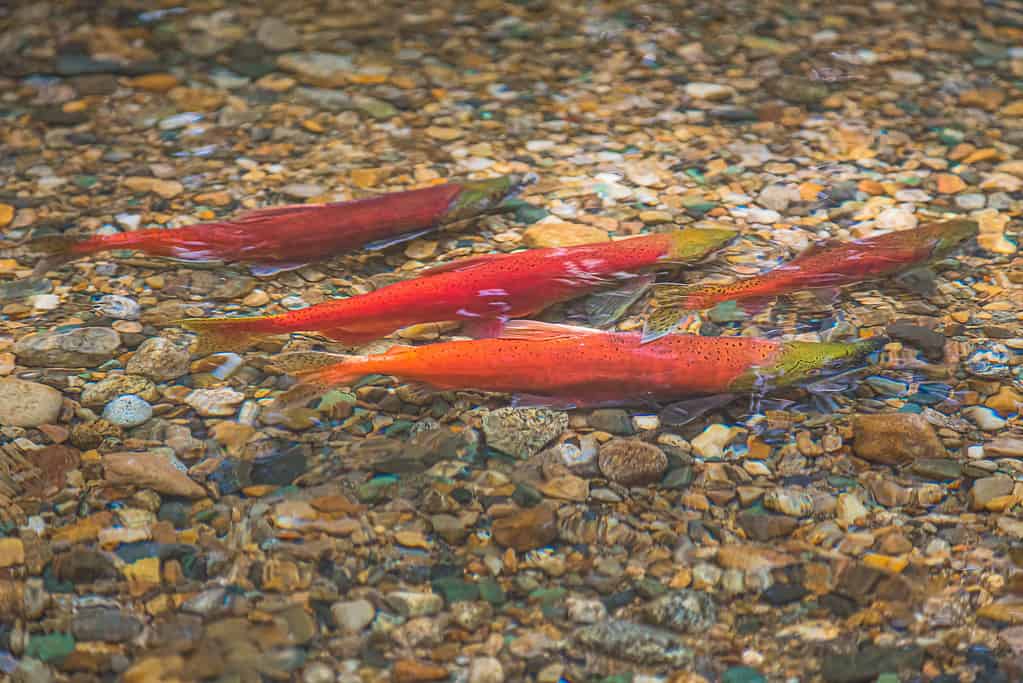
There are differences in the nutritional content when comparing salmon and tuna.
©StephenBridger/iStock via Getty Images
In the United States, twice as much tuna is sold as salmon. 5 out of 8 species are most important for recreational and commercial fishing: Skipjack, yellowfin, bigeye, albacore, and bluefin. Salmon is considered a delicacy and therefore commands a higher price in any form, while 6 out of 7 species are most important for commerce: Chinook (King), Coho (silver), pink (humpback), red (sockeye), salmo salar (Atlantic), silverbrite (chum or dog) salmon.
5. Nutrition
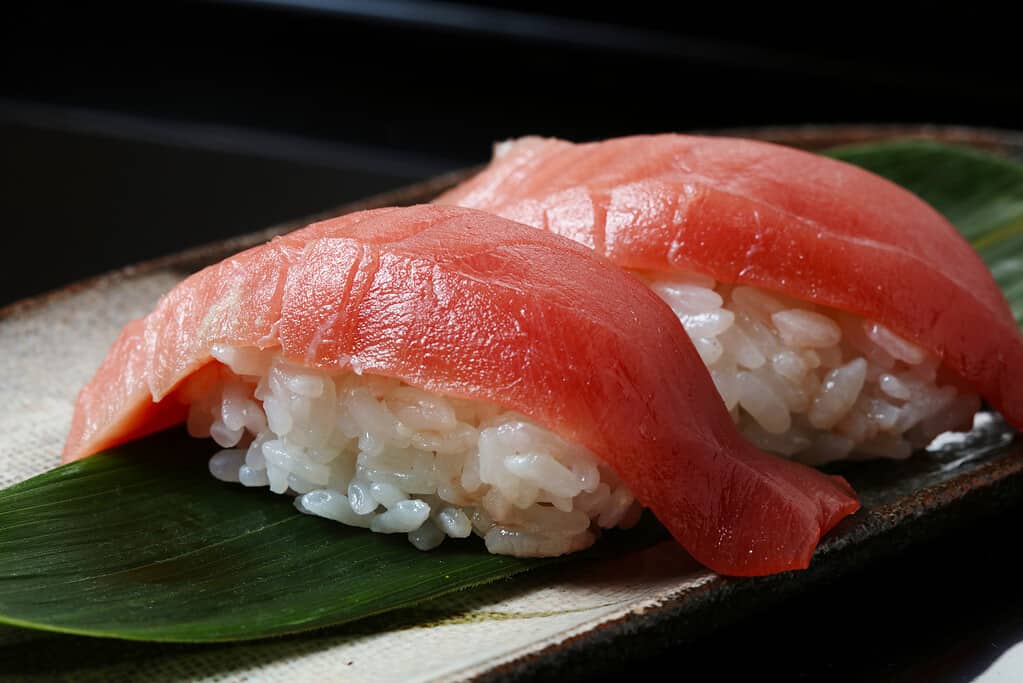
For the most part, tuna is a leaner fish compared to salmon.
©iStock.com/key05
Tuna is higher up on the food chain and consumes smaller fish that may be contaminated with mercury and other heavy metals, so limiting tuna intake due to mercury concerns is sensible. There are some important differences in nutrients, though, especially if you’re seeking to fulfill certain dietary needs. Tuna is a leaner source of protein, containing more protein and being lower in calories, fat, and cholesterol. Salmon has more omega-3 fatty acids, important antioxidants which neutralize free radicals. It is high in vitamin D and vitamin B12 and because of its soft, digestible bones, is also a good source of calcium.
6. Flavor
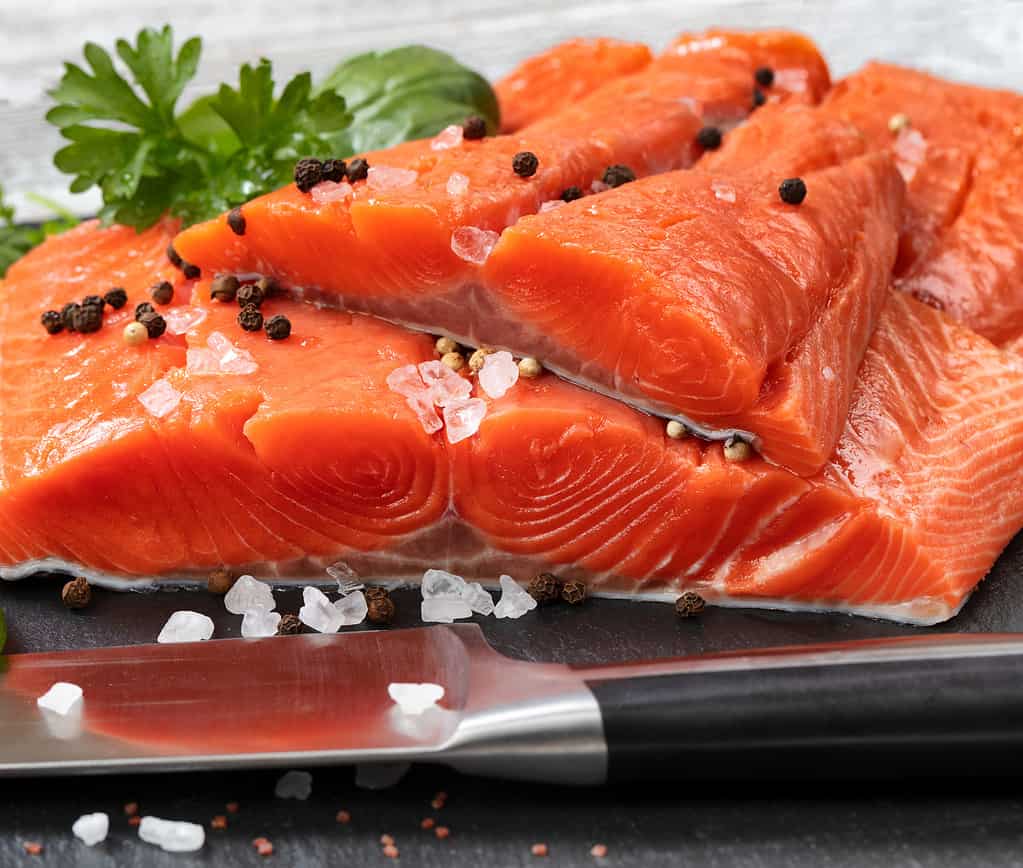
More tuna is sold in the United States compared to salmon.
©tab1962/iStock via Getty Images
The nutritional differences are very evident in the unique flavor of each fish. Tuna is a lean protein with higher iron and has a coppery, meaty, oily taste with dark meat that turns dark pink when cooked. Salmon is a fattier fish with an oily, moister, richer taste with orange or pink meat that turns pale pink or whitish when cooked.