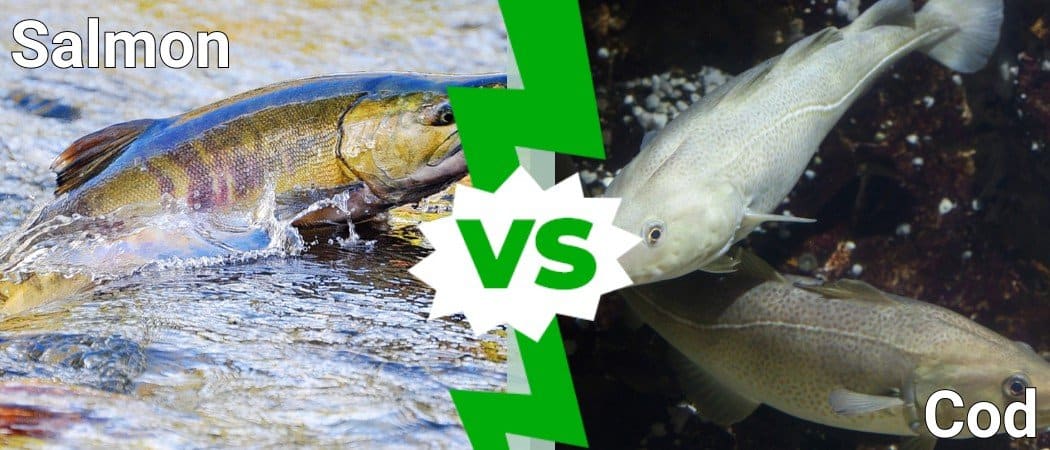

Salmon (Salmonidae) and codfish, commonly called cod, are among the most prevalently consumed seafood in the world. Both fish are valued for their flavor as well as their nutrition, and salmon and cod are among the most widely eaten fish globally, particularly in the Western world. There are 5 key differences between these two fish, including their size, shape, color, habitat, and culinary uses. Continue reading to learn more about what sets the fish apart.
Size
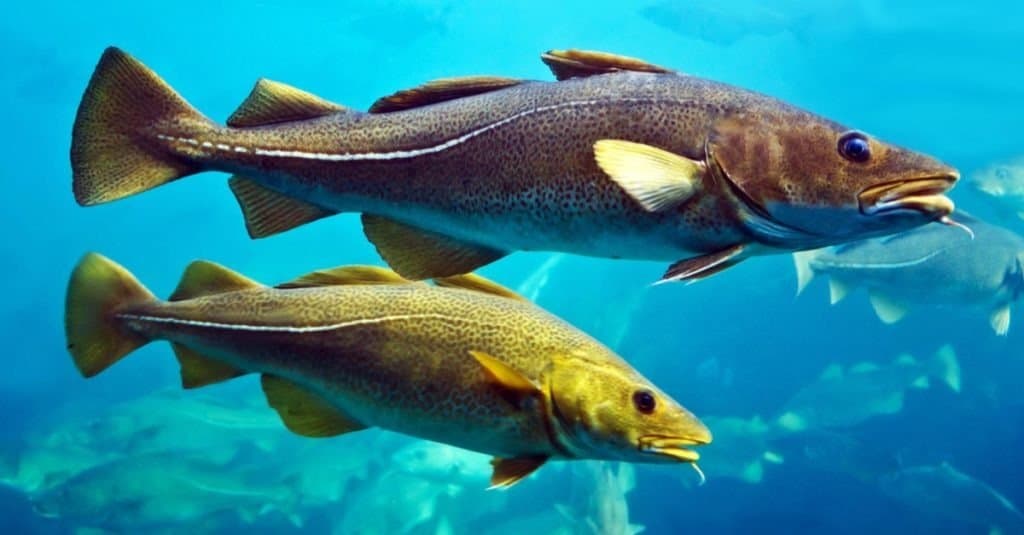
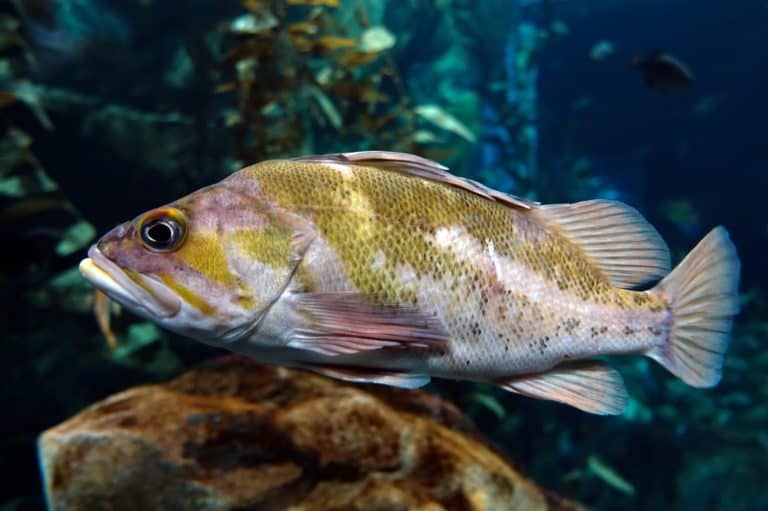
Cod are larger than salmon and are known for their speckled pattern
©Travel Faery/Shutterstock.com
There are eight recognized species of salmon: seven Pacific species contained in the genus Oncorhynchus (Chinook, Coho, Chum, Pink, Sockeye, Masu, and Amago) and Atlantic salmon (Salmo salar), the singular Atlantic species. These eight species vary significantly in length and weight, ranging from the small pink salmon (O. gorbuscha), averaging 20 to 25 inches long and weighing between 3.5 and 5 pounds, to the Chinook salmon (O. tshawytscha), which is between 24 and 36 inches long and weighs 10 to 50 pounds.
Cod is the common name for various demersal fish, including Atlantic cod (Gadus morhua), haddock (Melanogrammus aeglefinus), whiting, and grouper (Actinopterygii). The average size of cod varies significantly by species, but a common Atlantic cod measures between 2 and 4 feet long and weighs 10 to 25 pounds. Pacific cod are generally smaller, averaging 2 to 3 feet in length and around 15 pounds.
Shape
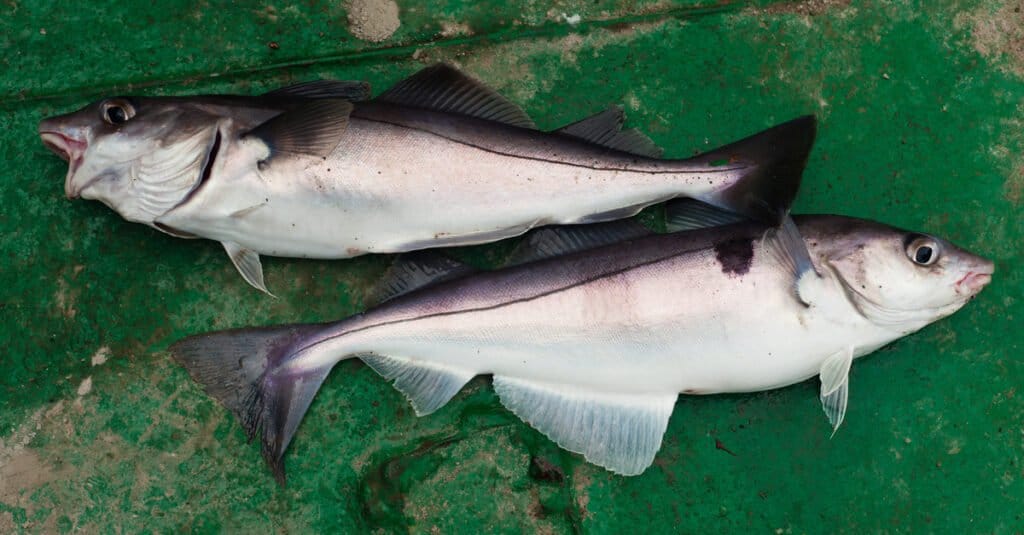
Haddock, sometimes known as cod, is often caught for culinary purposes.
©Solodov Aleksei/Shutterstock.com
Salmon have a torpedo-shaped body that is broad in the middle and tapers toward the head and tail. Their streamlined body allows for efficient movement through water. The salmon features a small head and a powerful tail fin for propulsion. During spawning season, a salmon’s shape can change, with males often developing a prominent hump on their back and a hooked jaw, called a kype.
Like the salmon, cod is considered a round fish, meaning they have a rounded, elongated shape, with eyes on either side of the head. Cods are easily identified by the three separate dorsal fins on their back and two anal fins on their underside. The cod has a broad, relatively large head with a blunt snout and a mouth where the upper jaw extends over the lower one. A prominent, whisker-like organ called a barbel hangs from its chin, which the fish uses to sense and locate food on the seabed.
Color

A Chinook salmon jumps up a ledge in the Ganaraska River as it swims upstream in the fall to lay eggs.
©John Fader/Shutterstock.com
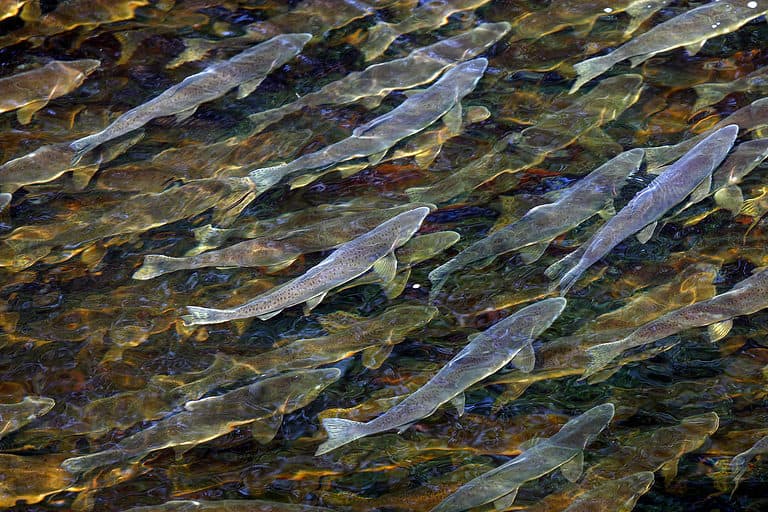
Salmon can be various shades of pink to deep red, with the exact color depending on the species and what it has eaten. While farmed salmon is often fed a pigment to achieve a pinkish or reddish color, wild salmon’s hue is a result of its diet, which can range from pale pink to a deep red. During the spawning season, some salmon species will change color. Chinook salmon, for example, darken and develop red on their bellies and fins. Many salmon species have spotted patterns on the tail and body.
Codfish come in a variety of colors, including grayish-green, olive-brown, and reddish-brown, often with darker spots on their back and lighter bellies. Some species, like the golden cod of Labrador, a genetically distinct population of Atlantic cod, can be golden-brown due to their diet, while others, such as black cod (Anoplopoma fimbria), are a dark gray or almost black color.
Habitat
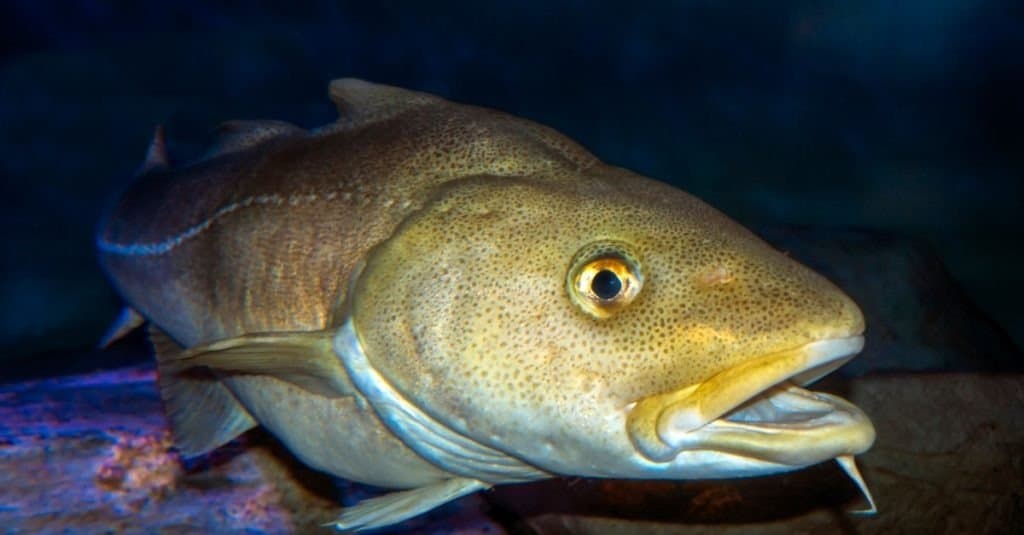
Codfish only live in saltwater
©Miroslav Halama/Shutterstock.com
Salmon can live in saltwater and freshwater, but cod can only survive in saltwater. All eight species of salmon are anadromous, meaning they are born in freshwater, migrate to the ocean to mature, and return to freshwater to spawn.
Most species of codfish spend their entire lives in saltwater. While they can tolerate a range of salinity levels found in coastal and brackish waters, they do not migrate to freshwater.
Culinary Uses
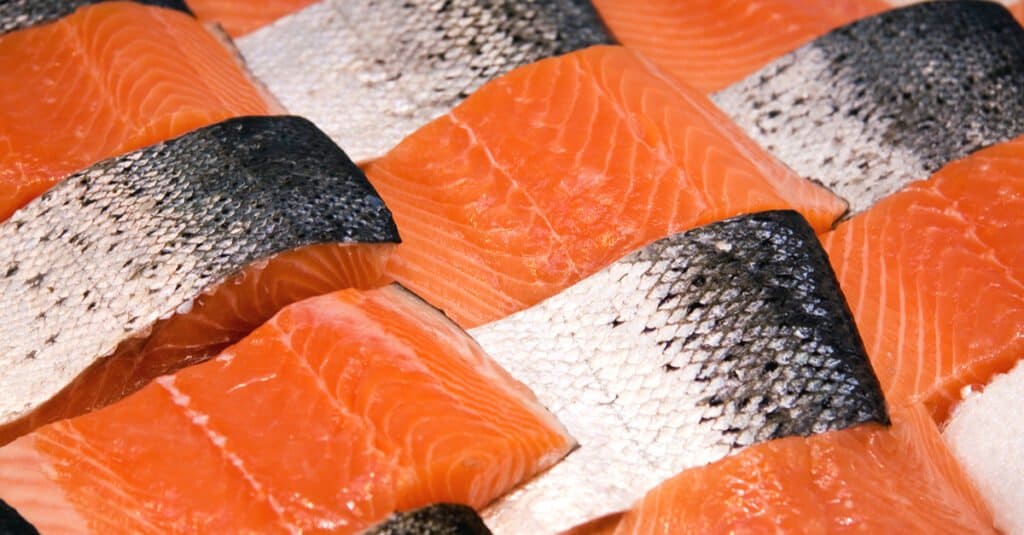
Most salmon fillets are pinkish when they are caught in the wild, but they are gray when raised in captivity.
©Jane Rix/Shutterstock.com
Salmon fillets are a pinkish-orange color, but cod fillets are a translucent white. Cooked salmon fillets will have an opaque exterior and a light pink interior when cooked properly, while cod will become more opaquely white. Farm-raised salmon have gray flesh because they are not fed krill and shrimp, which contain astaxanthin, the substance that gives salmon their pink color. Thus, farm
Fresh salmon fillets are known for being rich, fatty, and tender, and cod fillets are lean, flaky, and somewhat firm. Salmon is a rather oily fish, which makes it very good for use in certain recipes, like sushi and sashimi.