
Salmon are one of the best-known fish, but their complex lifecycle is not always appreciated. They are a native species of the North Pacific and North Atlantic, and the rivers that flow into these waters. North Atlantic salmon are a single species, aptly named the North Atlantic salmon (Salmo salar). In the North Pacific, however, there are several species, including the sockeye (Oncorhynchus nerka) and the chinook (Oncorhynchus tshawytscha). Here we will explain the whole salmon lifecycle. In general, salmon are anadromous, which means they start in freshwater streams and rivers and then migrate to the ocean before returning home to spawn.
Spawning
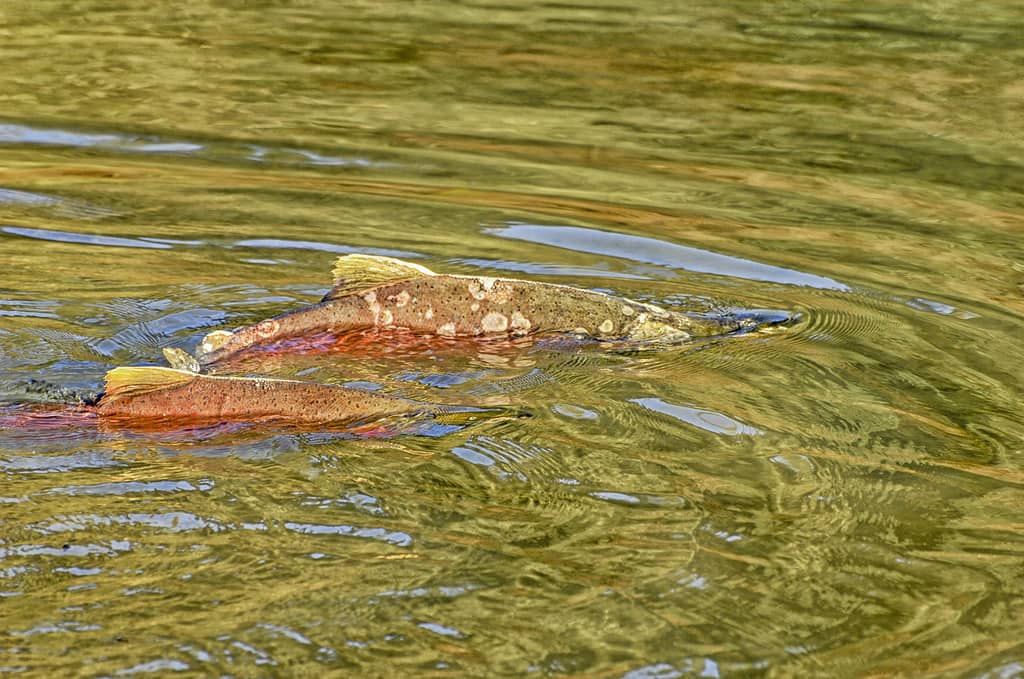
Many salmon die after spawning.
©cweimer4/iStock via Getty Images
Spawning is the very beginning of the salmon life cycle and is the process of releasing eggs and fertilizing them. This takes place in rivers, and these are often the very same rivers where the parents themselves spawned. The behavior is called homing, and salmon can do it by imprinting to the smell of the route they took from their spawning ground to the sea.
Spawning is usually between October and January, but can be earlier or later. However, the adult fish (especially older and larger individuals) may arrive in the rivers throughout the year.
The female releases pheromones, which indicate that she has used her tail to excavate a nest in the gravel in the riverbed (called redds) and is preparing to spawn. Both attract the males to the redds and prepare their reproductive systems. Up to ten males may fertilize the eggs of a single female with their milt (sperm). The female covers the fertilized eggs with more gravel so they are protected from debris and predators such as eels and trout.
Spawning Challenges
Salmon have important requirements for spawning to be successful. The river water must be clean and well oxygenated, and the female needs a gravel bed (preferably in a headwater) in which to lay her eggs. Any contaminant in the water that affects the salmon’s sense of smell will make it hard for them to find where to spawn. They also affect the male salmon’s ability to detect the female’s pheromones. This includes river acidification, pesticides, endocrine disrupters, and industrial chemicals.
Ova
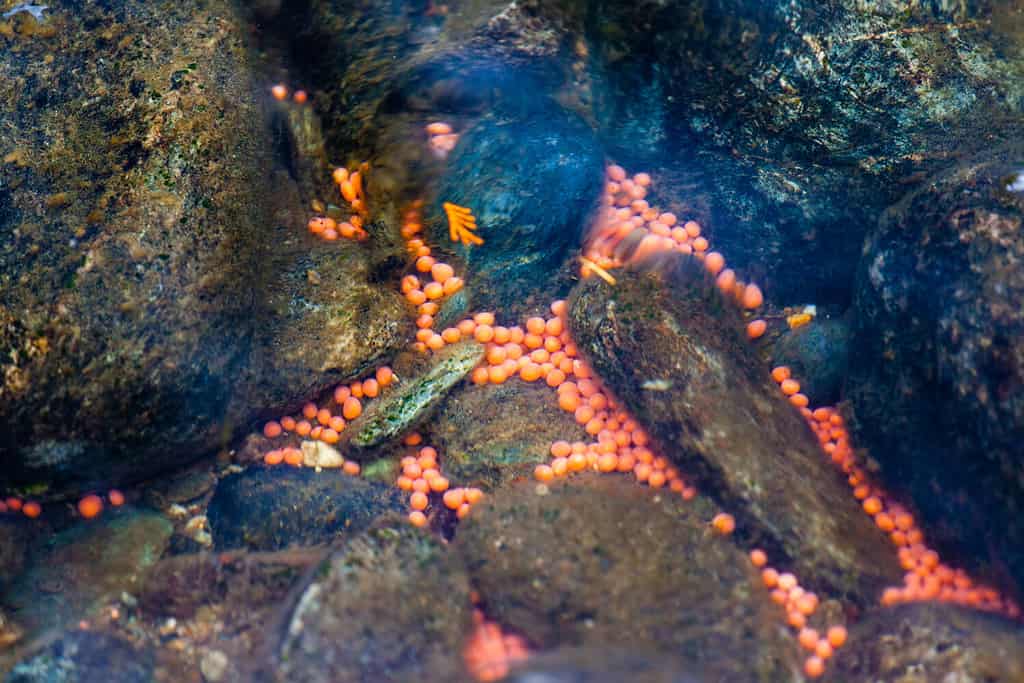
The female salmon will lay eggs in riverbed depressions that she has formed using her tail.
©Ronnie Chua/Shutterstock.com
The fertilized pea-sized eggs are called ova, and they start to develop at a rate that is primarily controlled by the water temperature, oxygen, carbon dioxide levels, and species. In general, chinook eggs hatch at around 12 weeks, but coho salmon hatch at around 6-7 weeks. Burial depth, the composition of the gravel, and the river flow also play a part. Larger females will deposit as many as 17,000 ova each, but as few as 1 percent of them will survive. A group of eggs is referred to as roe. The eggs vary in size; for example, sockeye salmon eggs are around ¼ inch in diameter, but chum salmon eggs are closer to half an inch in diameter. Tiny eyes will become visible, and the yellow yolk sac will be consumed. Eventually, the young salmon will break out of the egg as alevins.
Alevin
Alevins emerge from the eggs when they are no longer reliant on their yolk sac. Now, they need to start feeding. The timing of spawning is such that the alevins emerge just when there are increasing food supplies in the river. At first, the alevins have the yolk sac still attached to their bodies, but it is absorbed as they become more active and work their way through the gravel. Once they are strong enough, they head to the surface and take a gulp of air that fills their swim bladder. This is called the swim-up, and they need to do this to remain buoyant and hold their position in fast-flowing streams. Sockeye salmon spend around 3-5 weeks as alevins, but chinook salmon only spend around 2-3 weeks.
Ova and Alevin Challenges
If climate change causes more frequent storms, then buried eggs are at risk of being washed out. Also, the marked changes in temperature can affect the timing of emergence, causing the alevin to miss the nutrient peak. The extension of agricultural and forestry drainage can modify both the flow and temperature regimes of upland streams. Also, because the network of these streams is so extensive, they are exposed to a wide area of contamination with chemicals such as pesticides and heavy metals. Non-native species have also caused problems for salmon populations.
Fry
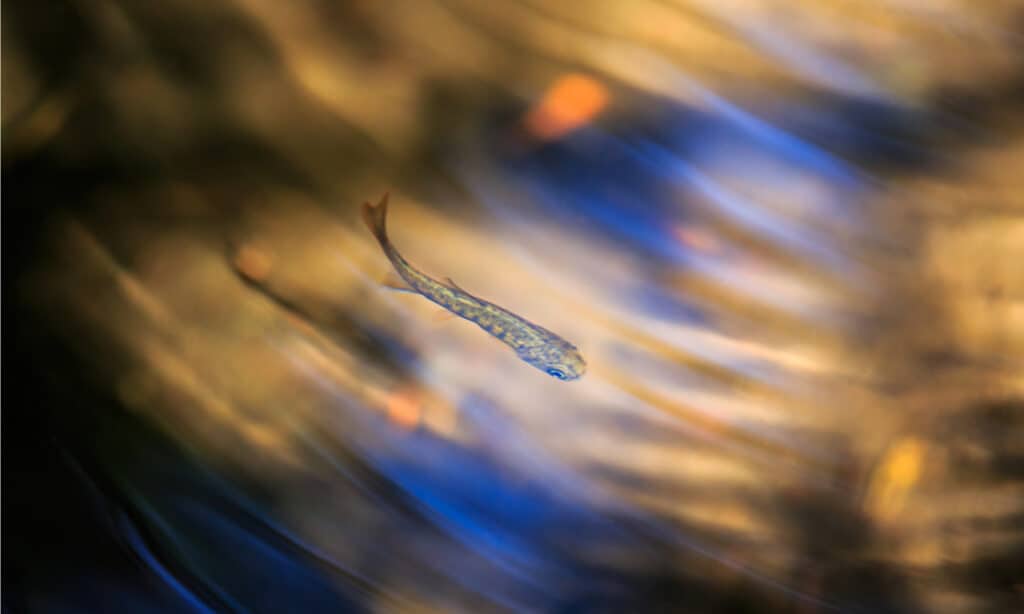
Salmon fry disperse at night.
©Kevin Cass/Shutterstock.com
Once alevins become free-swimming, they are called fry. They have eight fins and feed on microscopic invertebrates. Pacific salmon fry average 1-2 inches in length. This is a critical period in the salmon lifecycle, and many of them will not survive it. They disperse from the redds at night, which helps them to avoid predators. Salmon can use both visible light and infrared vision, so low visibility is not a problem for them.
Behavior at this stage varies by species. Once they are strong enough, pink and chum salmon head directly to estuaries. Chinook fry stay a few months in freshwater streams. Coho fry stay in the streams and rivers for 1-2 years, and sockeye for up to four years.
Also, this is the stage where the young salmon start to establish their territories, which give them access to resources. The first fry to arrive in a location gets the first choice, and this enhances their chances of survival.
Fry Challenges
Anything that affects the timing of the dispersal of fry can reduce survival rates. Low-intensity artificial lights can do this. The extension of forestry and agriculture exposes the streams to contaminants such as pesticides, and these can affect fry survival.
Parr
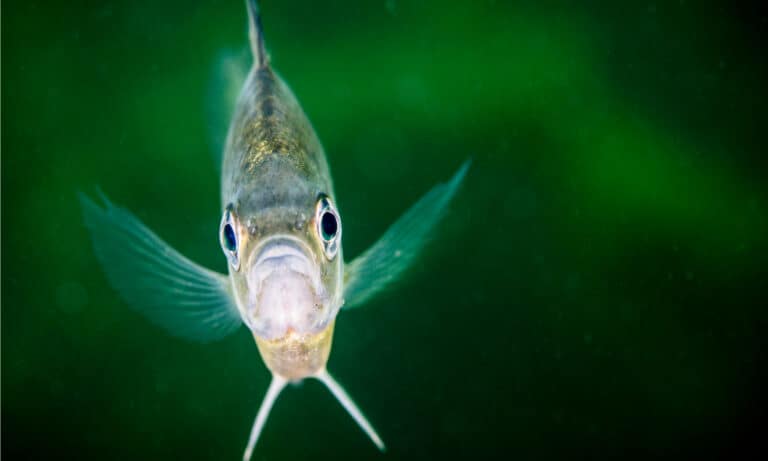
Once feeding territories have been established, the young salmon are referred to as parr, and their aim is to grow as quickly as they can. They develop vertical stripes and spots, which help with camouflage, but exact markings vary with species. They also have an acute sense of smell and feed on aquatic insects as well as larvae and even the eggs of other fish. Growth rates are dictated by temperature and food availability. What’s more, factors that affect the health of parr go on to determine survival rates later in the lifecycle. Some fry join together in a group (a school) to get more protection from predators. They also become experts in hiding under rocks and logs.
Parr Challenges
Parr growth rates increase with temperature until they reach an optimum at around 60 to 66 degrees F. After that, the fish becomes stressed and heads for cooler waters. Therefore, as climate change warms up our rivers, it puts more stress on these fish. Human activity also affects the amount of food available for parr.
Smolts and Migration
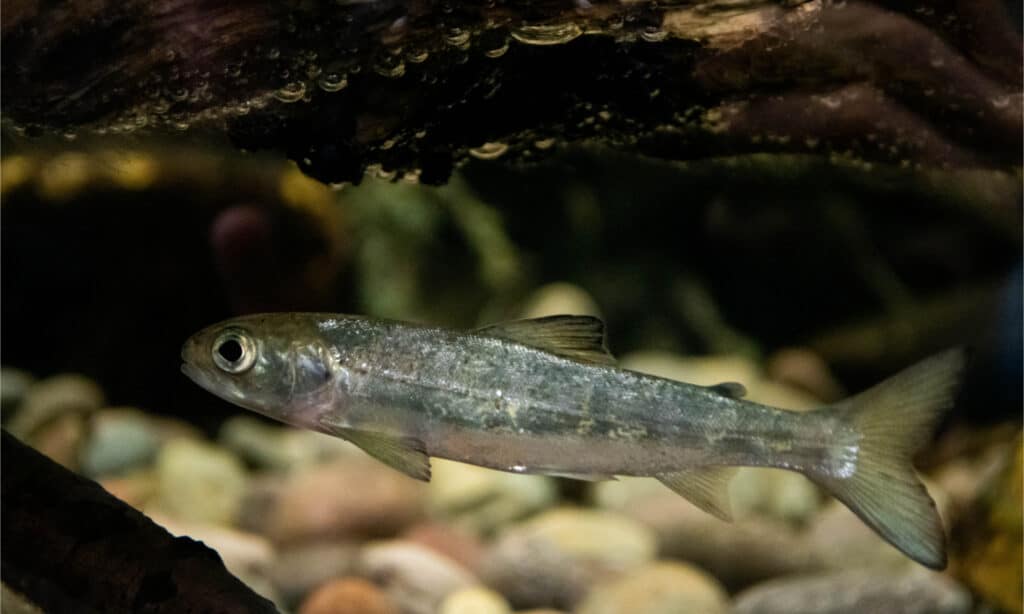
Young salmon are called smolts after they turn silvery and migrate to the ocean
©jack perks/Shutterstock.com
Smoltification is the name given to the physiological and morphological changes that juvenile salmon undergo to get them ready for living in the sea. Smolts develop a silver coloration to protect them from predators. Once they reach the estuary, sockeye salmon head straight out to the ocean. Other salmon species, however, spend a few months getting used to the saltwater. Salmon that live in freshwater need to keep salts in and get rid of extra water, but at sea, they do the opposite – keeping water in and getting rid of extra salt! At this time, they feed on smaller fish, insects, mollusks, and crustaceans. They tend to enter the sea at night, under the cover of darkness, to avoid predators. The ‘post-smolts’, as they are then called, continue to migrate rapidly to their oceanic feeding grounds.
Smolt Challenges
The timing of smolt migration is critical as it must happen when sea temperatures and food availability are best for survival and growth. Climate change can cause changes in both temperature and flow rates, which can affect the success of migration. Also, physical barriers such as weirs and barrages can block or delay their movement. Artificial light and noise can also disrupt this delicate process.
Adult Stage – Ocean
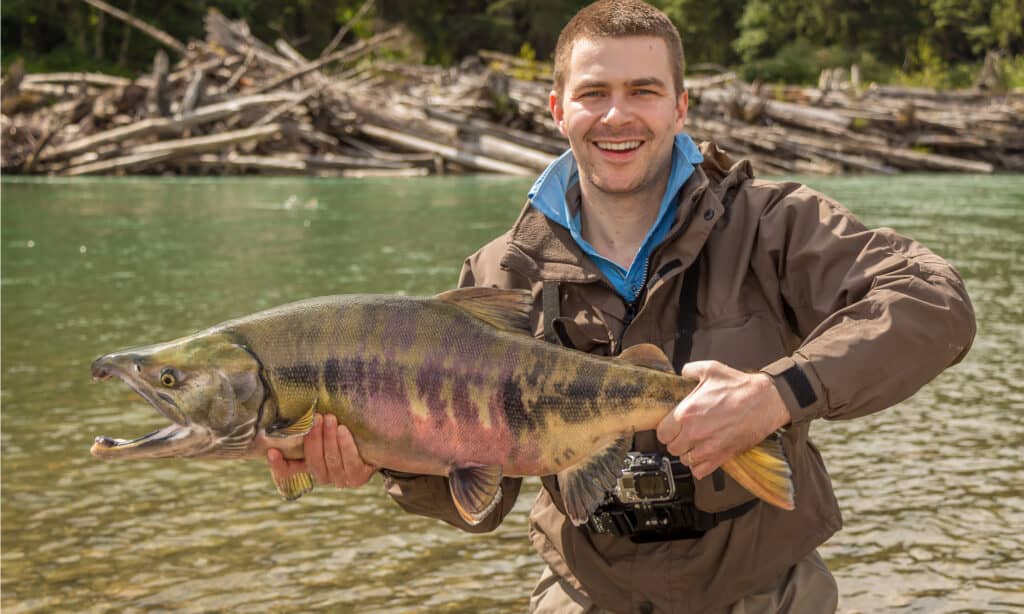
The chum is usually fished in the ocean since it doesn’t eat when it returns to spawn.
©SnapTPhotography/Shutterstock.com
Once Pacific salmon are in the ocean, they are primarily silver in color and are said to be in the post-smolt stage. They stay here as they grow and mature. Chinook salmon typically spend 1 to 6 years in the ocean before maturing, most commonly returning at 3-4 years old, though some may take up to 7 years. Pink salmon mature in two years. Atlantic salmon usually stay in the ocean for one or two years before returning to spawn. In the ocean, there is more food, and so growth rates speed up. At this life stage, the salmon eat other fish, invertebrates, and crustaceans, and will travel tens of miles a day to feed.
Adult Stage Challenges
Over the past 20-30 years, there has been a marked decline in the abundance of Atlantic salmon. This decline is due to a combination of factors, including increased natural mortality at sea, climate change, dams, overfishing, and pollution. Warming ocean conditions and changes in salinity and plankton productivity are thought to contribute to increased mortality. Climate change is also a major threat facing wild Pacific salmon.
Adult Spawning Stage
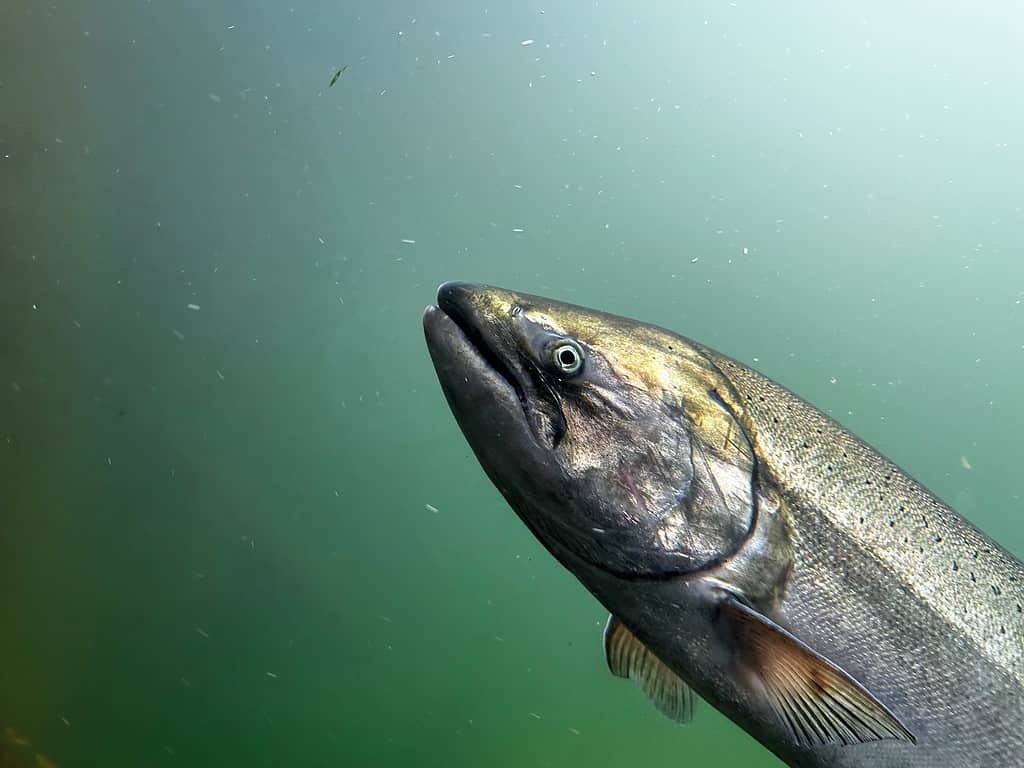
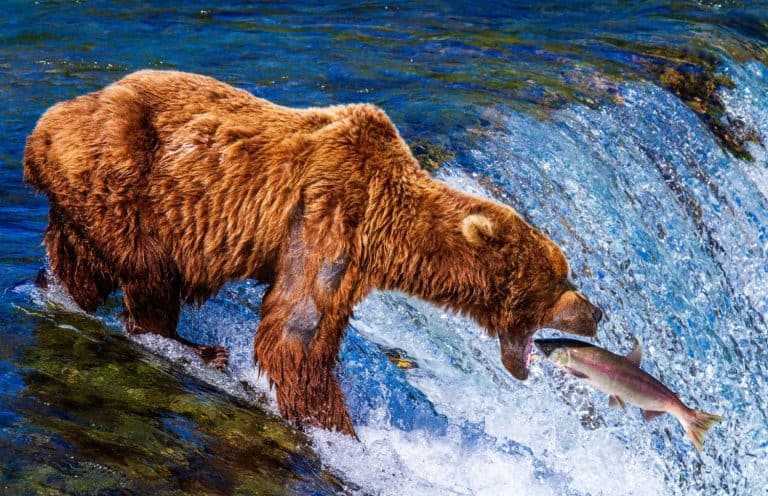
Chinook salmon can jump as high as 8 feet.
©Heather Ray/iStock via Getty Images
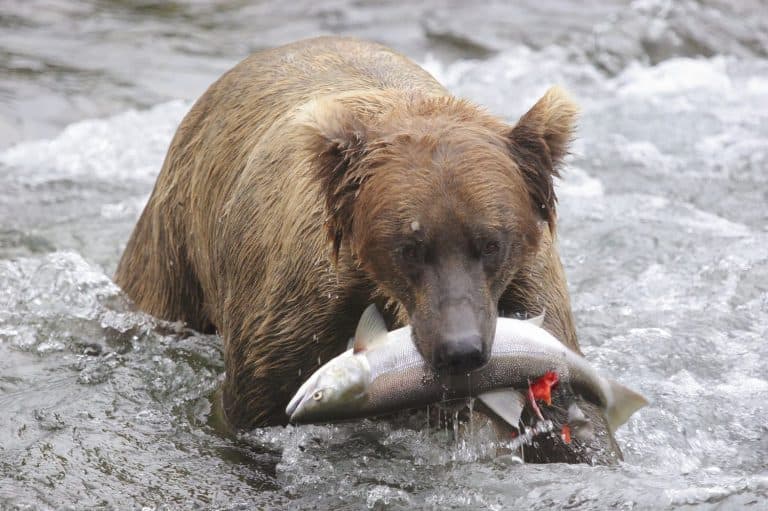
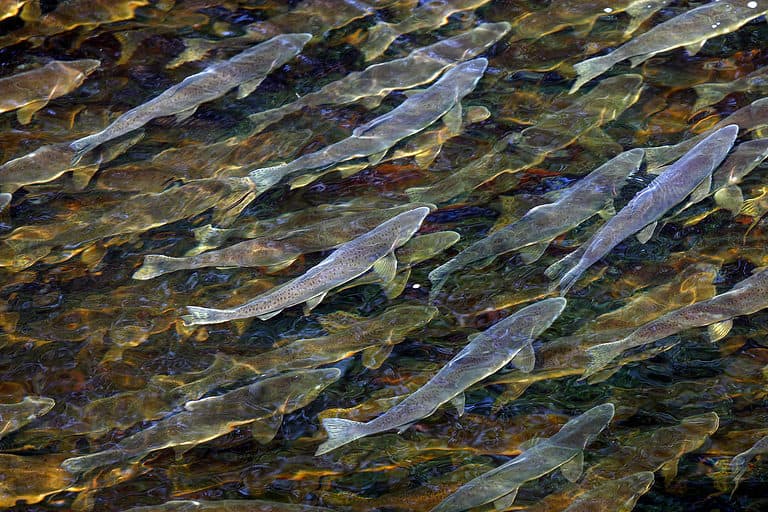
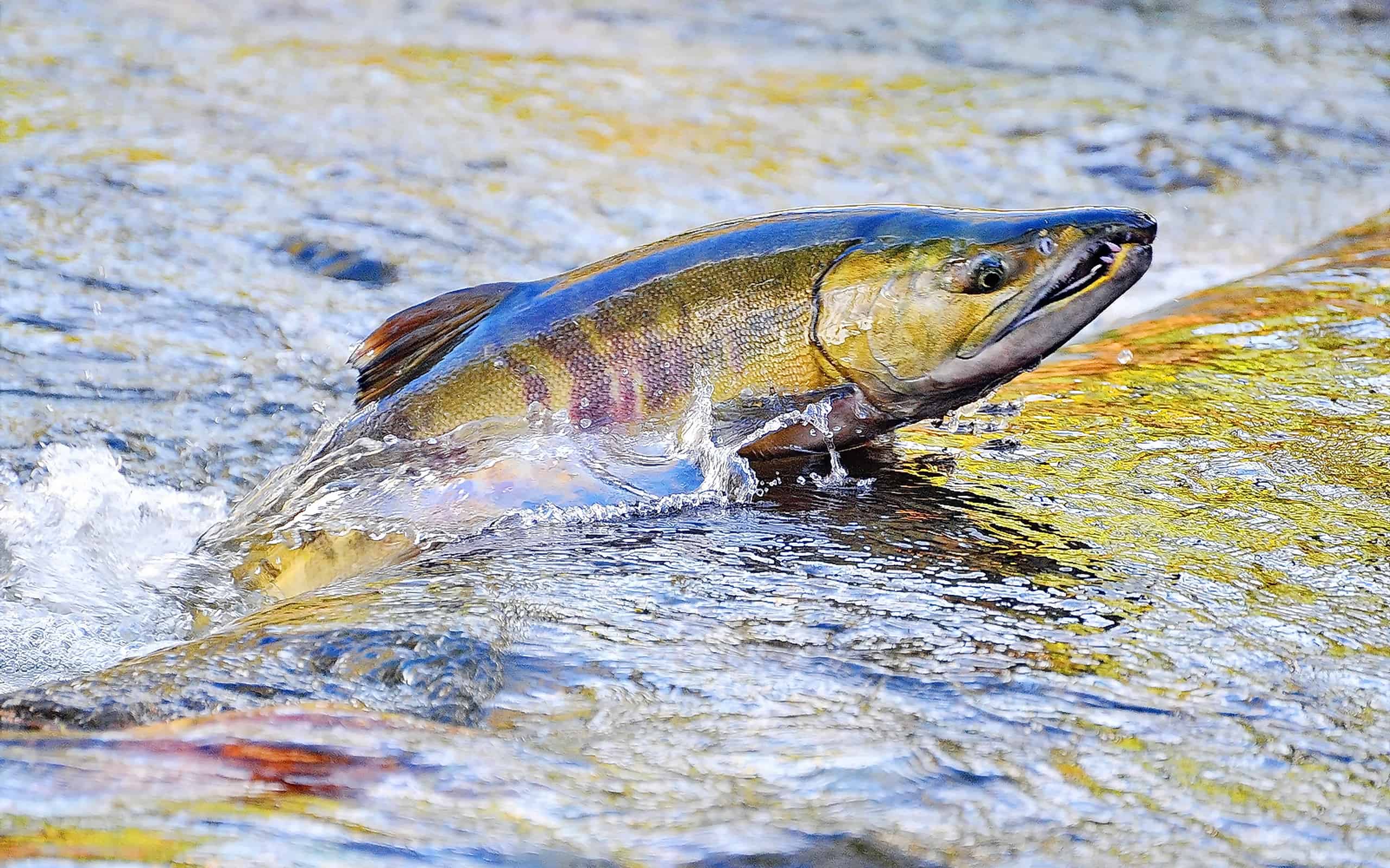
Adults return to freshwater to spawn and, depending on species, they change in color. In some species, the males also develop a hooded snout, a humped back, and elongated teeth. Once salmon leave the ocean, they do not feed. Despite this, some travel up to 1800 miles to reach the streams where they spawned. Chinook, coho, and sockeye can jump as high as eight feet to get over obstacles in rivers. All Pacific salmon die after spawning, and their bodies fertilize the aquatic habitat. Some Atlantic salmon (between 5 and 10 percent), however, do survive this process and are called kelts. Some return another two times to spawn before they die.
Adult Spawning Challenges
Water flow is the main environmental factor stimulating salmon to enter the rivers. They will often wait just off the coast or in the estuary until river flows are suitable. Also, once they are in the river, the final move from the pools to the spawning area is controlled by river flow and temperature. Climate change, therefore, poses a threat to upstream migration by altering flows and other river characteristics, including temperature. Water abstraction from rivers can also interfere with the timing and duration of the spawning migration. Migrating salmon also face other challenges to migration, which include physical barriers (such as weirs) and chemical contaminants.