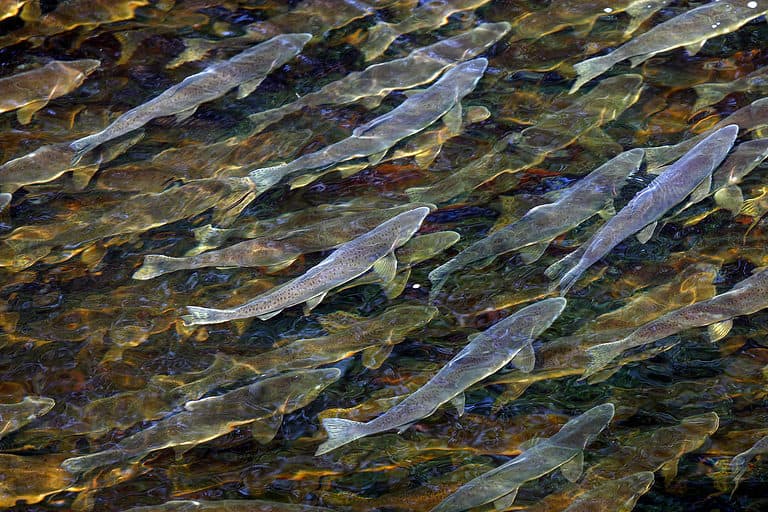
To become an adult, fish must develop through several stages. Each species of fish has its own timeline from hatching from the egg to spawning and laying eggs of its own. It is during the earlier stages that fish are at their most vulnerable. If they survive to adulthood, the chances of them completing their life cycle increase substantially.
For salmon, there are several of these vulnerable stages they must go through to reach adulthood. While it is often thought that the egg stage is when salmon are most vulnerable, eggs are relatively well protected, all things considered. It is the next stage, the alevin stage, where salmon are most likely to perish. But for the small percentage that make it through, development accelerates rapidly as salmon change from juveniles to adults.
What Are Alevins?
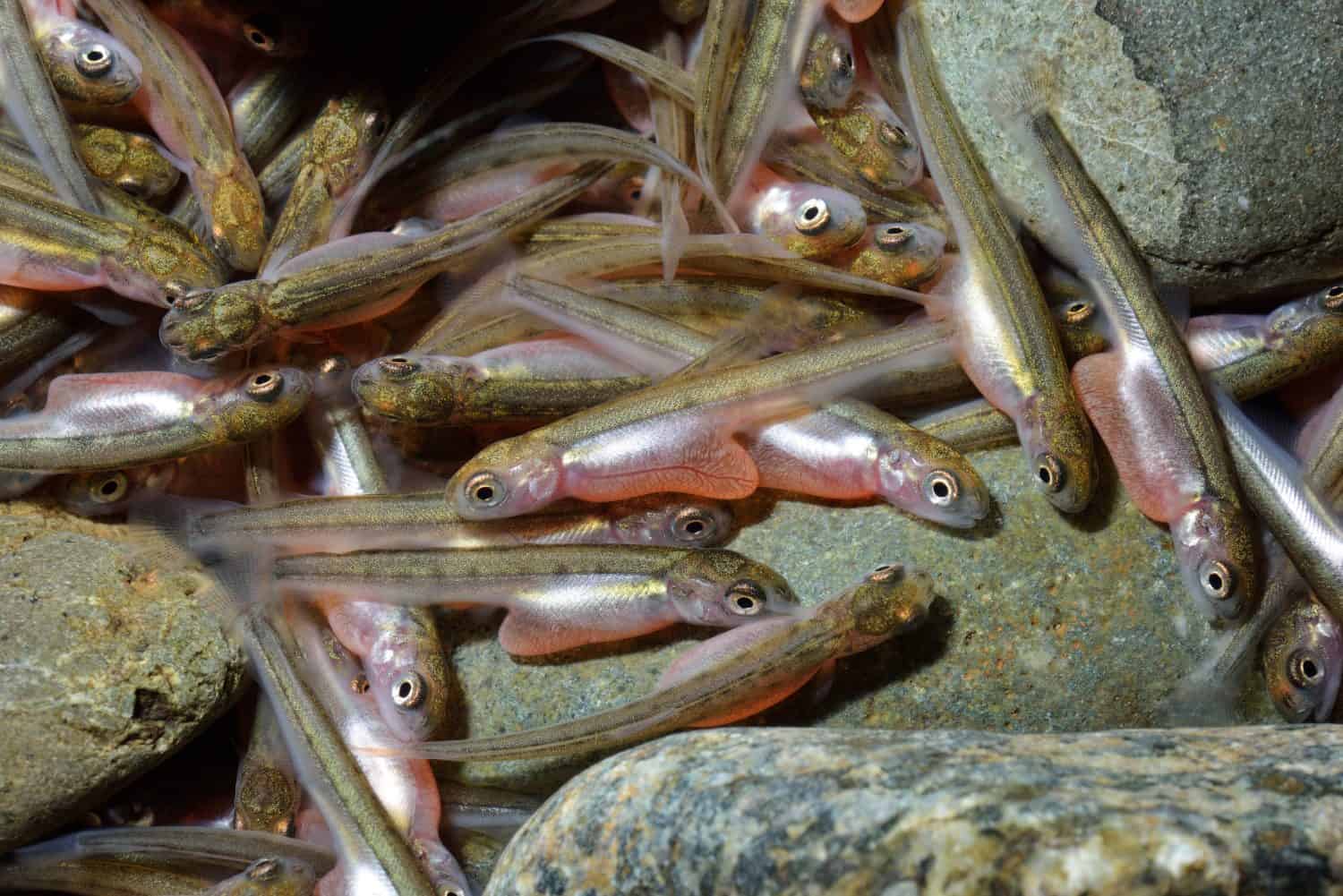
Alevin salmon will stay attached to their yolk sac after hatching to receive the nutrients they need to develop into fry.
©yamaoyaji/Shutterstock.com
As fish go through their life cycles, each stage has a name. For salmon specifically, one of the key stages in its life cycle is the alevin stage. The alevin stage is the period that occurs after salmon hatch from their eggs. During this stage of a salmon’s life, it remains attached to its egg yolk, as shown in this Instagram video. This is done so that the young salmon receive the necessary nutrients. The fish do not open their mouths to feed during the first few days after hatching. Consequently, if their egg yolks were not still attached after birth, the salmon would starve.
The term for this stage of salmon comes from the French word “alever.” Alever means “to raise offspring.” While the fish that lay and fertilize the eggs do not help the alevin as they try to navigate their watery environment, the young salmon do receive a form of nurturing by having built-in nutrition that helps them grow stronger.
Unfortunately, the egg being attached can make staying upright, swimming, and navigating difficult. Consequently, only 1% of salmon will make it to adulthood. Most salmon do not survive beyond the alevin phase for several reasons, including:
- Predation
- Water oxygen levels
- Water clarity
- Competition for resources
With the numerous factors stacked against alevins, it is no wonder so few survive. But those who do make it to adulthood will eventually return to the place where they hatched to start the salmon life cycle all over again.
Life Cycle of Salmon
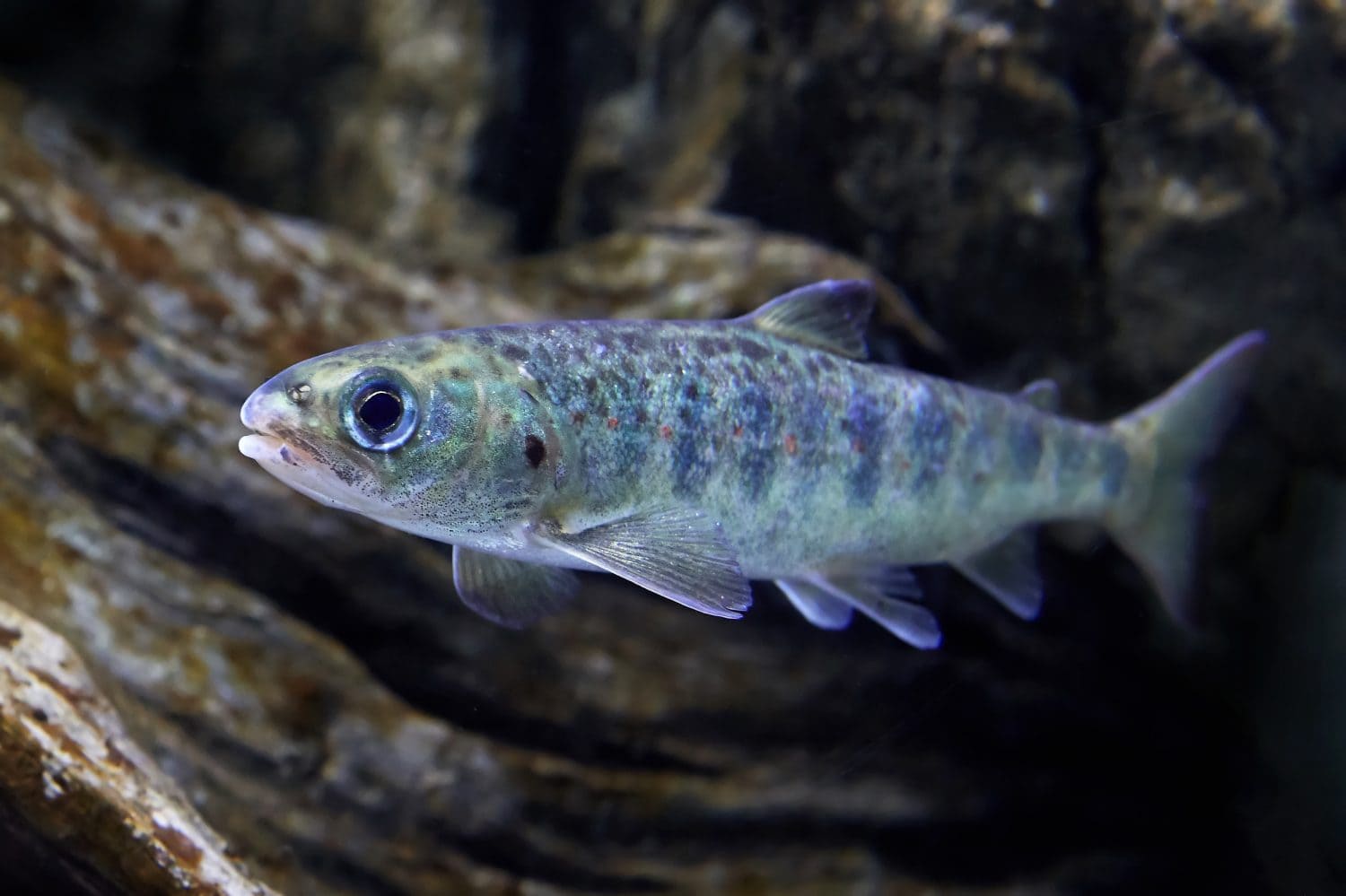
This juvenile salmon still has other stages to go through before completing its life cycle.
©Dennis Jacobsen/Shutterstock.com
The alevin stage is just one of the stages of the salmon’s life cycle. While only a very small percentage will make it past this stage, those that do must undergo many more phases before reaching maturity and beginning the life cycle for the next generation. The life cycle of salmon is divided into eight distinct stages. Those stages include:
| Life Cycle Stage | Duration | Explanation Of Stage |
| Eggs | Several weeks to months, depending on the species. | Eggs are laid in the gravel of their watery environment, where they will be protected from predators and fluctuations in temperature as the salmon develop. |
| Alevins | Three to four months. | Salmon use their yolk sac for nourishment as they grow into larger salmon. |
| Fry | Three to four months. | Fry will swim to the surface to gulp in oxygen, which fills their swim bladders and helps them remain buoyant in the water. During this stage, salmon also imprint on their natal homes and rapidly change colors to become darker to camouflage themselves in the water. |
| Smolt | One to two years, depending on the species. | At this stage, salmon are undergoing several changes, including adapting their bodies to salt water (if necessary), a change in metabolism to accommodate their new diet, a color change from dark to silvery, and scales become tougher as the body becomes more adept at swimming through the water. |
| Adulthood | One to eight years, depending on the species. | Salmon eat and grow larger. |
| Spawning Migration | Several weeks | Adult salmon return to where they were born. |
| Spawning | The females lay eggs, and the males fertilize them. | The females lay eggs and the males fertilize them. |
| Death | Shortly after laying or fertilizing eggs. | Most species of salmon die after spawning. The exception is Atlantic salmon, which can survive and spawn more than once. |
The salmon life cycle is a complex process involving multiple transitions from egg to adult. However, the rate at which salmon mature from young to adult varies by both species and water temperature.
Alevins’ Development Is Water Temperature Dependent
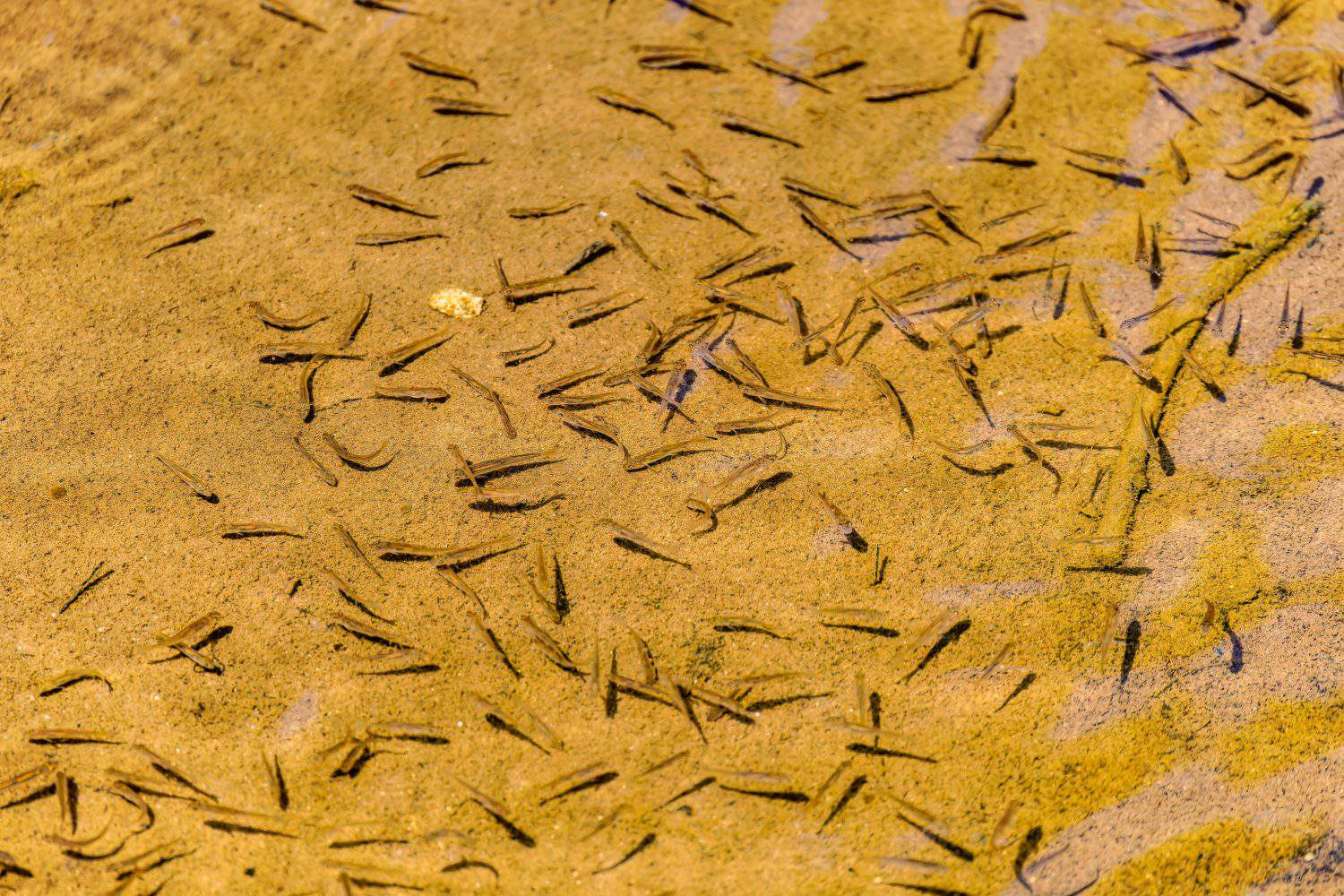
The temperature of the water will determine how long it will take for alevins to develop into fry.
©Karel Bock/Shutterstock.com
Salmon eggs are laid in freshwater habitats. As the eggs, or redds, are protected in the gravel, they begin to develop, eventually becoming alevins. Once salmon reach the alevin stage, the speed at which they develop into fry depends entirely on the water temperature.
The water temperature in which salmon eggs are laid varies between 41°F and 55°F. While these temperatures are well within the range that allows development to occur, if the eggs, and consequently, the alevins are in warmer water, they will develop more rapidly than those alevins in colder water. This may mean that alevins in warmer water have a better chance of survival than those in colder water. Of the five species of salmon, each will spend different amounts of time in the alevin stage. The amount of time each species spends in the alevin stage before moving on to the fry stage includes:
| Species Of Salmon | Duration Of Time In The Alevin Stage |
| Chum | Eight weeks |
| Sockeye | Three to five weeks |
| Chinook | Two to three weeks |
| Coho | Two to three weeks |
| Pink | Four to eight weeks |
While the time each species of salmon spends in the alevin stage varies, all alevins with yolk sacs attached are more active at night than during the day.
Alevins Are More Active at Night

Alevins will be more active in the twilight hours, given there are fewer predators.
© – Original
Alevins spend more time near the gravel at the bottom of their freshwater environments to help them stay upright with minimal exertion. They also remain near the gravel for protection and to access the most oxygen-rich water as they absorb their yolk sacs.
The color of the alevins helps them camouflage as they swim near the gravel. However, the yolk sac is a bright orange color, which makes the alevin stand out. Because of this, alevins will not be incredibly active during the day, saving their swimming for the later hours of the day.
During the evening, there are fewer predators in the environment where alevins live. Because there are fewer predators at night and alevins are protected by darkness, they have a better chance of survival if they are more active during the evening and night. This is why fewer alevins are seen during the day than at night.
Alevins face significant challenges to their survival. However, if salmon can survive this stage, they have overcome a major hurdle and may eventually lay and fertilize their own eggs, allowing the next generation of salmon to hatch into alevins.