Watch THIS. Trigger warning: it’s simultaneously the coolest and grossest thing you’ll see today.
Now that you’ve seen it, you’re likely asking yourself this question: “WHAT!?!?“
That mesmerizing footage is not a plate of spaghetti come to life, but rather a large number of millipedes moving in tight formation, crawling on top of one another, creating a layered mass that advances as a unit. This behavior, sometimes described as a “rolling swarm” or “mass migration,” provides a fascinating glimpse into an otherwise cryptic group of arthropods.
What is a “rolling swarm” of millipedes?
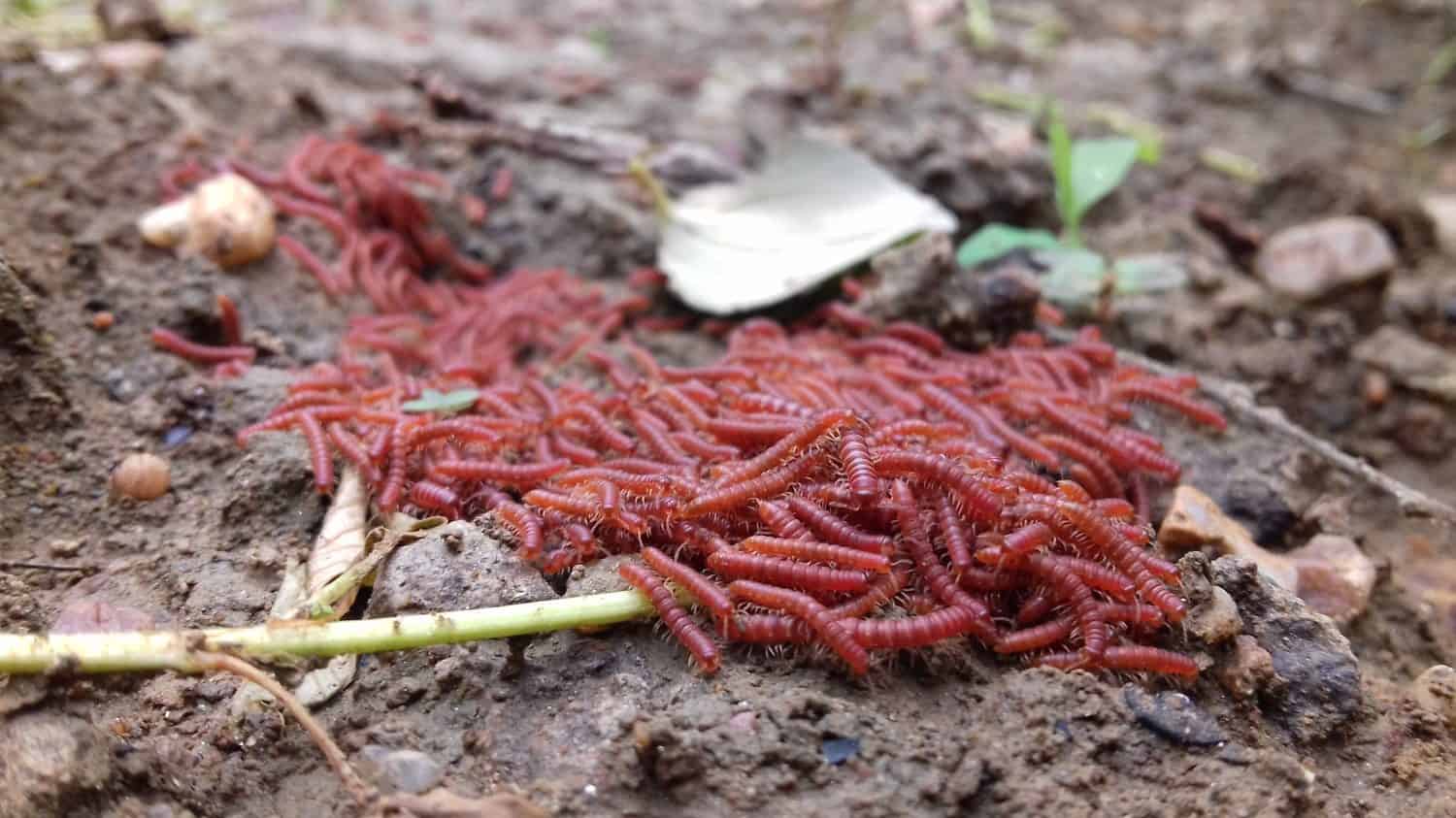
It’s unknown why millipedes occasionally move in a rolling swarm, but there are many theories.
©VINEET BHASKAR/Shutterstock.com
In this context, a “swarm” means a large number of individuals of the same species moving together, and “rolling” describes the effect of some individuals crawling on top of others, giving the mass the appearance of shifting as a whole by rolling. As you can see from the reel, the forward motion of the cluster propels the individuals on top forward, as if walking on a moving sidewalk at an airport, until they reach the front of the swarm. At this point, they’re pinned to the bottom and “rolled” back to the end of the pile, at which point they’re “rolled” forward again.
But WHY?!?!
This behavior conflicts with the solitary or small-group lifestyle usually attributed to most millipedes. So why do they do it? There actually isn’t a single universal cause for mass migratory swarms in millipedes; it varies by species and context. Several hypothesized benefits and triggers for this behavior include:
Protection from predators: By moving in a dense group, individual risk may be diluted (the “selfish herd” concept). When a predator, even one as small as an ant, tries to pass through the swarm, it’s impeded by the mass of millipedes.
Facilitating movement or migration: In some cases, the swarm appears to move en masse from one location to another. The layering of individuals may speed up the forward movement of the group. The “escalator” analogy arises: those on top are carried by those beneath them, which could allow those on top a moment to rest and exert less energy
Response to environmental triggers: Such aggregations often occur under certain conditions: increased rainfall, habitat disturbance, food patch exploitation, or the need to relocate to favorable micro-habitats (e.g., for breeding or resting). For example, millipedes often live in moist areas, and mass aggregations have been associated with high rainfall forcing them out of subsurface habitats. It’s also been noted that these types of migrations are often seasonally recurring events.
Reproduction or synchronized life-stages: Some clustering may relate to groups of recently hatched juveniles staying together, or adults gathering to mate or lay eggs. Newly hatched millipedes may lack full chemical defense or mobility, in which case clustering may increase survival chances.
But the truth of the matter is that we’re not 100% sure; the clumping and “rolling” movement is likely a combination of benefits like protection, increased mobility, and responses to environmental cues.
Where are these typically found, and when do they occur?

Mass migrations are unpredictable but may coincide with seasonal events.
©ASHUYADAV31/Shutterstock.com
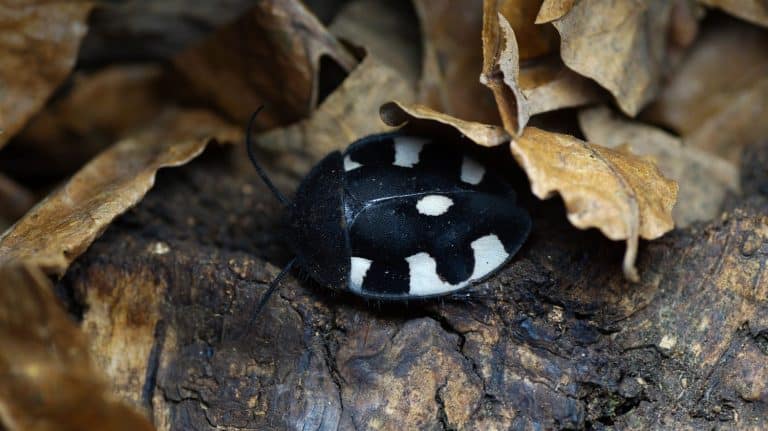
Millipedes in general are often found in moist, sheltered environments: under decaying logs, leaf litter, bark, mulch, crevices, and in basements. The documented swarming behavior tends to occur in both tropical and temperate regions, though the majority of reports come from tropical or subtropical locations. For example, the giant pill-millipede is found in low-elevation, rainforest, leaf-litter habitat in Madagascar.
As mentioned above, mass movements often occur in response to seasonal events: rainfall increase, flooding of subsurface habitat, drying of leaf litter, or emergence of juveniles. But they are overall unpredictable. Thus, if you spot a rolling mass of millipedes, the timing may well coincide with a rainy season, emergence of a cohort of juveniles, or simply relocating from one micro-habitat to another.
Which type of millipede is this?
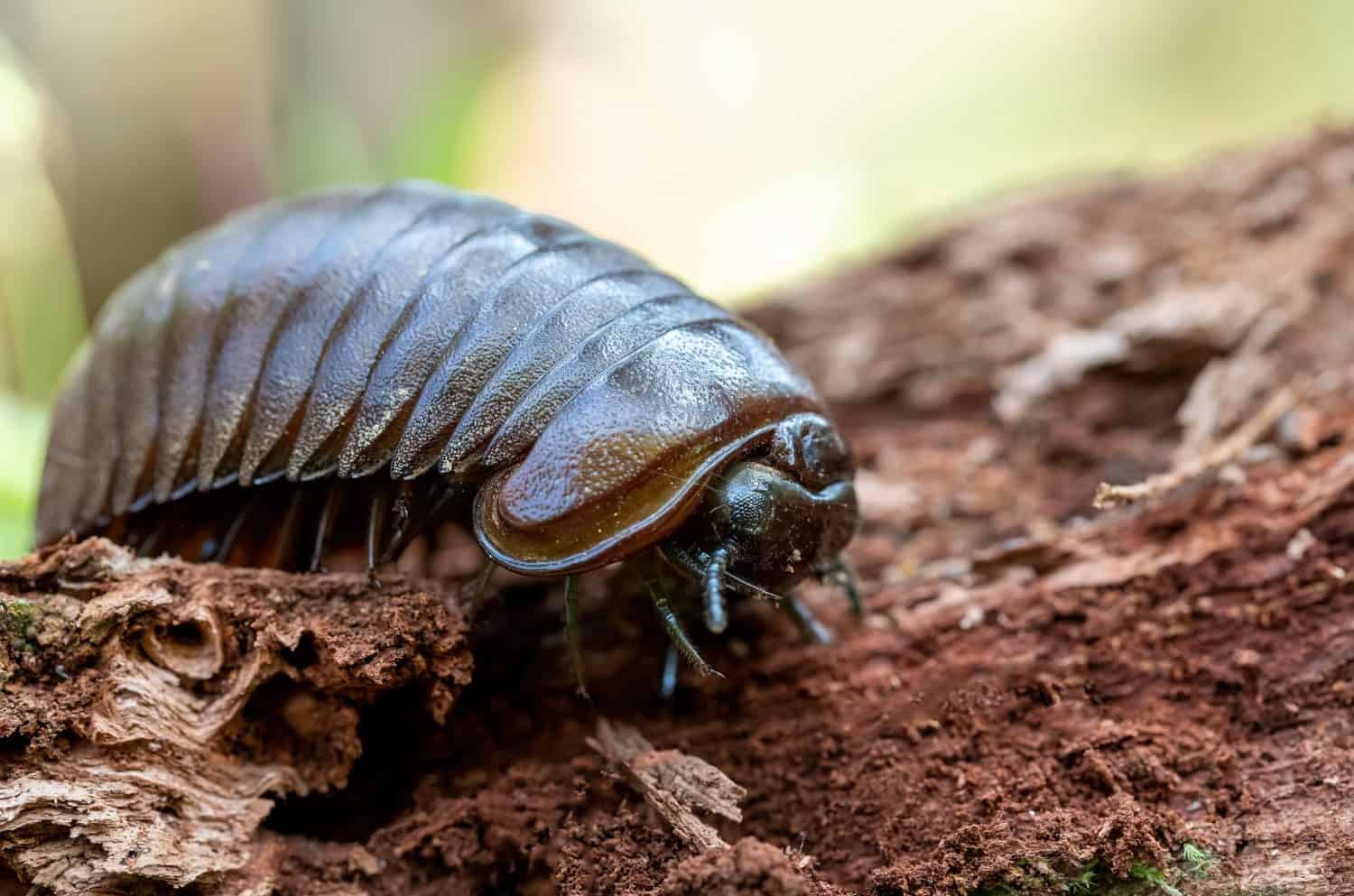
The giant-pill millipede of Madagascar is known to travel in a rolling swarm.
©Artush/Shutterstock.com
The exact species in the reel hasn’t been confirmed, and identifying millipedes from short clips can be tricky. Many species look similar, especially when clumped together. However, mass rolling swarms like this have been observed before. A famous case from Senegal, documented by National Geographic, showed a nearly identical phenomenon involving small brown millipedes. In that case, experts noted the millipedes likely belonged to a species in the family Paradoxosomatidae, a large group of millipedes common in tropical and subtropical regions. Another species known to swarm is the giant pill-millipede from Madagascar. But without knowing the filming location, it’s impossible to assign a precise species name to the millipedes in this video. Still, the footage seems to show typical polydesmid or “flat-backed” millipedes, which are often found in warm, humid environments under leaf litter and rotting wood. So, while the exact identity of the swarm remains uncertain, it very likely belongs to one of the communal or seasonally migrating species within these families.
Other interesting facts about millipedes
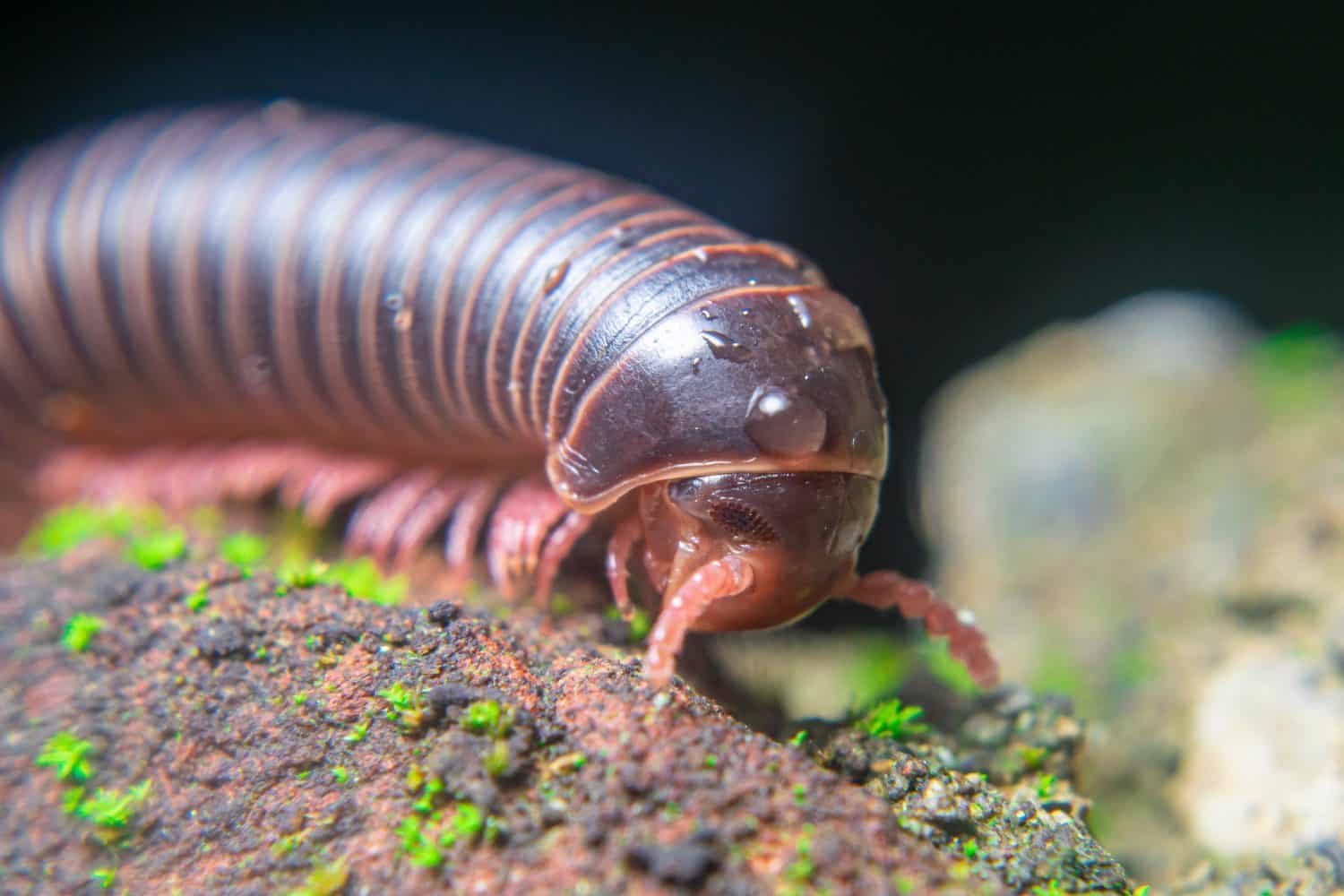
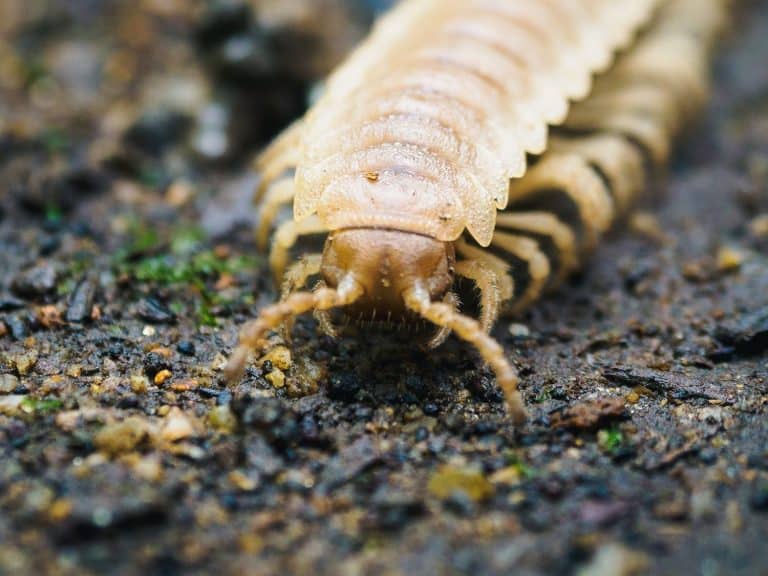
Despite the name, millipedes do not actually have 1,000 feet.
©Fawwaz Media/Shutterstock.com
Despite the name “millipede” meaning “thousand feet,” most species have far fewer legs. (A recent discovery known as Eumillipes persephone has over 1,300 legs, but this is exceptional.)
Millipedes belong to the class Diplopoda. They are detritivores (in many cases), meaning they feed on decaying leaves, wood, and other plant matter, which plays a vital ecological role in breaking down organic matter and returning nutrients to the soil.
Many millipedes defend themselves by secreting chemical compounds from glands along their sides. When threatened, they often curl into a tight coil (volvation) to protect their legs and vulnerable underside.
Millipedes are understudied compared to many other arthropods. It’s been said that every time researchers dig into leaf litter, they often discover species new to science.
Many millipedes begin life in clusters (several eggs hatching at the same time), and early stadia may stay together or in the same micro-habitat.
Some millipedes burrow and create tunnels in soil and leaf litter, an activity that can influence soil structure and nutrient cycling.
So, what does it all mean? We’re still not quite sure.
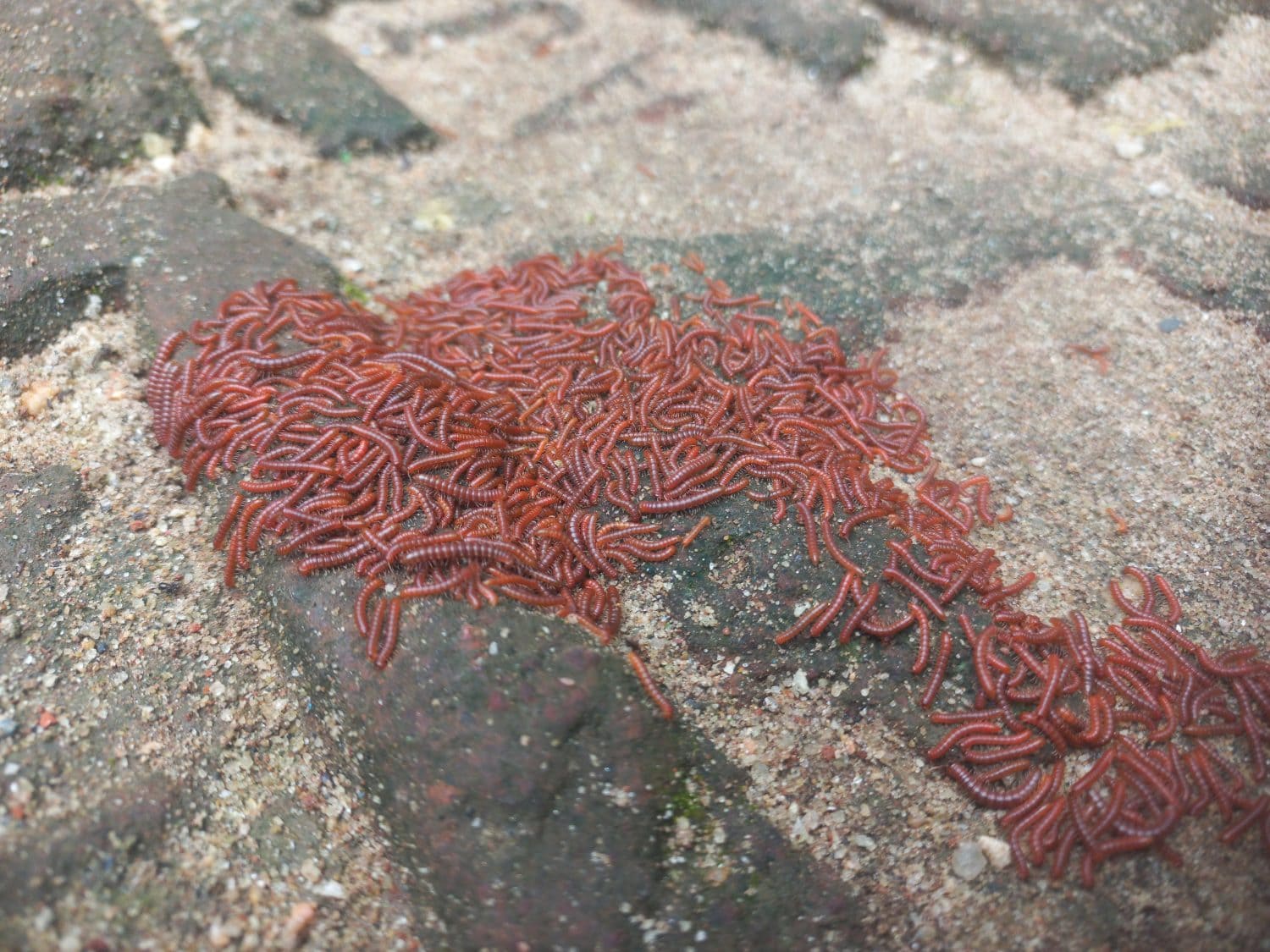
While we’re not 100% sure why millipedes occasionally move in rolling swarms, I think we can all agree it sure is fascinating… and icky.
©LAKHAN RAKSHIT/Shutterstock.com
Rolling swarms in millipedes are still poorly understood overall. Even in well-studied outbreaks, causes are hard to pin down definitively, and each case may differ significantly. What we can say about this reel is that it captures a large aggregation of millipedes moving together across substrate. The clustered layering may suggest they are engaging in a migrating behavior rather than simply feeding or randomly gathering, probably to a more favorable environment (in regard to moisture, food access, etc.). It’s possible they are moving this way for enhanced mobility and/or increased protection through numbers. The timing might coincide with a part of the year when movement is advantageous, for example: following rain, emergence of juveniles, or relocation due to necessary habitat change.
Despite all the unknowns, one thing is certain: that plodding blob of millipedes sure is creepy! But what you’re seeing is a spectacular example of collective behavior in millipedes; a rolling swarm that gives insights into how these often-overlooked arthropods can band together and move as one. This rolling swarm of millipedes in motion is a living tide of tiny legs working in perfect rhythm. Though the reasons behind this rare behavior aren’t fully understood, it’s a striking reminder that even humble decomposers like millipedes have complex, coordinated lives beneath the leaves. Whether driven by rain, instinct, or the need for safety, these creatures reveal how wonder still hides in the soil at our feet.