
Quick Take
- That "wasp" hovering motionless outside your window probably can't sting you, and there is one simple thing to count that gives it away instantly. Spot the telltale differences →
- Some harmless insects don't just copy a wasp's colors. They steal its personality too, and the performance is surprisingly convincing. See the wasp beetle act →
- One scary-looking "stinger" turns out to be something else entirely, and knowing the difference will change how you see it. Meet the horntail imposters →
- There's a whole group of moths that evolved to look nothing like moths, and most people have no idea they exist. Discover clearwing moths →
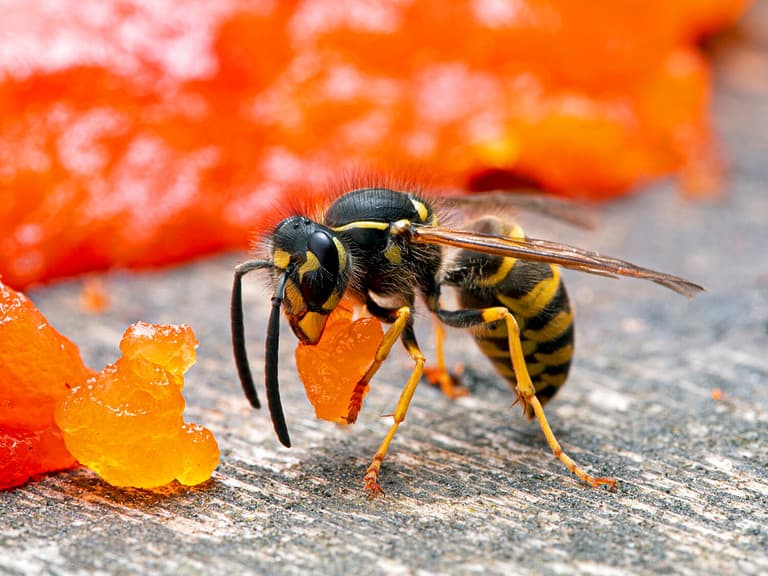
Yellow-and-black stripes are one of nature’s most recognizable warning signs. For many predators — and people — they signal one thing: stay away. When it comes to bugs, most people and predators associate this pattern with painful wasp stings, but in reality, not every striped insect is dangerous. In fact, many harmless flies, moths, and beetles have evolved to look surprisingly similar to wasps for self-defense.
If you’ve ever spotted an insect that looked like a yellowjacket but behaved a little differently, there’s a good chance you were looking at a harmless mimic. Here’s how to tell them apart.
Why Do Harmless Insects Look Like Wasps?
Many harmless insects survive by taking advantage of a strategy called Batesian mimicry. While true wasps use bold colors to advertise their painful stings (a strategy known as aposematism), harmless look-alike species simply copy those same yellow-and-black patterns for their own protection. By stealing the wasp’s iconic look — and sometimes even its body shape and flying habits — these defenseless insects scare off predators without ever needing a sting of their own.
Harmless Bugs That Look Like Wasps
Hoverflies (Family Syrphidae)
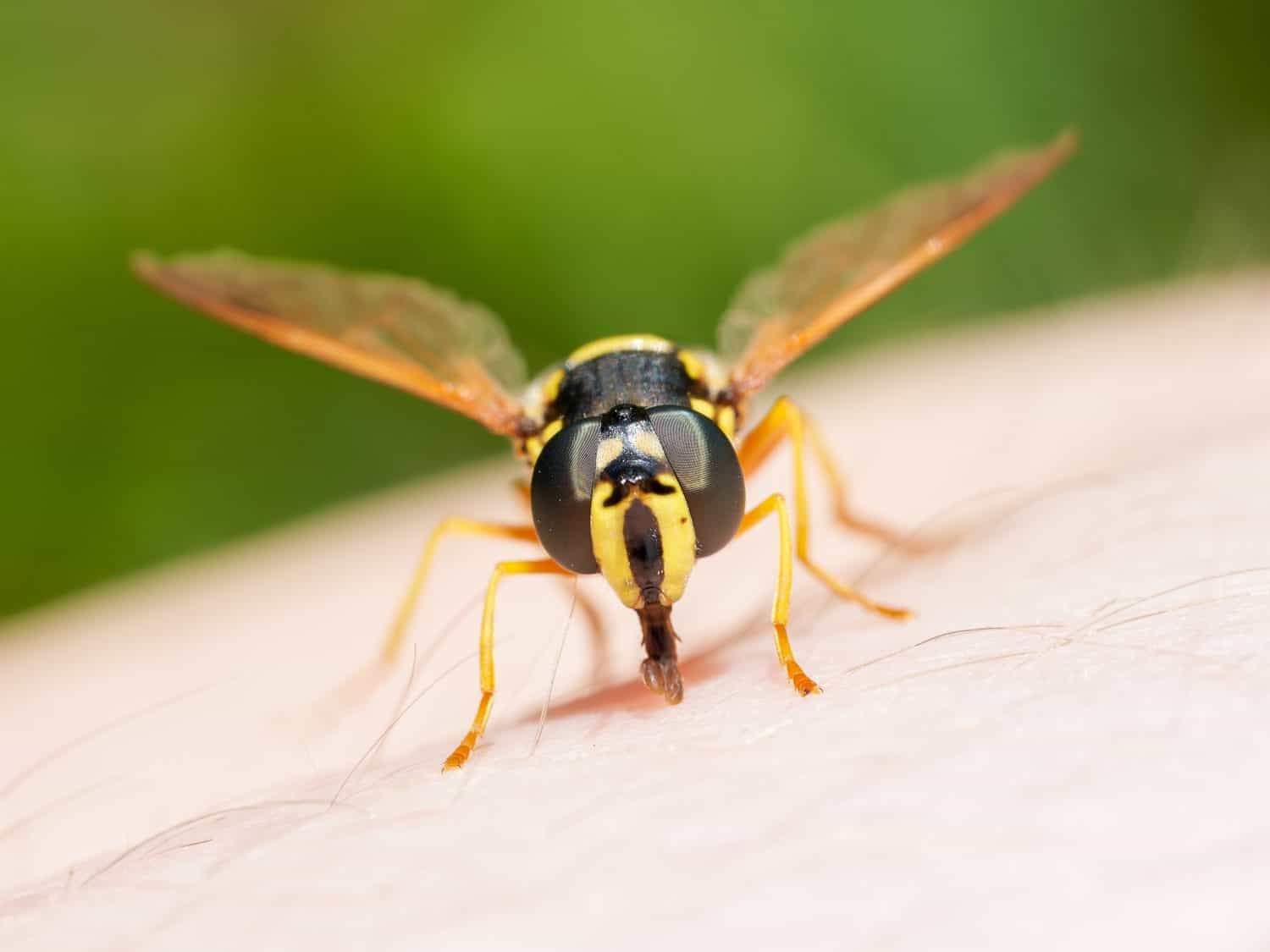
Hoverflies are among the most common and convincing wasp impostors you’ll encounter.
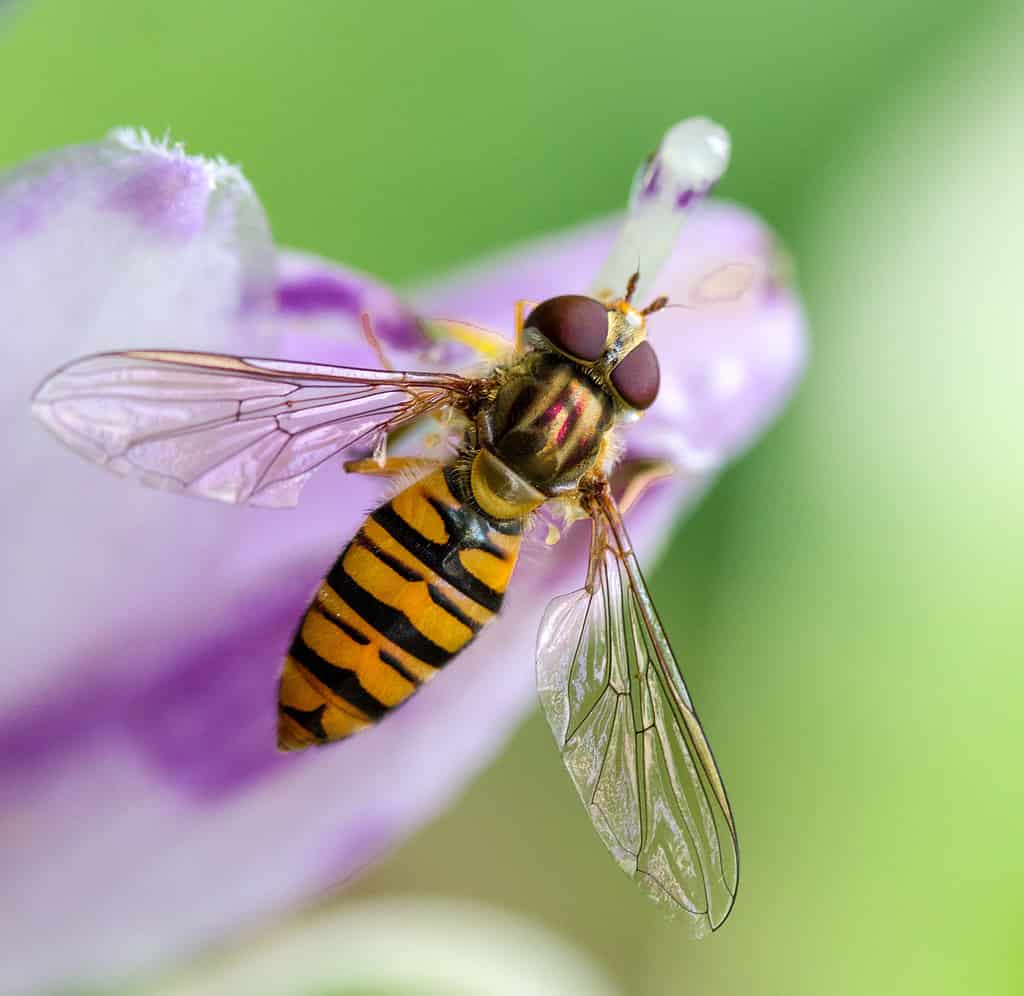
Despite their warning stripes, these beneficial insects are harmless nectar eaters that cannot sting at all.
©viktorkunz/iStock via Getty Images
How to identify a hoverfly:
- Large compound eyes that take up most of their head
- Short, barely noticeable antennae (in contrast to a wasp’s long ones)
- As true flies, they have only one pair of wings (wasps have two pairs).
- They can hover perfectly still in mid-air before suddenly darting away.
One especially convincing species is the bald-faced hornet fly (Spilomyia fusca), which closely resembles a bald-faced hornet.
Clearwing Moths (Family Sesiidae)
At first glance, a clearwing moth is easy to mistake for a wasp. Unlike most moths, their wings are mostly transparent because they lack powdery scales.
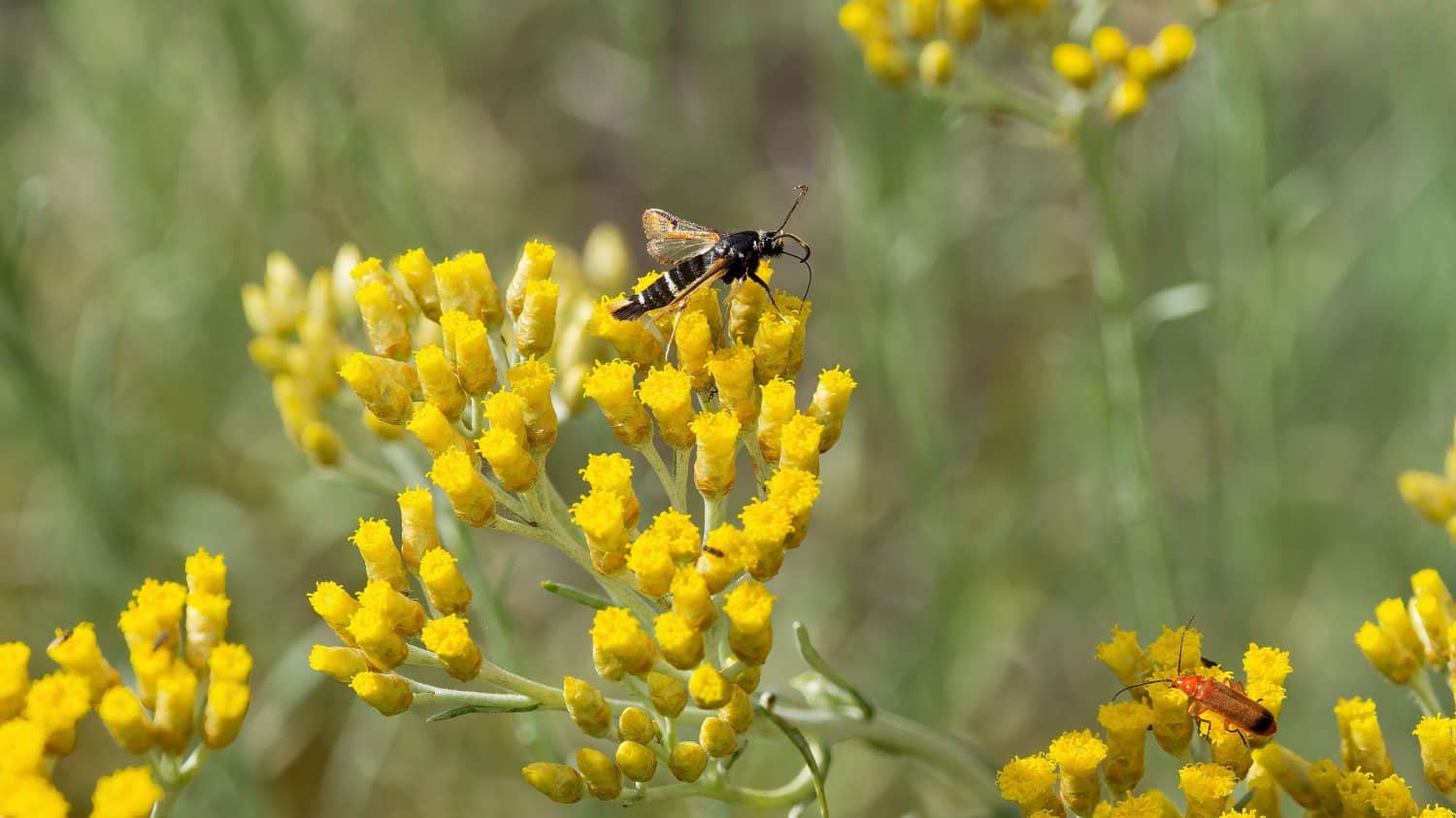
Although they look like wasps, clearwing moths are completely harmless and cannot sting.
©MacBen/Shutterstock.com
How to identify a clearwing moth:
- See-through, narrow wings that lack typical moth scales
- A slender body wrapped in bright yellow bands
- Long, prominent antennae similar to those of a wasp
- Active during the day rather than night
Wasp Beetles (Clytus arietis)
The wasp beetle takes mimicry to a whole new level. Instead of a soft, flexible abdomen, its yellow-and-black warning pattern is painted right onto its hardened wing covers.
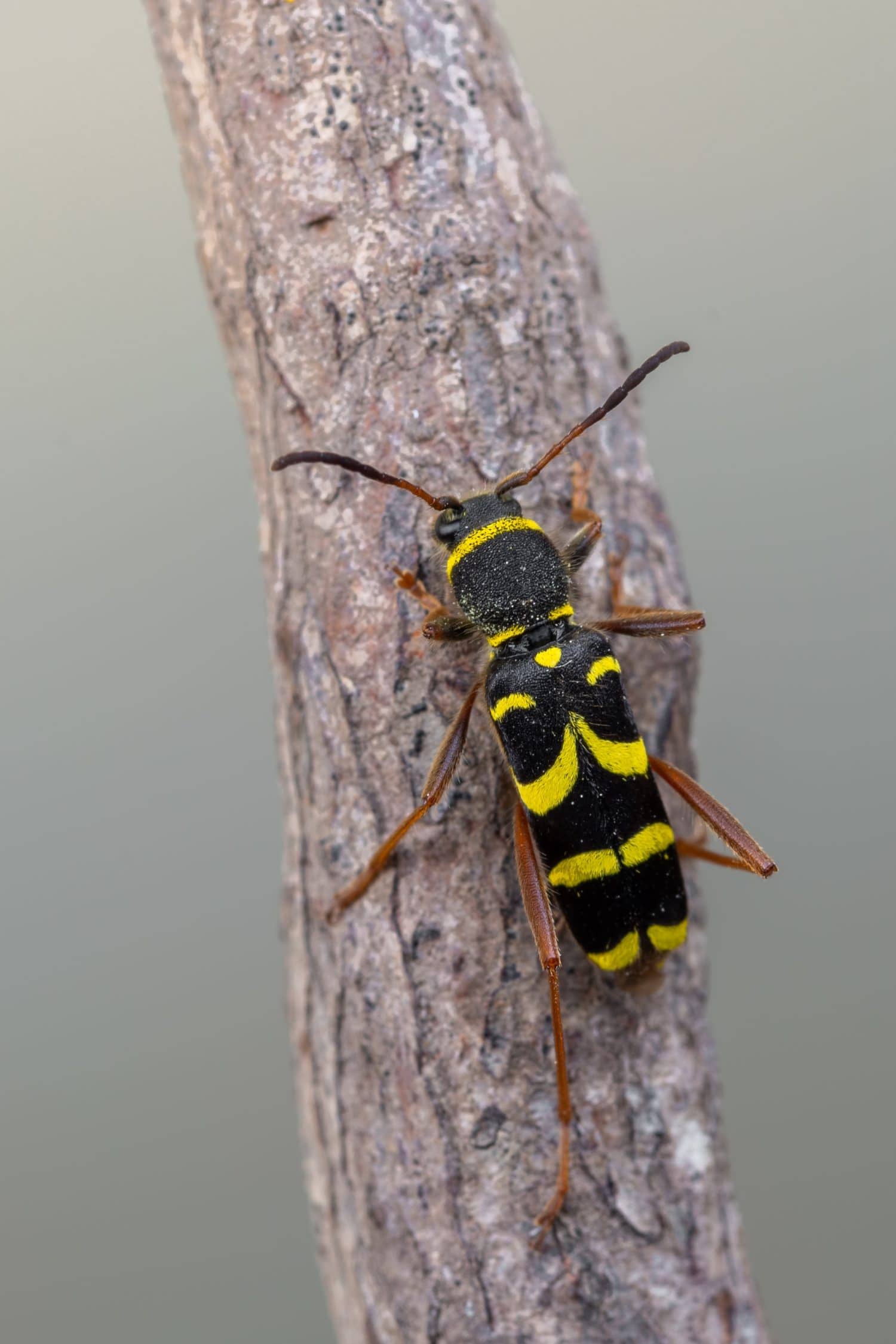
Despite their twitching, intimidating routine, wasp beetles are totally harmless.
©Marek R. Swadzba/Shutterstock.com
How to identify a wasp beetle:
- Rigid wing covers (elytra) that meet in a straight line down its back
- Long, thread-like antennae that sweep outward
- Quick, jerky movements that intentionally mimic an angry, agitated wasp
Soldier Flies (Family Stratiomyidae)
Soldier flies are another group of true flies that have adopted the classic wasp look, often pairing bright yellow or green markings against a dark body to complete the illusion.
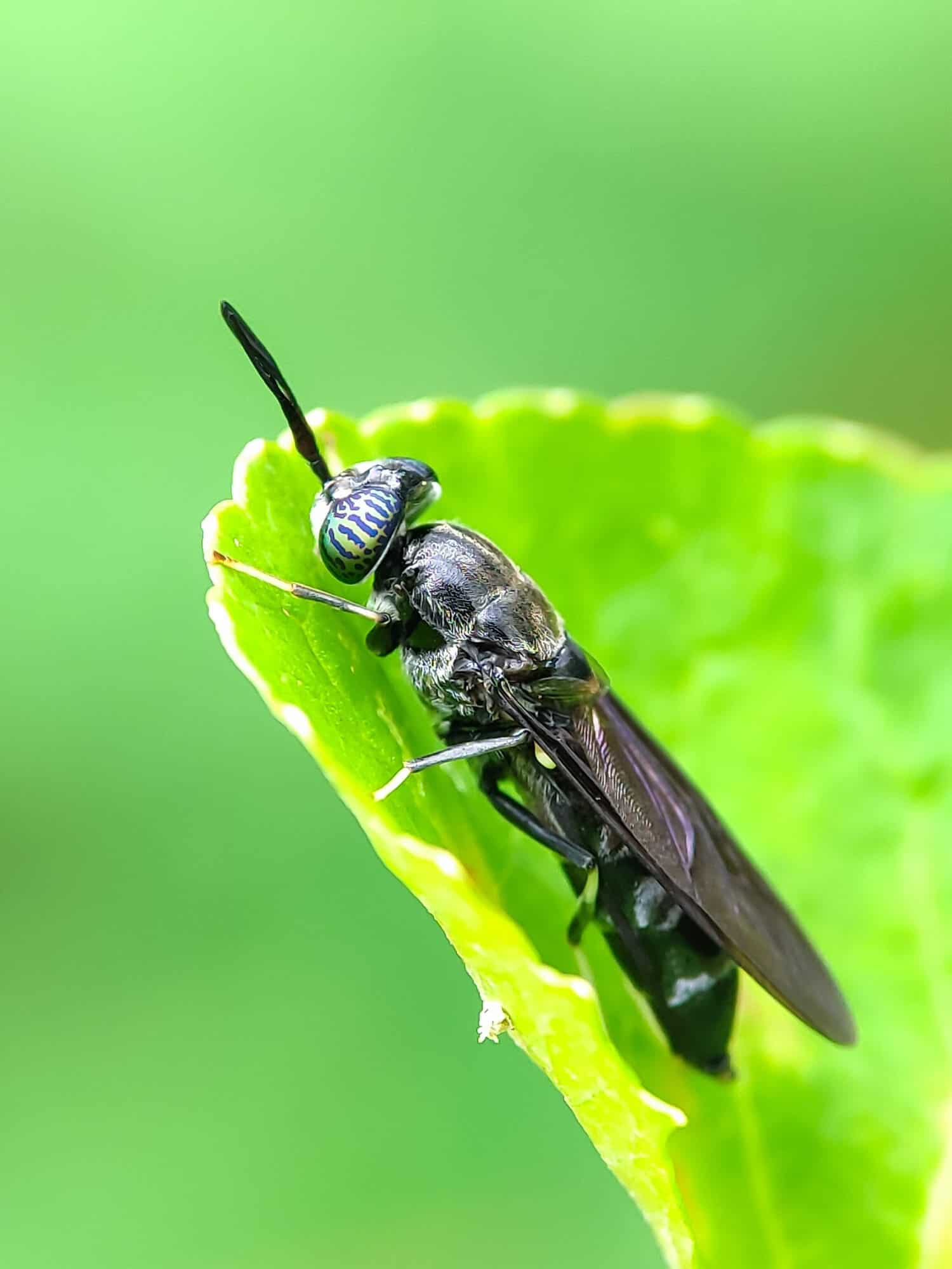
Soldier flies do not bite, sting, or spread diseases like many common houseflies.
©Fredi Ahmeda Jaya/Shutterstock.com
How to identify a soldier fly:
- Like all true flies, they have only one pair of wings.
- Prominent antennae that stick straight out and forward in a “V” or “Y” shape
- A narrow area where the body meets the abdomen, mimicking a wasp’s slender waist
- They fold their wings completely flat over their back when resting.
Despite their clever shape and coloring, soldier flies are completely harmless to humans.
Wasp-Mimicking Bee Flies
Although bee flies are better known for their bee-like appearance, several genera have evolved to imitate wasps instead. Some species, like those in the genus Systropus, have extremely thin waists and long, dangling legs like thread-waisted wasps. Others, such as Toxophora and Lepidophora, use bold stripes and adopt wasp-like postures.
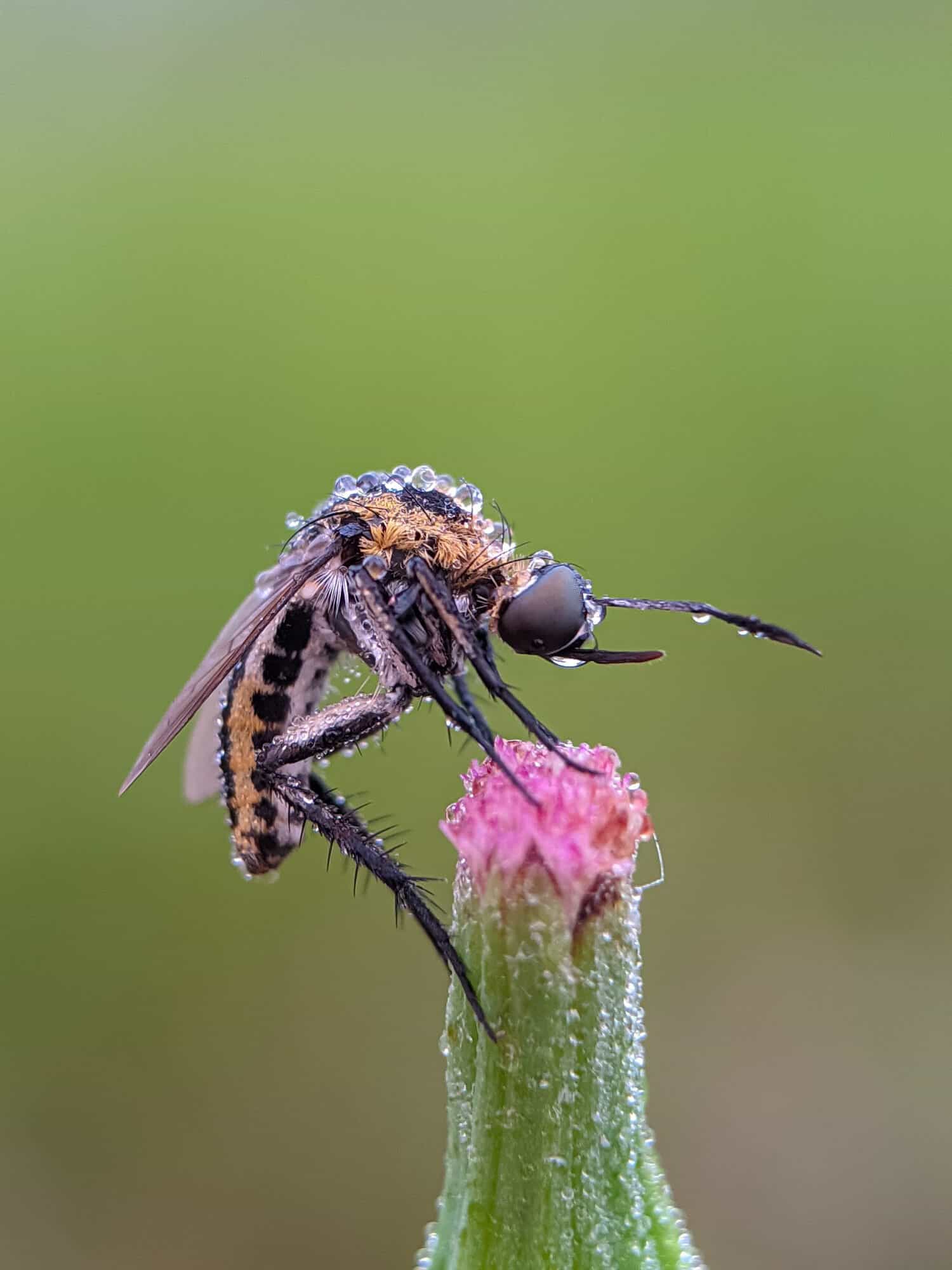
Wasp-mimicking bee flies drink nectar and are harmless to humans.
©a74ts/Shutterstock.com
How to identify a wasp-mimicking bee fly:
- As true flies, they only have one pair of wings.
- Large, domed fly eyes
- A visible, tube-like mouthpart used for sipping nectar
- A slender, wasp-like body with a distinctly fly-like head
Other Harmless Wasp Look-Alikes
Several other insects borrow the wasp’s signature style without posing much of a threat to humans.
- Robber Flies (Laphria): Skilled insect hunters that frequently copy bees and wasps. While formidable to other bugs, they are harmless or even beneficial to people.
- Pigeon Tremex Horntail (Tremex columba): Often alarms people due to a long, needle-like tail, but that scary “stinger” is actually just an egg-laying tube (ovipositor) used to lay eggs in trees.
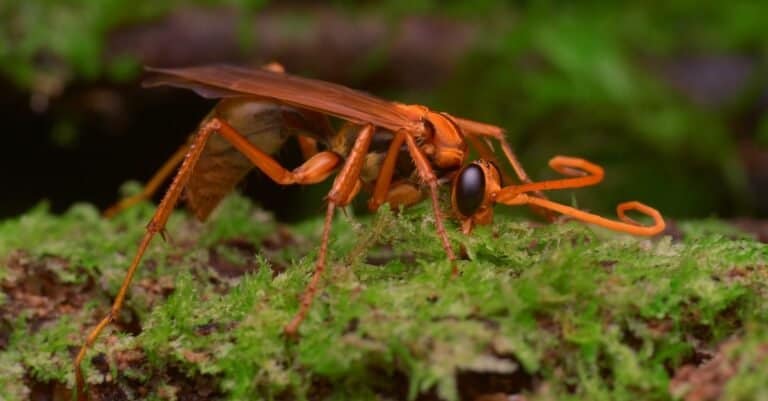
- Wasp Mantidfly (Climaciella brunnea): One of nature’s most impressive impersonators, this yellow-and-black impostor hunts small bugs, not humans.
- Clubbed Mydas Fly (Mydas clavatus): This large, intimidating fly relies entirely on its fake wasp look for defense — it can’t sting at all.
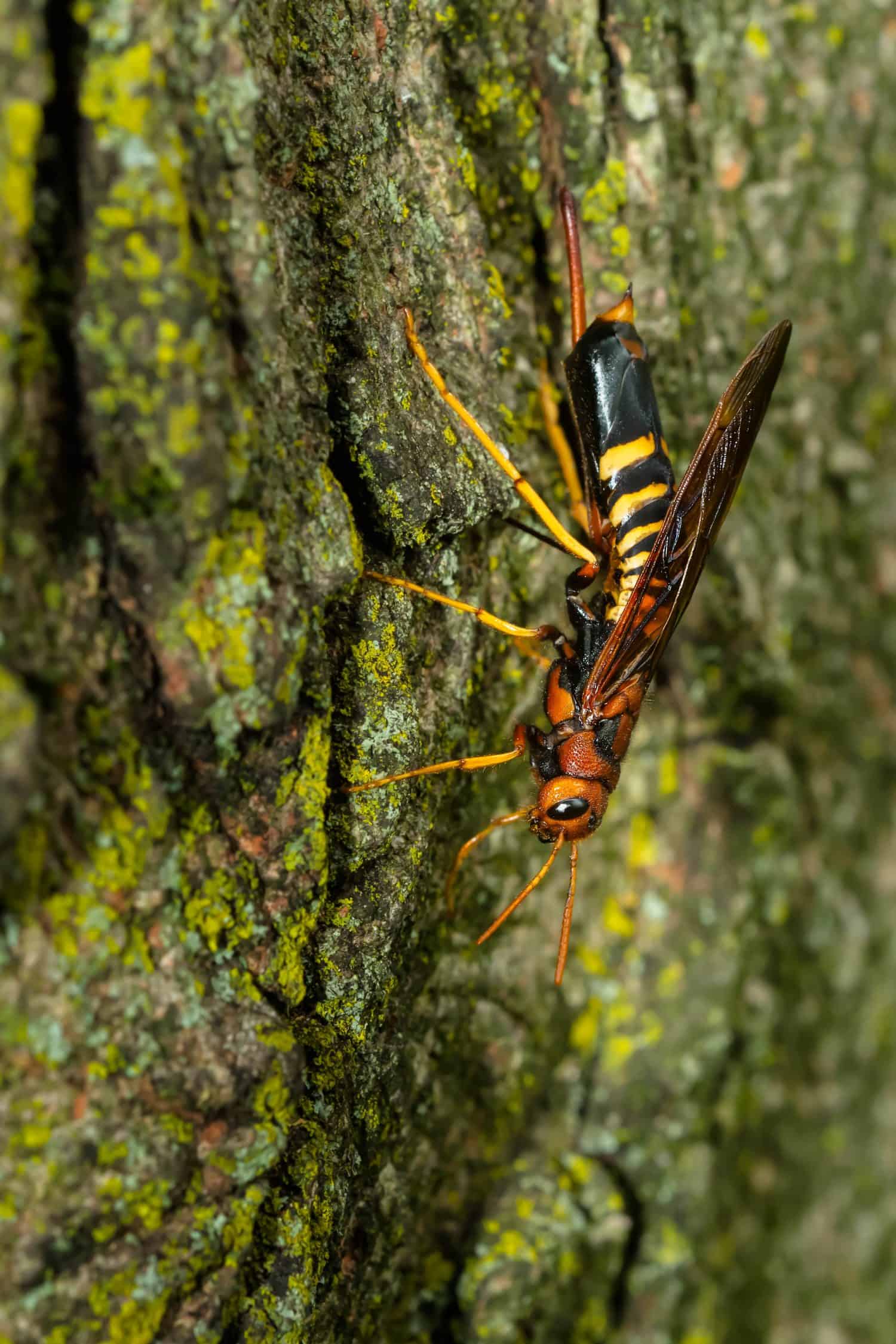
Pigeon tremex horntails have an intimidating appearance, but they cannot sting or bite.
©Paul Reeves Photography/Shutterstock.com
What About Mud Daubers?
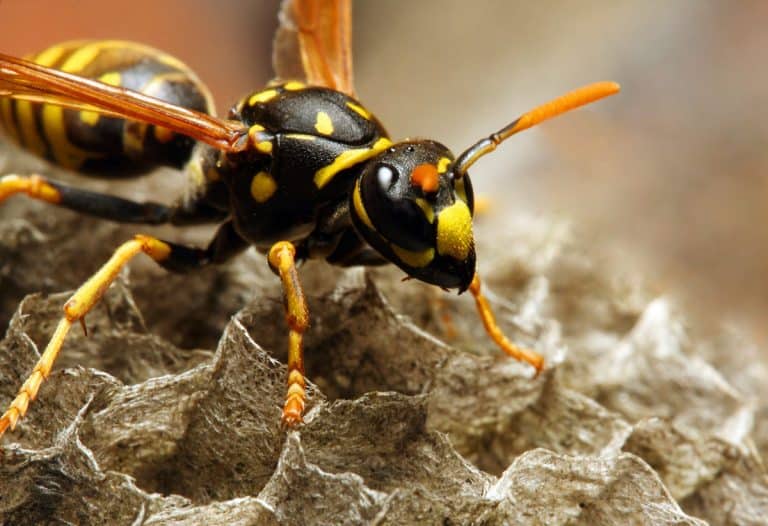
Mud daubers (Sceliphron and Chalybion) are not mimics at all — they are real wasps! However, they are solitary and non-aggressive and will only sting if directly threatened or handled.
How to Tell a Wasp Mimic from a Real Wasp
When you’re trying to identify a suspicious-looking insect, a few features usually give away the disguise:
- Count the wings. Flies, including hoverflies, soldier flies, bee flies, robber flies, and mydas flies, have only one pair of wings. True wasps always have two.
- Look at the eyes. Many flies have enormous compound eyes that cover most of their head.
- Check the antennae. Hoverflies have very short antennae, while soldier flies and wasps have more noticeable ones.
- Watch how it flies. Hoverflies often freeze as if suspended in midair before quickly darting away, a behavior true wasps rarely display.
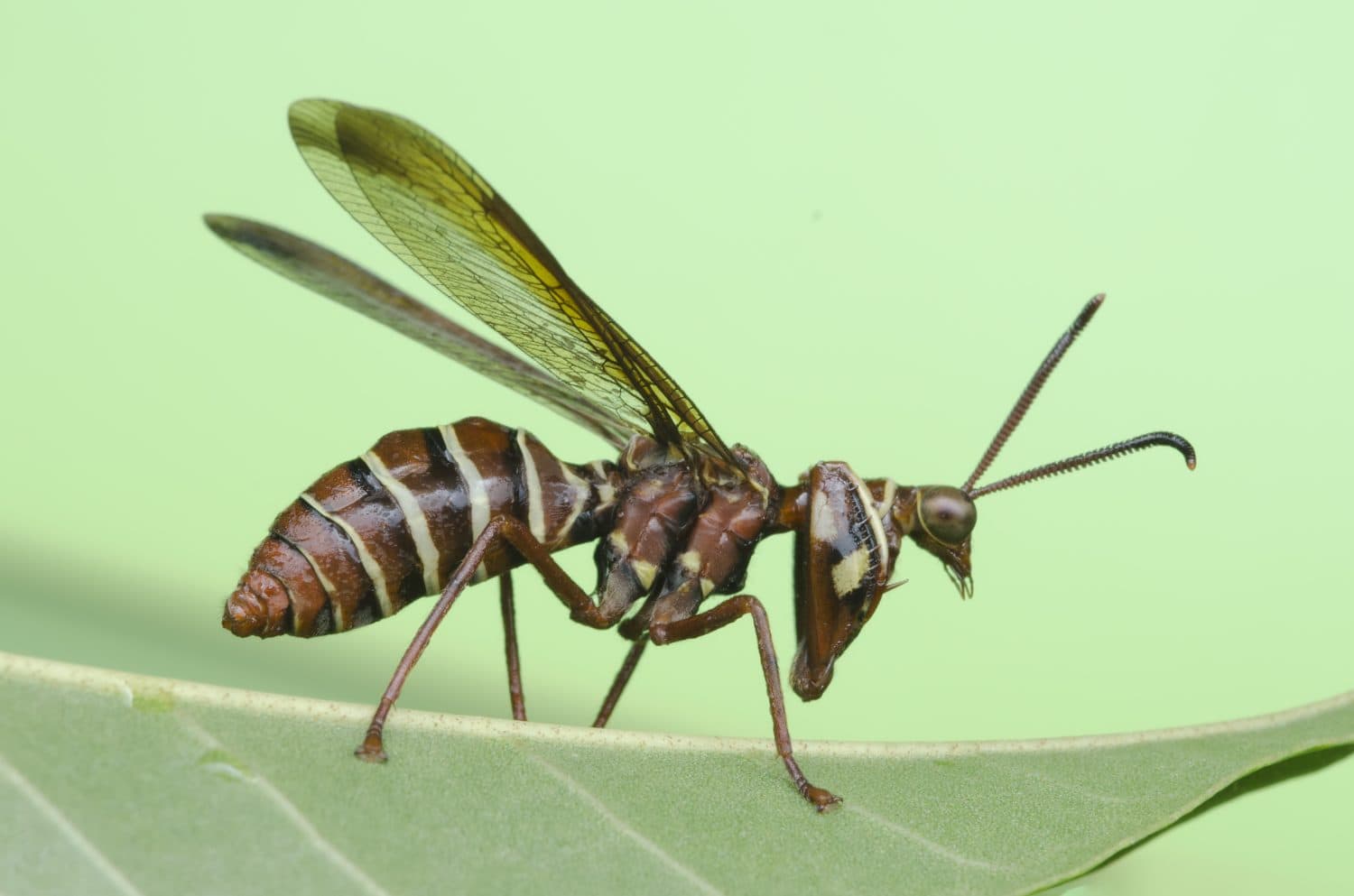
Wasp mantidflies will move their abdomens up and down like a wasp when they are disturbed.
©Ruzy Hartini/Shutterstock.com
Nature’s Ultimate Bluff
Wasp mimicry is one of nature’s most successful survival strategies, appearing in flies, beetles, moths, and more. Some species rely on simple yellow-and-black stripes, while others copy a wasp’s body shape, flight style, or even chemical signals with striking precision.
Fortunately, most of these convincing impostors are completely harmless. By paying attention to features like wing count, antennae, and behavior, it’s often easy to tell whether you are looking at a true wasp — or one of nature’s master impersonators.