
Quick Take
- Web-building spiders often wrap large, dangerous prey in silk first to reduce risk before delivering a venomous bite.
- Spider silk serves multiple roles, acting as restraint, transport system, and food storage while external digestion occurs.
- Some spiders lack venom entirely and rely on extensive silk wrapping alone to subdue and kill their prey.
There are plenty of frightening creatures in the animal kingdom. Great white sharks are particularly fearsome. As are grizzly bears. And packs of wolves. If aliens landed on Earth, unfamiliar with our ways, they would likely quickly understand why the aforementioned beasts make us sweat and tremble. But if they saw the humble spider—one of humankind’s most feared critters—they would probably be very confused. “What?” they would say in their otherworldly language. “I can understand being afraid of that clawed, fanged, growling bear, but who could possibly be scared of that tiny eight-legged creature?” Show that confused alien in this video by WG Outdoors, and they’ll be on their ship back to the cosmos before you can say “arachnophobia.”
In case you’re unable to watch, the video opens on a deceptively simple scene: a gray spider (likely of the genus Neoscona) suspended on a strand of web, grappling with a cockroach roughly its own size. The roach kicks and twists, clearly alive and dangerous, while the spider keeps its distance, working silk around the insect with practiced efficiency. Slowly, methodically, the spider binds the roach, then begins the laborious process of dragging it upward along the web. This marks the beginning of the terrifying end for the poor cockroach.
This scene, unsettling as it is, offers a rare window into one of the most important and least understood parts of spider behavior. Webs do not merely catch prey. Silk is a weapon, a restraint, a pulley system, and a pantry, all at once. It’s terrifying, but also fascinating, and well worth taking a closer look at.
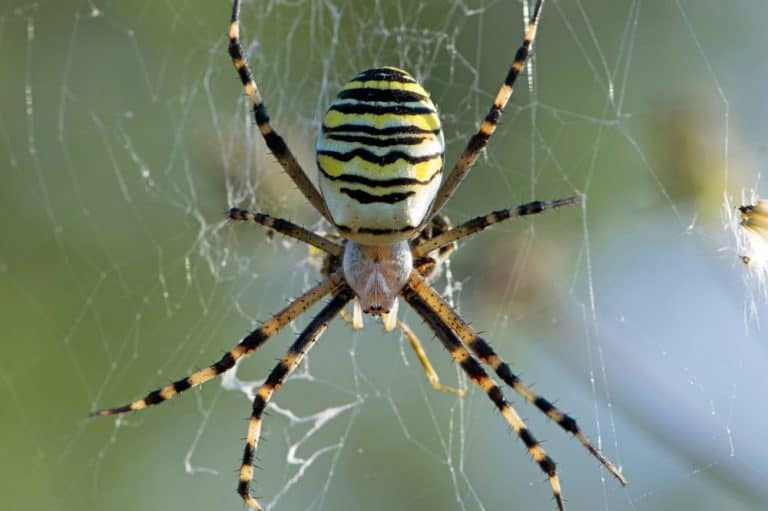
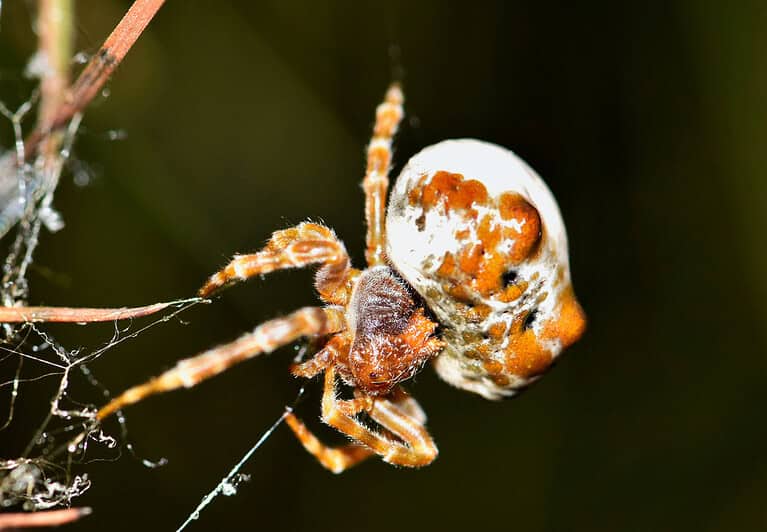
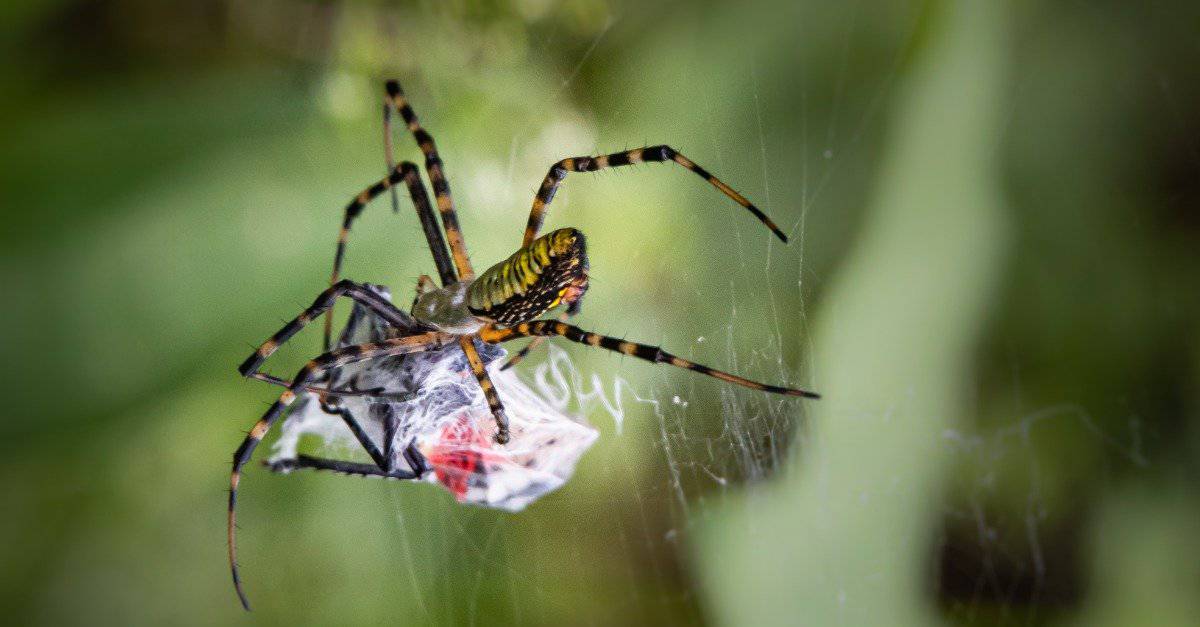
Wrapping helps to subdue prefer before injecting venom.
©cwieders/Shutterstock.com
Wrap First, Bite Later
Cockroaches are not easy meals. They are fast, strong, and equipped with spiny legs capable of injuring a spider that rushes in carelessly. When prey is roughly the same size as or larger than the spider, as in this video, direct biting can be risky, which is why many web-building spiders rely on silk first.
As soon as the spider reaches the struggling cockroach, it begins a behavior known as prey wrapping. Using its hind legs, the spider pulls silk from its spinnerets and flicks it rapidly over the roach’s body. Each pass adds more strands, pinning legs together and restricting movement. This allows the spider to maintain distance while steadily reducing the threat posed by the prey.
In venomous orb-weaving spiders and related species, wrapping is not usually meant to kill. Instead, it is a safety measure. Once the prey’s movements slow enough, the spider delivers a venomous bite, often targeting softer areas of the exoskeleton such as leg joints or the underside of the thorax. Venom immobilizes the insect, making feeding possible without further struggle.
To recap: the spider binds you in a tight web. Then it injects you with venom, which paralyzes you. Then it eats you while you’re still alive. Yikes.
Making Quick Work
In cases like the one shown in the video, wrapping a cockroach typically takes seconds to a few minutes. Smaller prey, such as flies or moths, may be wrapped almost instantly or not at all. Larger, more dangerous insects require more silk and more time.
The duration depends on several factors: the spider’s size, the prey’s strength, and how violently the prey struggles. A calm or already-entangled insect may be subdued very quickly. A large cockroach fighting hard can prolong the process, prompting the spider to apply more silk before risking a bite.
There are extreme examples elsewhere in the spider world. Some spiders without venom, particularly in the family Uloboridae, rely entirely on silk to kill their prey. Documented cases show these spiders spending over an hour wrapping a single insect, using hundreds of feet of silk. In those cases, wrapping itself becomes lethal, like a boa constrictor crushing and deforming its prey’s body until it can no longer survive. That is not what is happening in this video, but it highlights just how flexible and powerful silk-based strategies can be.
Dragging the Prey Up the Web
One of the most striking moments in the video is when the spider begins hauling the wrapped cockroach upward. This is not just about moving the prey. It is about control, safety, and efficiency. Webs are not uniform structures. Some areas are designed to absorb impact, others to support weight. By dragging the prey upward, the spider is likely moving it toward a more secure location, such as a thicker frame line, the web’s hub, or a nearby retreat. These areas reduce the risk of the prey falling, being stolen by scavengers, or attracting other predators.
This behavior also demonstrates an impressive feat of strength. A spider does not lift prey in the way a human lifts a weight. Instead, it redistributes the load across multiple strands of silk, effectively turning the web into a system of ropes and pulleys. Observational studies have shown that orb-weaving spiders can manipulate prey that weighs as much as or more than they do by using this distributed support system. The silk wrapping serves another purpose here as well, creating friction and structure, and allowing the spider to grip and maneuver the prey without direct contact.
After the Prey Is Secured
Once the cockroach is fully immobilized and positioned in a safe spot, the spider’s work is far from over. Spiders cannot chew solid food. Instead, they digest their prey externally. After biting the prey and injecting venom, the spider regurgitates digestive enzymes into the cockroach’s body. These enzymes break down muscles, organs, and other soft tissues, turning them into a liquid slurry. Over time, the spider consumes this liquefied material, effectively drinking its meal.
So, earlier, when we said the spider would eat you after paralyzing you—that’s not entirely accurate. What it actually does is liquefy your insides and drink you! The silk wrapping helps during this stage as well. It keeps the prey intact while its insides are being liquefied and slows decomposition. In some cases, spiders will leave wrapped prey hanging in the web for hours or even days before feeding, especially if they have captured more food than they can immediately consume. What remains afterward is a hollow exoskeleton, often still wrapped in silk, which the spider eventually cuts loose and discards.
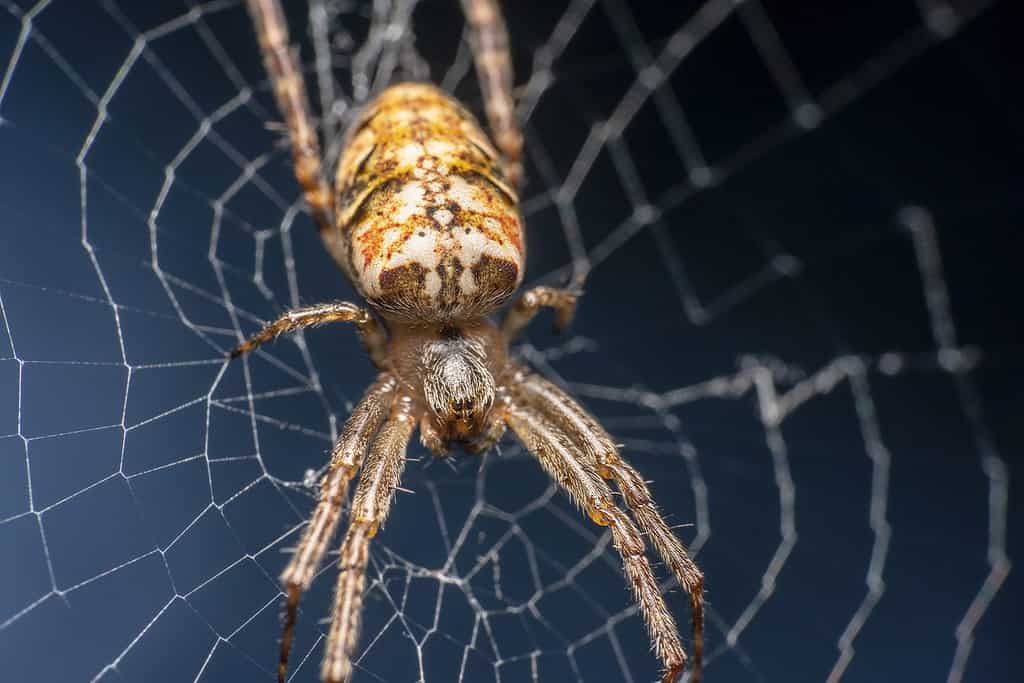
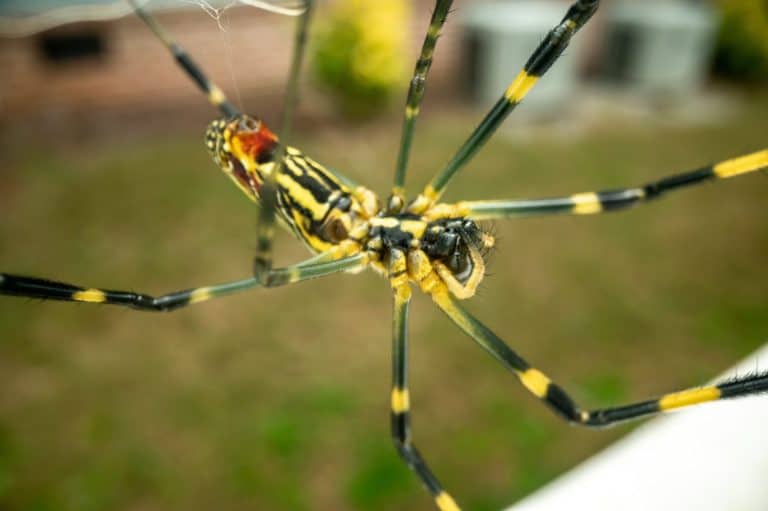
Spiders produce different types of silk for different purposes.
©Rav Kark/Shutterstock.com
Anyone familiar with Spider-Man knows there are countless ways to use silk. While Spider-Man is, of course, a work of fiction, Peter Parker’s use of silk isn’t that far from reality—just on a much larger, more fantastical scale. Spiders do not produce just a single kind of silk. Most species can make multiple types, each with different properties and purposes.
- Dragline silk is strong and relatively stiff. It forms the framework of the web and acts as a lifeline when spiders drop or climb.
- Capture silk is more elastic and often sticky, designed to absorb the impact of flying insects.
- Wrapping silk, which is prominent in this video, is optimized for rapid deployment and restraint.
What makes spider silk especially remarkable is its combination of strength and elasticity. By weight, some spider silks rival or exceed steel in tensile strength. Unlike steel, however, silk can stretch significantly before breaking. This ability to stretch allows it to absorb energy without snapping, which is critical when prey struggles violently. These properties are why silk works so well for prey wrapping. It restrains without tearing, conforms to irregular shapes, and remains intact under repeated stress.
Wrapping behavior appears across many spider families because it solves multiple problems at once. It reduces injury risk, allows spiders to handle large or dangerous prey, and provides a way to store food safely. In evolutionary terms, silk wrapping is a highly efficient investment.
Even spiders with potent venom often wrap first. Venom takes time to work, and a struggling insect can still cause damage in those moments. Silk provides immediate control. In the case of prey like cockroaches, which are notoriously resilient, wrapping ensures that venom delivery and digestion can proceed without interruption. In species that lack venom entirely, wrapping becomes essential rather than optional. For these spiders, silk alone must be enough to subdue prey, given sufficient time and material.
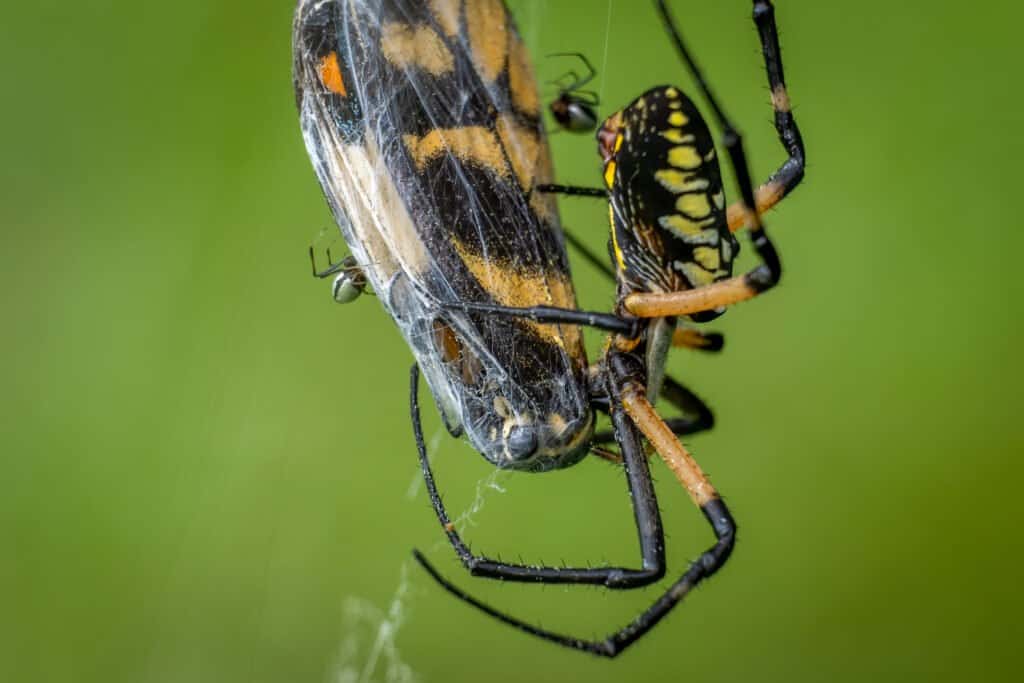
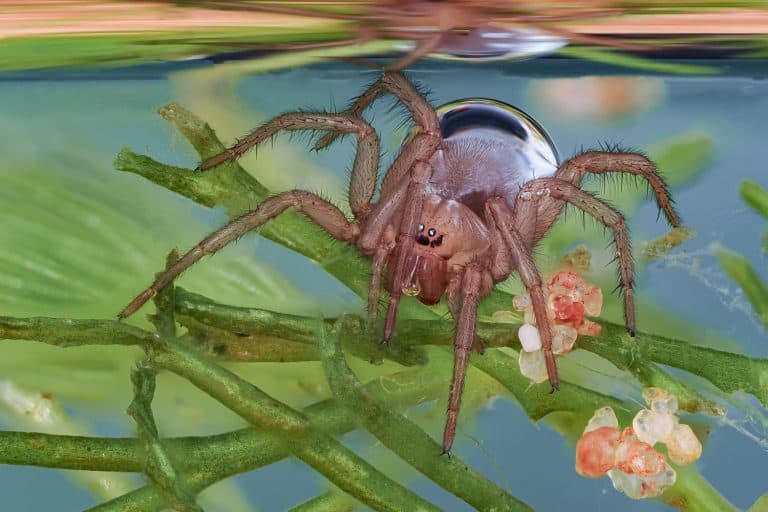
Spider silk is as versatile as it is powerful, serving many functions at once.
©samray/Shutterstock.com
What begins in the video as a tense struggle between two similarly sized animals ends with a demonstration of one of nature’s most elegant predatory systems. The spider’s use of silk to wrap, restrain, and transport a cockroach shows how versatile and powerful this material truly is. Within minutes, a dangerous opponent is transformed into a manageable meal.
From quick wraps lasting seconds to marathon silk assaults that take over an hour, spiders have evolved a wide range of strategies built around the same core tool. Spider silk is not just strong; it is adaptable, multifunctional, and central to spider survival.
The next time you see a spider hauling prey along a web strand (or even Spider-Man hauling a silk-wrapped Green Goblin up the side of a building), remember: you are not just watching a hunt—you are witnessing millions of years of evolutionary refinement play out, one strand of silk at a time. And while it’s certainly fascinating and incredible, you also have every right to be terrified.