
Quick Take
- Wolf spiders skip the web entirely, and that one hunting quirk is exactly why their maternal behavior looks nothing like any other spider's. See how they hunt and parent →
- The male's role in reproduction ends almost immediately after mating, though not in the way you'd expect. Explore the mating cycle →
- Carrying dozens of live babies is nearly unheard of for a spider, and there is a survival-driven reason wolf spiders evolved to do it. Discover why spiderlings ride along →
- There's a specific window each year when you're most likely to encounter a mother wolf spider covered in spiderlings, and also least prepared for the sight. Find the seasonal timing →
Wolf spiders (family Lycosidae) are active hunters, unlike other spider species that build webs to trap prey. Because of this, female wolf spiders keep their babies close by first carrying their egg sacs and, later, their spiderlings on their abdomen. In one video on YouTube, you can see one of these amazing (and huge!) wolf spiders carrying its little ones close.
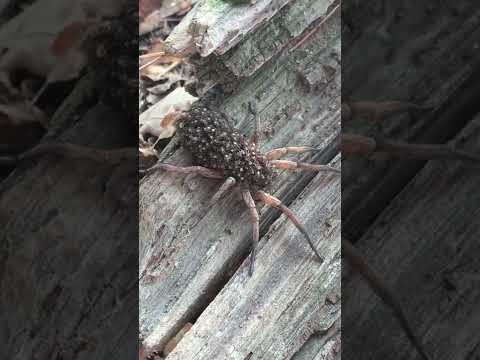
ViralHog shared a video taken by someone in the Central Valley of California, who saw a wolf spider crawling over a piece of wood in their backyard. The huge spider pauses on the wood while the videographer zooms in, showing many baby spiders crawling and clinging to their mother’s back.
People were amazed (and, yes, a little horrified) by the video, which has over 530,000 views. “Interesting! However I hope this never comes into my house lol,” one person commented. Another wrote, “If that ain’t the stuff nightmares are made of?! 😳 Eek! But what a good mama!”
How Wolf Spiders Reproduce
Male wolf spiders attract the attention of females by waving their pedipalps, or mouth appendages, in the air. Once the spiders mate, the female wolf spider is left in charge of the offspring because the males die shortly after.
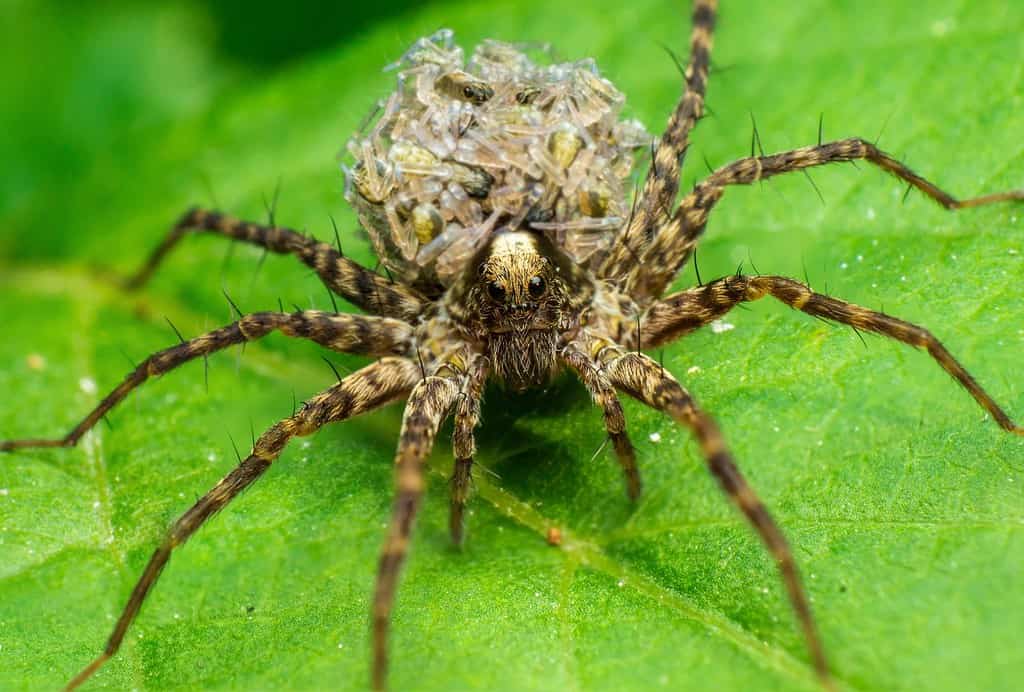
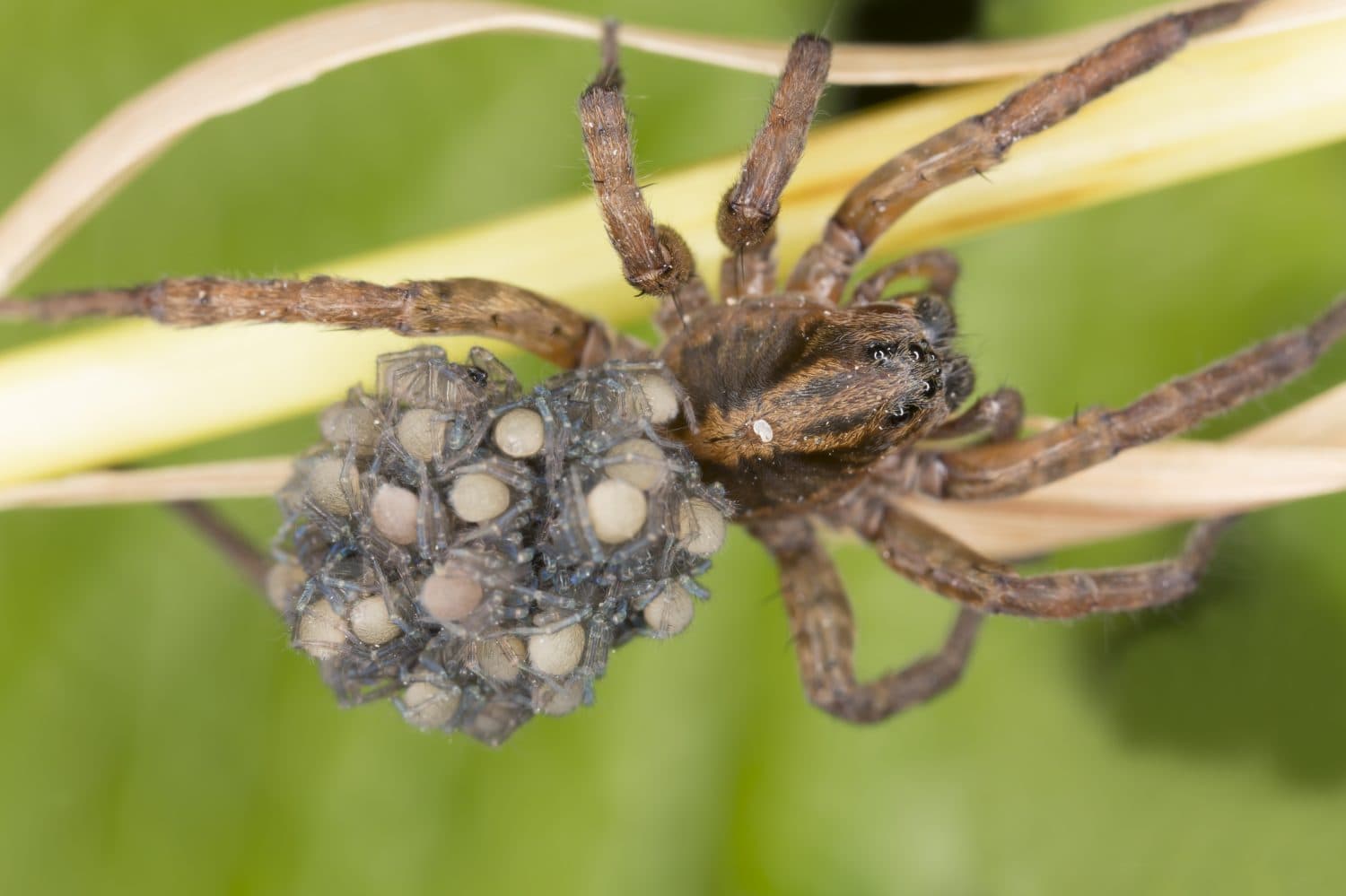
Wolf spiders are among the few spider species to carry their spiderlings on their backs.
©Alexey Wraith/Shutterstock.com
Because the mating season is generally in the fall, mother wolf spiders keep their fertilized eggs inside them over the winter. When the weather warms up, she lays around 100 eggs! Because wolf spiders only live one to two years, they tend to produce a lot of spiderlings to ensure species survival. Once the eggs are laid, the mother wolf spider wraps them in silk and carries the egg sac on her abdomen until they hatch, which takes about two to three weeks.
Spiderlings Stay with Their Mothers
As the spiderlings start to emerge from the egg sac, they crawl onto their mother’s back and stay there until they are ready to venture out into the world on their own, as shown in the video above. When they first emerge from their sacs, the baby wolf spiders are only about 1-2 mm long!
Taking care of babies like this is rare in the spider world, as wolf spiders are among the few spiders known to carry their offspring on their backs. They remain this way for several weeks before the spiderlings are big enough to leave their mother’s back and navigate their surroundings on their own.
If you hope to see one of these incredible mother wolf spiders carrying her babies—or want to know when to avoid the outdoors to steer clear of them—you should know that the spiderlings usually start to hatch in the spring or early summer.