
Quick Take
- When a python grabbed one mongoose, the rest of the group did something that turned the predator into the prey, and the whole thing was caught on video. Watch the group defense →
- Mongooses are famous for fighting venomous snakes, but a python poses a completely different kind of threat, and their venom resistance is no help against it. See how pythons differ →
- Some mongooses have a biological quirk that makes certain snake toxins far less effective, though this does not make them invincible. Learn about mongoose traits →
- A python doesn't need venom to be deadly, which changes everything about how a mongoose has to fight back. How pythons kill prey →
Most animals know better than to tussle with a snake, but mongooses are not most animals.
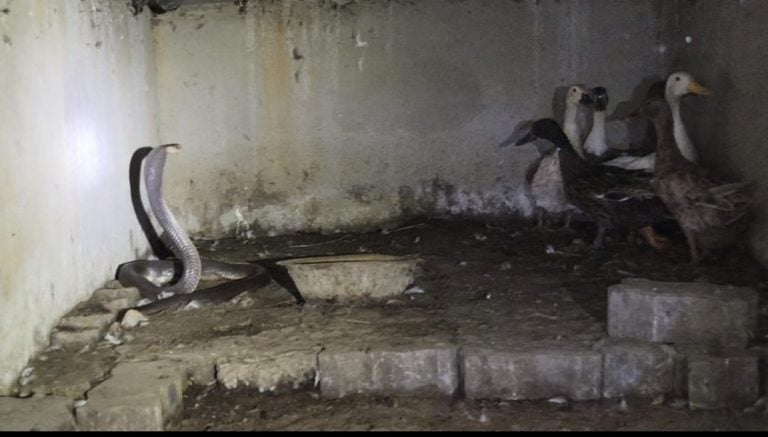
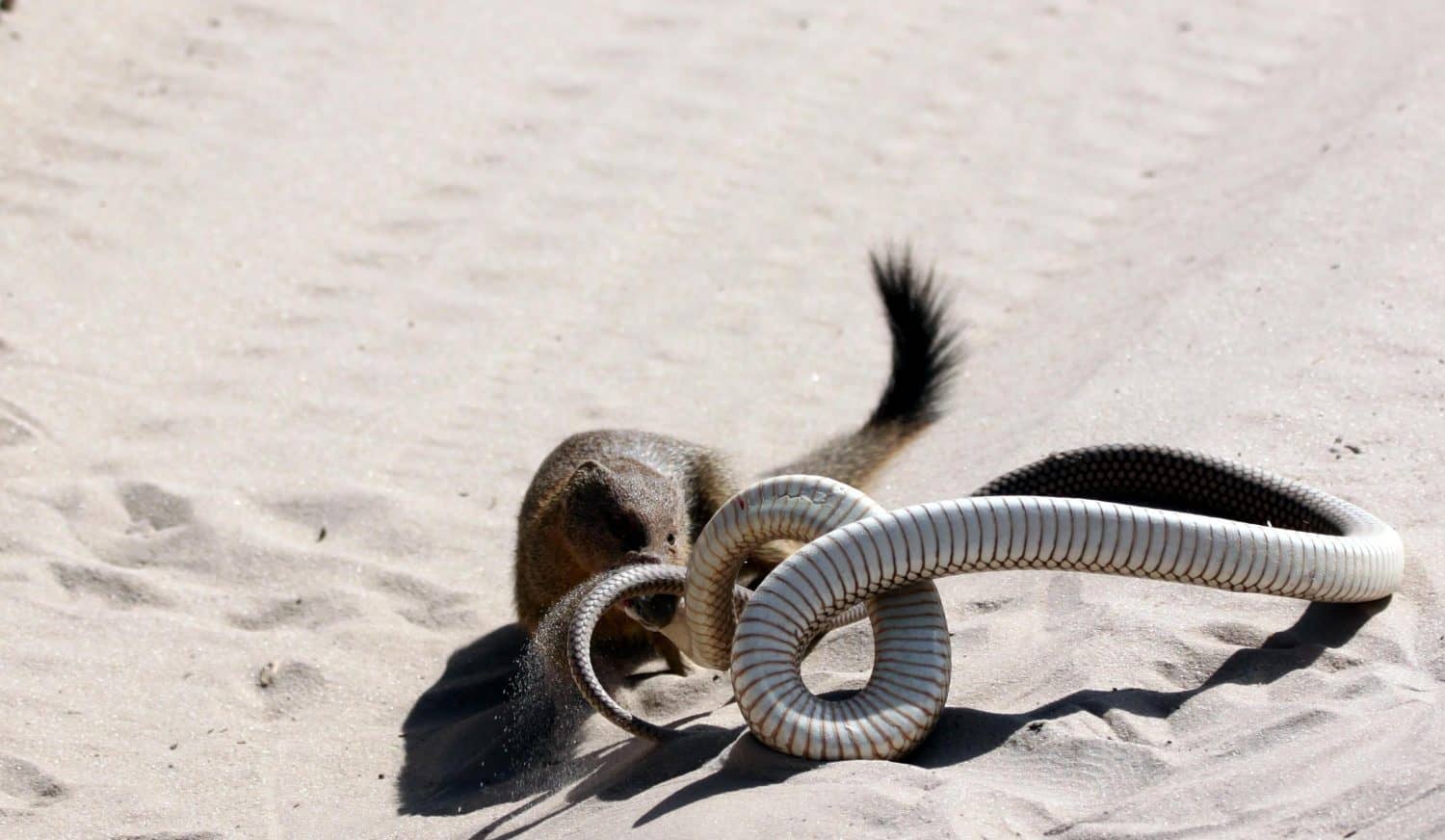
In the tense viral video shown above, a python appears to grab a single mongoose, and within seconds, a band of mongooses springs into action. What starts as a predator-prey encounter quickly turns into a chaotic mob defense, with more than 10 mongooses swarming the snake and fighting to protect one of their own.
The mongooses bite and tug at different parts of the python’s body. Some pull at its tail while others bite along its body as the snake struggles to get away. The dramatic scene is a powerful example of group defense, a behavior seen in some social mongoose species when a predator threatens one of their members.
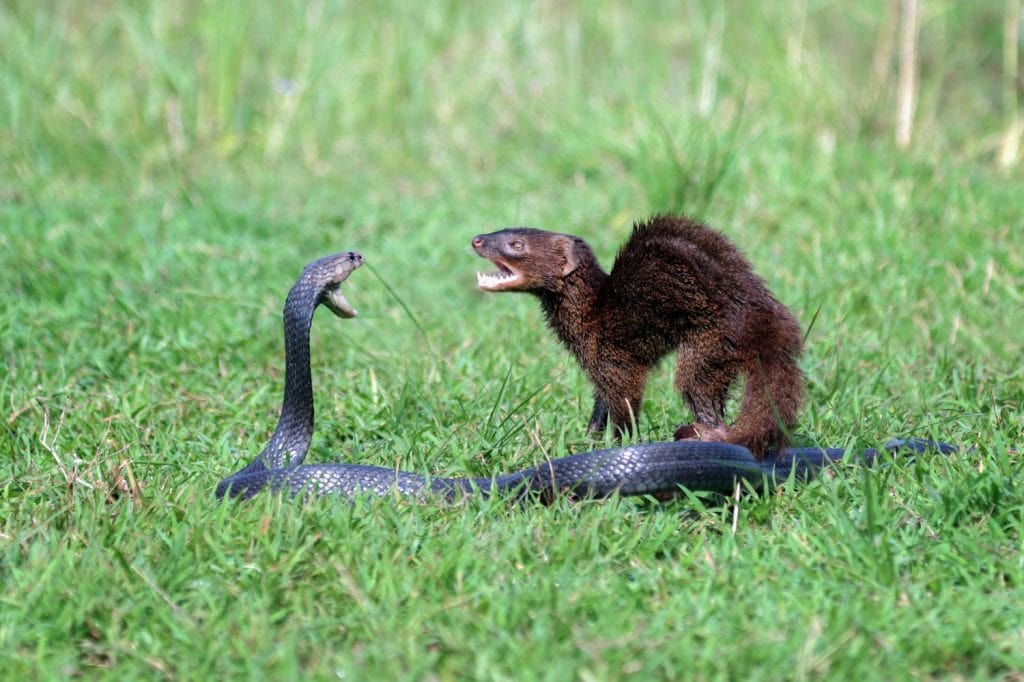
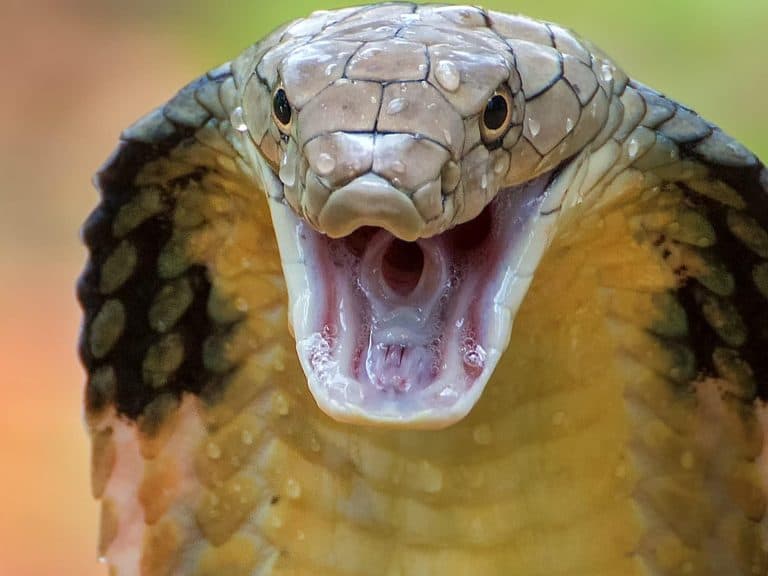
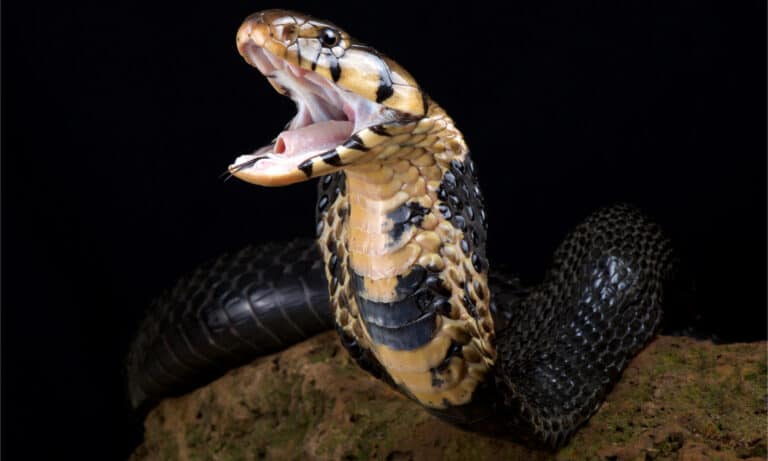
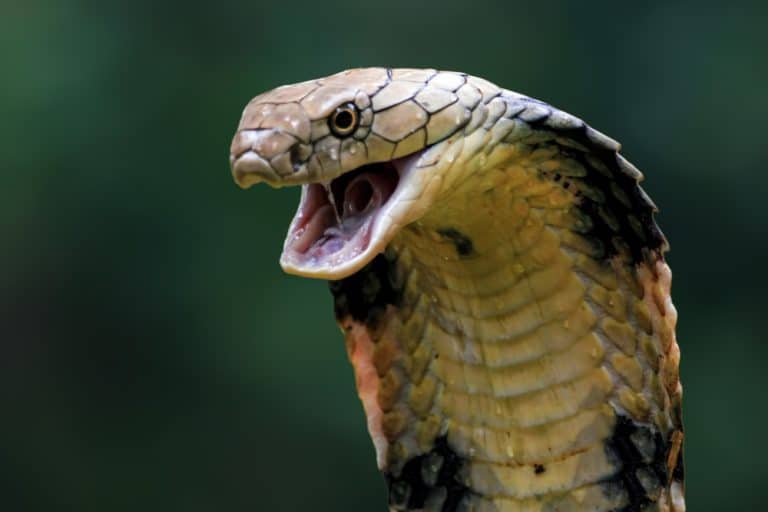
Mongooses are tiny but mighty, seemingly unafraid of sparring with snakes, even venomous ones like this cobra.
©Kurit afshen/Shutterstock.com
Where Do Mongooses Live?
Mongooses are small carnivorous mammals found mainly in Africa and Asia. There are many different mongoose species, so their exact range and habitat depend on the species. Some live in savannas, open woodlands, grasslands, scrublands, forests, and rocky areas.
Some mongoose species are highly social and live in groups, often called colonies or packs. In these groups, members may work together to defend one another from predators. That kind of teamwork can be especially important when the threat is a snake.
Mongooses are famous for their bold confrontations with snakes, including venomous species such as cobras. They rely on speed, agility, and quick bites to avoid being struck while harassing or attacking the snake. However, they are not invincible, and taking on any large snake can still be dangerous.
Where Do Pythons Live?
Pythons are nonvenomous snakes found in Africa, Asia, Australia, and parts of Oceania. Their habitats vary by species, but many live in warm environments such as forests, grasslands, wetlands, scrublands, rocky areas, and other sheltered habitats.
Unlike venomous snakes, pythons do not kill prey with venom. Instead, they are constrictors. After grabbing prey with their teeth, they wrap their muscular bodies around the animal and squeeze.
Python size varies widely. Some species remain only a few feet long, while the largest pythons can grow to more than 20 feet long. Well-known python species include ball pythons, Burmese pythons, reticulated pythons, and Indian pythons.
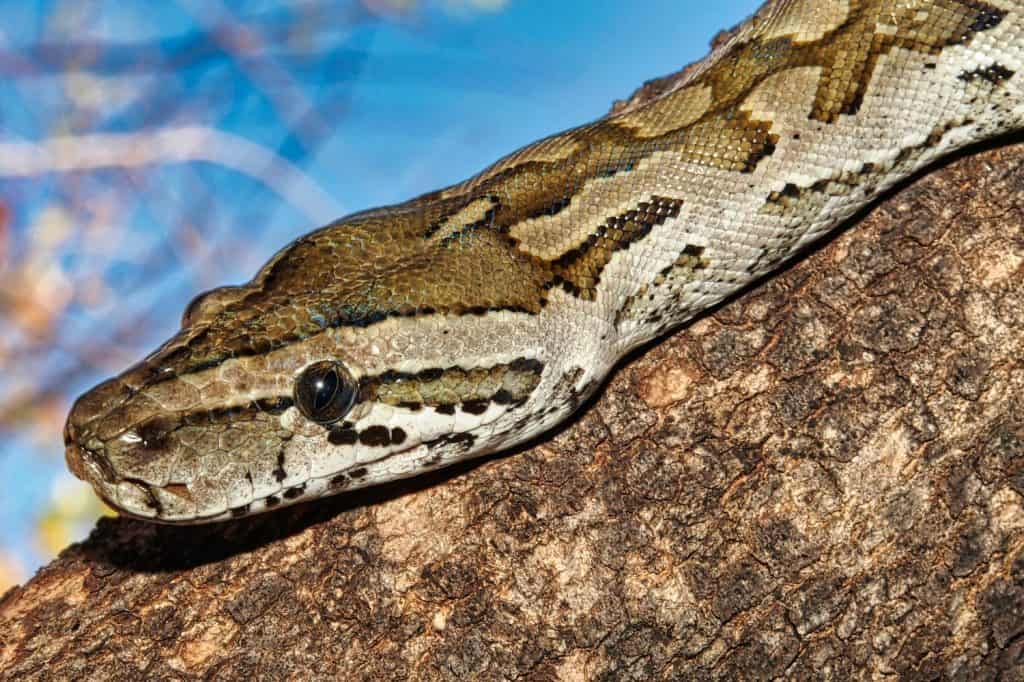
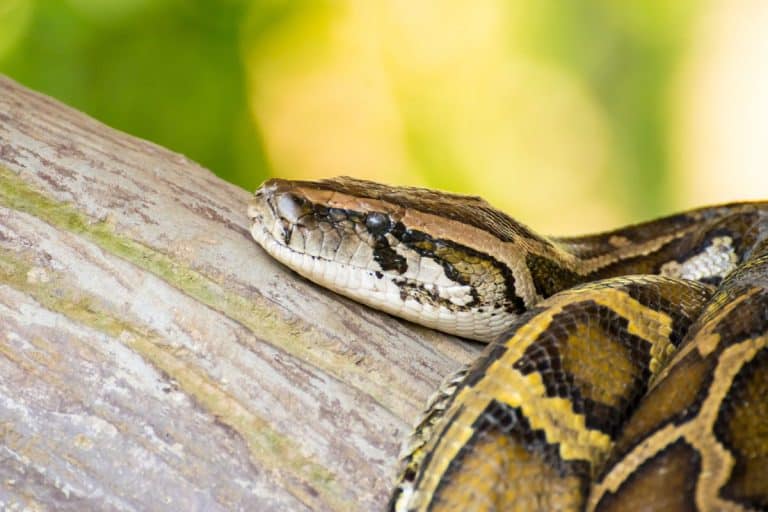
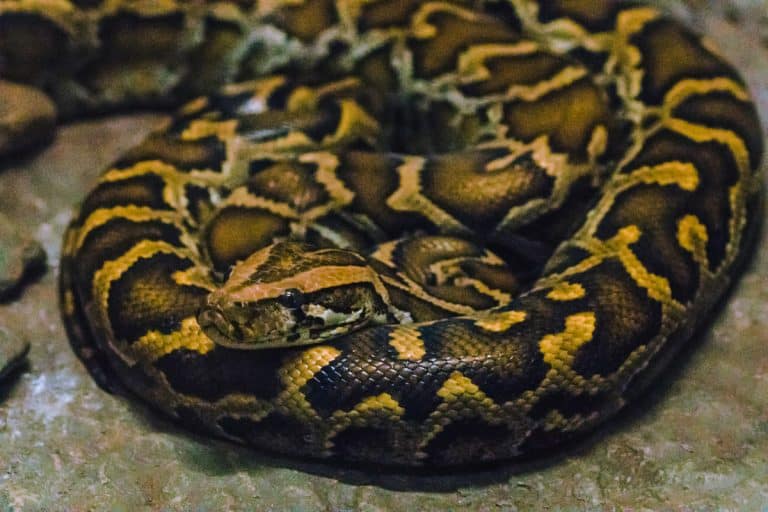
Pythons are constrictors, using their powerful bodies to squeeze their prey.
©Al Carrera/Shutterstock.com
Do Pythons Prey on Mongooses?
Mongooses are not usually considered a primary food source for pythons, but a python may try to eat one if the opportunity presents itself. Python diets vary by species and size, but they commonly eat mammals, birds, reptiles, and other animals they can overpower.
The video appears to show exactly that kind of risky encounter: a python grabbing a mongoose, followed by the band rushing in and attacking the snake.
Mongooses, on the other hand, are well known for fighting snakes. Some species have adaptations that make them more resistant to certain snake neurotoxins, especially those found in cobra venom. Their resistance is tied to changes in their nicotinic acetylcholine receptors, which make it harder for some toxins to affect them.
Still, that does not mean mongooses are completely immune to snake venom. A bite from a venomous snake can still be dangerous. And in the case of a python, venom is not an issue at all. The danger comes from the python’s bite, strength, and ability to constrict its prey.
This makes the video especially intense: it is not just a snake-versus-mongoose fight, but a group defense response from animals that often rely on speed, numbers, and coordination to survive dangerous encounters.