
Quick Take
- Not all spiders wait for prey to come to them. The way this one actively hunts is unlike anything you'd expect from an arachnid. See the hunting style →
- Its nickname sounds like something from a horror film, but its actual behavior toward humans is the complete opposite. Learn about its nickname →
- Its enormous eyes aren't just for show. They solve a specific problem most predators never crack. Discover those giant eyes →
Spiders are the master hunters of the insect world. Their agility, eyesight, and speed are second to none when it comes to catching prey. Driven by the need to feed, most wait in shadowed corners of their webs for an unsuspecting meal to come along. But not every spider relies on stealth and patience to catch its dinner. Some, like the net-casting spider in this YouTube video, actively pursue their prey instead of waiting for it.
A Fearless Hunter Catches Its Prey With Homemade Nets
Deinopidae, also known as net-casting spiders, are one of the most unique species of arachnid in the world. They don’t create traditional webs like many others. Instead, they prefer to be active night hunters, using spun silk as a net rather than a web. These spiders lead a unique lifestyle and are found in the southeastern U.S. and Jamaica. Members of the family Deinopidae are also distributed worldwide in warm regions, where there are plenty of palm trees for them to wait for their prey.
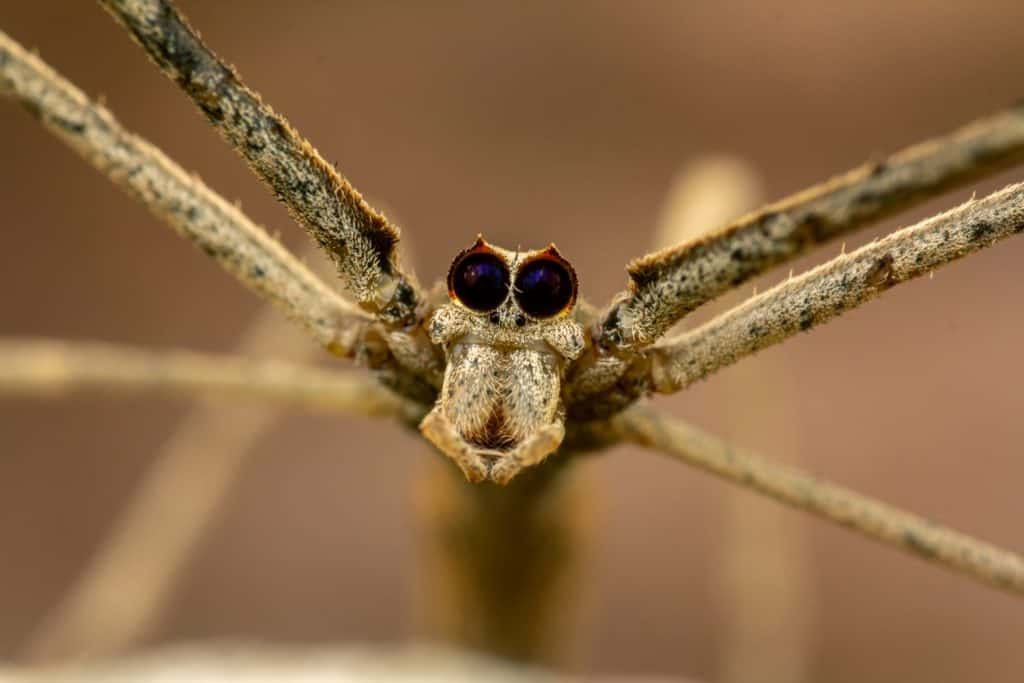
Up close, net-casting spiders appear to only have two eyes, hence the nickname “ogre-faced spider.”
©Manoj Kumar Tuteja/Shutterstock.com
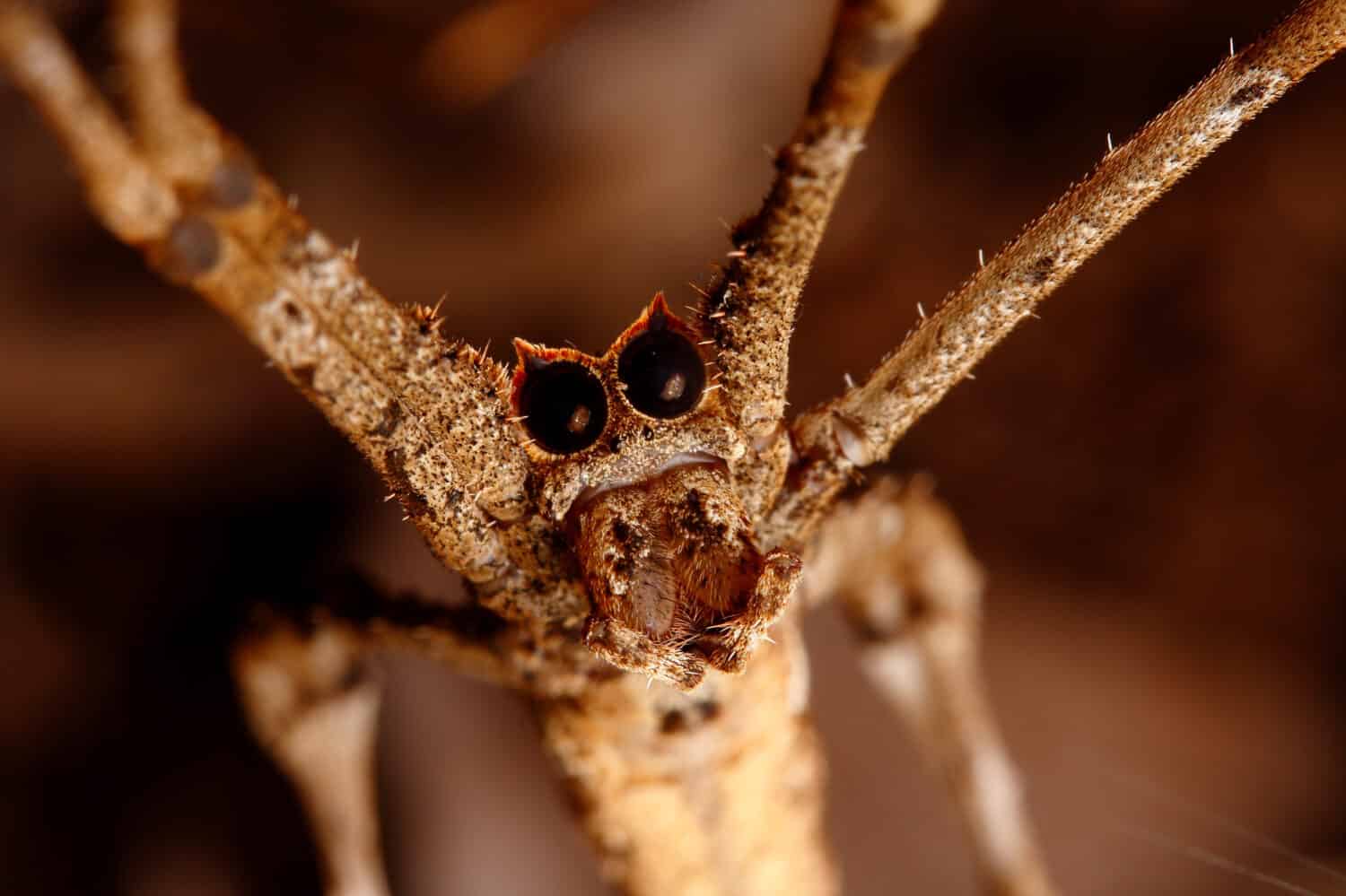
Two massive eyes at the front of their heads earned them the nickname “ogre-faced spider.” But there’s nothing ogre-like about these skilled predators. Their two enormous eyes help them see in the dark, a necessary trait for night hunters. These are accompanied by long legs, covered in tiny hairs that can detect the slightest vibrations. Few insects escape net-casting spiders once these hunters have set their sights—or their eight eyes—on them.
Quicker Than A Flash
Net-casting spiders are famous for hanging upside-down from palm leaves. In this position, they can see insects flying toward them and also sense vibrations above. This gives them a unique advantage to catch any insect that happens to come their way. And for a spider that catches its prey in a net, this is the perfect place to be.
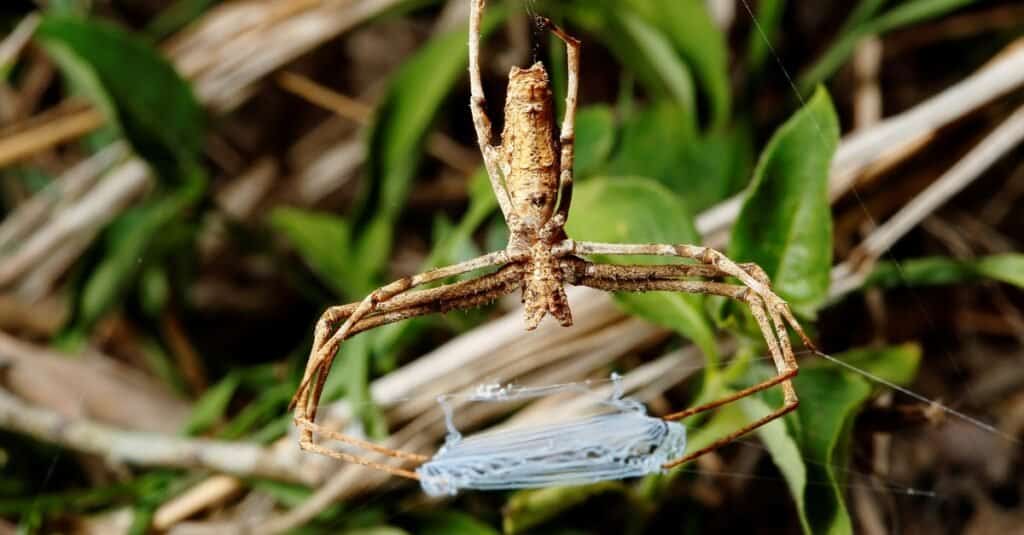
Net-casting spiders are patient hunters, but prefer to actively catch their prey rather than the sit-and-wait method.
©Ondrej Michalek/Shutterstock.com
When prey is within jumping distance, the net-casting spider launches itself from its position. As it does, it holds the corners of its silk net with its front legs. Its goal is to catch prey mid-flight, and these spiders rarely miss. As they fling themselves forward, they wrap their prey in the net faster than the human eye can follow. Then, the spider injects the insect with a paralyzing toxin before consuming it. Despite their vicious hunting habits, net-casting spiders are completely harmless to humans. In fact, they’re quite docile!