
In our human culture, the idea of going days without food is almost unheard of, but many animals on our planet view things quite differently. There are many animals that can survive without food for months. You’ve likely heard of some of them before, such as the bears that can hibernate for an entire season without a meal or the camels that conserve water and sustenance in their humps. However, there are also other creatures you may not have thought of before, such as many types of frogs and the microscopic tardigrades that are found around the world.
The species on this list can survive for weeks and months without food due to their unique traits, such as the ability to lower their metabolism, store food in their body parts, and even dig deep into the dirt and mud for years at a time. It’s quite impressive what these creatures can do, so check out this list and impress your friends with your knowledge of animals.
Bears
Perhaps one of the most famous of the animals that can survive without food for months is the bear. They must be able to do this in order to hibernate during the winter successfully. When the time for hibernation approaches, the bear undergoes a process called hyperphagia. During that time, the bear travels while searching for fish, berries, nuts, and any other high-calorie foods it can find. In the end, the bear can gain hundreds of pounds, and it’s that fat storage that creates the energy the bear needs to survive during months of hibernation.
During hibernation, the bear’s body functions slow down, including its metabolic rate, which will be a recurring theme on this list. The bear is so inactive that it typically only breathes once every 45 seconds. The fat they burn during hibernation is converted into the calories and water they need to survive while resting. Bears hibernate mostly because it can be very difficult to find food during the winter, and hibernation protects them against the harsh weather of the season.
Tardigrades
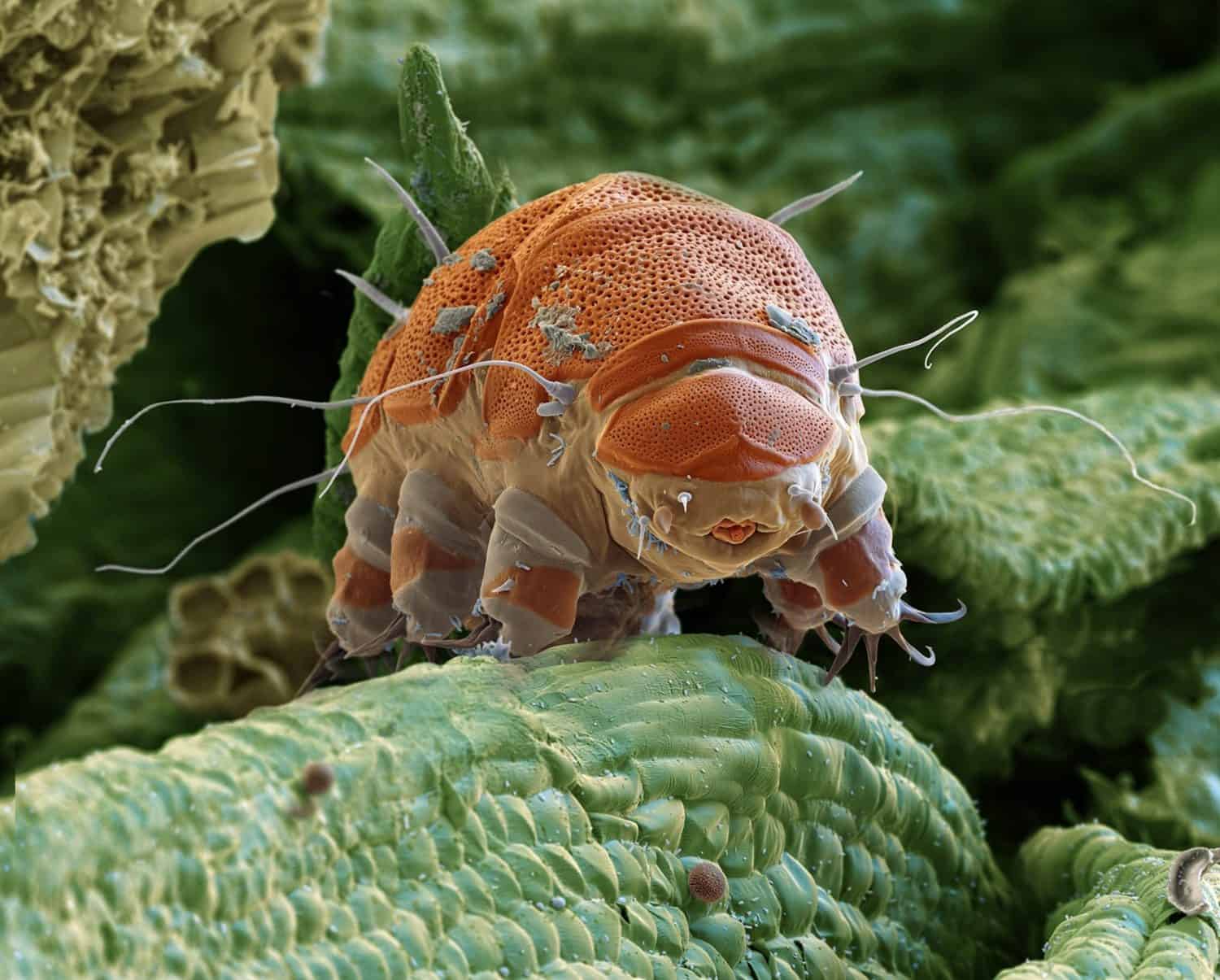
Tardigrades are microscopic but quite tough. They can live in the harshest climates for months without sustenance.
©TajdidProtik/Shutterstock.com
One of the most unique animals that can survive without food for months is the tardigrade, often referred to as the “water bear” due to its appearance under a microscope and its ability to last for extreme lengths of time without food. However, unlike a bear, you’ll be unable to see a tardigrade with your naked eye. That’s because the tardigrade is a microscopic animal, typically measuring only around one millimeter in size. They can be found on moss, in tropical forests, in the freezing waters of the Arctic, and in almost any other extreme environment you can imagine.
Tardigrades are able to last months or even years without food or water due to their ability to suspend their metabolism in a state called cryptobiosis. During this time, they’re almost in a deathlike state, where the water content of their bodies drops to below 1% and metabolism is at 0.01% of normal function. The species typically enters this state when living in extreme temperatures. There’s still much to learn about these unique creatures, but they may end up being one of the longest living species on this planet.
Yellow Bellied Sea Snake
Many species of snakes can survive for extended periods without food, which can be beneficial when food supplies are scarce. One species of snake famous for this behavior is the yellow-bellied sea snake (Hydrophis platurus). Typically, the medium-length sea snake, which is found in the Pacific and Indian Oceans, lives off a diet of various sea fish. The snake needs fresh water to survive. Since it lives in saltwater, the snake often goes to the surface to drink the rainwater that gathers on the ocean’s surface.
Of course, it doesn’t rain every day, so the snake needs a backup plan during dry seasons. That’s why studies show that the sea snake can go up to seven months without water. To avoid severe dehydration, they slow their metabolic rate and rely on stored fat. It must be said that there is still a lot to learn about this species, and scientists continue to research this snake to see how they can be so resilient.
Snails
Snails are very tough creatures, and it’s believed that they have been around for millions of years. For a species to persist for that long, it must be very resilient. Granted, not all snails are the same when it comes to going long periods without food. Typical garden snails can go between 2 and 8 weeks without food. However, when presented with harsh conditions, the giant African land snail can survive for nearly eight months without food.
Snails are able to go long periods without food by going into a state of dormancy. In winter, this dormancy is called hibernation, and in the summer, when temperatures are high, snails experience aestivation, a state in which they slow their metabolism. During this time, they seal themselves inside their shells while using their protective membrane to conserve energy and moisture. Essentially, they’re in a form of suspended animation until the weather conditions improve.
Desert Tortoise
One of the most resilient animals is the desert tortoise. Most live between 50 and 80 years, and some go past age 100. To do that, an animal must have a way to survive even when food is scarce. When the temperatures are hot and dry, and there’s not much to eat, the desert tortoise will go into the same state of inactivity called estivation that snails experience, which is a prolonged rest.
During this estivation period, the tortoise will hide inside its shell and become inactive while it conserves water and energy. Even when they’re active, tortoises can go up to a year without drinking water in the traditional sense. Instead, they can survive on the moisture of the plants they eat.
Emperor Penguins
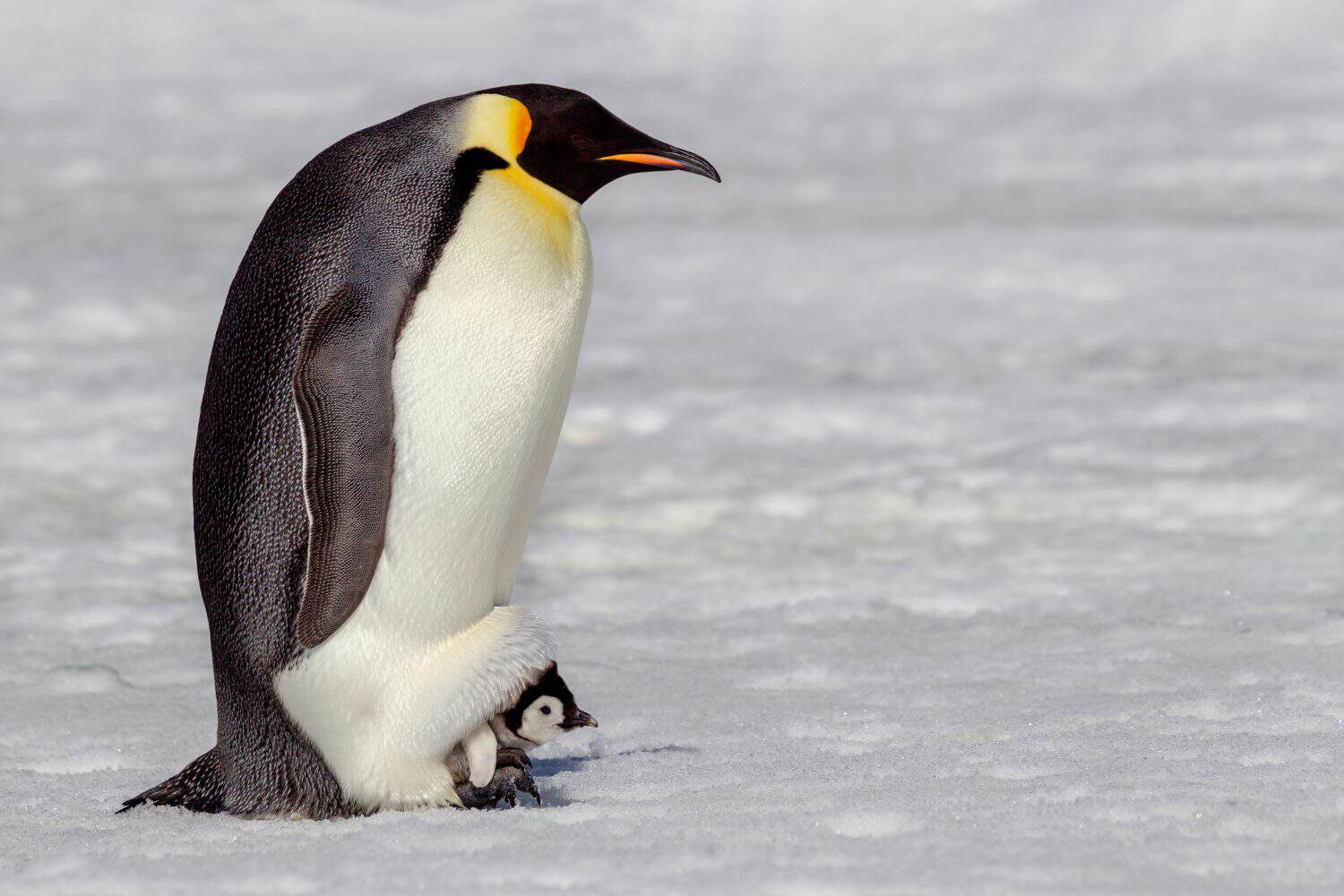
Emperor penguins often go months without food while waiting for their newborn babies to hatch.
©Danita Delimont/Shutterstock.com
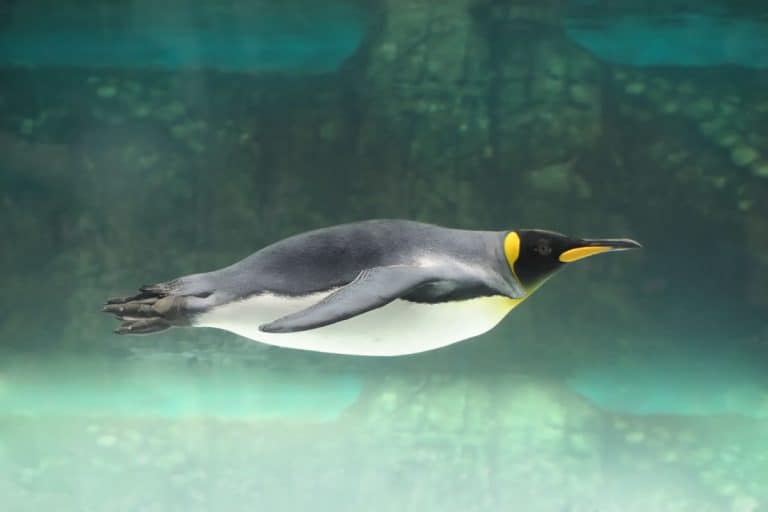
One of the more surprising animals that can survive without food for months is the emperor penguin. It’s not unusual for the penguins to go 2-3 months without food. This fasting period typically occurs when the penguins are molting (shedding feathers) or during mating season.
They’re able to accomplish this in several ways. One of them is by slowing their metabolism, allowing the food and moisture in their systems to last longer. Also, the penguins have a thick layer of fat that provides them with energy when they’re not eating. While this process is intriguing, it’s not always an easy process for the penguins. While relying on their own energy, the penguins can often lose up to 50% of their body weight, and they’ll need to work hard to regain it.
Kangaroo Rat
The kangaroo rat is accustomed to living in dry conditions, so it must adapt to survive. Since they primarily live in the desert and in desert-like conditions, food and water can be scarce. Kangaroo rats will consume a diet of desert grasses, mesquite beans, and the occasional insect.
When the food supply dries up, the species primarily obtains the moisture it needs from the seeds it consumes. When they eat the seeds, their bodies transform the fat into water through digestion. They obtain about half a gram of water from every two seeds they consume. Their kidneys also work in such a way that very little water is wasted. When the seeds are not around, the kangaroo rat can continue to live without eating due to its fat reserves.
Gila Monster
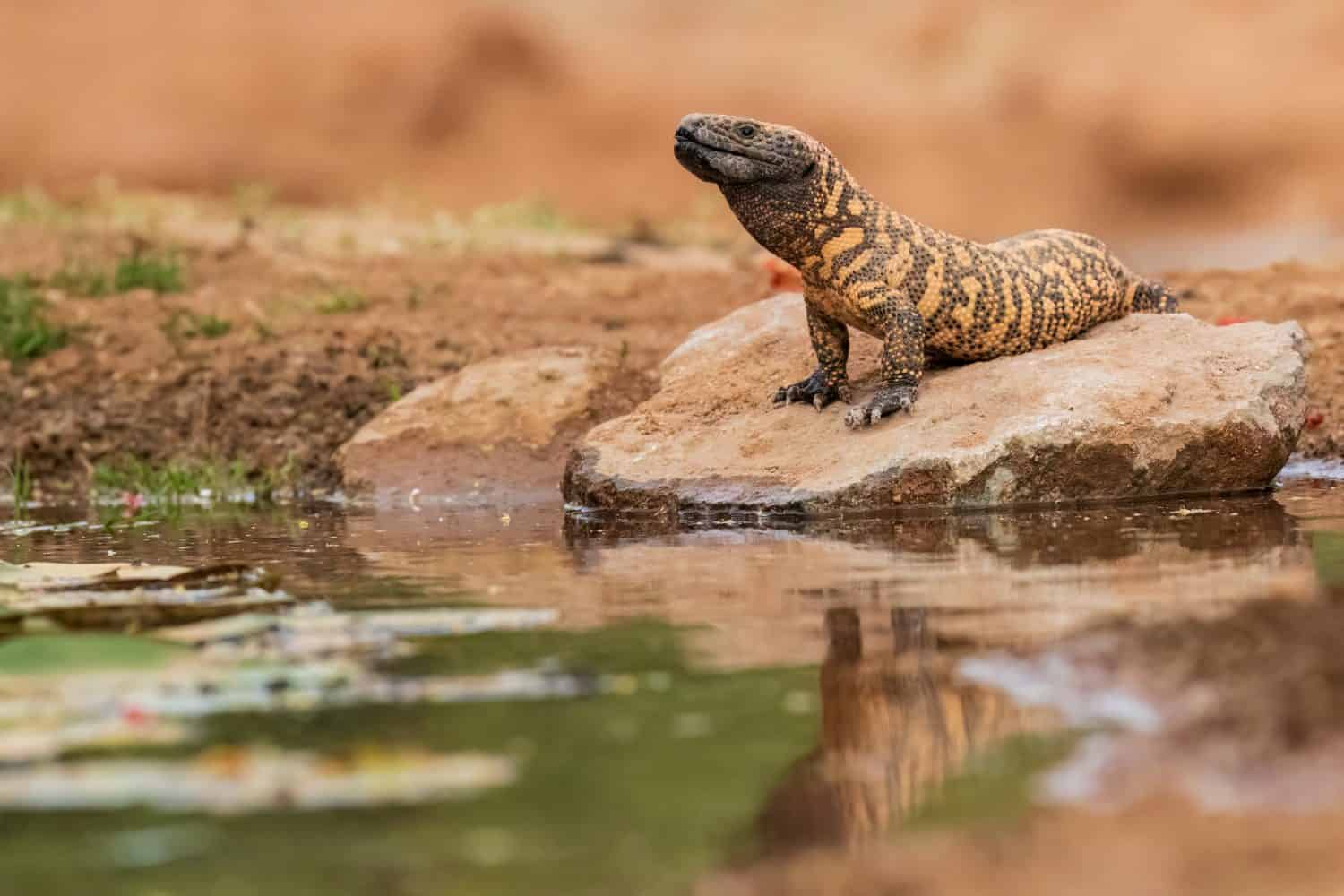
Gila monsters can go months without food partly due to the food they store in their tails.
©Danita Delimont/Shutterstock.com
The gila monster is a heavy-bodied lizard that can be found in areas of Arizona, Utah, California, Nevada, and Mexico. They’re fascinating creatures that spend a lot of time living under rocks and bushes, and they can live till around 35 years of age. A typical diet for these creatures includes vertebrates such as rabbits, the aforementioned kangaroo rats, and the eggs of tortoises, quails, and smaller lizard species.
When a gila monster finds a good meal, it eats more than necessary, sometimes about 30% of its body weight. That’s because they’re preparing for the parts of the year when food is scarce. Much of the food that they eat is stored in their tails and their abdomens. It’s typically enough to get them through dry or winter seasons.
Frogs
Like several other animals on this list, frogs can survive extended periods without food by going into a state of dormancy called hibernation (during winter) or aestivation (during warm seasons). During this time, their metabolism slows down dramatically as they conserve energy. The moisture in their bodies is conserved, thanks in part to the glucose and water in their cells. This process helps frogs to get through the harsh seasons.
Burrowing Frogs
While most frogs have this ability, several burrowing frogs, such as Cyclorana alboguttata, take this to another level by having the ability to live for years without water or food. They’re able to do this by burrowing deep into mud. While there, they engage in a process called mitochondrial coupling, using the energy stores in their bodies to get through harsher months. While this ability is awesome, it’s not without drawbacks, as prolonged periods without food can lead to weakened immune systems, stunted growth, and other unhealthy consequences.
African Bullfrogs
Similar to the burrowing frogs, the African bullfrog can also survive the dry season and go months without eating by entering its dormant aestivation stage. During this period, the African bullfrog also digs deep into the soil using its powerful legs. They can remain underground for up to two years until the perfect rainy conditions return.
Crocodile
Crocodiles are extraordinary creatures that can survive a wide range of challenges with minimal effort. Many crocodiles can hold their breath for up to eight hours by slowing their metabolism, which in turn helps them to conserve oxygen. Crocodiles are also unique in their eating habits and meal preparation. The average crocodile eats about 50 meals a year. When they eat, they are not picky about what they consume. They’ll eat anything from birds to fish and snails. This is due to their acidic stomach, which can digest bones, shells, hooves, and just about anything else.
The species is also very adaptable when food is scarce. In fact, they can go for over a year without eating. That’s due to their superpower, which is being cold-blooded. Unlike warm-blooded creatures that use the energy they gain from eating to warm their bodies, crocodiles obtain their body heat from the environment. That means they don’t require as much food to get the energy they need. Crocodiles also have an ultra-slow metabolism, which means they don’t need to eat frequently to remain active and healthy.
Camels
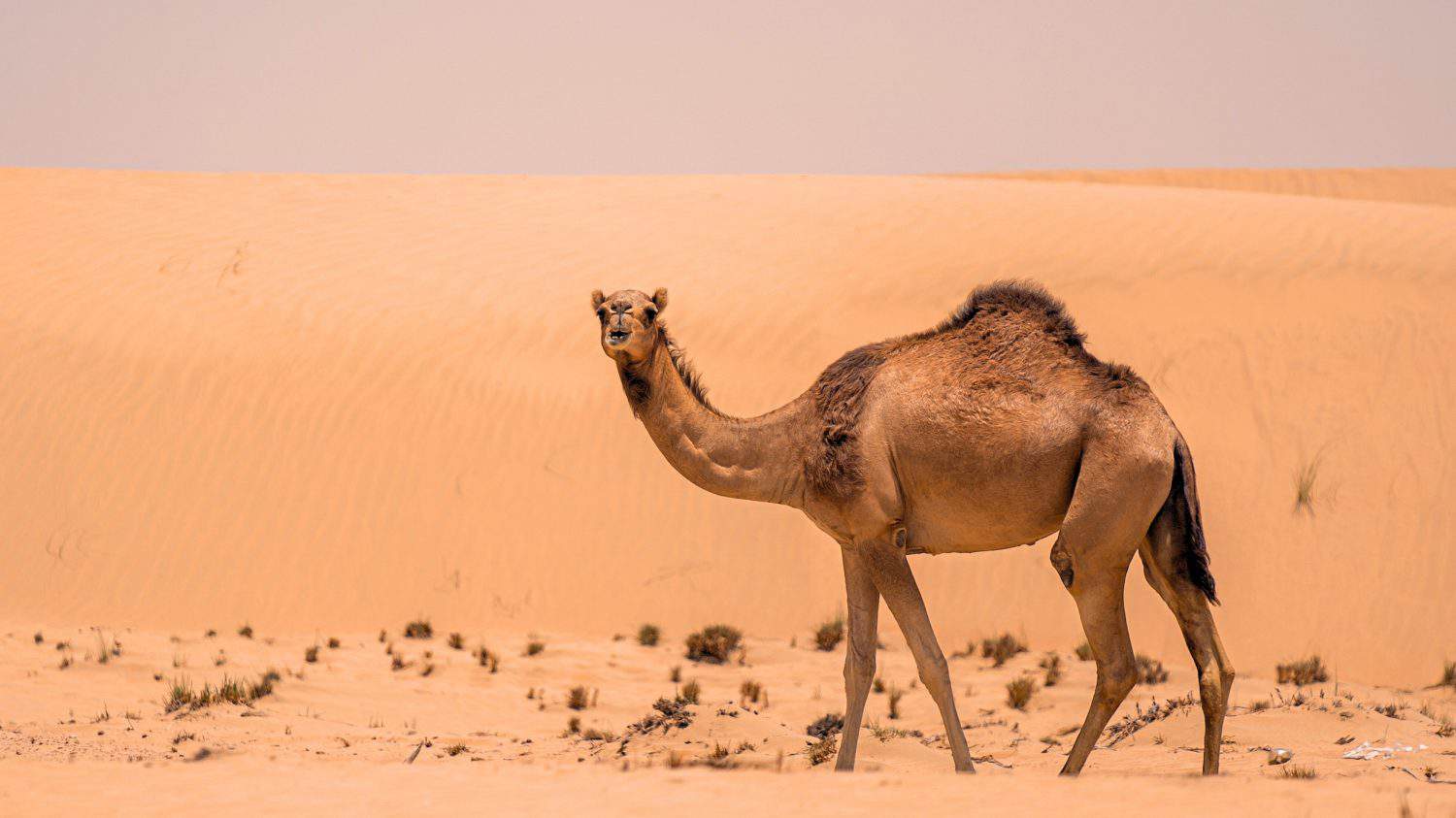
Camels store fat in their humps, which provides energy and water when food is scarce until they can find grass or leaves to eat.
©webcog/Shutterstock.com
The camel is one of the first species that often comes to mind when people think about the animals that can survive without food for months. Camels are diurnal, which means they are active during the day and sleep at night. During the day, they spend most of their time eating or searching for food. Most camels live in the desert, but that doesn’t prevent them from eating enough food. Their split upper lip allows them to get very close to the ground to eat the shortest grass. They also eat leaves and twigs from trees.
However, food can often be scarce in the desert, which is acceptable because camels can survive for several months without food. They accomplish this by taking advantage of the fat that’s stored in their humps, which keeps them full of energy when food is nowhere to be found. A camel’s hump can grow larger depending on the amount of food it consumes. The hump can also get smaller and even droop when food is especially scarce, meaning they’ll need to find a meal sooner rather than later.
Alpine Ibex
The alpine ibex (Capra ibex) is a type of wild goat that lives in the mountainous regions of the European Alps. This distinctive species is notable for its large horns that curve backward. Both males and females have these horns, though the females’ horns are smaller. Alpine ibex are herbivores, and most of their diet consists of shrubs, flowers, and various plants. The animals are incredibly talented rock climbers that can effortlessly jump from cliff to cliff.
Alpine ibex are also remarkable in their resilience when food is scarce. During winter, when the plant life is frozen or non-existent, the species must find a way to survive. They do so by eating as much as possible during the warmer season while accumulating fat. When winter arrives, they utilize this food storage to obtain the energy they need. Additionally, they reduce their metabolic rate and slow their heart rate. While they can go a while without food, they’re also known to migrate to south-facing slopes where they may be able to find lichens, shrubs, and salt licks for sustenance.
Arctic Fox
Finally, we have the amazing arctic fox. You can identify this adorable creature by its resemblance to a common red fox, except the arctic fox is covered in pure white fur. As the name implies, this fox inhabits the Arctic regions, where temperatures can drop as low as -58 degrees Fahrenheit. To survive, it depends on the thick fur covering its body and feet, which act as natural snow boots.
That’s not the only way the arctic fox survives the harsh conditions. It can also go several months without eating, thanks to its ability to reduce its metabolism when food is scarce during the coldest parts of the year. During autumn, when the cold season is near, arctic foxes will gorge on as much food as they can, sometimes increasing their body weight by 50% to build up their energy reserves. Still, even with these adaptations, arctic foxes have relatively short lifespans. All of the animals on this list are quite impressive. This is just another reason why nature continues to surprise animal lovers and scientists year after year.