
Quick Take
- This salamander's strangest defense has nothing to do with its jaws, a fact that earned the creature a very unexpected nickname. Meet the mucus defense →
- It can outlive most pets by decades, and yet that impressive lifespan is actually a major threat to its survival. Discover the longevity paradox →
Imagine walking along a quiet mountain stream in Japan when you see something unique in the water. You approach, and what looks like a log starts to crawl. All of a sudden, you realize it’s a giant, 5-foot salamander. If this happened to you, your eyes would not be deceiving you. Instead, you may be seeing the fascinating creature captured in this YouTube video. It’s called the Japanese giant salamander. Here’s what makes this remarkable amphibian so unusual.
Meet the Japanese Giant Salamander
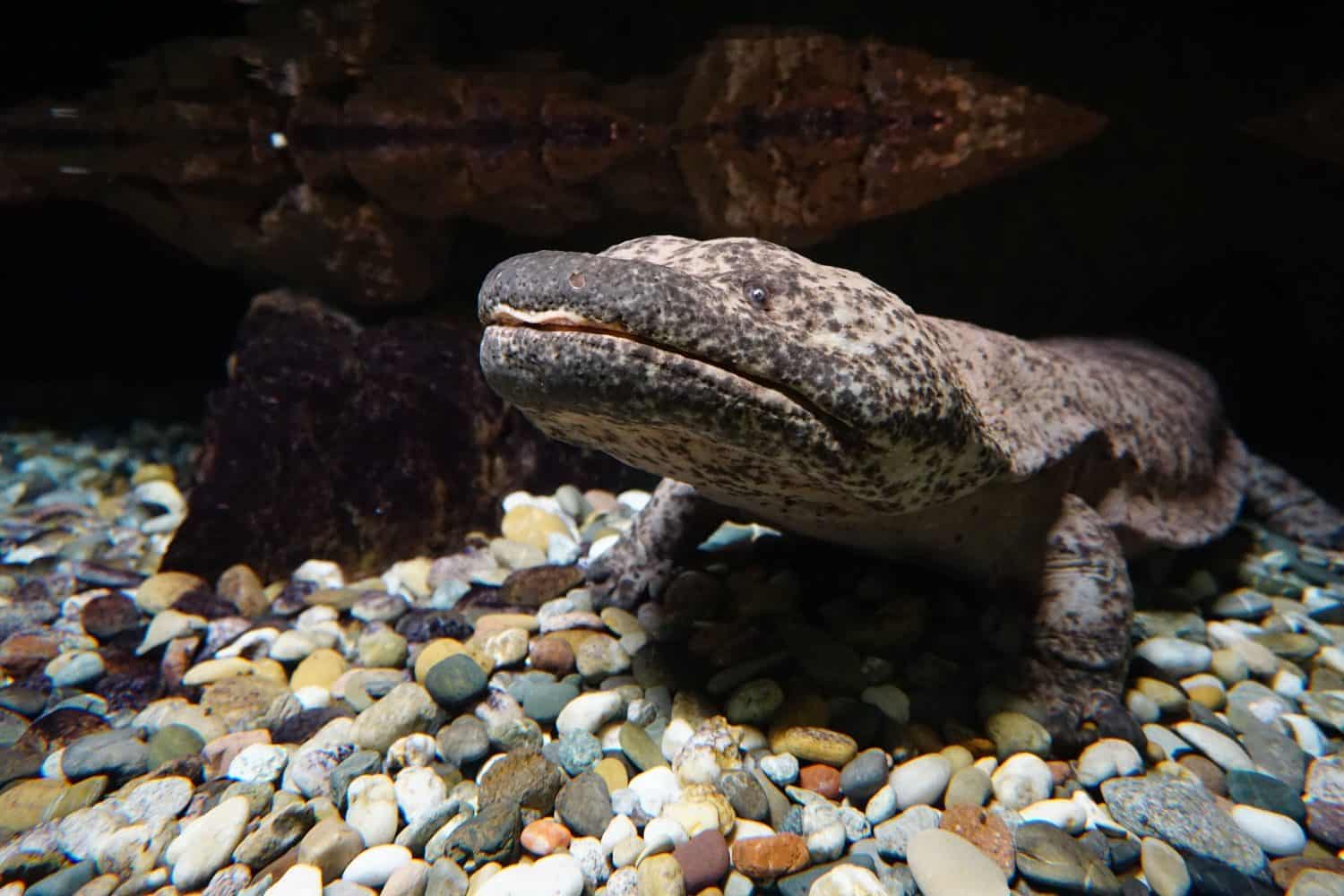
This 5-foot salamander is officially named Andrias japonicus, and it’s one of the largest living amphibians on Earth. In addition to growing up to five feet in length, the creature can also weigh as much as 55 pounds. That’s roughly the size of a medium-sized dog—but with the body shape of an oversized salamander.
Where Are They Found?
Unlike many giant animals that roam vast territories, the Japanese giant salamander has a surprisingly limited range. It is endemic to Japan, meaning it naturally lives nowhere else on Earth. You’re likely to find these salamanders in cool, fast-flowing mountain streams and rivers. Their habitat is incredibly important because they breathe largely through their skin. Clean, oxygen-rich water allows enough oxygen to diffuse directly into their bodies. Their wrinkled, folded skin dramatically increases the surface area available for this process.
What Do They Eat?
So, what does a 5-foot salamander eat? Japanese giant salamanders are opportunistic carnivores. Rather than actively chasing prey over long distances, they rely on patience. They typically remain hidden among rocks until an unsuspecting meal swims close enough. A typical menu item may include fish, crabs, frogs, insects, small reptiles, and other aquatic animals.
When prey gets within striking distance, the salamander opens its enormous mouth and creates a powerful suction that pulls the victim inside almost instantly. Because they’re cold-blooded, they don’t need to eat as often as mammals of similar size. A large meal can sustain them for quite some time.
Are They Dangerous?
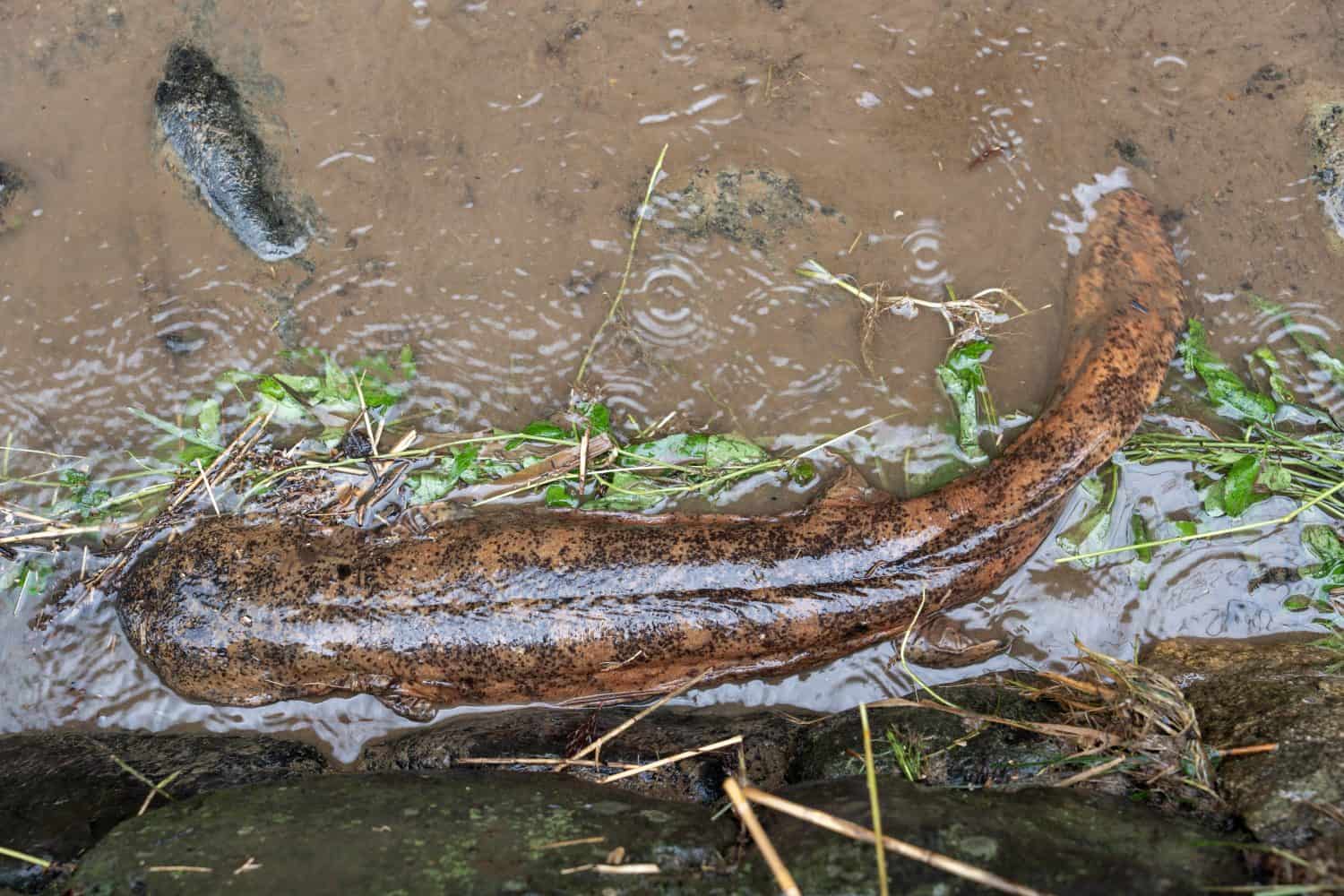
This giant salamander doesn’t attack humans, but it may defend itself if threatened.
©Akira Nakatani/Shutterstock.com
You may think of a 5-foot salamander and immediately believe it could be dangerous, but they are not considered dangerous to people. They’re generally shy animals that avoid human interaction whenever possible. If disturbed, they usually attempt to swim away or remain perfectly still so as not to be seen.
However, don’t take that as an invitation to bother this fascinating creature. Like many wild animals, the salamander will try to defend itself in some manner, which may include trying to bite an incoming threat. Their jaws are surprisingly strong and lined with numerous small teeth designed for gripping slippery prey. So, you would quickly learn your lesson.
One unusual defense mechanism involves their skin. When threatened, they can release a sticky, milky mucus that has a strong odor similar to Japanese pepper (sanshō). This unusual smell even inspired one of their Japanese nicknames, often translated as “giant pepper fish.”
The good news is that Japanese giant salamanders are primarily nocturnal. They spend daylight hours tucked beneath submerged rocks or underwater burrows. Once darkness falls, they slowly emerge to hunt.
The Current State of the Japanese Giant Salamander
One of the most remarkable facts about these amphibians is their longevity. Japanese giant salamanders can live for 50 years or more, especially in protected environments like zoos. Their slow growth, long lifespan, and relatively low reproductive rate mean that populations recover slowly if they decline, which is a current concern.
This species currently faces several threats in the wild. Habitat destruction has become one of the biggest challenges. Dams, river modifications, pollution, and development have altered many of the cool mountain streams they depend on. Because of these pressures, the Japanese giant salamander is legally protected in Japan, and conservation groups continue working to restore their habitats and monitor wild populations.
A True Giant Worth Protecting
In the end, this amazing 5-foot salamander may not have the fame of pandas, tigers, or whales, but it’s every bit as extraordinary. As habitat loss and other human-caused challenges continue to threaten freshwater ecosystems, protecting these remarkable amphibians becomes increasingly important.
Ensuring that future generations can marvel at a five-foot salamander isn’t just about saving one unusual species—it’s about preserving one of nature’s oldest and most impressive living treasures.