
Quick Take
- These salamanders all look similar, yet what scientists found hiding beneath their skin changes what we thought we knew about how evolution can unfold. See the hidden differences →
- There's a biological rule that explains body size in many animals, and these salamanders flat-out break it. Explore the rule they break →
- Amphibians are disappearing globally, but some salamander species have a hidden advantage that others don't, and we're only just figuring out what it is. Understand their hidden advantage →
- A salamander's skin does something most people don't expect, a surprising trait that may help determine which species are better equipped for a warming climate. Discover the skin secret →
You may have thought that once you’ve seen one salamander, you’ve seen them all. There may be different species, but at the end of the day, they are all very similar, each with an elongated body and short legs. This is far from the whole picture! A fascinating new study of woodland salamanders (Plethodontidae) living in the forests of the eastern United States reveals that once you peer beneath their skin, these creatures have some very important differences.
An Introduction to Plethodon Salamanders
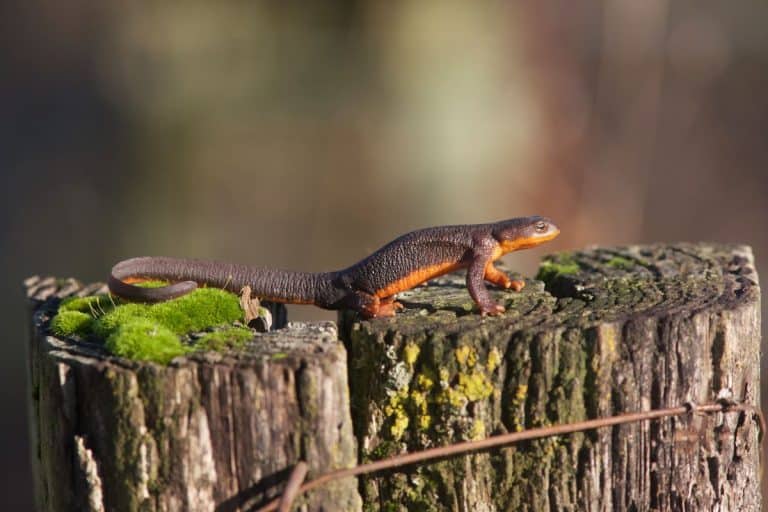
Salamanders are amphibians alongside frogs, toads, and caecilians. They have classic and recognizable features, namely long, lizard-like bodies, four small legs, and often a tail. One salamander family is called the Plethodontidae, and they are found across North and South America from southern Canada to southwestern Brazil, and in central Mediterranean Europe and Korea.
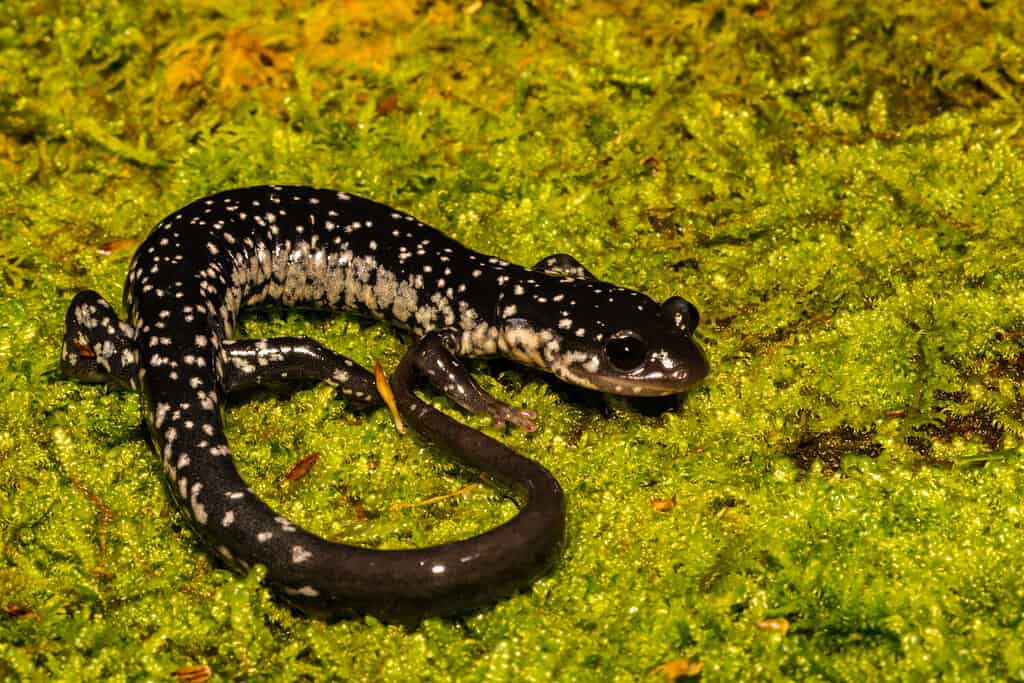
Most salamanders have similar body sizes.
©Jay Ondreicka/Shutterstock.com
These are lungless creatures that breathe through their skin and reside in moist, forested temperate or tropical habitats. The adults lack gills and gill slits. Most salamanders live in aquatic environments, but some species inhabit areas alongside streams. Salamanders play a significant role in their ecosystems. They control many pests by eating insects and larvae. In turn, they are eaten by larger predators. Also, because they move between water and land, they connect energy and matter between aquatic and terrestrial landscapes. Salamanders serve as a cost-effective and easily measurable indicator of an ecosystem’s health and integrity. Put simply, if salamanders are thriving, the ecosystem is healthy.
Exploring Evolutionary Stasis in Salamanders
Evolutionary stasis occurs when an animal evolves into many species without significant changes to its overall structure. Some lineages, such as the Caribbean anoles, look dramatically different from each other. At the other extreme, some lineages have loads of species, but they all look remarkably similar. This process is known as nonadaptive radiation.
Salamanders have a reputation for all looking similar. This broadly similar body shape has been the same for over 100 million years. But does this similarity mask differences in other traits?
Researchers wanted to explore whether salamanders that looked the same on the outside had actually diverged substantially in other physiological traits. They collected 300 individual woodland salamanders, all from the genus Plethodon, which comprises 30 distinct species. In the laboratory, the scientists tested the salamanders for several physiological traits, including skin resistance to water loss, metabolic rate, and thermal physiology (maximum heat tolerance and cold tolerance). They also took some physical measurements such as body size, relative limb and trunk size, and skull shape. The researchers wanted to establish whether there was a relationship between the climatic conditions where the salamanders lived and their internal and physical traits.
Salamanders Are Actually Very Different
The researchers found measurable physiological differences between the salamanders, even though they looked similar. Even more interesting, these differences aligned with micro- and macroclimatic niches.
The study found that those species living in warmer macroclimates had skin that was more resistant to water loss. This helped prevent them from dehydrating. Furthermore, species living in warmer climates, particularly those experiencing warmer wet-season temperatures, had higher metabolic rates.
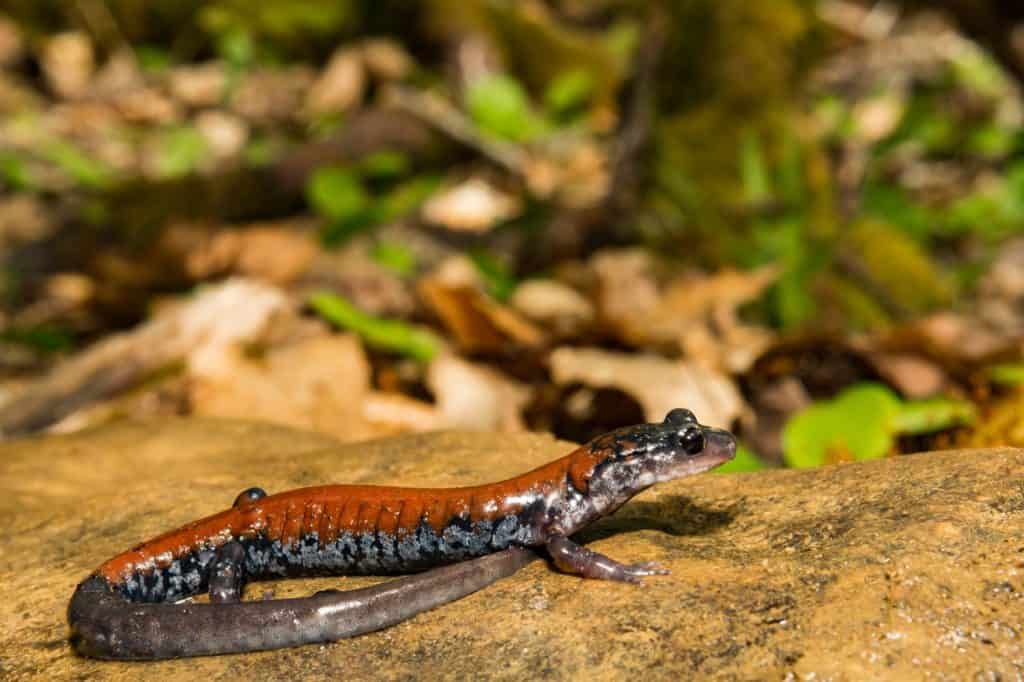
Some Plethodon salamanders have higher metabolic rates.
©Jay Ondreicka/Shutterstock.com
Slimy salamanders (species in the P. glutinosus group) generally had lower metabolic rates. This group often lives in relatively warm and dry habitats.
Subtle Differences in Body Shape
The study reveals that salamander appearance is not as universal as previously thought. Plethodon salamander species living in warmer environments are generally larger. This is the direct opposite of what is seen in most other animals. Bergmann’s rule is a biological phenomenon stating that animals in warmer environments tend to be smaller to aid in heat conservation. However, it is not unusual for amphibians to break this rule, as many other factors govern their body size. These include activity patterns and moisture availability. There was no link between climatic variables and limb length.
Amphibians and Climate Change
Amphibians have been declining globally for at least the past 20 years, with populations decreasing by about 3.5% to 3.8% per year. Around 40 percent of amphibians are already at risk of extinction. Some experts have referred to them as the ‘canary in the coal mine’ of climate change. They are sounding an early warning about what could happen to other species. This is largely due to their biphasic lifecycle, which depends on both aquatic and terrestrial environments. Their moist skin also serves as a sensitive respiratory organ.
However, there is some evidence that the risks to amphibians vary between the different groups. Amphibians with narrow tolerances for temperature and moisture may be at heightened risk.
The Appalachian Mountains, where this research was conducted, are a global hotspot of salamander diversity. This research suggests that some species of salamander may be able to cope in conditions that would adversely affect others. If we are to do all we can to protect these amazing creatures, this sort of research is vital.