
Quick Take
- The blue color isn't a defense mechanism or a trick of the light. The real reason this centipede changes color is stranger than you'd expect. Discover the real reason →
- Right after molting, this centipede looks its most dangerous, yet it is actually in serious danger itself. See the hidden dangers →
- What looks like two centipedes after a molt is really one centipede and its next meal. Find out what gets eaten →
- This species wasn't officially recognized as its own animal until surprisingly recently. Learn its discovery story →
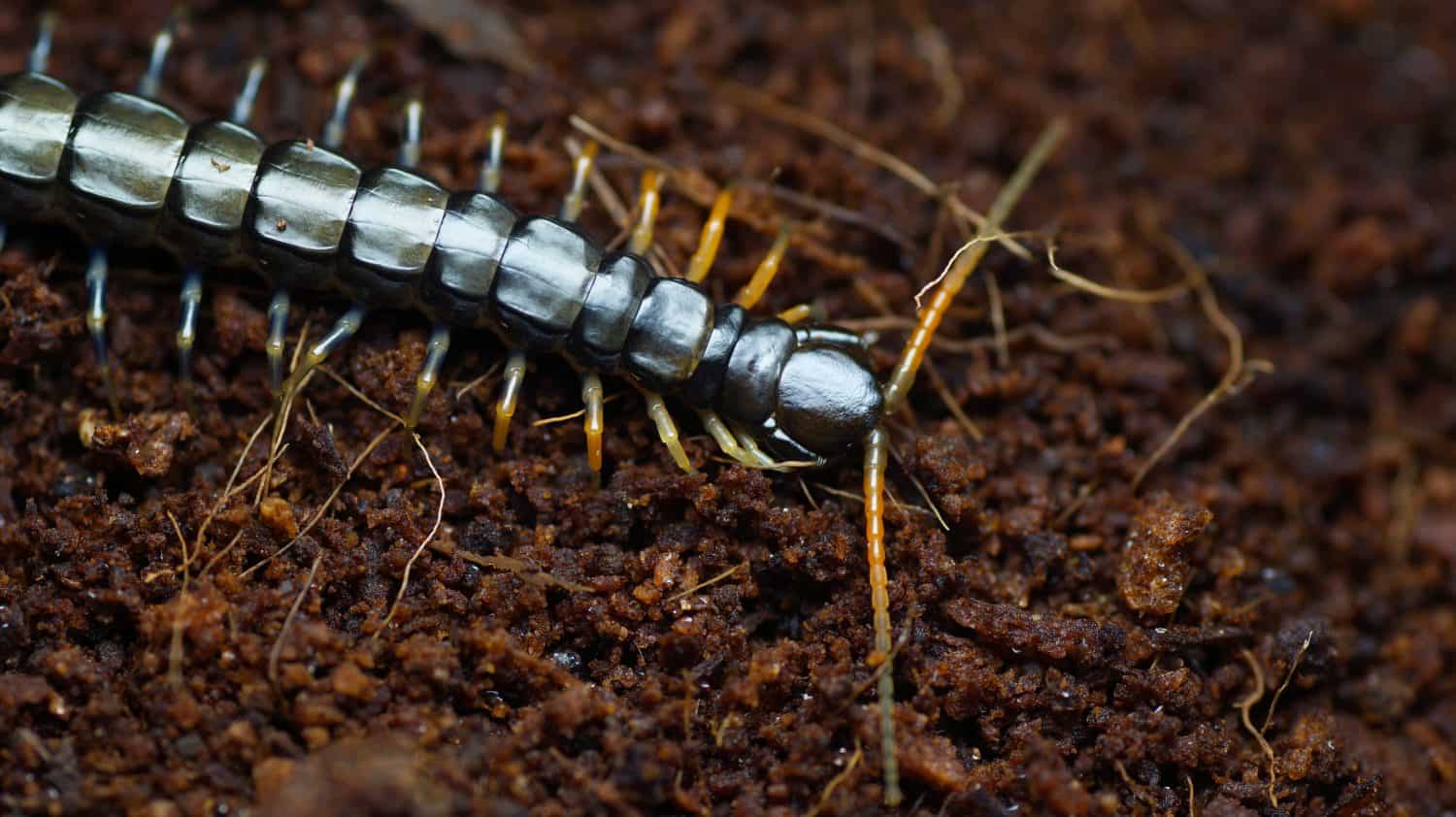
In the fascinating Instagram reel seen above, a centipede instantly transforms its skin color into a beautiful luminous shade of blue as it molts. When the molt is finished, the centipede turns around and begins to consume its old exoskeleton. This is the Chinese tiger leg centipede, and its freshly molted appearance looks drastically different from its typical look. Let’s explore why centipedes shed their skin and why the Chinese tiger centipede turns such a bright shade of blue.
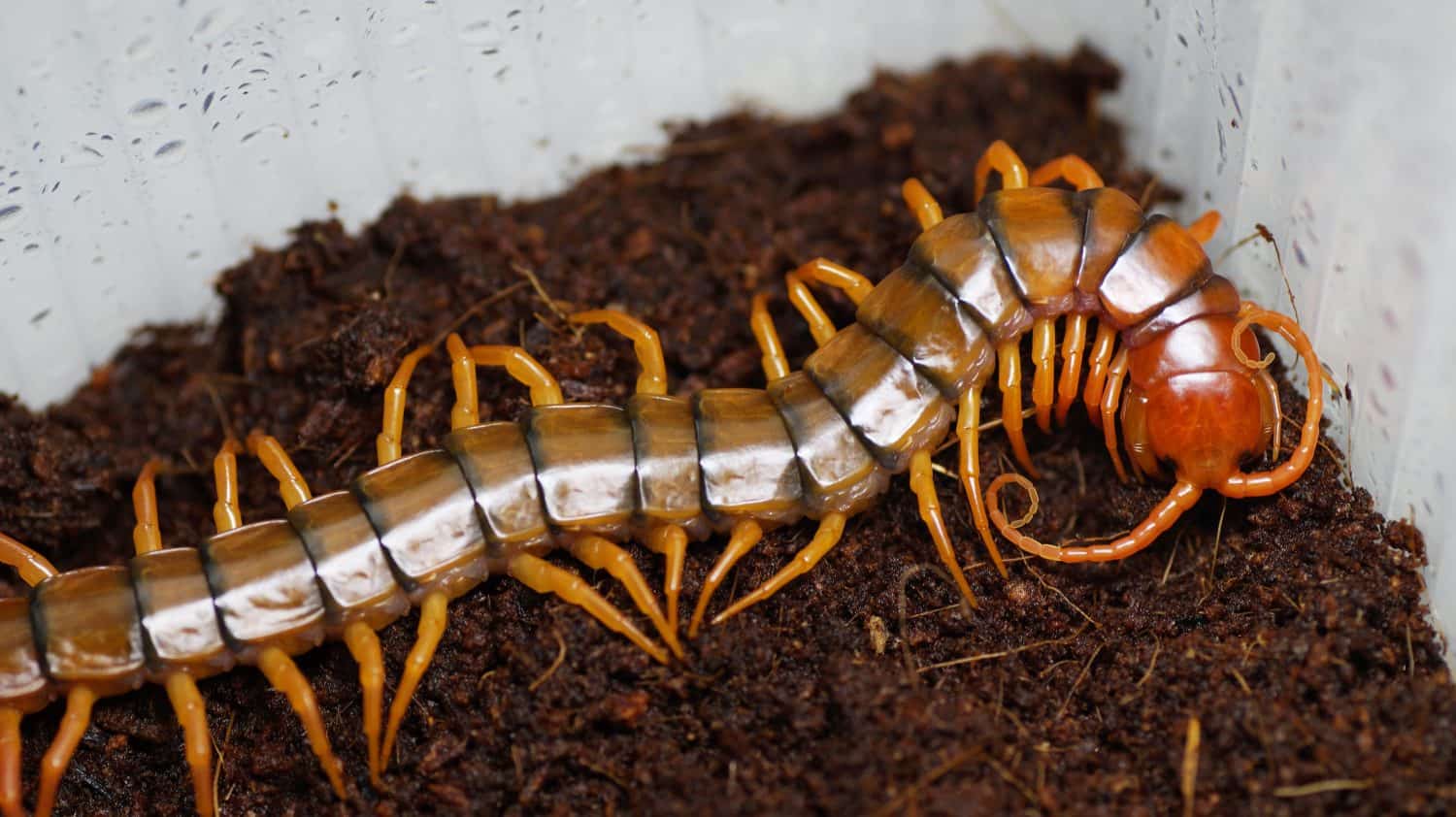
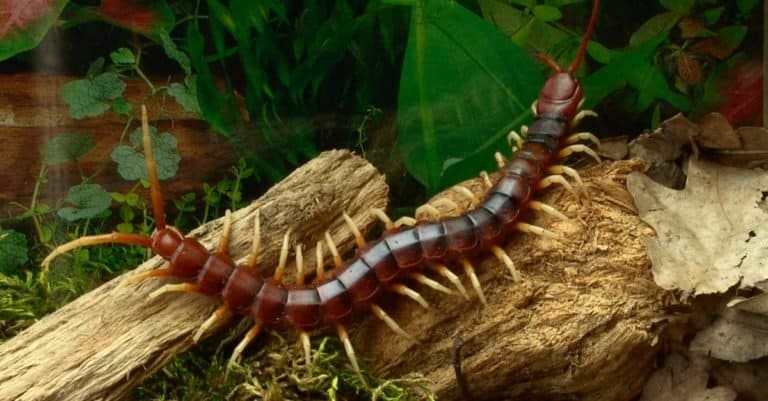
The Chinese tiger leg centipede is native to southern China.
©morslasdert/Shutterstock.com
Meet the Chinese Tiger Leg Centipede
The Chinese tiger leg centipede (Scolopendra hainanum) is a species of scolopendrid centipede in the family Scolopendridae. It wasn’t formally described until 2012, when researchers determined that what they thought was a subspecies of Scolopendra subspinipes was actually an entirely separate species. The specimens described in the paper were found on Hainan Island in southern China. They are native to the area, with sightings reported on Hainan Island and Hong Kong.
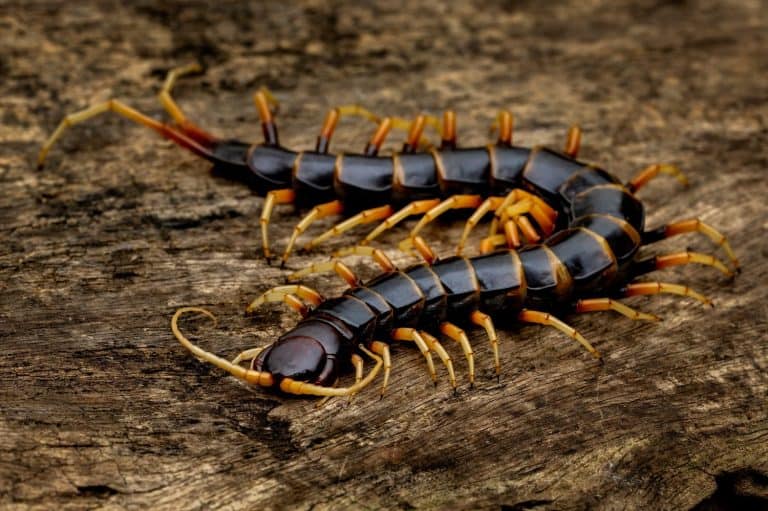
According to researchers, the tiger leg centipede can grow up to 9 inches in length. They are fierce predators and will hunt and consume a variety of insects and even small rodents and lizards. Their venom is potent and has evolved to immobilize their prey and protect them from predators. As adults, they are dark brown or nearly black with orange-brown striped legs. However, we know from the Instagram reel that freshly molted tiger leg centipedes can turn a striking blue.
This Centipede Leaves Behind a Ghostly Copy of Itself
Like all arthropods, centipedes must molt as they grow. Their hard exoskeleton provides structure and support. But as their body grows underneath, the rigid outer layer doesn’t expand with their new size.
When the centipede is ready to shed its old skin, it stops eating and finds a safe place to hide. Hormones signal the growth of a soft layer beneath the hard exoskeleton, and enzymes help separate the cuticle from the underlying tissue. The skin begins to split, and the centipede wriggles its way out, head first. The process can be slow and may take up to a few hours.
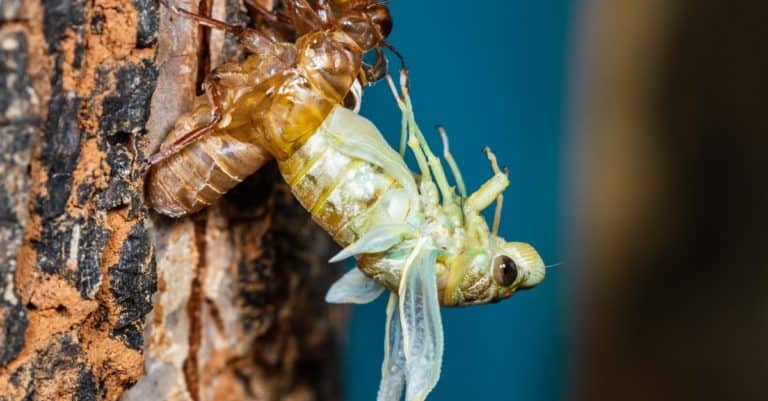
The old exoskeleton is dry and brittle, and appears to be an exact copy of the newly emerged centipede. It can retain body segments, legs, antennae, and other external structures.
Why Was the Centipede’s New Skin Blue?
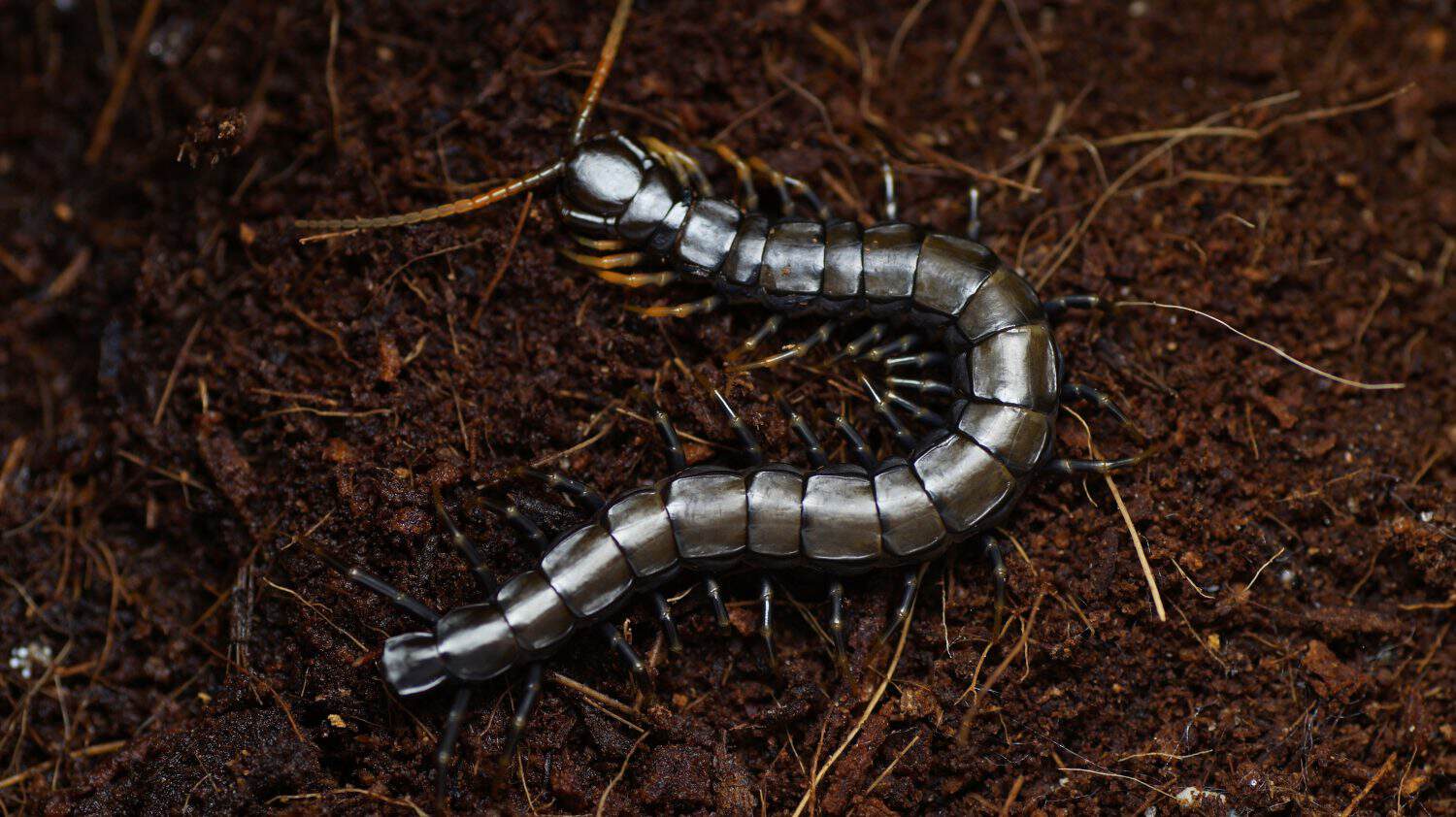
A freshly molted centipede is vulnerable to predators until its exoskeleton hardens.
©morslasdert/Shutterstock.com
In the video, the tiger leg centipede wriggles out of its exoskeleton, and we watch it emerge with an entirely different appearance. Its new exoskeleton is a purplish-blue color. Until its new cuticle hardens and its pigmentation darkens to its usual color, it will keep this new look. A freshly molted centipede has a soft body that won’t harden for another 7 to 10 days.
Why Molting Is Such a Vulnerable Time
Centipedes are incredibly vulnerable during a molt and before their exoskeleton hardens. While they are molting, they are essentially stuck in place, only able to work on wriggling out of their old skin. People who keep centipedes as pets are careful to remove prey items such as crickets and roaches from their enclosure during a molt. The insects can stress or even cause damage to the vulnerable centipede as it molts.
Once they have emerged, their entire bodies are soft, including their fangs. (Note that what we call fangs in centipedes are actually modified front legs known as forcipules.) In fact, if they tried to eat or defend themselves at this point, they could permanently damage their forcipules. It’s a dangerous time for arthropods after a molt. They are susceptible to predators and dehydration.
How Often Does the Chinese Tiger Leg Centipede Molt?
Like all centipedes, Chinese tiger leg centipedes do not molt on a routine schedule. Their bodies grow underneath, and when the old skin has no more room to expand, the process of molting begins. Younger centipedes will molt more often because they are growing quickly.
Molting frequency begins to slow down as the centipede begins to reach its mature size. Other things that might influence molting are food availability, environmental conditions, and growth rate.
The Centipede Eats Its Own Molt
The discarded exoskeleton is called an exuvia. Many arthropods, like the centipede in the reel, sometimes consume their exuvia to obtain chitin and other nutrients from the old skin. Molting is not an easy task for arthropods; it requires tremendous energy.
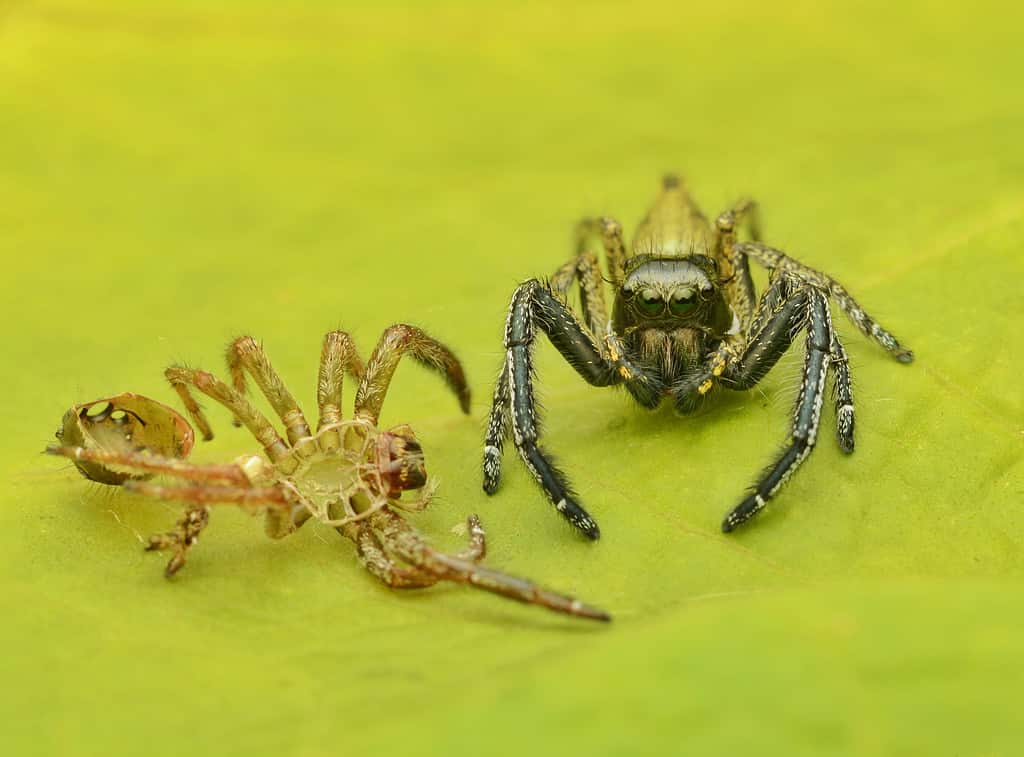
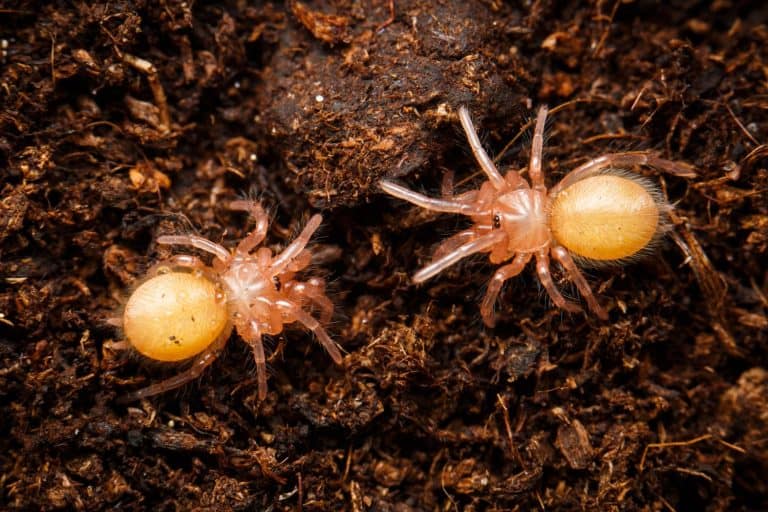
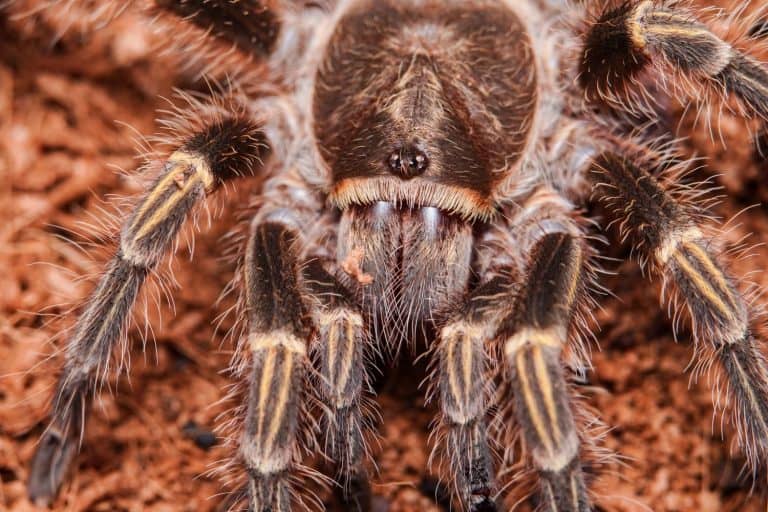
Arthropods, such as spiders and centipedes, shed their exoskeletons as they grow.
©Niney Azman/Shutterstock.com
By eating their old skin, centipedes can begin to recover by recycling important nutrients from the exuvia. Although it can appear as if there are two centipedes after a molt, what looks like a second arthropod becomes a meal for the newly emerged individual.