
Quick Take
- There are approximately 30 white-tailed deer per square mile in Pennsylvania.
- The West Nile virus outbreak of 2018 negatively affected ruffed grouse populations in Pennsylvania.
- Student-led campaigns are effective ways to officially recognize state animals.
Pennsylvania features diverse landscapes that support over 25,000 species. The state’s varied habitats, ranging from the Pocono Mountains to the Allegheny National Forest, provide homes for a wide range of mammals, birds, and aquatic species. Although Pennsylvania has only one official state animal, it has adopted seven animals as official state symbols. Continue reading to learn about the animals that represent the Quaker State.
State Bird: Ruffed Grouse
The ruffed grouse (Bonasa umbellus) was recognized as Pennsylvania’s state bird in 1931. This reddish-brown bird’s name derives from the black “ruffs” on its neck.
Also known as the partridge, the ruffed grouse is one of 10 grouse species native to North America. These gallinaceous birds are related to quail, pheasants, and turkeys, but they are far more resistant than many of their relatives. The ruffed grouse can survive cold and snowy winter conditions that would kill many other bird species.
The ruffed grouse’s presence, especially in the cold winter months, made the bird an invaluable food source for Pennsylvania settlers. When other food was scarce, these plentiful birds were lifesavers for early Pennsylvanians.
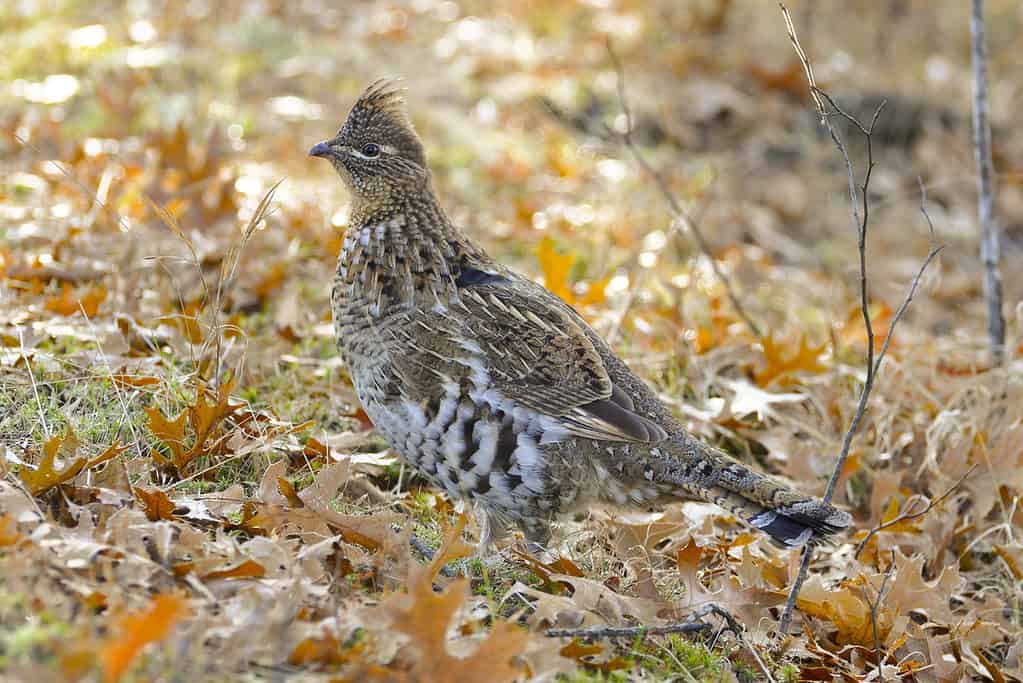
The ruffed grouse’s name comes from the black ruffs on its sides.
©iStock.com/SteveOehlenschlager
In 2018, mosquitoes carrying the West Nile virus had a devastating impact on Pennsylvania’s ruffed grouse population. Hunters and conservationists were concerned that the official bird of Pennsylvania might be extirpated from the state.
Due to a reduced hunting season and aggressive habitat work, ruffed grouse numbers are rebounding in the Keystone State. While it’s unlikely the population will ever return to the levels seen in the past, it seems evident the state bird of Pennsylvania is making a comeback.
State Animal: White-Tailed Deer
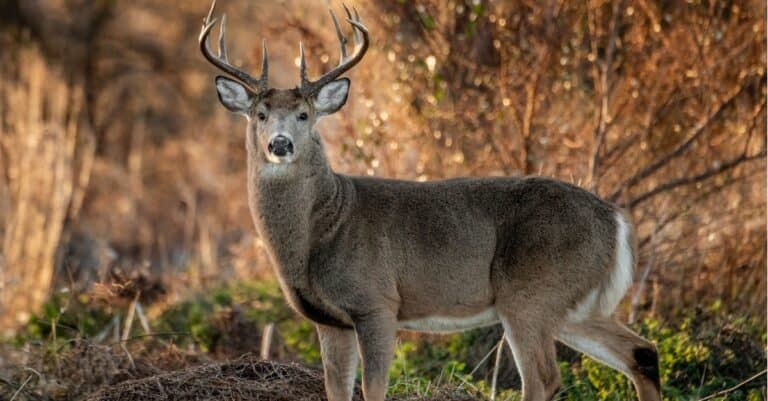
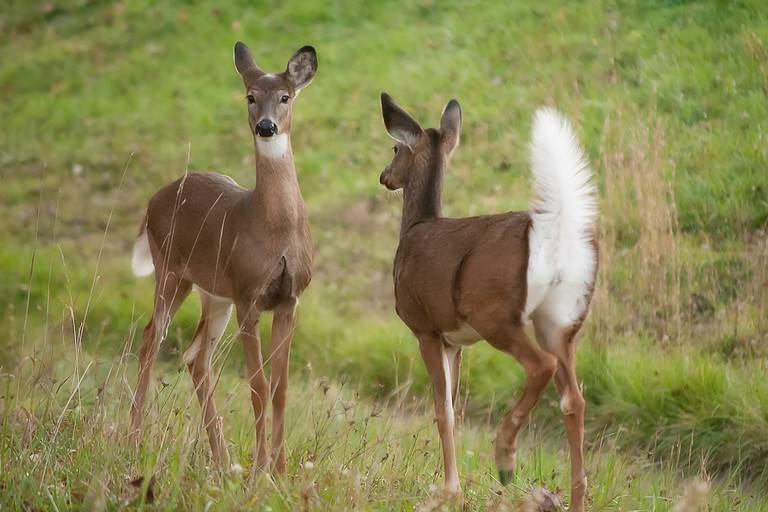
The white-tailed deer (Odocoileus virginianus) was named the official state animal of Pennsylvania in 1959.
The white-tailed deer is the most common deer species in the world. In Pennsylvania, the white-tailed deer was essential to both Native Americans and settlers. Deer provided a reliable food source, clothing, and shelter.
Today, the population of white-tailed deer in Pennsylvania is estimated to be 1.5 million, or about 30 deer per square mile in the state.
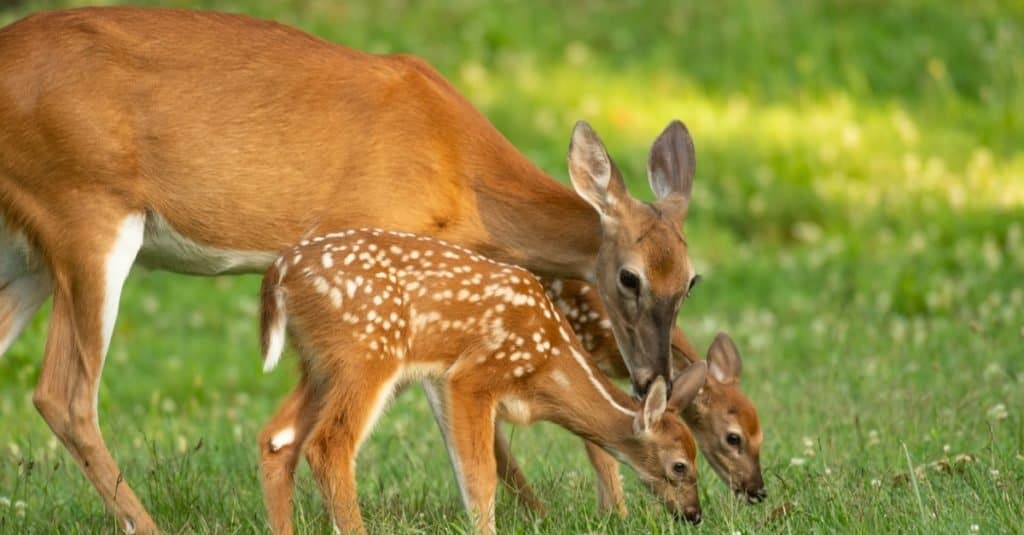
A white-tailed doe will birth one to three fawns each year.
©Tony Campbell/Shutterstock.com
State Dog: Great Dane
Pennsylvania designated the great Dane (Canis lupus familiaris) as the official state dog in 1965.
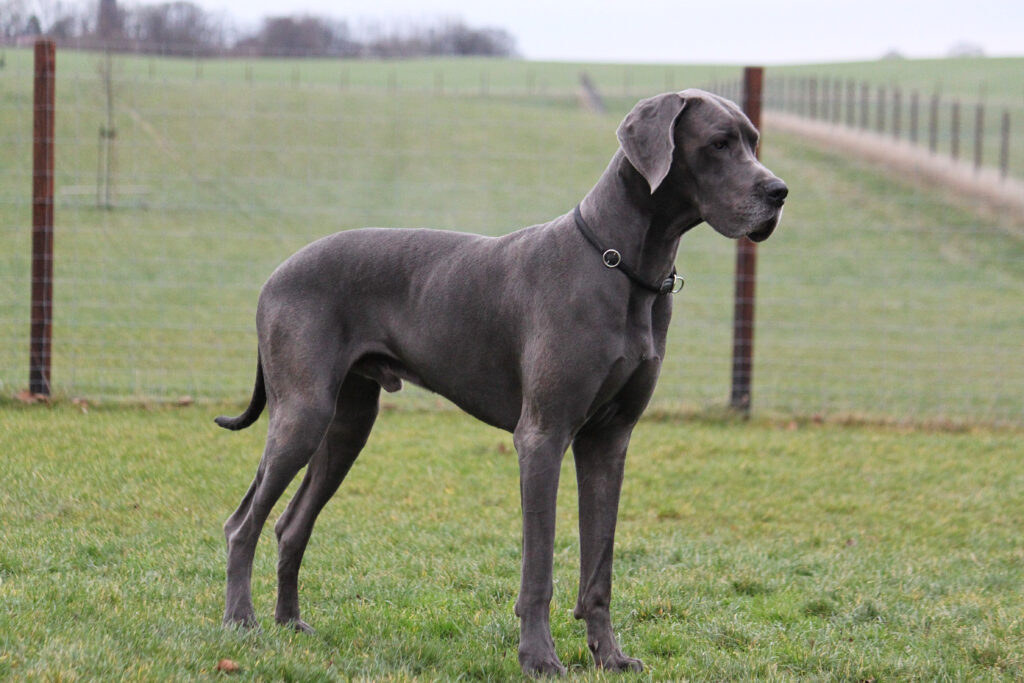
The great Dane started as a hunting breed but also became a working breed.
©iStock.com/Credit:BiancaGrueneberg
The 1965 declaration states that the great Dane’s “size, strength, beauty, intelligence, tolerance, courage, faithfulness, trustworthiness, and stability exemplify those of Pennsylvania.”
It was also noted that the great Dane started as a hunting breed but later became a working breed, drawing parallels to the hunts of early Pennsylvanians and the state’s later industrialization.
State Fish: Brook Trout
The brook trout (Salvelinus fontinalis) was designated the official state fish of Pennsylvania in 1970. The declaration noted that the fish is quite tasty, remarking that it is “a choice of most epicures.” Along with being loved by foodies, the 1970 declaration noted that the brook trout is the only trout native to Pennsylvania.
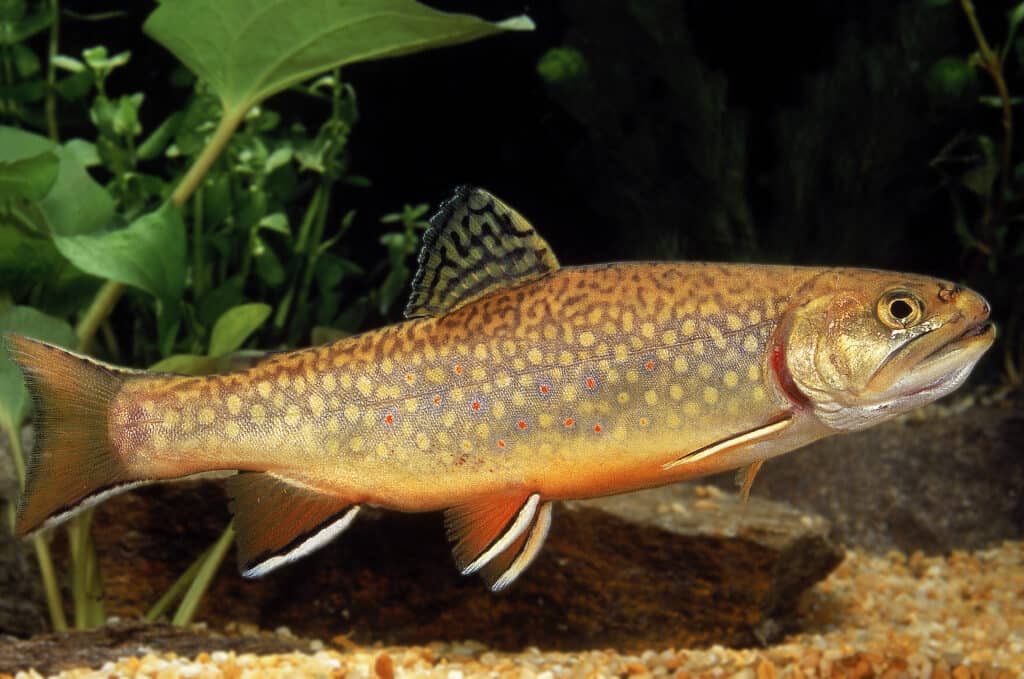
The brook trout is the official fish in nine states, including Pennsylvania.
©Slowmotion GLI/Shutterstock.com
The brook trout’s name is a bit of a misnomer. It’s actually not a trout but rather a member of the salmon family. The fish’s native range runs through Eastern North America, and it is among the most popular sport fish in those regions, especially with fly-fishing anglers.
State Fossil: Trilobite
Pennsylvania officially recognized the trilobite as its state fossil in 1988. Trilobites were marine arthropods. The largest trilobite may have measured over 18 inches and weighed nearly 10 pounds. Modern-day relatives of trilobites include shrimp, crabs, lobsters, spiders, and insects.
Found in the area that is now recognized as the Northeastern United States and Southwestern Ontario, Canada, trilobites are among the most well-known fossils, 160 million years older than dinosaurs. Trilobite fossils are abundant in areas such as Pennsylvania because, as these prehistoric animals grew, they molted and discarded their outer skeletons. One trilobite could potentially molt 10 to 12 times throughout its life, resulting in multiple fossilized skeletons. While whole, deceased trilobites can be preserved, these molts are far more frequent.
Once again, young people initiated the effort to achieve the trilobite’s official Pennsylvanian status, led by an elementary school science class that campaigned for the prehistoric invertebrate to be recognized.
The official legislation, signed on December 5, 1988, states, “Fossils of Phacops rana are found in many parts of Pennsylvania, and, therefore, the Eldredgeops rana* is selected, designated, and adopted as the official State fossil of the Commonwealth of Pennsylvania.”
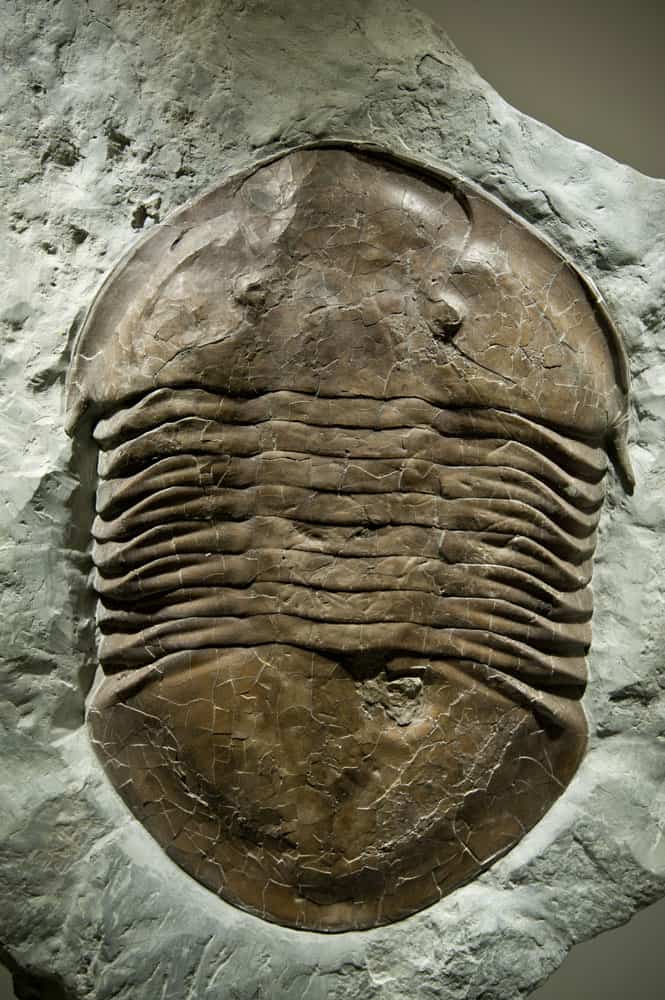
Trilobites are perhaps the most recognizable fossils not connected to the dinosaurs.
©iStock.com/markchentx
*Originally identified in the declaration as Phacops rana, the fossil has been reclassified as Eldredgeops rana to align with the current scientific classification.
State Insect: Pennsylvania Firefly
Pennsylvania’s state insect is the Pennsylvania firefly (Photuris pennsylvanica). The childhood wonder evoked by lightning bugs is the very reason they were officially recognized by Pennsylvania legislators.
A group of students from Highland Park Elementary School in Upper Darby, Pennsylvania, lobbied state legislators to make an official designation regarding the Pennsylvania firefly. They reasoned that, if an insect is named after the state, it should obviously be named the official state insect.
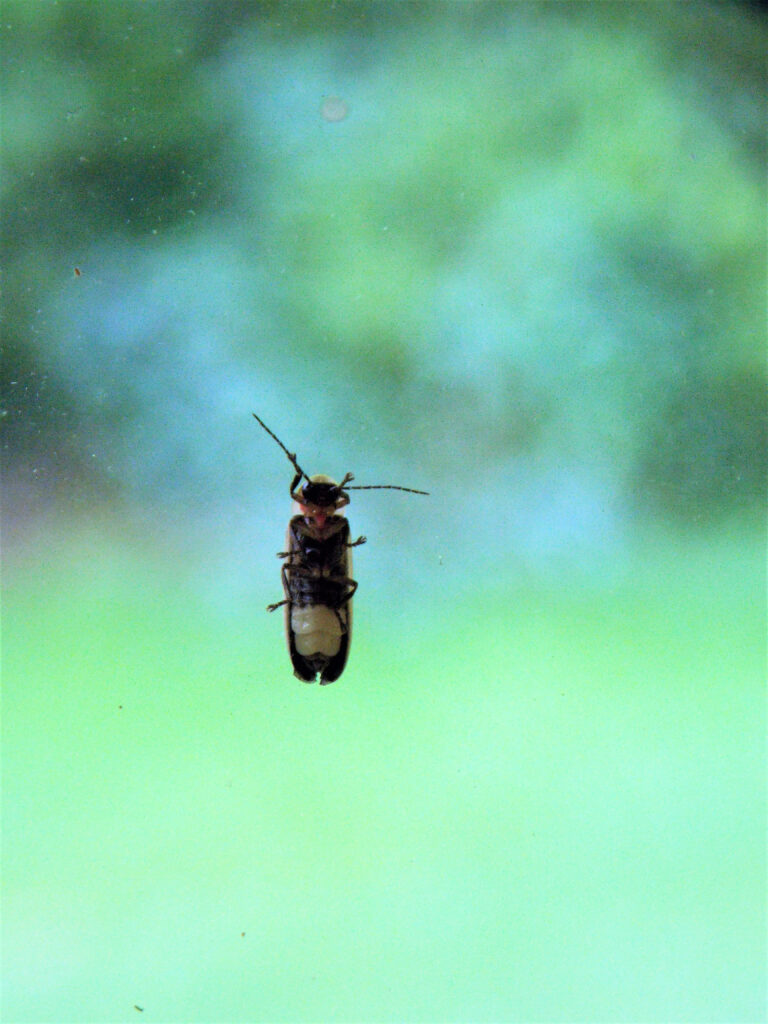
A close-up view of the underside of a Pennsylvania firefly.
©iStock.com/JJPaden
These young students created bumper stickers and circulated petitions, drumming up public support for the legislation. Their voices were heard. In 1974, then-Governor Milton J. Shapp signed the bill officially naming the Pennsylvania firefly the state insect.
State Amphibian: Eastern Hellbender
The Eastern hellbender (Cryptobranchus alleganiensis) received the designation as Pennsylvania’s state amphibian in 2019.
The hellbender is the largest amphibian in North America, growing up to two feet long. It is a fully aquatic giant salamander native to the Eastern and Central United States. It is the only extant member of the Cryptobranchus genus. The genus name comes from ancient Greek, meaning hidden gill, which speaks to the hellbender’s method of respiration. The Eastern hellbender doesn’t have gills; instead, it draws in oxygen through capillaries in the frills of skin along its sides.
Besides hellbender, other nicknames bestowed on this amphibian include mud dog, mud devil, devil dog, and even snot otter.
While hellbenders may not be considered attractive, they play a vital role in their ecosystems as both predators of insects and small aquatic creatures, and as prey for fish such as trout and smallmouth bass.
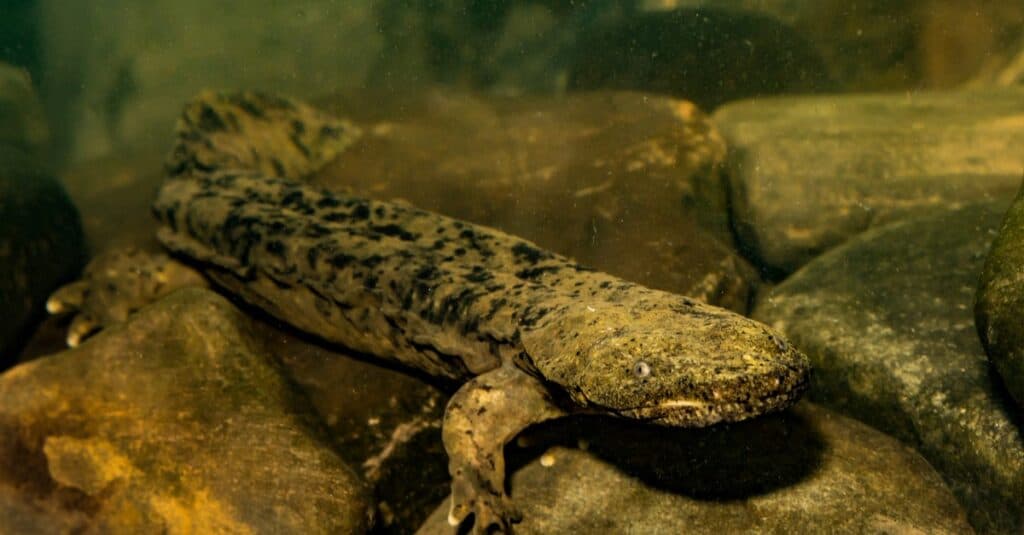
The Eastern hellbender is the largest amphibian in North America, growing up to two feet in length.
©Jay Ondreicka/Shutterstock.com